The Red Special: Brian May’s Handmade Guitar

Guitarists are a special breed, and many of them have a close connection with the instruments they play. It might be a specific brand of guitar, or a certain setup required to achieve the sound they’re looking for. No one has a closer bond with an instrument than Brian May to his Red Special. The guitar he toured with and played through his career with Queen and beyond had very humble beginnings. It was built from scratch by Brian and his father Harold May.

A young Brian May playing the brand new Red Special. Note the disk magnets of the original handmade pickups

It was the early 1960’s and a young teenaged Brian May wanted an electric guitar. The problem was that the relatively new instruments were still quite expensive — into the hundreds of dollars. Well beyond the means of the modest family’s budget. All was not lost though. Brian’s father Harold was an electrical engineer and a hacker of sorts. He built the family’s radio, TV, and even furniture around the house. Harold proposed the two build a new electric guitar from scratch as a father-son project. This was the beginning of a two-year odyssey that resulted in the creation of one of the world’s most famous musical instruments.

Brian was already an accomplished guitarist, learning first on his dad’s George Formby Banjo-ukulele, and graduating to an Egmond acoustic guitar. Brian’s first forays into electric guitars came from experimenting with that Egmond. If you look close, you can even see the influence it had on the final design of the Red Special.

Continue reading “The Red Special: Brian May’s Handmade Guitar”

Sony Unveils Swarm Robots For Kids

Sony recently unveiled Toio, an educational robotics toy for young programmers. We all know Sony as an electronics giant, but they do dabble in robotics from time to time. The AIBO dog family is probably their most famous creation, though there is also QRIO, a bipedal humanoid, and on the stranger side, the Rolly.

Toio consists of two small cube robots which roll around the desktop. You can control them with handheld rings, or run programs on them. The robots are charged by a base station, which also has a cartridge slot. Sony is marketing this as an ecosystem that can be expanded by buying packs which consist of accessories and a software cartridge. It looks like the cartridge is yet another proprietary memory card format. Is Sony ever going to learn?

There isn’t much hard information on Toio yet. We know it will be released in Japan on December 1st and will cost around ¥ 20,000, or about 200 USD. No word yet on a worldwide release.

The striking thing about this kit is how well the two robots know each other’s position. Tape a paper pair of pants, and they “walk” like two feet. Attach a paper linkage between them, and they turn in perfect sync, like two gears. Add some paper strips, and the two robots work together to form a gripper.  We can only guess that Sony is using cameras on the bottom of each robot to determine position — possibly with the aid of an encoded work surface — similar to Anoto paper. Whatever technology it is, here’s to hoping Sony puts out an SDK for researchers and hackers to get in on the fun with these little robots.

Continue reading “Sony Unveils Swarm Robots For Kids”

Starship One: The Ultimate 90’s Synthesizer

We’ve seen some crazy music production stations over the years. But this synthesizer system may just take the cake. Starship One is the creation of [Marc Brasse]. At first glance, this music battle station looks like it belongs on the bridge of the Enterprise. The resemblance is not entirely unintentional. [Marc] himself says “Commander Data from Star Trek: The Next Generation might actually (have) like(d) it if he did not have such a conservative taste in music.”

At the core of Starship One are two underappreciated synths from the 90’s. The Technics WSA1, and a Gem S3 turbo. Both were keyboards ahead of their time. The WSA1 is a modeling synth, a sound generation trend in the ’90s which sounded great, but never quite caught on. The other strike against it was that it was built by Technics, who had a reputation for building HiFi equipment and home keyboards. Professionals just didn’t pick it up.

The Gem S3 had a similar story — built by a company called General Music, the keyboard was a great design with incredible piano action, but never quite made it. [Marc] wasn’t turned off by the lineage of these two synths. In fact, he embraced them. [Marc] explains more about his philosophy in creating the Starship One in this PDF document.

[Marc] combined these two instruments with Fatar MP1 bass pedals, a ribbon controller, and more additional components than we could ever hope to name here. The frame of the synth is built from a discarded retail CD sales rack. Extruded aluminum pieces came from a sun slat curtain. Just about every part was reused to build one beast of a workstation.

If you’re wondering what the strange keyboard layout is, it’s a Janko keyboard adapter [Marc] custom made. Instead of 88 notes, there are 264 keys, arranged so that every chord has the same fingering, regardless of the scale being played.

Want more modulation? Check out this ARM based FM synth, or this monster post of open source synths!

Super Mario World Jailbreak Requires No External Hardware

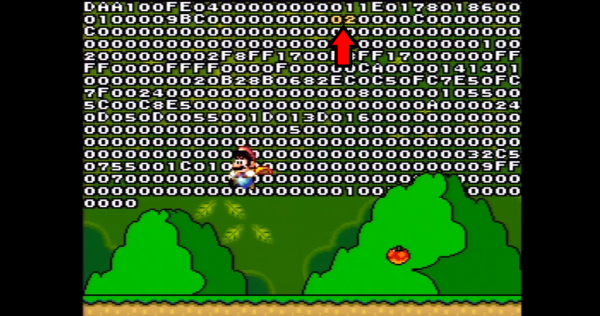
[SethBling] has released a Super Mario World jailbreak that allows players to install a hex editor, then write, install and run their own game mods. What’s more is this all works on unmodified cartridges and SNES hardware. No hardware hacks required.

[Seth] is quick to say he didn’t do all this alone. This mod came to be thanks to help from [Cooper Harasyn] who discovered a save file corruption glitch, [MrCheese] who optimized the hex editor, and [p4plus2] who wrote some awesome mods.

While no soldering and programming of parts are required, installing this mod still requires quite a bit of hardware. Beyond the SNES and cartridge, you’ll need two multitaps, three controllers, and clamps to hold down buttons on the controllers. Even then the procedure will take about an hour of delicate on-screen gymnastics. Once the jailbreak is installed though, it is kept in savegame C, so you only have to do it once.

What does a hex editor allow you to do? Anything you want. Mario’s powerup state can be edited, one memory location can be modified to complete a level anytime you would like. It’s not just modifying memory locations though – you can write code that runs, such as [p4plus2’s] sweet telekinesis mod that allows Mario to grab and move around any enemy on the screen.

It’s always awesome to see old video game hardware being hacked on by a new generation of hackers. We’ve seen similar work done on Super Mario Brothers 3, and an original GameBoy used to pilot a drone, just to name a couple.

Continue reading “Super Mario World Jailbreak Requires No External Hardware”

The Trouble With Old Model Steam Engines

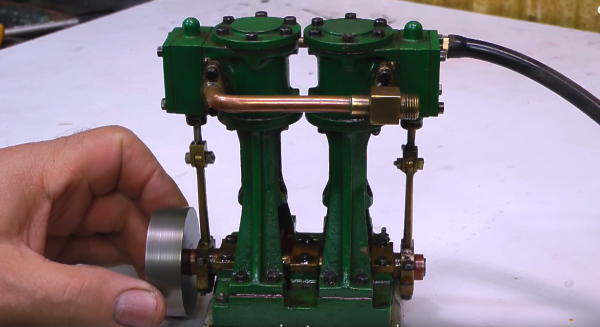
Model steam engines have intrigued hackers and makers for over 100 years. Many of us have seen old steam engine models up for sale at garage sales and various internet auction sites. The problem with these engines is the fact that many of them were sold as rough casting kits. This means the quality of the model is only as good as the original owner’s machining and fabrication skills.

[Keith Appleton] is something of a steam engine expert. In this pair of videos, he takes us through troubleshooting two engines. Keith goes on to show some of the common failures he’s found while working on these wonderous little machines.

First off is the paint. If you find nuts, bolts and random parts painted in different colors, the engine is probably bad. It sounds strange, but [Keith] has found this to be a rule over his years of working with these engines.

Another problem is rattles. [Keith] found one of these engines rattled terribly. The culprit was the crankshaft. Not only was it the wrong size, but it was built wrong. These engines use built up crankshafts, rather than shafts machined from a single piece of metal. This engine’s crankshaft was threaded into the crank webs rather than pinned. Whoever built it tried to re-engineer the design of the crankshaft, and failed miserably.

You can check [Keith’s] videos out after the break. Want more displacement? We’ve covered the simplest steam engine, and an insanely detailed steampunk battleship, which of course is powered by steam.

Continue reading “The Trouble With Old Model Steam Engines”

Game Gear, Console Edition

What if the Game Gear had been a console system? [Bentika] answered that question by building a consolized version of this classic handheld. For those not in the know when it comes to 1980s Sega consoles, the Game Gear is technically very similar to the Master System. In fact, the Game Gear can even play Master System games with a third-party adapter. However, the reverse isn’t the case as the screen aspect ratios were different and the Game Gear had a larger palette, which meant the Master System wasn’t compatible with Game Gear titles.

Sega’s decision to omit an AV connection meant that Game Gear games were forever locked into a tiny LCD screen. [EvilTim] changed that with his AV board, so [Bentika] decided to take things to their natural conclusion by building a proper console version of the Game Gear.

He started by ditching the screen and wiring in [EvilTim’s] video adapter board. The cartridge slot was then removed and reconnected atop the PCB. This turned the system into a top loader. [Bentika] then went to work on the case. He used Bondo to fill in the holes for the d-pad and buttons. After a spray paint finish failed, [Bentika] went back to the drawing board. He was able to get paint color matched to the original Game Gear gray at a household paint store. Careful priming, sanding, and painting resulted in a much nicer finish for this classic build. Check out [Bentika’s] video after the break!

Continue reading “Game Gear, Console Edition”

Restoring A Strange Milling Machine From Craigslist

[diyVT] found a real white elephant in this milling machine from Craigslist. It cost him only $200, cheap for a small mill, so it was worth the gamble. We’re not sure what to call this — it’s not exactly a gantry mill, not a horizontal mill, and definitely not a knee mill. The tag says V-Mill, made by either Pierce West or Tree Tool and Die Works, depending on which ID plate you read. The Tree has a three-phase motor, but it came with a phase converter, so it should be good to run on single phase 220 volt household power.

The machine was in good physical shape, at least until the previous owner attempted to move it out of the garage. During the move one of the cast iron chain drive handwheel brackets broke into three pieces. Cast iron is no fun to weld. It has to be pre-heated, welded with nickel rod, and slowly cooled. Some hackers would have given up or built a new part, but [diyVT] accepted the challenge. He put the puzzle pieces back together, grooved them out with an angle grinder, and welded everything. The result wasn’t pretty, but it only has to take the force of the handwheel and the 200 lb gorilla spinning it.

After a bit of work on the motor and head, including a new belt, this tree was ready to cut. [diyVT] snuck out of a family bar-b-que to cut his first chips on the new (to him) machine.

Continue reading “Restoring A Strange Milling Machine From Craigslist”