Suddenly, Wireless Power Transmission Is Everywhere

Wireless power transfer exists right now, but it’s not as cool as Tesla’s Wardenclyffe tower and it’s not as stupid as an OSHA-unapproved ultrasonic power transfer system. Wireless power transfer today is a Qi charger for your phone. It’s low power – just a few amps — and very short range. This makes sense; after all, we’re dealing with the inverse square law here, and wireless power transfer isn’t very efficient.

Now, suddenly, we can transfer nearly two kilowatts wirelessly to electronic baubles scattered all over a room. It’s a project from Disney Research, it’s coming out of Columbia University, it’s just been published in PLOS one, and inexplicably it’s also an Indiegogo campaign. Somehow or another, the stars have aligned and 2017 is the year of wirelessly powering your laptop.
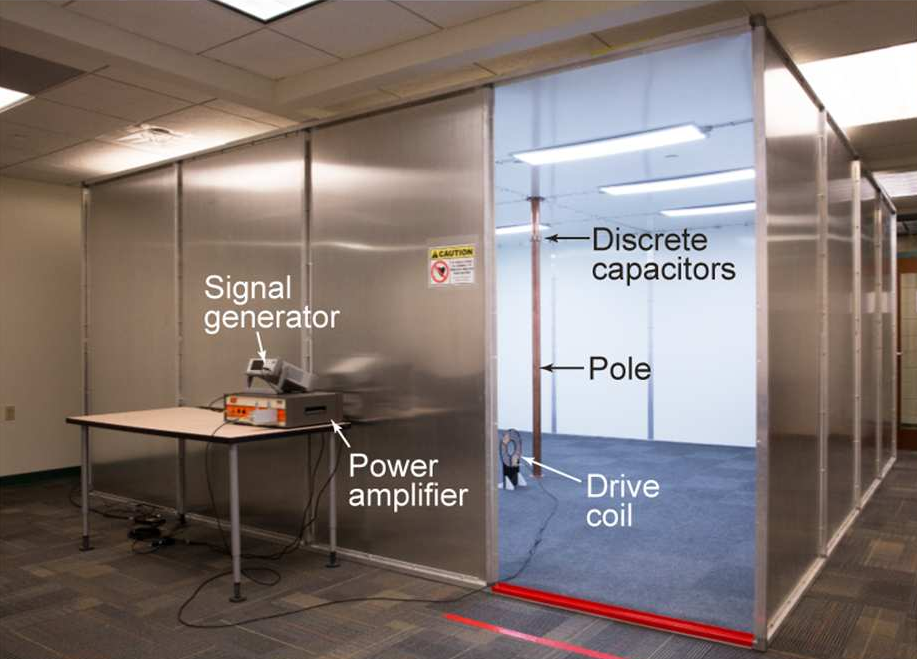
disney-research-quasistatic-cavity-roomThe first instance of wireless power transfer that’s more than just charging a phone comes from Disney Research. This paper describes quasistatic cavity resonance (QSCR) to transfer up to 1900 Watts to a coil across a room. In an experimental demonstration, this QSCR can power small receivers scattered around a 50 square meter room with efficiencies ranging from 40% to 95%. In short, the abstract for this paper promises a safe, efficient wireless power transfer that completely removes the need for wall outlets.

In practice, the QSCR from Disney Research takes the form of a copper pole situated in the center of a room with the walls, ceiling, and floor clad in aluminum. This copper pole isn’t continuous from floor to ceiling – it’s made of two segments, connected by capacitors. When enough RF energy is dumped into this pole, power can be extracted from a coil of wire. The video below does a good job of walking you through the setup.

As with all wireless power transmission schemes, there is the question of safety. Using finite element analysis, the Disney team found this room was safe, even for people with pacemakers and other implanted electronics. The team successfully installed lamps, fans, and a remote-controlled car in this room, all powered wirelessly with three coils oriented orthogonally to each other. The discussion goes on to mention this setup can be used to charge mobile phones, although we’re not sure if charging a phone in a Faraday cage makes sense.
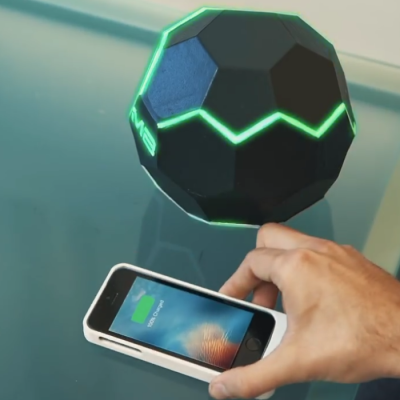
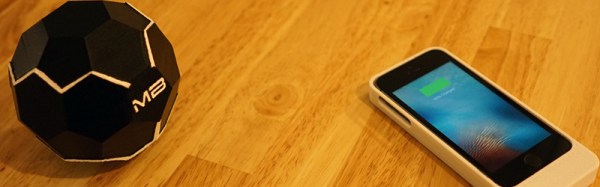
motherbox-charging-phone-squareIf the project from Disney research isn’t enough, here’s the MotherBox, a completely unrelated Indiegogo campaign that was launched this week. This isn’t just any crowdfunding campaign; this work comes straight out of Columbia University and has been certified by Arrow Electronics. This is, by all accounts, a legitimate thing.

The MotherBox crowdfunding campaign promises true wireless charging. They’re not going for a lot of power here – the campaign only promises enough to charge your phone – but it does it at a distance of up to twenty inches.

At the heart of the MotherBox is a set of three coils oriented perpendicular to each other. The argument, or sales pitch, says current wireless chargers only work because the magnetic fields are oriented to each other. The coil in the phone case is parallel to the coil in the charging mat, for instance. With three coils arranged perpendicular to each other, the MotherBox allows for ‘three-dimensional charging’.

Does the MotherBox work? Well, if you dump enough energy into a coil, something is going to happen. The data for the expected charging ranges versus power delivered is reasonably linear, although that doesn’t quite make sense in a three-dimensional universe.

Is it finally time to get rid of all those clumsy wall outlets? No, not quite yet. The system from Disney Research works, but you have to charge your phone in a Faraday cage. It would be a great environment to test autonomous quadcopters, though. For MotherBox, Ivy League engineers started a crowdfunding campaign instead of writing a paper or selling the idea to an established company. It may not be time to buy a phone case so you can charge your phone wirelessly at Starbucks, but at least people are working on the problem. This time around, some of the tech actually works.

Continue reading “Suddenly, Wireless Power Transmission Is Everywhere”

Friday Hack Chat: Security For IoT

securityforiot-01Over the last few weeks, our weekly Hack Chats on hackaday.io have gathered a crowd. This week, we’re talking about the greatest threat humanity has ever faced: toasters with web browsers.

The topic of this week’s Hack Chat is Security for IoT, because someone shut down the Internet with improperly configured webcams.

This chat is hosted by the Big Crypto Team at the University of Pittsburgh. [Wenchen Wang], [Ziyue Sun], [Brandon Contino], and [Nick Albanese] will be taking questions about lightweight devices connected to the Internet. Discussion will include building things that connect to larger networks securely.

The Big Crypto team at UP are thinking about the roadblocks people have to implement security in their projects, and if apathy or ignorance is the main reason security isn’t even considered in the worst IoT offenders.

The Hack Chat is scheduled for Friday, February 24th at noon PST (20:00 GMT).

Here’s How To Take Part:

join-hack-chatOur Hack Chats are live community events on the Hackaday.io Hack Chat group messaging.

Log into Hackaday.io, visit that page, and look for the ‘Join this Project’ Button. Once you’re part of the project, the button will change to ‘Team Messaging’, which takes you directly to the Hack Chat.

You don’t have to wait until Friday; join whenever you want and you can see what the community is talking about.

Upcoming Hack Chats

These Hack Chats are becoming very popular, and that’s due in no small part to the excellent lineup of speakers we’ve hosted. Already, we’ve had [Lady Ada], [Sprite_tm], and [bunnie] — engineers, hackers, and developers who are at the apex of their field. We’re not resting on our laurels, though: in a few weeks we’ll be hosting Hack Chats with [Roger Thornton], an engineer with Raspberry Pi, and Fictiv, masters of mechanical manufacturing.

Microchip Launches New Family Of PICs

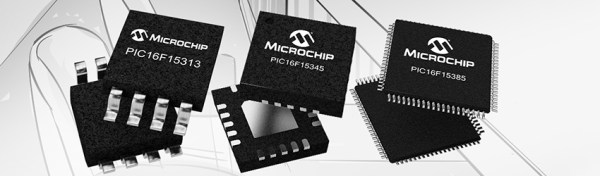
Over the last few years, we’ve seen projects and products slowly move from 8-bit microcontrollers to more powerful ARM microcontrollers. The reason for this is simple — if you want to do more stuff, like an Internet-connected toaster, you need more bits, more Flash, and more processing power. This doesn’t mean 8-bit microcontrollers are dead, though. Eight bit micros are still going strong, and this week Microchip announced their latest family of 8-bit microcontrollers.

The PIC16F15386 family of microcontrollers is Microchip’s latest addition to their portfolio of 8-bit chips. This family of microcontrollers is Microchip’s ‘everything and the kitchen sink’ 8-bit offering. Other families of PICs have included features such as a complementary waveform generator, numerically controlled oscillator, a configurable logic controller, power saving functionality and the extreme low power features, but never before in one piece of silicon.

This feature-packed 8-bit includes a few new tricks not seen before in previous Microchip offerings. Of note are power management features (IDLE and DOZE modes), and a Device Information Area on the chip that contains factory-calibrated data (ADC voltage calibration and a fixed voltage reference) and an ID unique to each individual chip.

As you would expect from a new family of PICs, the 16F15386 is compatible with the MPLAB Xpress IDE and the MPLAB Code Configurator, a graphical programming environment. The products in the family range from 8-pin packages (including DIP!) with 3.5kB of program Flash to 48-pin QFPs with 28kB of program Flash. The goal for Microchip is to provide a wide offering, allowing designers to expand their builds without having to change microcontroller families.

All of these chips can be sampled now, although the lower pin count devices won’t be available through normal means until next month.

Ask Hackaday: Is Owning A 3D Printer Worth It?

3D printers are the single best example of what Open Hardware can be. They’re useful for prototyping, building jigs for other tools, and Lulzbot has proven desktop 3D printers can be used in industrial production. We endorse 3D printing as a viable tool as a matter of course around here, but that doesn’t mean we think every house should have a 3D printer.

Back when Bre was on Colbert and manufacturing was the next thing to be ‘disrupted’, the value proposition of 3D printing was this: everyone would want a 3D printer at home because you could print plastic trinkets. Look, a low-poly Bulbasaur. I made a T-rex skull. The front page of /r/3Dprinting. Needless to say, the average consumer doesn’t need to spend hundreds of dollars to make their own plastic baubles when WalMart and Target exist.

The value proposition of a 3D printer is an open question, but now there is some evidence a 3D printer provides a return on its investment. In a paper published this week, [Joshua Pearce] and an undergraduate at Michigan Tech found a 3D printer pays for itself within six months and can see an almost 1,000% return on investment within five years. Read on as I investigate this dubious claim.

Continue reading “Ask Hackaday: Is Owning A 3D Printer Worth It?”

A Full Speed, Portable Apple //e

A while back, [Jorj] caught wind of a Hackaday post from December. It was a handheld Apple IIe, emulated on an ATMega1284p. An impressive feat, no doubt, but it’s all wrong. This ATapple only has 12k of RAM and only runs at 70% of the correct speed. The ATapple is impressive, but [Jorj] knew he could do better. He set out to create the ultimate portable Apple IIe. By all accounts, he succeeded.

This project and its inspiration have a few things in common. They’re both assembled on perfboard, using tiny tact switches for the keyboard. The display is a standard TFT display easily sourced from eBay, Amazon, or Aliexpress. There’s a speaker for terribad Apple II audio on both, and gigantic 5 1/4″ floppies have been shrunk down to the size of an SD card. That’s where the similarities end.

[Jorj] knew he needed horsepower for this build, so he turned to the most powerful microcontroller development board he had on his workbench: the Teensy 3.6. This is a 180 MHz ARM Cortex M4 running a full-speed Apple IIe emulator. Writing a simple 6502 emulator is straightforward, but Apple IIe emulation also requires an MMU. the complete emulator is available in [Jorj]’s repo, and passes all the tests for 6502 functionality.

The project runs all Apple II software with ease, but we’re really struck by how simple the entire circuit is. Aside from the Teensy, there really isn’t much to this build. It’s an off-the-shelf display, a dead simple keyboard matrix, and a little bit of miscellaneous circuitry. It’s simple enough to be built on a piece of perfboard, and we hope simple enough for someone to clone the circuit and share the PCBs.

Neural Nets And Game Boy Cameras

Released in 1998, the Game Boy camera was perhaps the first digital camera many young hackers got their hands on. Around the time Sony Mavica cameras were shoving VGA resolution pictures onto floppy drives, the Game Boy camera was snapping 256×224 resolution pictures and displaying them on a 190×144 resolution display. The picture quality was terrible, but [Roland Meertens] recently had an idea. Why not use neural networks to turn these Game Boy Camera pictures into photorealistic images?

Neural networks, deep learning, machine learning, or whatever other buzzwords we’re using require training data. In this case, the training data would be a picture from a Game Boy Camera and a full-color, high-resolution image of the same scene. This dataset obviously does not exist so [Roland] took a few close up head shots of celebrities and reduced the color to four shades of gray.

[Roland]'s face captured with the Game Boy Camera (left), and turned into a photorealistic image (right)
[Roland]’s face captured with the Game Boy Camera (left), and turned into a photorealistic image (right)
For the deep machine artificial neural learning part of this experiment, [Roland] turned to a few papers on converting photographs to sketches and back again, real-time style transfer. After some work, this neural network turned the test data back into images reasonably similar to the original images. This is what you would expect from a trained neural network, but [Roland] also sent a few pics from the Game Boy Camera through this deep machine artificial learning minsky. These images turned out surprisingly well – a bit washed out, but nearly lomographic in character.

We’ve seen a lot of hacks with the Game Boy Camera over the years. Everything from dumping the raw images with a microcontroller to turning the sensor into a camcorder has been done. Although [Roland]’s technique will only work on faces, it is an excellent example of what neural networks can do.

Hackaday Links: February 19, 2017

The ESP-32 is the Next Big Chip. This tiny microcontroller with WiFi and Bluetooth is the brains of the GameBoy on your keychain, emulates an NES, and does Arduino. There are ESP32 modules that are somewhat easy to acquire, but so far the bare chips have been unobtanium. Now you can buy them. One supplier has them for $3.60 USD/piece. That’s a lot of computational power, WiFi, and Bluetooth for not much money. What are you going to build?

What is the power of artisanal product videos? The argument for this trend cites [Claude C. Hopkins] and how he told consumers what no one else would tell them. In other words, if you and your competitors have product designers working on the enclosure, tell the consumer you have product designers working on the enclosure before your competitors do coughapplecough. In other words, marketing your product as ‘artisanal’ is simply telling consumers what all products in your market do, and this type of advertising is the easiest to create. See also: music with whistling, clapping, a ukulele, and a Fisher Price xylophone – it’s popular because it’s very easy to make.

Over on hackaday.io, [Michael Welling] is stuffing a BeagleBone in one of those mini Altoids tins. This build is based on the Octavo Systems OSD3358, otherwise known as the BeagleBone on a Chip. This is an absurdly small build, but surprisingly something we’ve seen before. Before the Octavo chip was released, [Jason Kridner] built a mini BeagleBone breakout for this chip in the mini Altoids form factor. [Jason] did it in Eagle, [Michael] is doing it in KiCad. Awesome work, and just what you need if you want Linux in your pocket.

Every month or so, Hackaday (or at least the Hackaday Overlords) hold events in LA, NYC, and San Francisco. These events are free, there’s usually pizza, and there’s always a speaker or two giving a talk on a very interesting topic. Waaaaaay back in July, we had the monthly Hardware Developers Didactic Galactic meetup in SF, with two great talks. [Jason Cerundulo], a CastAR engineer gave a talk about various ways of driving a LED. [Werner Johansson], a former Sony designer, talked about software-defined power supplies. There’s mention of a ‘transverter design’ which sounds like excellent Berman-era Trek technobabble but is really a power converter without a transformer. Both of these talks can be seen below.

Continue reading “Hackaday Links: February 19, 2017”