Optimizing AVR LCD Libraries

A while ago, [Paul Stoffregen], the creator of the Teensy family of microcontrollers dug into the most popular Arduino library for driving TFT LCDs. The Teensy isn’t an Arduino – it’s much faster – but [Paul]’s library does everything more efficiently.

Even when using a standard Arduino, there are still speed and efficiency gains to be made when driving a TFT. [Xark] recently released his re-mix of the Adafruit GFX library and LCD drivers. It’s several times faster than the Adafruit library, so just in case you haven’t moved on the Teensy platform yet, this is the way to use one of these repurposed cell phone displays.

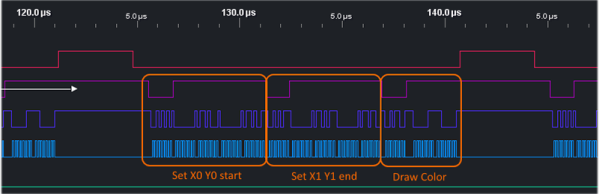
After reading about [Paul]’s experience with improving the TFT library for the Teensy, [Xark] grabbed an Arduino, an LCD, and an Open Workbench Logic Sniffer to see where the inefficiencies in the Adafruit library were. These displays are driven via SPI, where the clock signal goes low for every byte shifted out over the data line. With the Adafruit library, there was a lot of wasted time in between each clock signal, and with the right code the performance could be improved dramatically.

The writeup on how [Xark] improved the code for these displays is fantastic, and the results are impressive; he can fill a screen with pixels at about 13FPS, making games that don’t redraw too much of the screen at any one time a real possibility.


Intel Buys Altera For $16.7 Billion

Intel, CPU manufacturer we all know and love, will buy Altera, makers of fine FPGAs, for $16.7 Billion.

While most of the news about this deal focuses on the future of FPGAs in the datacenter, getting Altera IP into Intel fab houses is equally interesting. Intel is the current king of putting transistors on a piece of silicon, and Intel’s ability to put a massive amount of transistors on a chip means FPGAs will become even more capable – more gates, more blocks, and more memory. The most capable Altera FPGAs are being made with a 28nm process; Intel could theoretically double the number of gates with the 14nm process used on the new Broadwell CPUs. There is most likely someone at Xilinx tearing their hair out right now, chain-smoking next to a pot of coffee.

News of this buy out comes about a week after Avago bought Broadcom in the biggest semiconductor deal ever, and a few months after NXP and Freescale merged. Cash Rules Everything Around Semiconductors, it seems.

Hackaday Retro Edition: The RadioShack Roomba

A few years ago, Roombas — everyone’s favorite robotic trash can — graced the pages of Hackaday with reverence. There was nothing this little robot couldn’t do, save for going up stairs. Roomba hacks have died off since then, and these little trash cans have been swallowed up by dumpsters. It’s all very sad, really.

[Mike] has had one of these Roombas around for a while, sitting in a closet, waiting for someone to make use of it. He recently dug it out, looked it over, and watched the LEDs light up after troubleshooting a problem with the batteries. Then the problem was how to control it.

He had wanted to connect it to a VIC-20, but the handy serial port on the Roomba only accepted baud rates between 19.2k and 57.6k. The VIC-20, with the ancient 6522 VIA, could only bitbang a serial port up to 2400bps. Then the idea hit him. In his closet of ancient technology, [Mike] had a Tandy 102, a slightly upgraded TRS-80 Model 100 that could easily drive a serial port at 19.2k.

When it comes to a mobile retro robotics platform, [Mike] couldn’t have found a better computer. The Tandy 102 has a display, a BASIC interpreter, enough RAM to run a Roomba, and is powered by a few AA batteries. He did need a little bit of level conversion for the serial port, but a MAX232 took care of that easily.

With everything put together, [Mike] had a robot and a computer that is at least as good as the old Heathkit HERO robot. You can check out a video of the Tandy bot below.

Continue reading “Hackaday Retro Edition: The RadioShack Roomba”

Hackaday Prize Entry: A Braille Computer

As with all devices meant for a very small percentage of the population, computing equipment for the blind is very, very expensive. A Braille typewriter – a relatively simple machine that puts dots on a piece of paper – costs about $700 USD. Need a Braille interface for a computer? You can buy a 16-cell wide Braille output for $1600, and high-end models with an integrated keyboard go up to $5000.

For his Hackaday Prize entry, [Haydn Jones] is building a simpler and cheaper Braille computer. It’s not just a single line of text at a time; this computer will have a display that will output an entire page of Braille at a time.

The current solutions for a computer to Braille interface use small electromechanical cells for each character. That’s six individual pins for each character, multiplied by the number of cells on the display. Doing a full-page display with this type of mechanism, but [Haydn] has another idea. Instead of controlling each pin individually, all of the pins on the display will be controlled by a CNC-like mechanism. The pins themselves will be mechanical SR latches, better known as the mechanism in a ball point pen.

A display is only half of the IO of a computer, and for the input portion of his build, [Haydn] is also building a Braille keyboard. This doubles as a binary or hexadecimal keyboard, but the idea is very similar to a proper chorded Braille keyboard. It’s a simple enough build; just a few key switches and a microcontroller.


The 2015 Hackaday Prize is sponsored by:

Hackaday Links Column Banner

Hackaday Links: May 31, 2015

Back in the mid-70s, [Paul Horowitz] (who has an incredible Wikipedia entry, by the way) started teaching Physics 123 at Harvard. Simple electronic circuits, solving problems with silicon; simple stuff like that. His lecture and lab notes started getting a following, and after Xeroxing a few dozen copies, he realized he had written a book. It was The Art of Electronics, and Ladyada interviewed this master of hand drawn schematics. A great interview and great camera work, too.

Like hackathons? How about one at CERN? It’s happening October 2 through October 4. The aim this year is to have a humanitarian and social impact thanks to technology. The projects last year were very good; everything from cosmic ray detectors to a $10 inflatable fridge for field operations.

You want viral advertising for your movie? This is how you do viral advertising for your movie. It’s Hackerman’s Hacking Tutorials, and we’d really like to know how they did the 80s graphics with modern computers. It’s not like you can just go out and buy a Video Toaster these days…

Previously available only through group buys, the Flir Lepton module is now available at Digikey.

We have hit the singularity. We have stared into the abyss, and the abyss has stared into us. There was a kickstarter to fund a trailer for another, bigger kickstarter. Relevant xkcd right here.

The Tymkrs had a lamb roast, and what better way to do that than with a huge lathe? Put some charcoal on the ways, turn it at a low RPM, and eventually you’ll have a meal. Bonus points for the leaf blower manifold, a gold star for carving it with a sawzall.

More GPIOs For The ESP8266

The ESP8266 is an incredible piece of hardware; it’s a WiFi module controllable over a serial port, it’s five freaking dollars, and if that’s not enough, there’s a microcontroller on board. Until there’s a new radio standard, this is the Internet Of Things module.

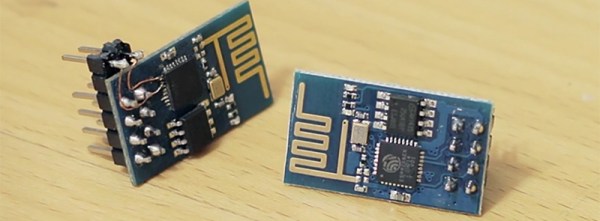
The most common version of the ESP, the -01 version, only has a 2×4 row of pins for serial, power, configuration, and two lines of GPIO. It’s a shame that module only has two GPIOs, but if you’re good enough with a soldering iron you can get a few more. It took a lot of careful soldering, but [Hugatry] managed to break out two more GPIOs on this tiny module.

According to [Hugatry] a lot of patience to solder those wires onto those tiny pads, but after finishing this little proof of concept he discovered a Russian hacker managed to tap into four extra GPIOs on the ESP8266-01 module (Google Translatrix).

As a proof of concept, it’s great, but there’s more than one ESP module out there. If you’re looking for a cheap WiFi module, check out the ESP-03, -04, or -07; they have nice castellated pins that are exceptionally easy to solder to.

Video below.
Continue reading “More GPIOs For The ESP8266”

Programmable Pump Keeps Its Stick On The Ice

Need to water your plants? Pump some coolant on a mill? Fill a watermelon with booze? Never fear, because the third greatest Canadian behind [Alan Thicke] and [Bryan Adams] is here with the solution to all your problems! It’s a cordless pump for desktop CNC, repair, and horticulture that automates daily chores and pumps out exact amounts of liquid.

[Chris], [AvE], Bright Idea Workshop, or, ‘that guy that records videos in his shop’ is rather well-known around these parts; we’ve seen him make an $80,000 gold-plated cutting fluid pot, a copper laminate desk, and recharge his cell phone with a car and a pencil. He’s very, very good at futzing around in his shop and the dialog is the closest YouTube will ever get to Click and Clack the Tappet Brothers, albeit without wheezing laughter.

The Kickstarter is for a rechargeable cordless pump, controlled by a microcontroller, that dispenses liquids of varying viscosity onto the item of your choice. It’s perfect for adding cooling to a drill press, watering plants, or something or everything involving beer.

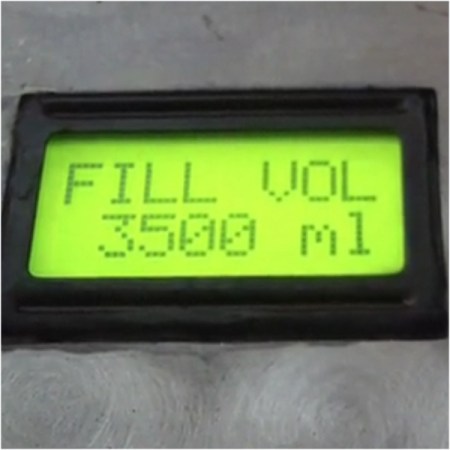
Details on the pump are a little sparse, but given the liquid never touches the pump we’re putting money on some type of peristaltic pump. Add volume measurement, programmable flow rate adjustment, a timer, and dispensing programmable volumes of liquid, and you’ve got something useful.

Thanks [Scott] for the tip.