Cracking Litter Box DRM

DRM on a specific brand of cat litter box has been cracked. In other news, DRM on cat litter boxes exists.

[Jorge] moved into a new apartment with a feline companion and wanted one of those fancy, auto-cleaning litter boxes. Apparently only one such device exists, the CatGenie. This ‘Rolls Royce of cat litter boxes’ uses little pieces of plastic granules as ‘functional medium’ that are scooped up, cleaned, and returned to use. These granules are washed with a cartridge full of fresh-smelling cleaning solution that comes in a container with an RFID tag. Yep, DRM’ed cat boxes. Welcome to the future.

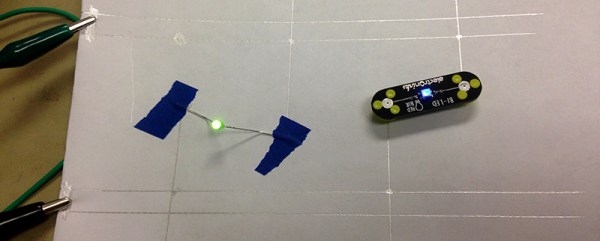
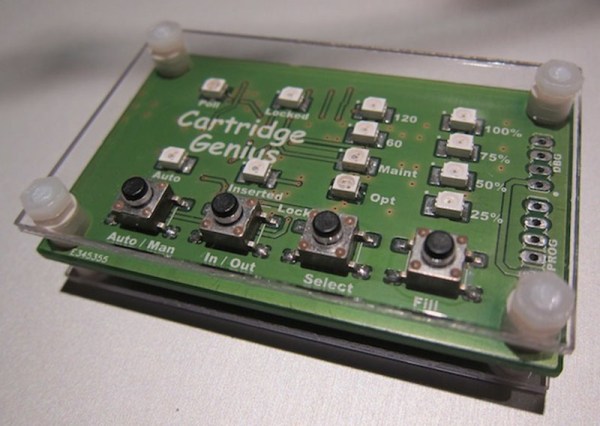
After cruising around the Internet, [Jorge] found a CatGenie community that has released open source firmware for a litter box and something called a CartridgeGenius, a drop-in replacement for the cartridge tag reader in the litter box. It simulates both the RFID tag and its reader, allowing any robotic litter box owner to select between 120 cycle cartridges, 60 cycle cartridges, a maintenance cartridge, and set the fill level of those cartridges.

Previously, [Jorge] was spending about $350 a year on the solution to clean these plastic granules, so in a few months this CartridgeGenius has already paid for itself.

ARM Pro Mini

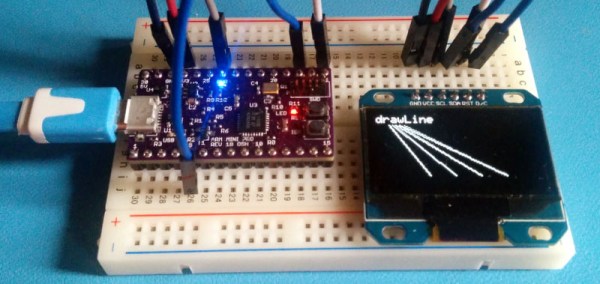
Slowly but surely, the age of 8-bit micros being the first tool anyone picks up is coming to an end, and we’re seeing more and more ARM dev boards in nifty, breadboard-friendly packages. [Zapta] thought he would throw his hat into the ring with the ARM Pro Mini, a tiny little board based on the ARM M0 microcontroller.

The ARM chip on this board is the NXP LPC11 with 64 kB of Flash, 12 kB of RAM, and just enough pins to make the whole endeavor worthwhile. The board itself is extremely simple, with just enough SMD parts to be annoying to hand solder.

All the nifty bonuses of ARM boards are available on the ARM Pro Mini, including drag and drop firmware over the USB port, support for single stepping and debugging, and the IDE is a single install with NXP Eclipse/LPCXpresso. Mbed is also supported, so it’s possible to use this board with no software installs when using the online Mbed IDE.

[Zapta] has put everything you need to build this board up on his Github, and has even done a few simple ‘getting started’ tutorials, including a cool little example with a graphics library and a small OLED.

Hackaday Links Column Banner

Hackaday Links: January 18, 2015

A little while ago, we complained that there aren’t many projects using the Microview, a very cool Arduino and OLED thing that might be just too big for a ring. [Johannes] answered the call with a slot car track timer. He’s using an infrared distance sensor to count off lap times for his slot car track and a mini thermal printer to print out the times. Video right here.

Too many cables in your freshman college dorm room? Here’s the solution.

Our Internet travels frequently take us to strange auctions (we’re still looking for a US Mail truck, btw), but this one takes the cake. 24kt gold plates that were flown in space for five and a half years weighing 6,015.5 grams (212.191 oz). At the current price of $1277.06/oz, this auction should go for $270,980 USD. I’m 99% sure this was part of the Long Duration Exposure Facility, but I have no clue why this much gold was flown. Surely they could have done the same amount of science with only a hundred thousand dollars worth of gold, right?

So here’s this, but this isn’t your everyday, “put an Arduino in a vibrator” crowdfunding campaign. No, they actually have some great tutorials. Did you know that a stroke sensor looks like shag carpeting? [Scott] tells us, “I believe the founders are all graduate students getting PhDs in something or other, starting a sex toy company on the side.” More power to ’em.

Speaking of dildonics, the guy who coined that term will be giving one of the keynotes at the Vintage Computer Festival East this year. Yes, we’ll be there in full force.

Tracking Power Usage With A Raspi

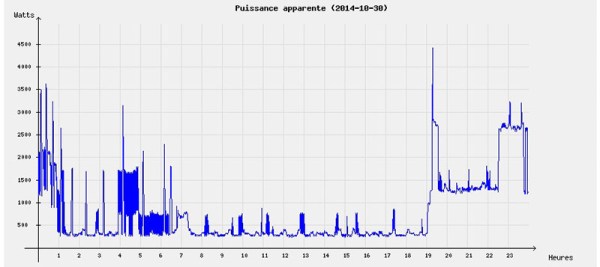
With tiny, Internet-connected computers everywhere these days, home automation is finally hitting it big. [Jelora] was looking for a few more home automation projects and realized his electric meter had a pair of ‘digital information outputs’. With a Raspberry Pi and a few bits of wire, he figured out how to read this digital output and put a log of his electricity consumption up on the web.

The digital output on [Jelora]’s meter is a bit odd; it’s 1200 bps, 7 bits per character, parity, with one stop bit. It’s also a 50 kHz AC signal for a binary ‘0’ and nothing for a binary ‘1’. To read this signal, [Jelora] is using a diode to throw out half the signal, a 6N138 optoisolator so the Pi isn’t connected directly to the meter, and a small cap to smooth out the signal. Simple, and it works.

This cleaned up signal is then connected to serial to USB chip and a PHP script scrapes the data every minute. The data received from the meter is stored in a data base along with a few other bits of information: if the meter is being charged peak or off-peak rates, and the price per kWh. All this is saved on an IDE hard drive (more reliable than the SD card, surprisingly), and a ‘electricity cost per day’ is plotted on a nifty graph and served up by the Raspberry Pi.

Circuit Plotting With An HP Plotter

Over the last few years we’ve seen a few commercial products that aim to put an entire PCB fab line on a desktop. As audacious as that sounds, there were a few booths showing off just that at CES last week, with one getting a $50k check from some blog. [Connor] and [Feiran] decided to do the hacker version of a PCB printer: an old HP plotter converted to modern hardware with a web interface with a conductive ink pen.

The plotter in question is a 1983 HP HIPLOT DMP-29 that was, like all old HP gear, a masterpiece of science and engineering. These electronics were discarded (preserved may be a better word) and replaced with modern hardware. The old servo motors ran at about 1.5A each, and a standard H-Bridge chip and beefy lab power supply these motors were the only part of the original plotter that were reused. For accurate positioning, a few 10-turn pots were duct taped to the motor shafts and fed into the ATMega1284p used for controlling the whole thing.

One of the more interesting aspects of the build is the web interface. This is a small JavaScript app that is capable of drawing lines on the X and Y axes and sends the resulting coordinates from a server to the printer. It’s very cool, but not as cool as the [Connor] and [Feiran]’s end goal: using existing Gerber files to draw some traces. They’re successfully parsing Gerber files, throwing out all the superfluous commands (drills, etc), and plotting them in conductive ink.

The final iteration of hardware wasn’t exactly what [Connor] and [Feiran] had in mind, but that’s mostly an issue with the terrible conductivity of the conductive ink. They’ve tried to fix this by running the pen over each line five times, but that introduces some backlash. This is the final project for an electrical engineering class, so we’re going to say that’s alright.

Video below.

Continue reading “Circuit Plotting With An HP Plotter”

Hackaday Retro Edition: Pen Computing

Although we’re well past the heyday of ‘pen computing’, and seemingly into a retro revival with laptops and tablets that come with Wacom styluses and digitizers, this doesn’t mean the pen computers of old weren’t useful. While they were mostly used for industrial applications, they were useful and some of the first practical applications of touch screen displays.

[Jason] got his hand on one of these ruggedized handheld PCs – specifically, an Itronix T5200. This three-pound mini notebook runs Windows CE Handheld PC Edition 3.01. The specs include a 74MHz RISC processor, 16 MB of RAM, 16MB of Flash, and a 7.3 inch monochrome touch screen with 640×240 resolution. It’s odd and old: when closed, it’s over two inches thick. You’ll be hard pressed to find a modern laptop that thick. [Jason]’s hardware is a pre-production version.

Unlike a lot of retro submissions that have somehow managed to pull up the Hackaday Retro Edition on old hardware, this machine actually has a browser. It’s old, it’s clunky, but it works. There are three options for getting this old computer up on the Internet – either IrDA, an RJ11 modem port, or RS232. [Jason] didn’t tell us which port he used to load up the retro edition, but he did send in a few pictures. You can check those out below.

Continue reading “Hackaday Retro Edition: Pen Computing”

Twisted String Actuators

[Travis] tells us about a neat actuator concept that’s as old as dirt. It’s capable of lifting 7kg when powered by a pager motor, and the only real component is a piece of string.

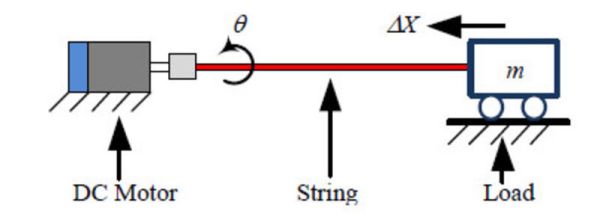
The concept behind the twisted string actuator, as it’s known to academia, is as simple as putting a motor on one end of a piece of string, tying the other end off to a load, and putting a few twists in the string. It’s an amazingly simple concept that has been known and used for thousands of years: ballistas and bow-string fire starters use the same theory.

Although the concept of a twisted string actuator is intuitively known by anyone over the age of six, there aren’t many studies and even fewer projects that use this extremely high gear ratio, low power, and very cheap form of linear motion. A study from 2012 (PDF) put some empirical data behind this simple device. The takeaway from this study is that tension on the string doesn’t matter, and more strands or larger diameter strands means the actuator shrinks with a fewer number of turns. Fewer strands and smaller diameter strands take more turns to shrink to the same length.

As for useful applications of these twisted string actuators, there are a few projects that have used these systems in anthropomorphic hands and elbows. No surprise there, really; strings don’t take up much space, and they work just like muscles and tendons do in the human body.

Thanks [ar0cketman] for the link.