THP Semifinalist: OSHWatch

No, it’s not a finely crafted wrist accessory from Cupertino, but [Jared]’s OSHWatch, but you’re actually able to build this watch thanks to an open design and reasonable, hand-solderable layout.

Built around a case found on DealExtreme that looks suspiciously similar to enclosures meant to hold an iPod Nano, [Jared]’s smartwatch includes a 128×128 RGB OLED display, magnetometer, accelerometer, Bluetooth 4.0 transceiver, and a lithium-ion charger and regulator circuit. Everything is controlled with a PIC24, which should mean this watch has enough processing power to handle anything a watch should handle.

As for the UI and what this watch actually does [Jared] is repurposing a few Android graphics for this watch. Right now, the watch can display the time (natch), upcoming appointments on his schedule, accelerometer and magnetometer data, and debug data from the CPU. It’s very, very well put together, and repurposing an existing watch enclosure is a really slick idea. Videos below.


SpaceWrencherThe project featured in this post is a quarterfinalist in The Hackaday Prize.

Continue reading “THP Semifinalist: OSHWatch”

Hackaday Links: September 28, 2014

hackaday-links-chain

Kyocera is vastly expanding their product lineup with the Shop Sink 3530. The perfect addition to your copiers, fax machines, and laser printers.

About a year and a half ago and with objections from the editorial staff, we did a Top 10 hacking fails in movies and TV post. The number one fail is, “Stupid crime shows like NCIS, CSI, and Bones.” A new show on CBS just topped this list. It’s named Scorpion, and wow. Dropping a Cat5 cable from an airplane doing an almost-touch-and-go because something is wrong with the computers in the tower. Four million adults age 18-49 watched this.

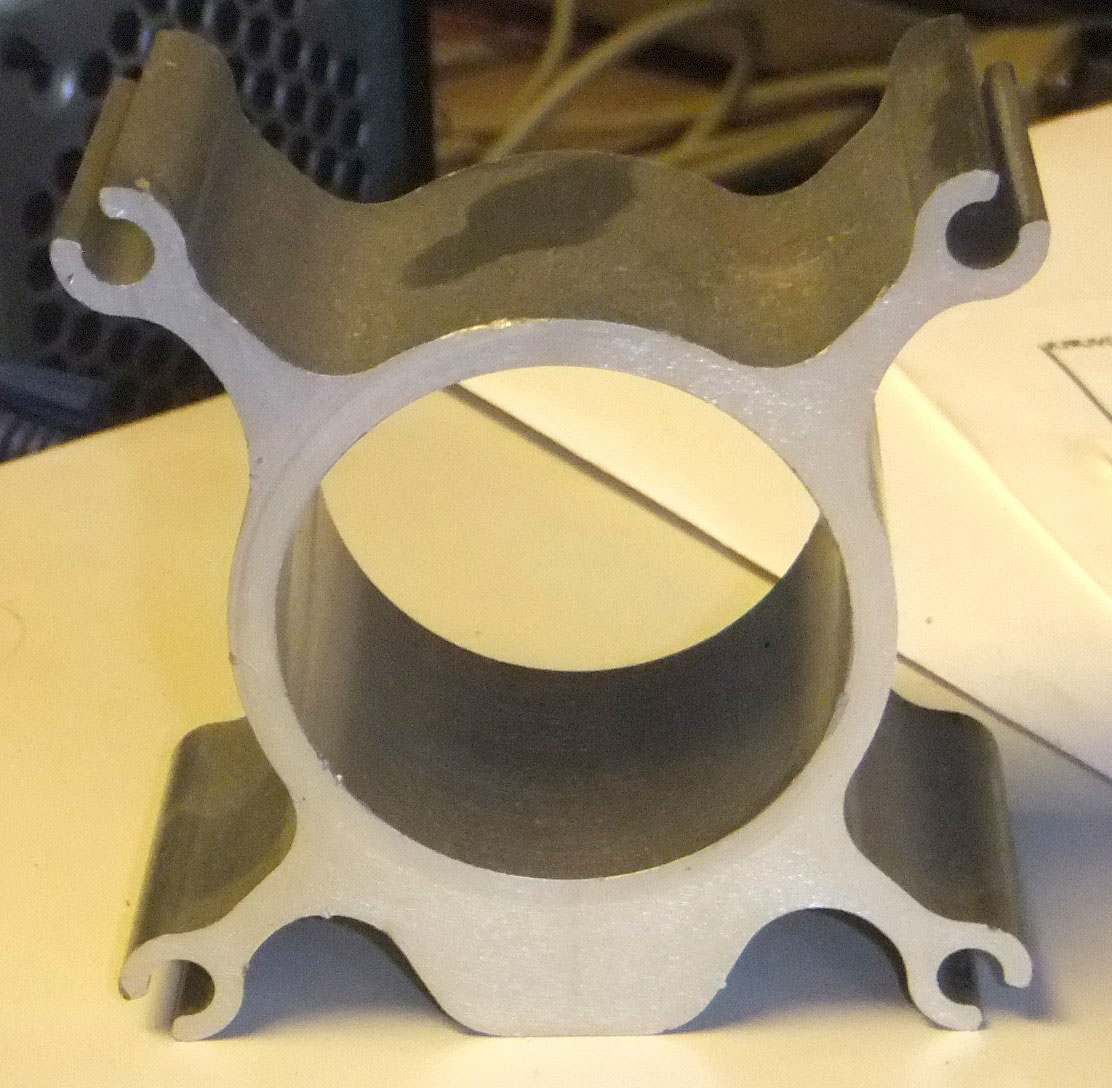
thing[Derek] found something that really looks like the Hackaday logo in a spacer of some kind. It’s been sitting on his shelf for a few months, and is only now sending it in. He picked it up in a pile of scrap metal, and he (and we) really have no idea what this thing is. Any guesses?

[Sheldon] has a teardown of a vintage voltage and current standard. Just look at those hand drawn traces on a single sided board. Beautiful.

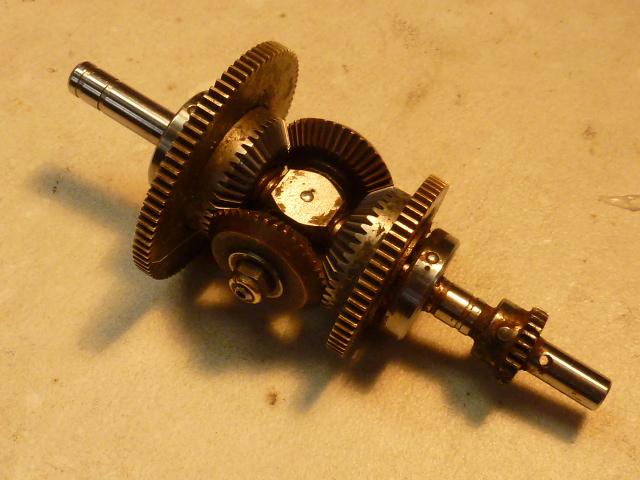
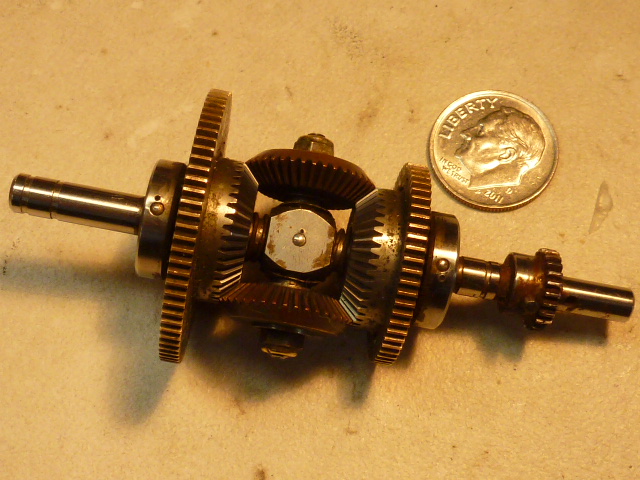
[Art] has another, ‘what is this thing’. He has two of them, and he’s pretty sure it’s some sort of differential, but other than that he’s got nothing. The only real clue is that [Art] lives near a harbor on the N. Cali coast. Maybe from a navigation system, or a governor from a weird diesel?

So you have a Kinect sitting on a shelf somewhere. That’s fine, we completely understand that. Here’s something: freeze yourself in carbonite. Yeah, it turns out having a depth sensor is exactly what you need to make a carbonite copy of yourself.

THP Semifinalist: Solar Energy System

Building a solar power installation isn’t as simple as buying a few panels, wiring them up to a battery, and putting an inverter in the mix. To get the most out of your pricey panels, you’ll want to look at something called Maximum Power Point tracking. Solar panels have an IV curve, and this changes with how much sunlight they’re getting. To get the most out of a set of cells, you need make sure you’re drawing the maximum amount of power out of your cells.

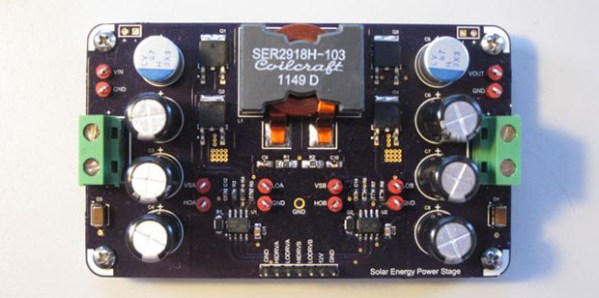
[Nathaniel]’s Solar Energy Generator does just that. It can handle up to 500 Watts, sucks power down from a bank of solar cells and spits that out to a battery. That’s not everything; the project also has a microcontroller for measuring and displaying all the pertinent info, and some terminals to plug in a few DC loads.

While the Solar Energy Generator is designed for off the grid applications, this could easily augment a home installation on the cheap. If you want more than 500 Watts or so, you’ll want to look at a larger controller, but for anything under that, [Nathan] has you covered.

Videos below.


SpaceWrencherThe project featured in this post is a quarterfinalist in The Hackaday Prize.

Continue reading “THP Semifinalist: Solar Energy System”

‘Duinos And VR Environments

At the Atmel booth at Maker Faire, they were showing off a few very cool bits and baubles. We’ve got a post on the WiFi shield in the works, but the most impressive person at the booth was [Quin]. He has a company, he’s already shipping products, and he has a few projects already in the works. What were you doing at 13?

[Quin]’s Qduino Mini is your basic Arduino compatible board with a LiPo charging circuit. There’s also a ‘fuel gauge’ of sorts for the battery. The project will be hitting Kickstarter sometime next month, and we’ll probably put that up in a links post.

Oh, [Quin] was also rocking some awesome kicks at the Faire. Atmel, I’m trying to give you money for these shoes, but you’re not taking it.

[Sophie] had a really cool installation at the faire, and notably something that was first featured on hackaday.io. Basically, it’s a virtually reality Segway, built with an Oculus, Leap Motion, a Wobbleboard, an Android that allows you to cruise on everyone’s favorite barely-cool balancing scooter through a virtual landscape.

This project was a collaboration between [Sophie], [Takafumi Ide], [Adelle Lin], and [Martha Hipley]. The virtual landscape was built in Unity, displayed on the Oculus, controlled with an accelerometer on a phone, and has input with a Leap Motion. There are destructible and interactable things in the environment that can be pushed around with the Leap Motion, and with the helmet-mounted fans, you can feel the wind in your hair as you cruise over the landscape on your hovering Segway-like vehicle. This is really one of the best VR projects we’ve ever seen.

THP Semifinalist: A Robotic Lawn Mower

For all the Roombas in the world, you have to wonder why robotic lawn mowers aren’t more common. Sure, you can go out and buy one, but mowing the typical suburban yard is a piece of cake for a robot; there aren’t stairs, there are relatively few obstacles, and a boundary wire system is much simpler than simply bouncing into things like an iRobot.

[Schuhumi]’s autoCut is the only household robot to make the semifinalists in The Hackaday Prize. Underneath, this bot is electric, has fully automatic operation, and even has a motor to change the height of the blades. The blades are actually designed more like a stringless weedwacker; the blades pivot back when they encounter a hard obstacle, although this safety cage is a really good idea

Instead of doing the random ‘bump and turn’ algorithm found in a roomba, there’s a lot of thought put into navigation with this bot. [schuhumi] is using ultrasonic navigation that triangulates the position of the bot in a yard. That’s a great idea; there’s no need to waste time or power rolling over what the bot has already cut.

You can check out [schuhumi]’s overview video and a demo below.


SpaceWrencherThe project featured in this post is a quarterfinalist in The Hackaday Prize. 
Continue reading “THP Semifinalist: A Robotic Lawn Mower”

Third Person Skydiving

GoPros were invented for a few reasons, and skydiving is right at the top of that list. You’ll be hard pressed to find a regular skydiver that doesn’t own at least one of the little cameras, and there are a few examples of helmets with three or four GoPros tacked on.

This is an entirely new application. Yes, you can now film yourself skydiving with a third person view.

[Jason] hacked together this camera rig in an hour by strapping a GoPro on a Nerf Vortex football, tying a length of paracord to the camera mount, and connecting the other end to a hip ring on the parachute harness. It took three flights to get the canopy in the camera’s field of view, but the results are spectacular. It’s a tad bit unstable when turning, but the fins on the Nerf football make for a very, very stable shot.

[Jason] isn’t jumping out of a plane with this contraption already dangling underneath him; the football, camera, and paracord rig isn’t launched until the canopy fully deploys. It’s perfectly safe, but we’ll expect someone to get the idea of strapping a keychain camera to their pilot chute soon.

A Description Of Maddening Battery Terminology

Once again, [Afroman] is here for you, this time breaking down electrolyte and the terminology behind batteries.

Volts and Amps are easy mode, but what about Amp hours? They’re not coulombs per second hours, because that wouldn’t make any sense. An Amp hour is a completely different unit podcast, where a 1Ah battery can supply one amp for one hour, or two amps for 30 minutes, or 500 mA for two hours.

Okay, what if you take two batteries and put them in series? That would double the voltage, but have the same Ah rating as a single cell. Does this mean there is the same amount of energy in two batteries as what is found in a single cell? No, so we need a new unit: the Watt hour. That’s Volts times Amp hours, or more incorrectly, one joule per second hour.

Now it’s a question of the number of cells in a battery. What’s the terminology for the number of cells? S. If there are three cells in a battery, that battery has a 3S rating. You would think that C would be the best letter of the alphabet to use for this metric, but C is entirely different. Nothing here makes any sense at all.

What is C? That’s related to the number of amps a battery can discharge safely. If a 20C battery can discharge 2200mAh, it can deliver a maximum current of 44 A, with 20C times 2.2Ah being 44A.

So there you go. A complete description of something you can’t use logic and inference to reason through. Video below.

Continue reading “A Description Of Maddening Battery Terminology”