Mood Lighting With LEDs And An Arduino

Regular candles can be awfully boring at times. They can only produce one color and the flicker is so… predictable. They can’t even be controlled by an infrared remote control, not to mention the obvious fire hazard. Now, however, [Jose] has come up with an LED candle that solves all of these problems. (Original link to the project in Spanish.)

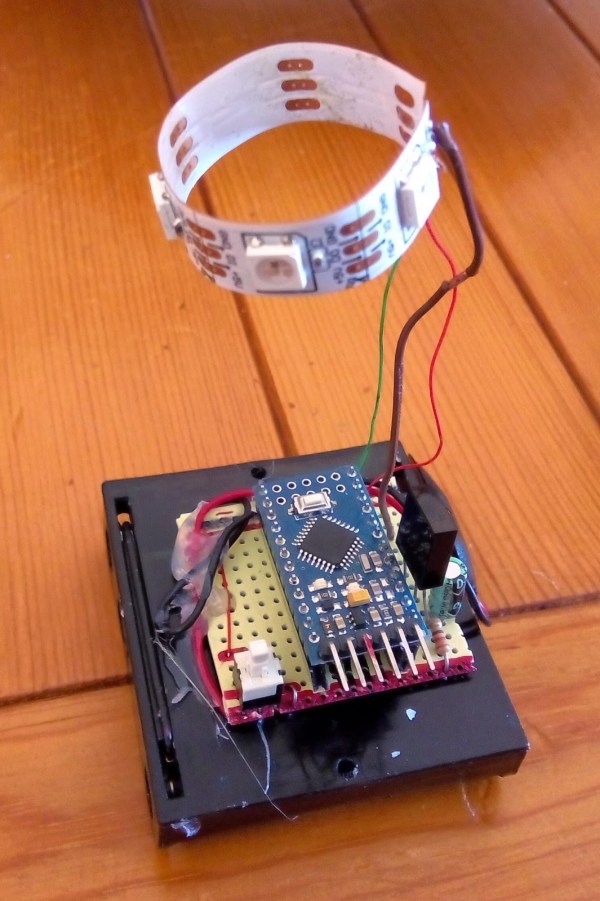
The heart of the project is an Arduino Pro Mini, which is especially suited for this project because of its size. [Jose] put the small form-factor microcontroller in the base of a homemade wax enclosure and wired it to a Neopixel WS2812b LED strip. The strip can produce any color, and has some programmed patterns including flicker, fade, rainbow, and fire.

The artificial candle is controlled with an infrared remote control, and all of the code for the project is available on the project site if you want to build your own. [Jose] has been featured here before for his innovative Arduino-driven RGB lighting projects, and this is another great project which builds on that theme!


Infrared-controlled Light Switch

If you’re looking for your first electronics project, or a project to get someone else started in electronics, [Vadim] has you covered. Back when he was first starting out in electronics he built this infrared-controlled light switch that works with a standard TV remote control.

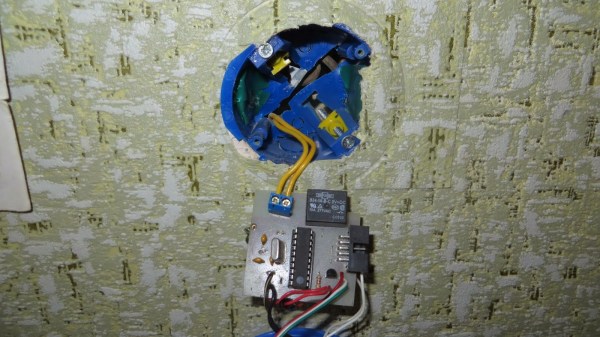
[Vadim]’s first few projects ended up as parts for other projects after they were built, so he wanted to build something useful that wouldn’t ultimately end up back in the parts drawer. The other requirements for the project were to use a microcontroller and to keep it simple. [Vadim] chose an ATtiny2313 to handle the RC-5 IR protocol and switch the light.

The circuit still has a switch to manually control the lights, preserving the original functionality of the light switch. The rest of the design includes a header for programming the board and another header for tying into the high voltage lines. This is a great project for anyone who knows what they’re doing with mains power but is just getting started with microcontrollers. If properly designed and implemented you’ll never stumble across a room to turn the lights out again!

Perhaps mixing high and low voltages on the same circuit board doesn’t spark your fancy or you can’t modify the light switch in your place of residence? Check out this mechanically-switched light switch.


Master Clock Keeps Time For All Other Clocks

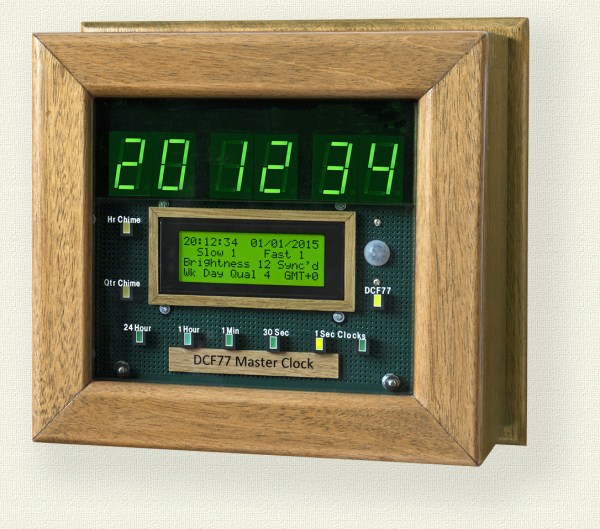
[Brett] just finished construction and long-term testing of this extremely accurate timepiece. It keeps such great time by periodically syncing with the atomic clock in Mainflingen, Germany.

The core of the project is an ATMega328 which uses the new DCF77 library for decoding the signal broadcast by an atomic clock. The libraries written by Udo Klein significantly increase the noise tolerance of the device reading the signal, but they will not work with any project that use a resonator rather than a crystal.

In the event of a complete signal loss from the atomic clock, the micro driving the clock also has a backup crystal that can keep the clock running to an accuracy of within 1 second per day. The clock can drive slave clocks as well, using pulses with various timings depending on what [Brett] needs them to do. The display is no slouch either: six seven-segment displays show the time and an LCD panel reads out data about the clock. It even has chimes for the hour and quarter hour, and is full of many other features to boot!

One of the most annoying things about timekeeping is daylight savings time corrections, and this clock handles that with a manual switch. This can truly take care of all of your timekeeping needs!

Ping Pong For The IT Office

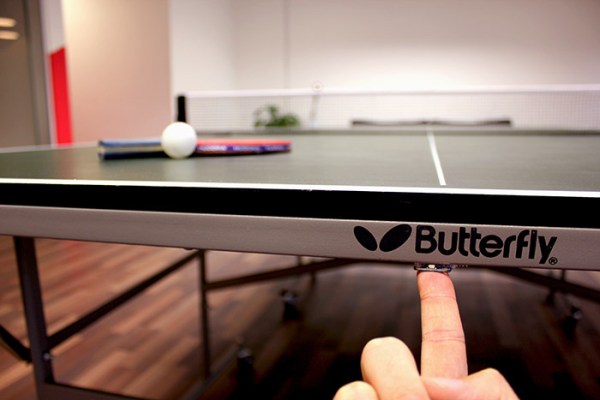
The office environment over at [Adam]’s place of employment has recently become one of the many IT-related offices with a ping pong table, a cliché that he readily points out. However, [Adam] and the other folks at the office decided to step up their game a little bit by making this automated ping pong table.

The table first keeps track of the players with specialized RFID tags that are placed in the handle of the paddles. The paddles are unique to each player, and when they are swiped past a reader on the table the scoring system registers the players at the table.

Small capacitive touch sensors on the underside of the table allow the players to increment their score when a point is made. The scoreboard is a simple but a very well-polished interface that has audio cues for each point. The system is also able to keep track of the winners and the overall records are tracked, allowing for office-wide rankings.

This is the best table-related game hack since the internet-connected foosball table, and should be welcome in any office for some extra break room fun at work! All of the code is available on the project site.

Arduino-Powered Alarm System Has All The Bells And Whistles

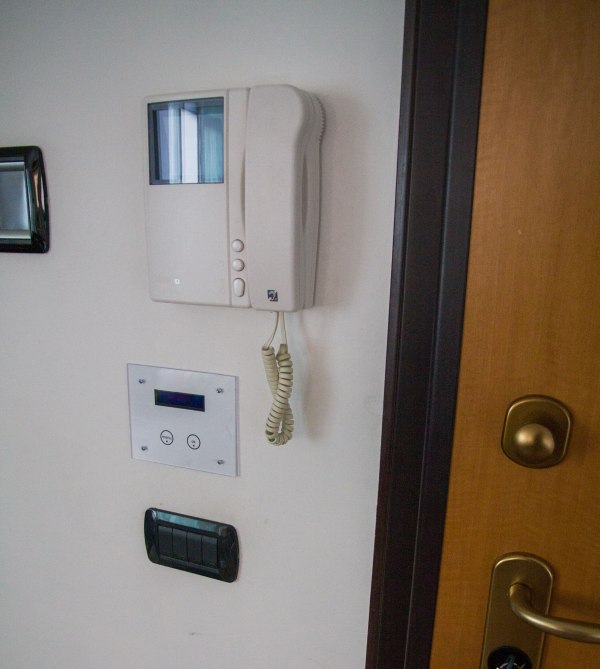
Put aside all of the projects that use an Arduino to blink a few LEDs or drive one servo motor. [IngGaro]’s latest project uses the full range of features available in this versatile microcontroller and has turned an Arduino Mega into a fully-functional home alarm system.

The alarm can read RFID cards for activation and control of the device. It communicates with the front panel via an I2C bus, and it can control the opening and closing of windows or blinds. There is also an integrated GSM antenna for communicating any emergencies over the cell network. The device also keeps track of temperature and humidity.

The entire system can be controlled via a web interface. The Arduino serves a web page that allows the user full control over the alarm. With all of that, it’s hard to think of any more functionality to get out of this tiny microcontroller, unless you wanted to add a frickin’ laser to REALLY trip up the burglars!

Baby’s Room Gets A Palace With This CNC Castle Decoration

castle decoration

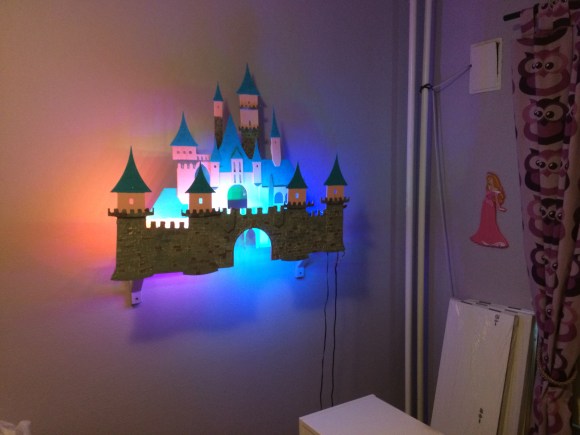
[Vegard] and his wife were expecting a baby girl, and decided to build a castle for their new daughter. As a prototyping geek with his own CNC machine in his apartment, he decided to take to Google Sketchup to design this well-crafted castle decoration for his daughter’s room.

The first challenge was figuring out what the castle would look like. [Vegard] had never been to Disney Land or World, and so had never actually seen any of the fairy-tale castles in real life. After experimenting with some paper versions, he settled on a design which incorporates multiple layers and can house lights within them.

The next step was to cut the final version on the CNC machine, then sand and paint the parts. After figuring out a way to mount the castle to the wall, some LEDs were added for effect, driven by an Arduino. The final version looks pretty good!

Hacking your kids’ room is great fun, and you get to keep making new stuff to remain age appropriate. We bet [Vegard] can’t wait until she’s old enough to enjoy a marble-run that wraps the entire room. In the mean time he can work on a classic robot stroller.

Foosball Now Part Of The Internet Of Things

internet of things foosball

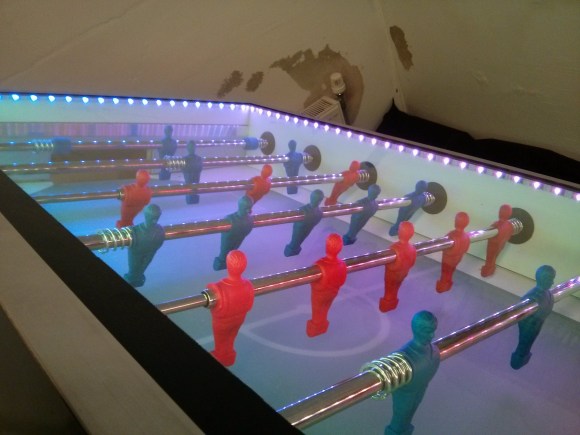
At a local LAN event, [Thomas] wanted a way to easily show off the capabilities from some of the Internet-of-Things devices everyone keeps talking about. His idea was to build an internet-connected foosball/table soccer/table football table to show off some hardware and software.

[Thomas]’s table automates almost everything that is part of the great sport of foosball. Once a user logs in using the barcode scanner, the game begins by deploying the tiny ball with parts salvaged from a Roomba. The table uses infrared sensors to detect the ball. Once a goal is scored, it is posted online where anyone can see the current score and a history of all of the games played on the table.

There are a few other unique touches on the foosball table, such as the LED lighting, touch screen displays, and an STM32-E407 ARM processor to tie the whole machine together.

For more information including the source code and demonstrations, check out [Thomas]’s project blog. And, if you get lonely, perhaps you can try the robot foosball player!