DIY HEPA Fan Clears The Stale Office Air

Although it would be nice, we can’t all work from home. If you have to spend the day in close quarters with other people, you might want more protection than just a mask and sanitizer. Check out [jshanna]’s DIY HEPA filtering fan — it looks like a breeze to build and uses commonly-available parts plus a few 3D-printed pieces to put it all together.

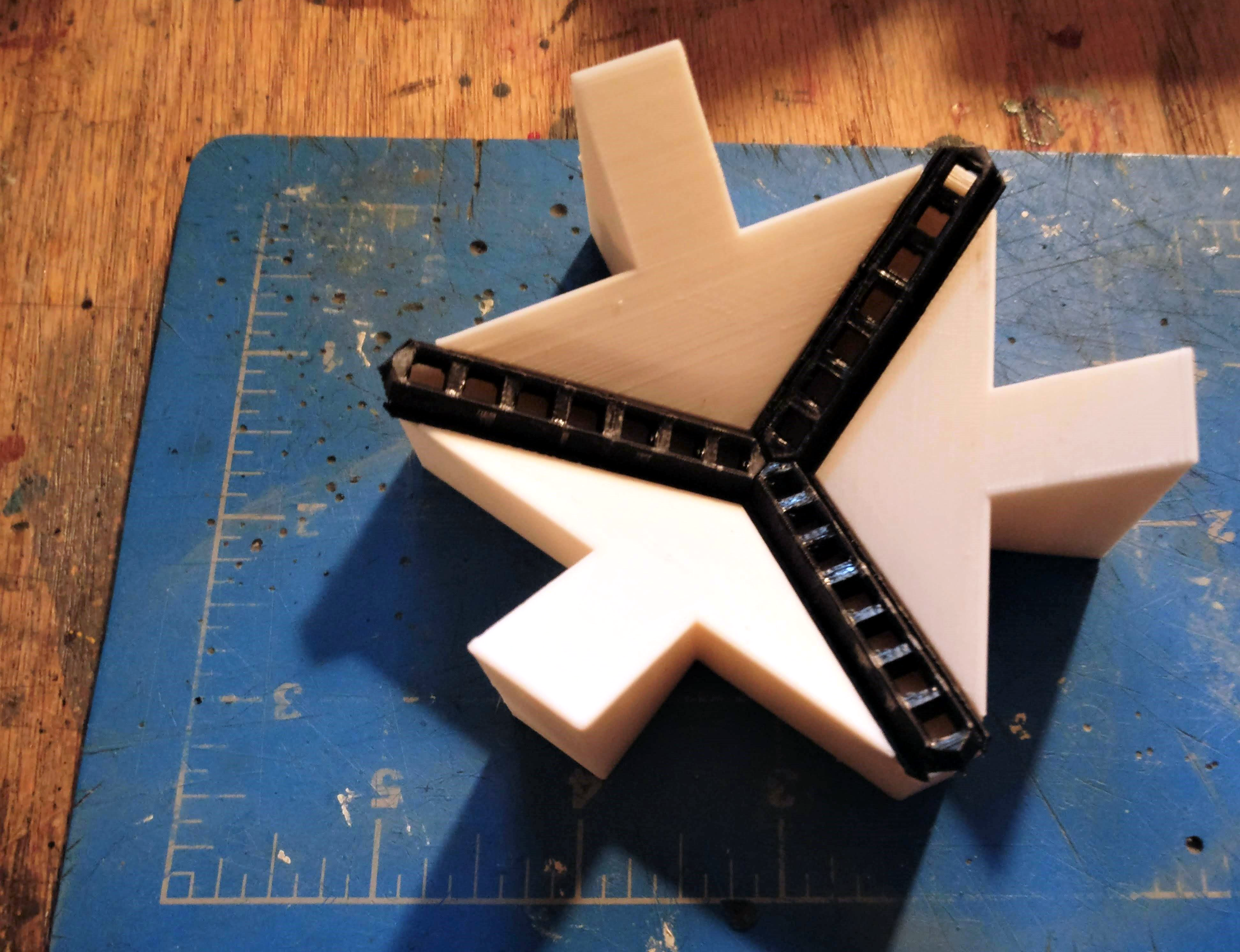
The basis of this attractive and useful office must-have is a muffin fan from Amazon that has an optional variable speed controller. A long threaded rod runs up the center of the HEPA filter, so it attaches kind of like a lampshade. The fan draws up air from underneath and blows it upward through the filter and out into the room. Whenever the HEPA filter gets dirty, just take it out and wash it.

Are you still buying disposable masks? You might save money in the long run by making your own.

Solar Safety Bag Lights Up The Night, Charges Your Phone

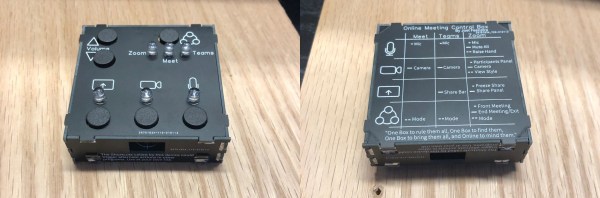
Spend enough time riding a bike, and chances are good that you’ll start carrying a few tools with you. Even if you don’t, you’re probably going to use a bag to carry something along, so why not make that bag do triple duty? This convertible backpack/tote bag can charge your phone and provide safety lighting for nighttime rides. The design lends itself nicely to turn signals, too.

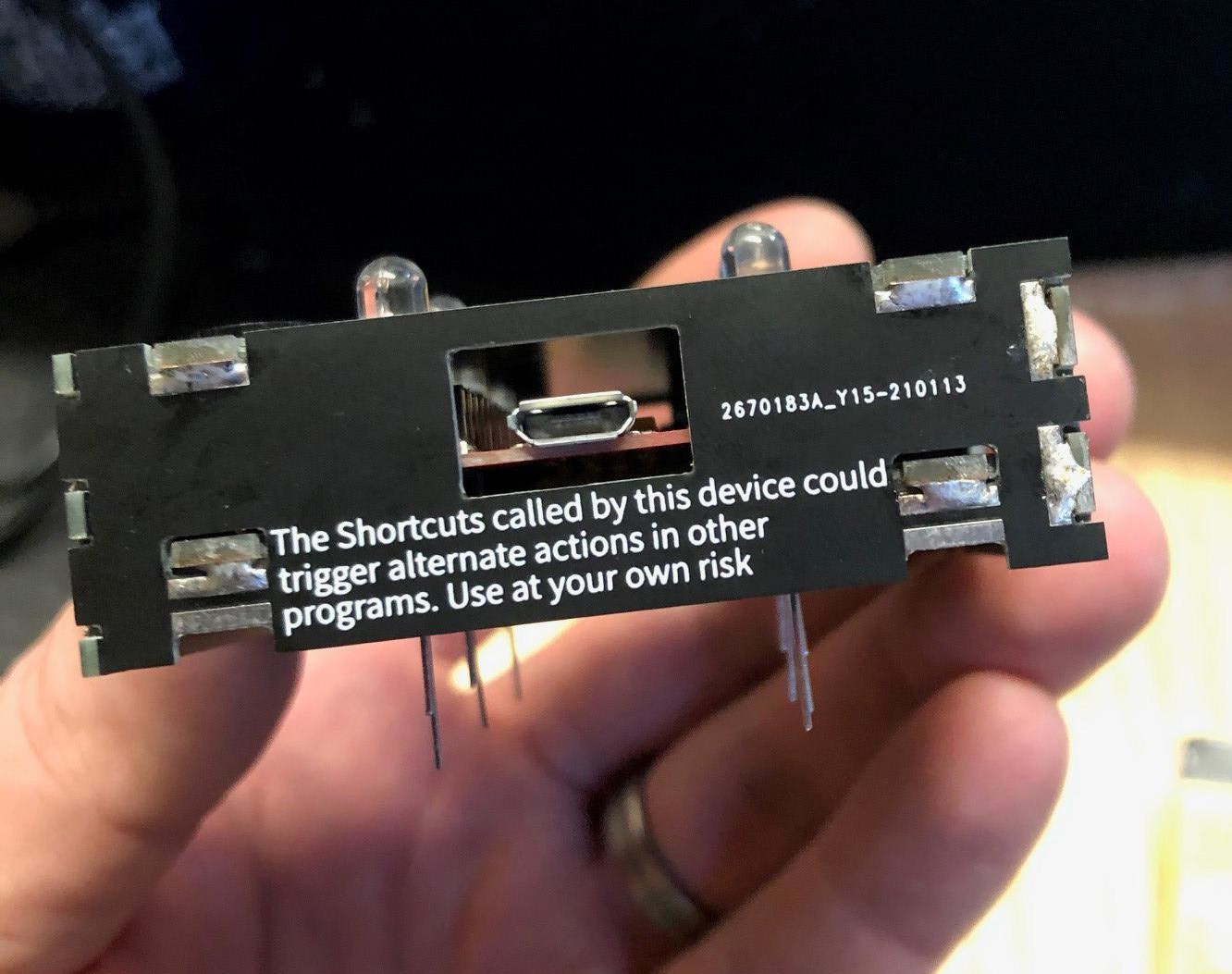
This bag was designed to show off the capabilities of Loomia, a line of prototyping parts made with e-textiles and other flexible applications in mind. It can be sewn, fused, or adhered to various substrates including fabric and wood. [AmpedAtelier] is using a Beetle microcontroller to control RGB LED strips using an illuminated Loomia soft switch on the strap. The switch is wired to the microcontroller through Loomia busses running through the strap.

Although Loomia’s site has a deep dive into the capabilities of their technology, it isn’t exactly open source. If that’s what you’re after, take a look at PolySense, which uses piezoresistive dye to create textile sensors.

Handheld Farkle Really Sparkles

Farkle is a classic dice game that only requires 6 dice and a way to write down scores based on the numbers rolled. Even so, this type of game isn’t inherently portable — it would be fairly difficult to play on a road trip, for instance. [Sunyecz22] decided that Farkle would make an excellent electronic game and got to work designing his first PCB.

This little game has everything you could want from a splash screen introduction to a handy scoring guide on the silkscreen. After choosing the number of players, the first player rolls using the momentary button and the electronic dice light up to indicate what was rolled. As long as the player rolled at least one scoring die, they can take the points by selecting the appropriate die/dice with the capsense pads, and either pass or keep going. The current player’s score is shown on the 7-segment, and the totals for each player are on the OLED screen at the bottom.

The brains of the operation is an Arduino Pro Mini. It controls two MAX7219s that drive the 42 LEDs plus the 7-segment display. A game like this is all in the code, and lucky for us, [Sunyecz22] made it available. We love how gorgeous the glossy 3D printed enclosure looks — between the glossy finish and the curved back, it looks very comfortable to hold. In the future, [Sunyecz22] plans to make a one player versus the computer mode. Check out the demo and walk-through video after the break.

The capsense modules are a great touch, but some people want a little more tactility in their handheld games. We say bring on the toggle switches.

Continue reading “Handheld Farkle Really Sparkles”

On-Air Sign Helps Keep Your Broadcasts G-Rated

Like many of us, [Michael] needed a way to let the family know whether pants are required to enter the room — in other words, whenever a videoconference is in progress. Sure he could hang a do not disturb sign, but those are easy to forget. There’s no need to worry about forgetting to change status because this beautiful wall-mounted sign can be controlled with Alexa.

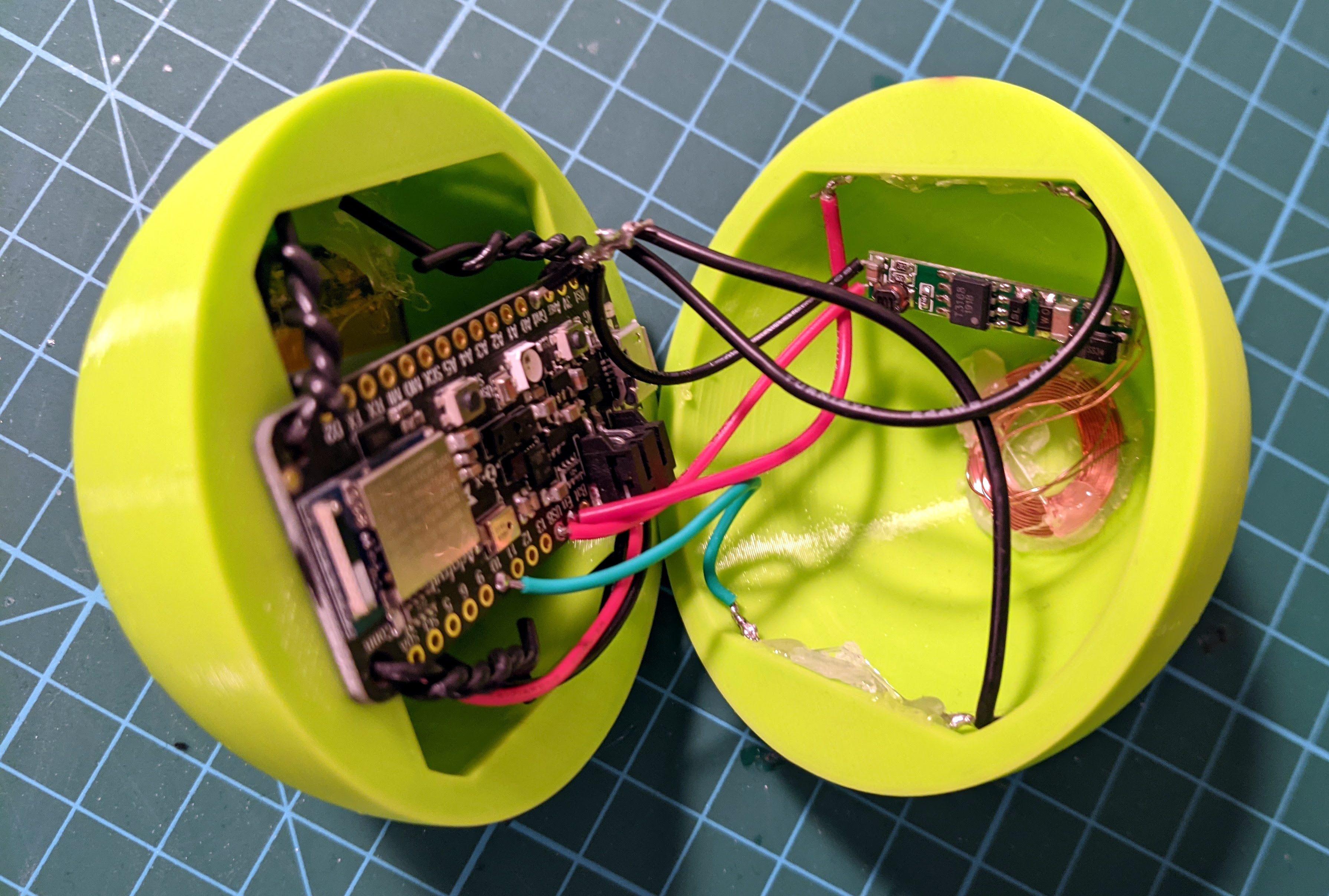
Inside the gorgeous box made from walnut, curly maple, and oak is an ESP32, some RGB LEDs, and three MOSFETs. [Michael] is using the fauxmoESP library to interface the ESP32 with Alexa, which emulates a Phillips Hue bulb for the sake of using a protocol she already knows. [Michael] can change the color and brightness percentage with voice commands.

The sign is set up as four different devices — one default, and one for each color. Since talking to Alexa isn’t always appropriate, [Michael] can also change the color of the LEDs using sliders on a website that’s served up by the ESP. Check out the full build video after the break.

Need something quick and dirty that works just as well? Our own [Bob Baddeley] made a status indicator that’s simple and effective.

Continue reading “On-Air Sign Helps Keep Your Broadcasts G-Rated”

DIY LEGO Record Cleaner Is Revolutionary

There are many schools of thought when it comes to keeping vinyl records clean. It’s a ritual that’s nearly as important as the one that comes after it — queuing up the record and lowering the needle. We’ve seen people use everything from Windex and microfiber towels to ultrasonic cleaning machines that cost hundreds or even thousands. In the midst of building a beefier ultrasonic record cleaner and waiting for parts, [Baserolokus] looked around at all the LEGO around the house and decided to build a plastic prototype in the interim.

The idea behind ultrasonic cleaning is simple — high-frequency sound waves pumped through distilled water produce tons of tiny bubbles. These bubbles gently knock all the dirt and grime out of the grooves without using any brushes, rags, or harsh cleaners. [Baserolokus] built two pieces that hang on the edge of a washtub. On one side, a Technic motor spins the record at just under one RPM, it spins against a 3D printer wheel embedded in the other side. Check it out in action after the break.

Cleaning your vinyl is a great first step, but you might be ruining your records with a sub-par turntable. Take a deep dive with [Jenny List]’s thorough primer on the subject.

Continue reading “DIY LEGO Record Cleaner Is Revolutionary”

Remote Control Robot Deals Dominoes

Oh, dominoes — the fun of knocking them down is inversely proportional to the pain of setting them all up again. [DIY Machines] is saving loads of time by automating the boring part with a remote control domino-laying machine. If only it could pick them back up.

This machine can be driven directly over Bluetooth like an R/C car, or programmed to follow a predetermined path via Arduino code. Here’s how it works: an Arduino Uno drives two servos and one motor. The 1:90 geared motor drives the robot around using a 180° servo to steer. A continuous servo turns the carousel, which holds nearly 140 dominoes. We love that the carousel is designed to be hot-swappable, so you can keep a spare ready to go.

[DIY Machines] really thought of everything. Every dozen or so dominoes, the machine leaves a gap in case one of the dominoes is tipped prematurely. There are also a couple of accessories for it, like a speedy domino loading stick and a fun little staircase bridge to add to your domino creations. Though all the machine files are freely available, [DIY Machines] requests a small donation for the accessories files. Check out the complete build video after the break, followed by a bonus video that focuses on upgrading the machine with an HM10 Bluetooth module for controlling it directly with a phone.

This certainly isn’t the first domino-laying device we’ve seen, though it might be the most accessorized. [Matthias Wandel]’s version uses only one motor to move and deal the dominoes.

Continue reading “Remote Control Robot Deals Dominoes”

Circuit Sculpture Vibration Sensor

Here’s your useful and beautiful circuit for the day — [New Pew]’s vibration sensor takes manual control of the flip-flop inside a 555 timer and lights an LED in response. Use it to detect those vibrations you expect, like laundry machines, or those you only suspect, like the kind that might be coming from your engine. This gadget isn’t super-precise, but it will probably get the job done.

The vibration-detecting bit is a tiny ball bearing soldered to the spring from an old pen, which is tied between the trigger and ground pins of the 555. When the chip is powered with a 9 V battery, nearby vibrations will induce wiggle in the spring, causing the ball bearing to contact the brass rod and completing the circuit. When this happens, the internal flip flop’s output goes high, which turns on the LED. Then the flip flop must be reset with a momentary button. Check out the build video after the break.

Want to pick up Earthly vibrations? You can detect earthquakes with a homemade variable capacitor, a 555, and a Raspberry Pi.

Continue reading “Circuit Sculpture Vibration Sensor”