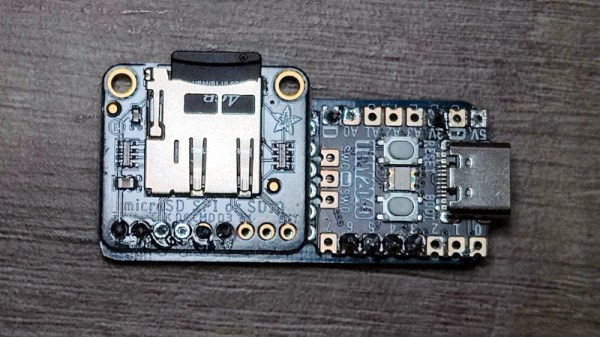
If you had an office word processor in the late 1970s, the chances are it ran Digital Research’s CP/M operating system. IBM went for Microsoft in the 1980s and the once-dominant player fell on hard times, but it survives today as a popular choice on retrocomputer platforms. Even the more compact Z80 systems are a little large for 2022, so when [Kian Ryan] needed the ultimate in CP/M portability it fell on a more modern piece of silicon. Hence he’s put it on a tiny RP2040-based board from Pimoroni alongside an Adafruit micro SD card breakout.
The tiny hardware is neat of course, but the real star of the show is the software. Non-CP/M aficionados will be interested to learn about RunCPM, and for this project, RunCPM 2040. This provides an emulated environment on a host microcontroller to run CP/M, allowing the operating system to be hosted on easier hardware than some of the original machines.
All this makes for a tiny development machine, but perhaps of more interest would be a machine that’s all-in-one with a display and perhaps a keyboard. The RP2040 is interesting in this case because of those programmable state machines. Could it be made to run a video display alongside RunCPM? We hope someone has a go at writing it.
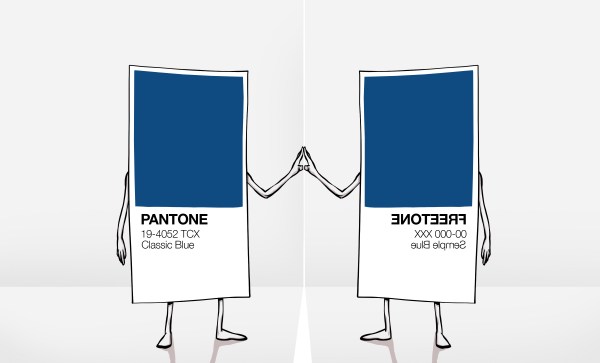
We recently covered the removal of Pantone colour support from the Adobe cloud products, with the two companies now expecting artists and designers to pay an extra subscription for a Pantone plugin or face losing their Pantone-coloured work to a sea of black blocks. Our coverage focused on our community, and on how the absurdity of a commercial entity attempting to assert ownership over colours would have no effect on us with our triple-byte RGB values.
Interview With An Artist And Pigment Activist
The palette that could start a revolution.
It’s fair to say though that in our focus on hardware hackers and open source enthusiasts, we missed its effect on artists and designers. To rectify this omission we needed to step outside our field and talk to an artist, and in that context there’s an obvious person to interview.
Stuart Semple is probably one of the more famous contemporary British artists, but in relation to this story it’s his activism over the issue of colours and intellectual property that makes him an authority. He’s drawn attention to the issue by releasing his own art materials in colours that directly challenge those which companies have tried to claim for themselves, and is perhaps best known in our community for challenging Anish Kapoor’s exclusive licence for VantaBlack, the so-called “world’s blackest pigment”.
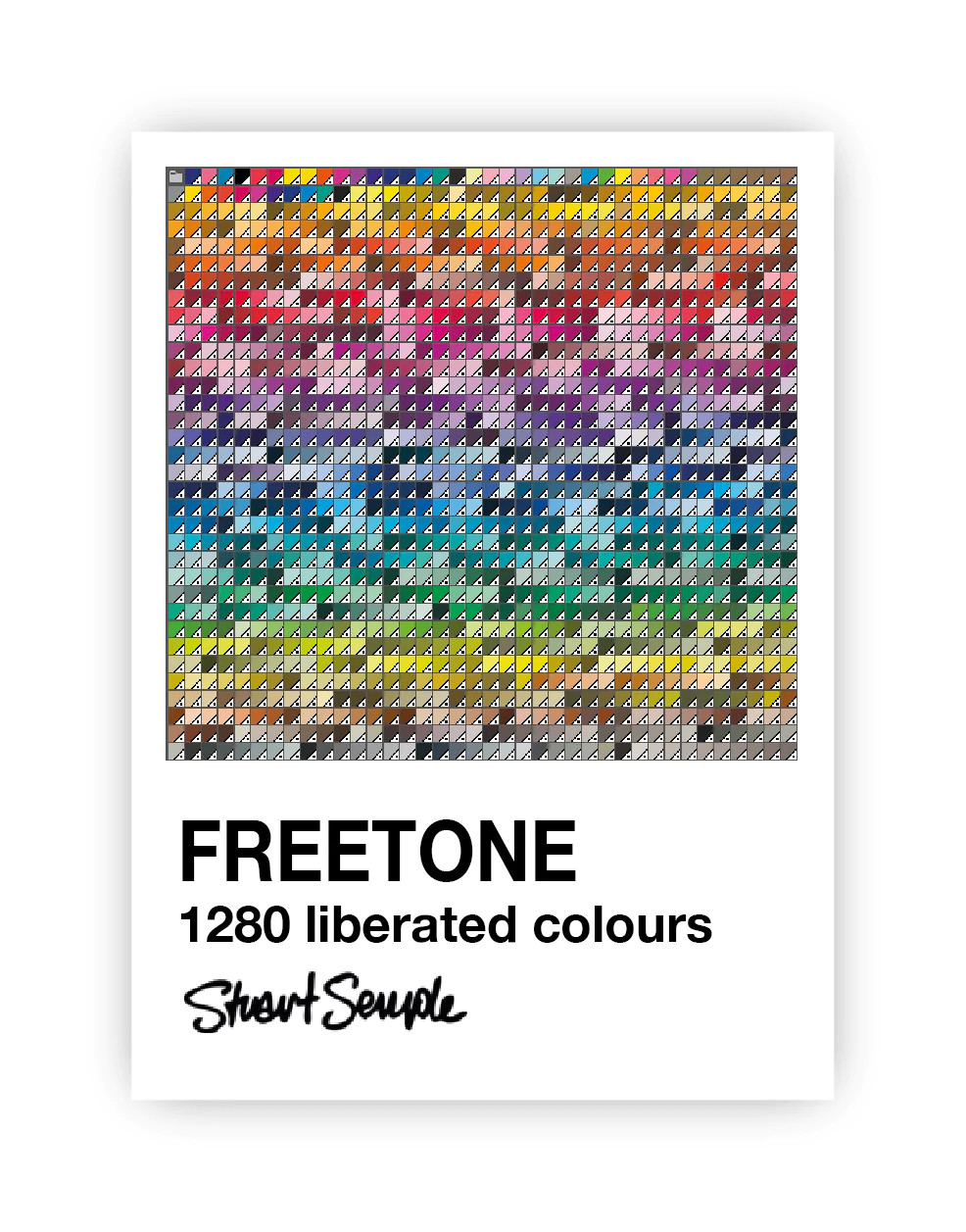
Most recently in response to the Adobe/Pantone controversy he’s released Freetone, a free plugin for the Adobe suite that in the words from its web page contains “1280 Liberated colours are extremely Pantoneish and reminiscent of those found in the most iconic colour book of all time. In fact it’s been argued that they are indistinguishable from those behind the Adobe paywall”. I had a phone conversation with him, in which he explained why Freetone had come into being.
Hackaday I understand Pantone is something used by designers, so I’ve worked for companies in the past where the designer would specify a Pantone index and it would appear on the screen, on the printed box, and on everything else identically. But why why do you as an artist use Pantone?
Art, activism, and a very red pigment.
Stuart Well, I use it in lots of ways. So I make a lot of screen prints as part of my art. So you know, if I’m working with a screen printer, I want to know that the print that they make of my work is the colour that I want it to be, so Pantone’s really useful for me for that.
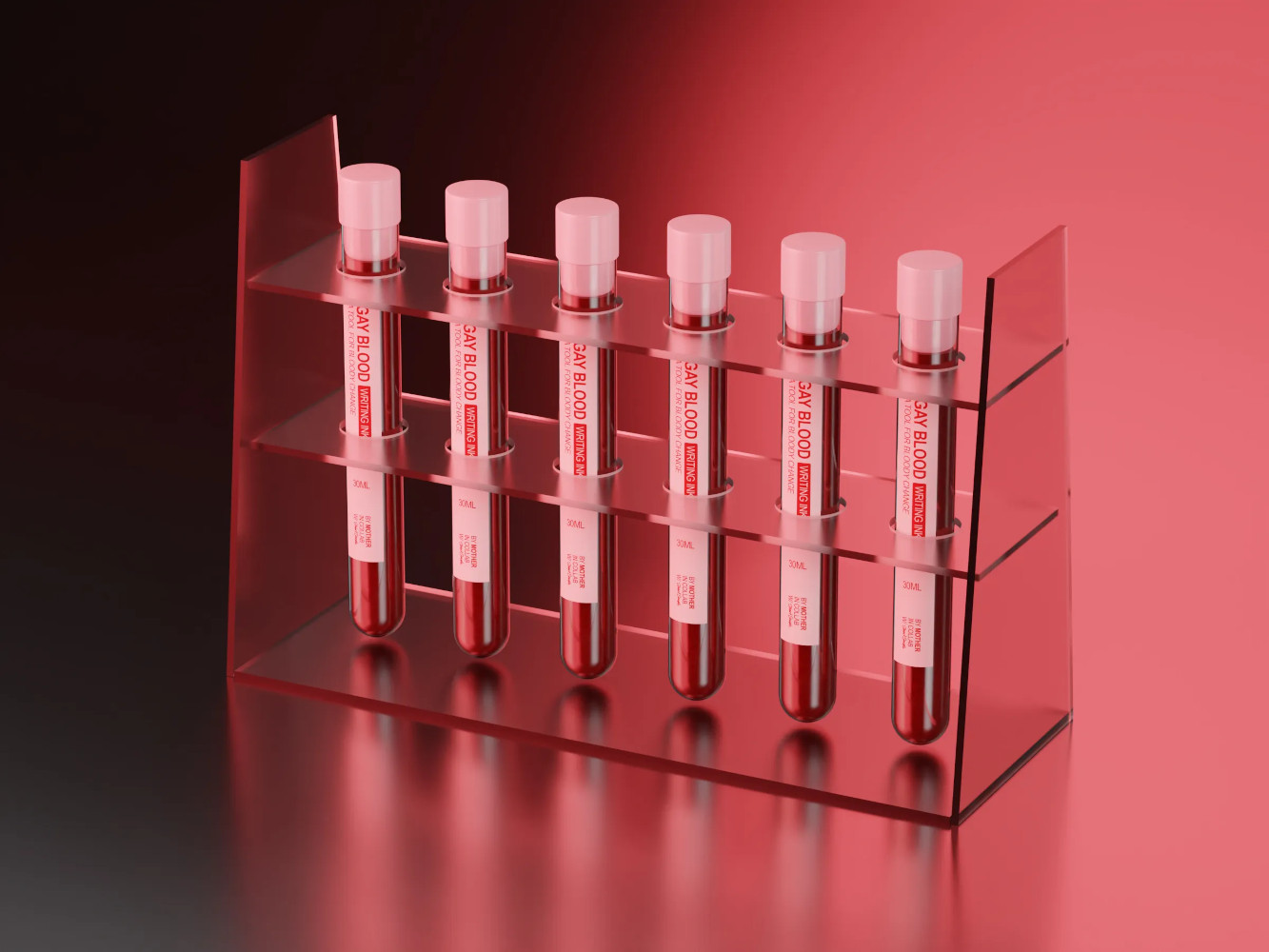
But also, even with within the paints, so I just did a thing where I made some paints, which actually uses the blood of gay men. It was really important to me that the colour of the paint matched the colour of actual blood. So I was working with a lot of people, we’ve been collaborating, and I was working with some friends in New York on it, and we needed a common language.
The red I was talking about was the red they were talking about, and Pantone is super useful for that. In fact, it’s the go-to for that. I just did a record cover for Placebo, the band, that was produced for me by someone that prints, so I had to tell them what spot colours I wanted. So I had to tell them Pantone references, it’s the language they understand.
Hackaday So my next question relates to Freetone. Obviously, as as you’ve distributed it, it’s a Adobe plugin. How does it solve the problem? Because obviously, I can specify a Freetone colour, and anybody else with Freetone can tell yes, that’s that colour. But how do I then go to a printer who buys his inks with Pantone specifications and map one to the other?
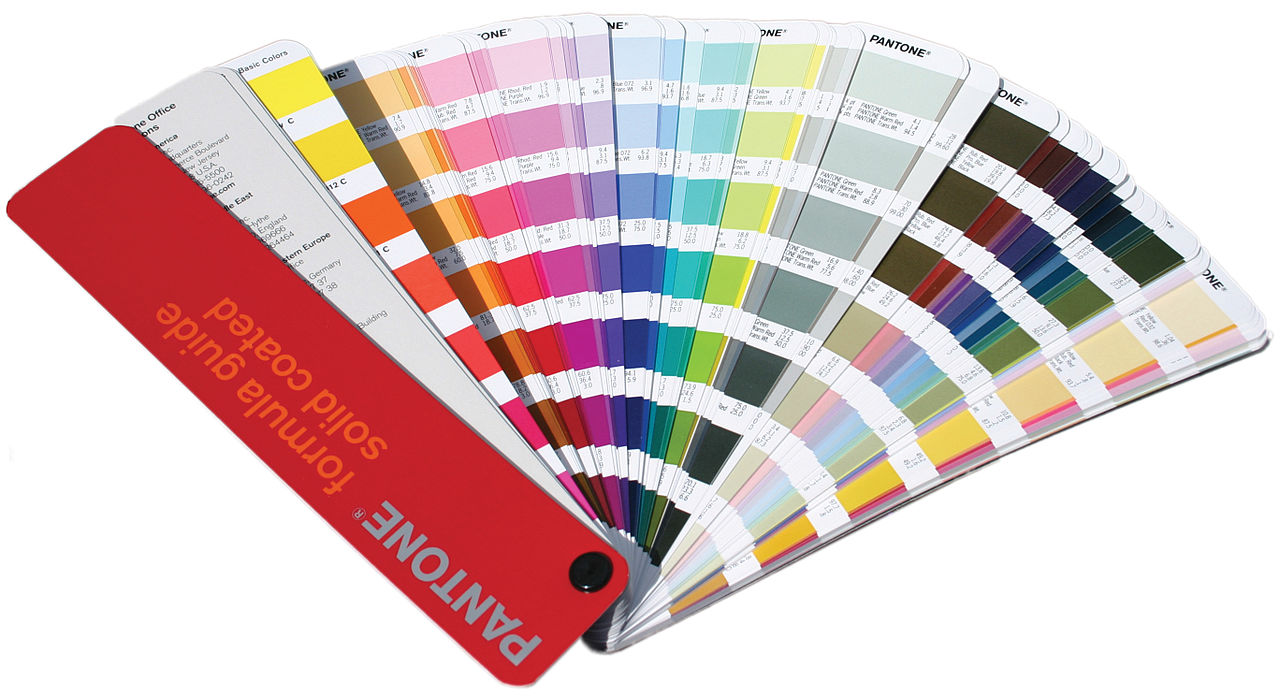
The Pantone swatch book which you’ll see in the hands of artists and designers everywhere. Céréales Killer CC BY-SA 3.0.
Stuart How it works is, if you download Freetone, you’ll find colours in there, and one of them will be called Sempletone 648C. Well, it’s exactly the same as Pantone 648C. If you do your work on the screen, use the Freetones, and then when you send it to the printer, it’s actually blatantly obvious to anyone that 648C is clearly apparent. If you’ve got the Pantone fan book and you look at the colours, it’s the same. 846C in mine is the same as 846C in the fan, in the Pantone book. I’d like to see them try and argue that they own it, but I don’t think they do in the name or the Pantone trademark, but these are Sempletones with a number. So I think it’s gonna be hard.
Hackaday My next question is probably getting more into the technology of it all. Do you think it will be possible to replace Pantone’s service completely? So if you took every Sempletone colour and threw it at a spectrometer and published the spectrum, would you then be able to say to an ink manufacturer or similar, here are the full technical details rather than just a colour, and does your paint correspond to this spectrum? I’m curious how far you could push open source in this line.
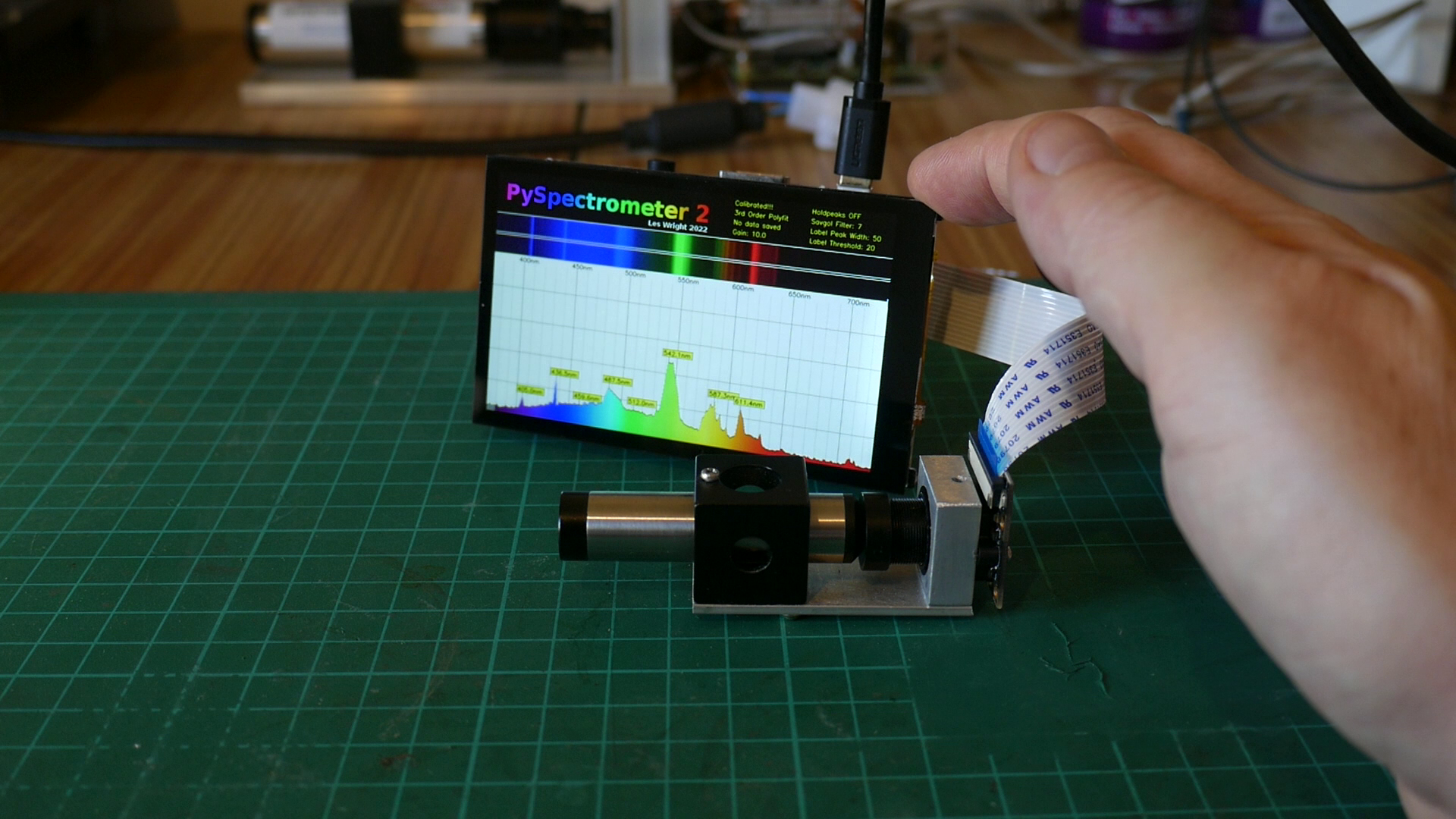
The PySpectrometer project, something for anyone with an interest in colour.
Stuart That’s really cool. I love it. Like, if you could just give them that spectral data, and if they’ve got a spectrometer they could measure it a their end. But there’s nothing that advanced at the moment, a lot of action is done by eye still. My answer is, I don’t see why not if there was a cool enough device. I don’t know if the spectrometer would be good enough to match it. I don’t see why not, I don’t see why you couldn’t publish the data. But it would have to be the whole spectral information and not just like an RGB value.
(At this point the interview digressed for a moment into a discussion of open-source spectrometers such as the Raspberry Pi project we featured recently, as Stuart’s lament was that a spectrometer can be an extremely expensive instrument. It isn’t the job of an interviewer to lead their interviewee so we’re skipping this part of the transcript, however I think we can all look forward to whatever uses Stuart makes of an affordable spectrometer. We’ll pick up the interview at the next question.)
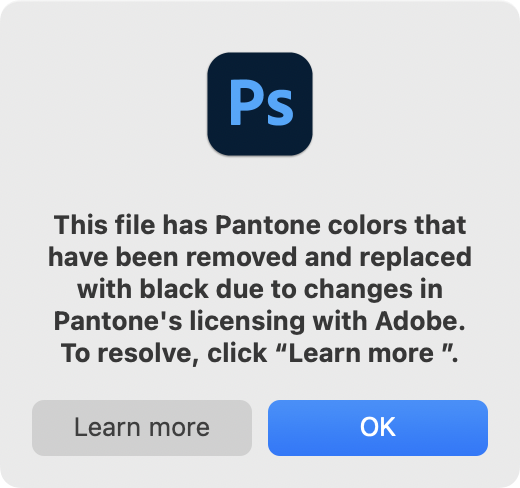
This widely shared screenshot represents the destruction of past work.
Hackaday One of the real problems with the whole Adobe suite, and this has happened in world as well with for instance the Autodesk CAD packages, is that they have gone into the cloud and become software as a subscription. So I understand completely, the frustration of artists at suddenly being told they have to pay an extra subscription to keep their Pantone support, and I’m particularly shocked to find that Photoshop isn’t just displaying black pixels over Pantone colours, I’m told it’s wiping out the Pantone information on saving. Do you think that anything in the open source software ecosystem comes close to replacing proprietary products like the Adobe suite for you as an artist?
Stuart Yes, 100%, there’s loads of stuff. I think open source is just the answer, I believe in freedom. And freedom means freedom to express yourself and freedom to own the thing and tweet the thing and change the thing and all the rest of it. So yeah, 100%. I think there’s actually better things than Photoshop, the problem we’ve got is that Adobe have the industry stranglehold. And if you want to work with someone, you have to be talking that language. And that’s still the problem. It’s like an operating system, but it’s got the monopoly.
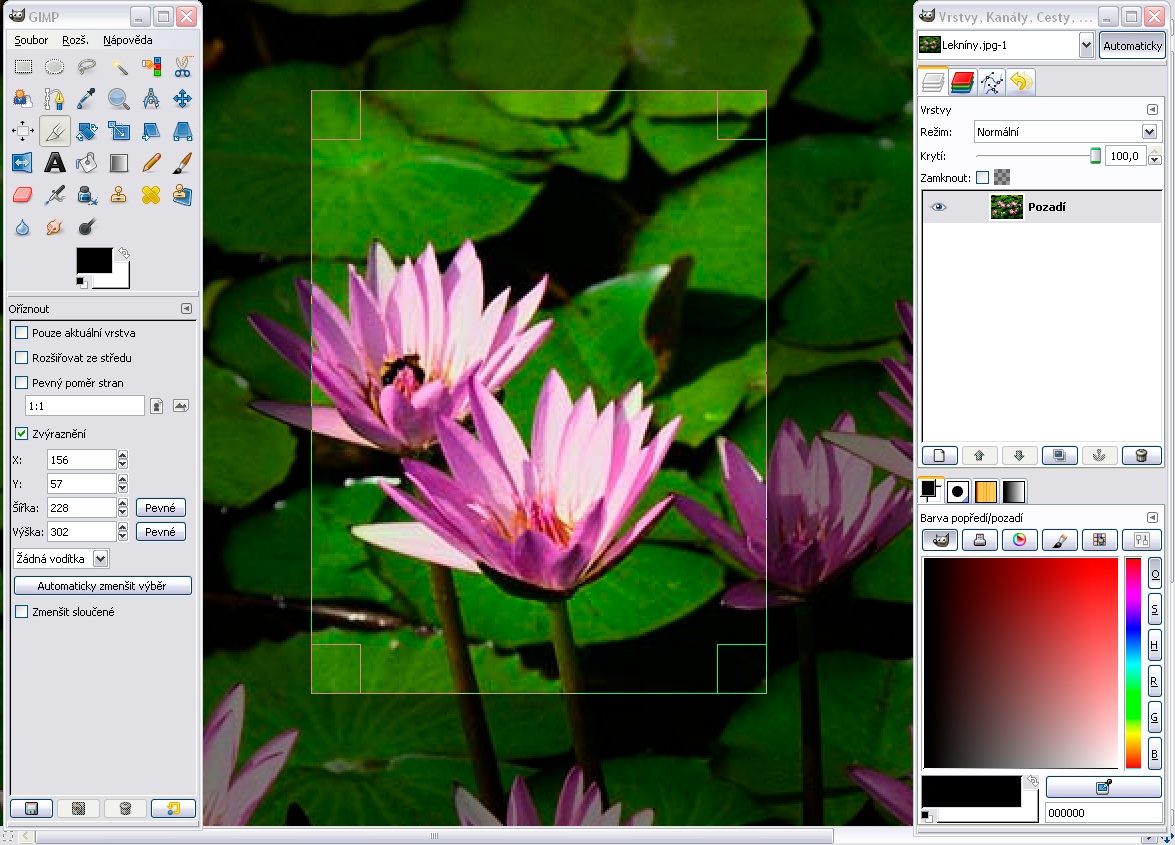
So there are other things, for instance, on a Mac, there’s something called Pixelmator, which is as good as Photoshop in my opinion, I use it every day. It’s not free, but you buy it once, and that’s it, free updates. Like software used to be. And there are other things, like GIMP is amazing. It’s awesome, but it doesn’t really replace Photoshop.
We all like using GIMP, perhaps other people could learn to love it too. (gimp.org)
Hackaday Here at Hackaday we can make noises about how wouldn’t it be great if the developers of GIMP or other software could stick Freetone into their products, because they don’t have Pantone as it’s licensed?
Stuart Yeah, that’d be a dream, wouldn’t it? I mean, why not? I made it for everybody. As far as I’m concerned, it’s out there, use it, change it. incorporate it, the more people the better, I think.
A lot of people use GIMP, and it’s good. Really good open source stuff that always has been. We know the future is in the open source stuff, proprietary stuff just won’t last, it’s just not adaptable. It’s putting greed and profits above the user, it can’t work. There’s no freedom in it.
Hackaday To me the most egregious thing is that as I understand it they will delete the Pantone information from your PSD. This really shocked me.
Stuart They’re literally holding it hostage. It’s like 20 quid, or delete from your work, which is, wow. They’re not giving me anything, anyway. I’m renting the software, paying to use the software every month, it’s not free. And the licence fee is a lot. We’re already spending hundreds and hundreds a year on this software, probably about 800 quid a year. Another 20 quid, just to pen the work we make before. I mean, it’s our work! It’s pure corporate greed, isn’t it.
Hackaday Thank you very much for the interview.
As we wrapped up, I asked him about his Black 3.0 pigment, produced as a reaction to VantaBlack and Anish Kapoor. I was curious whether it might have a specially good infra-red response for headsinks or solar collectors, but sadly he informed me that it’s primarily a visual colour for artists. It’s very cool stuff, incredibly black, and I really want to get some to play with, but probably no better than a rattle can for heat purposes. Never mind, an engineer’s curiosity satisfied.
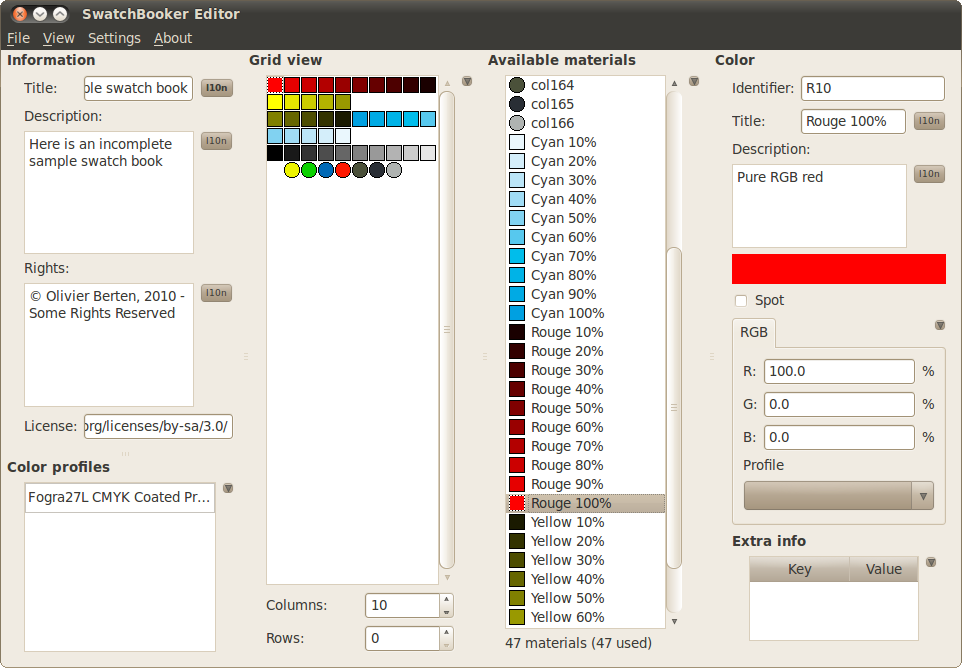
Following the interview, it’s worth looking at the Freetone project from our side of the table as well as his. If we as a community would like to ensure that colours do not become ever more proprietary, then it is probably on us to ensure that where appropriate it is supported within our sphere. GIMP support for instance would at a stroke make open source software an easier choice for millions of artists and designers, and could I think be done relatively easily through its existing palette support. There’s SwatchBooker which appears to perform the necessary interchange, and I found the ASE2GIMP project which imports Adobe palettes into GIMP, but sadly I couldn’t make it work here. If GIMP shipped with a Freetone palette built-in, would that be too much of a development task to contemplate?
From Stuart’s side, having sat down and played with Freetone, if there’s one thing I could ask him it would be to release it as more than just an Adobe plugin, and to give it an open source licence. As it stands it’s a binary available for no charge through his web shop, I think that releasing it as a straightforward list, perhaps even as simple as a CSV file, would make it so much more accessible to developers. And coupled with an open source licence that allowed them to include it within their software, I think it would be unstopable. We’re not open source licence nerds here at Hackaday, but I’m guessing something that does the same for a palette as a library licence such as the LGPL does for libraries would be appropriate.
In our world we’re wrapped up in electronics and code, and it’s sometimes easy to forget that the work we do reaches way beyond our workbenches. If you’ve spent enough time in a hackerspace you’ll know that art and engineering are almost the two sides of the same coin, so it’s pleasing to find such a moment of crossover. Let’s hope Freetone support can find its way into the open source movement, and together we can keep the tentacles of yet another IP land grab at bay.
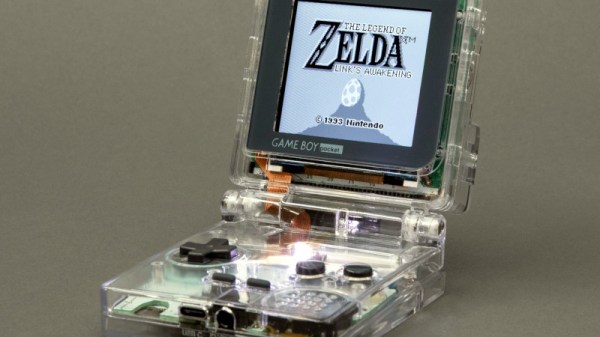
The new hotness in mobile phones is it seems a hinge, and an ever-so-fragile flexible LCD display. There’s nothing new in a hinge of course, a couple of decades ago they were all the rage in feature phones, and of course Nintendo got in on the act with the ever-so-cute Game Boy Advance SP. This hinged design caught the attention of [Allison Parrish], who has brought it to an earlier generation of Game Boy with the Game Boy Pocket SP. It’s a late-1990s Game Boy Pocket whose PCB has been carefully cut in half, in a custom case that looks for all the world like the hinged case of the Advance SP.
The case is a neat bit of CAD work very nicely 3D printed and fitted with a set of Advance SP hinges, but perhaps the neatest part of this build is the se of a set of flexible PCBs to connect the two halves of the unit together. This looks for all the world as though it came this way from the factory, which is an achievement above many console mods.
The whole thing is a little lumpy compared to the SP to make space for the Pocket’s full-size cartridge, but not so much as to make it ugly. Any 1990s kid with one of these would have been the envy of all their classmates!
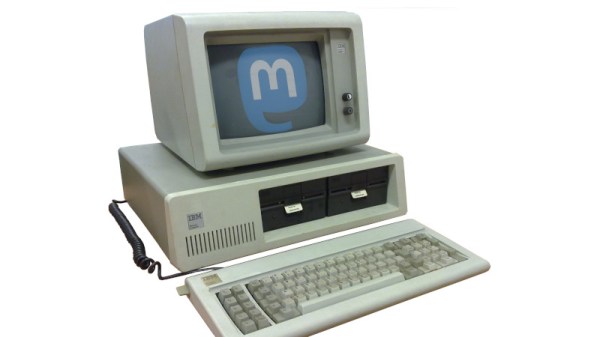
Elon Musk has bought Twitter for an eye-watering sum, and his live adventures in chaotic mismanagement of a social media company have become a compelling performance for the rest of us. As we munch on our tasty popcorn and enjoy the show, many Twitter users have jumped ship for the open-source alternative Mastodon. It offers much to the escapee including instances tailored to particular communities, but aside from all that it’s got something Twitter never had. You can now use a Mastodon client on an IBM PC.
Many of you are no doubt looking askance at us, as you have been Tooting for years from behind the keyboard of a PC. But it’s likely that the PC you’re using is a generic modern x86 machine running an up-to-date operating system such as a GNU/Linux flavour or Microsoft Windows, by contrast here we’re referring to the original, the daddy of them all. Because the client we’re talking about is DOStodon, designed to run on a real IBM PC as though it’s the early 1980s again.
Stunt hacks aside, whether or not you fire up DOStodon on a 16-bit machine to get your Fediverse fix, it’s an interesting piece of software because it’s written in Javascript. Which in turn brings us to DOjS from the same author, a DOS Javascript canvas with sound. Not everyone will be raring to run their Javascript code on an early 1980s PC, but its existence proves that there’s plenty of life in the old platform yet.
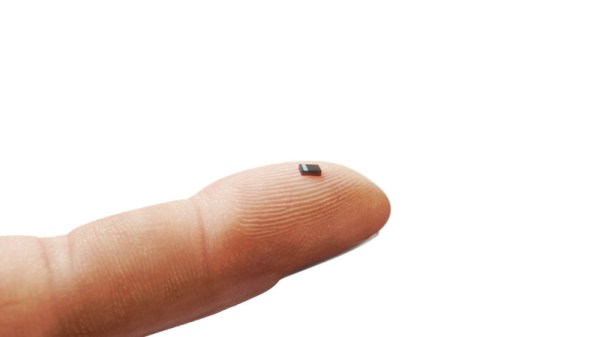
We’re used to some pretty small batteries in miniaturized electronics, thanks to the manufacture of lithium-polymer pouch cells. But they’re still pretty big, and they’re hardly the most stable power storage solution. The French company ITEN may have an answer for designers of micro-power devices though, in the form of a range of tiny surface-mount solid-state rechargeable lithium batteries. These come in a range of capacities from 0.1 mAh to 0.5 mAh, and in a 3.2 by 2.5 mm package look very much like any other slightly larger SMD chip component.
These devices are most likely to be found in applications such as remote wireless sensors, where they can store the energy from a small solar cell or similar to produce the burst of power required to transmit a packet of data as well as the tiny current required to keep things ticking over. The solid state chemistry should provide a long life and lack of leaks. For now they have some evaluation kits on offer, and unless we missed something, no full data sheet. We’d be particularly interested to learn about their temperature sensitivity when it comes to soldering, as we’ve taken to heart the warnings about soldering to more traditional lithium cells.
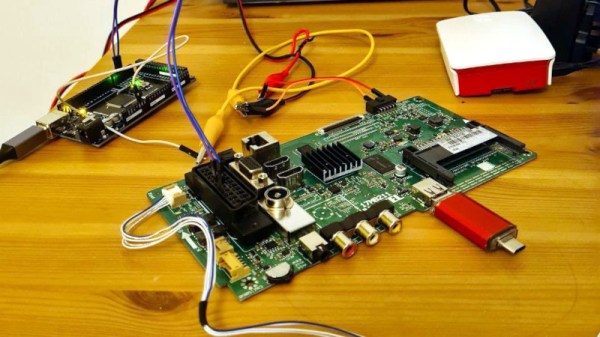
It is an annoyance for some members of our community, that it has become almost impossible to buy a TV that’s not a so-called “smart” TV. These units contain a computer as well as the display, and it boots into a locked-down OS with a user interface and a load of streaming apps. Can anything be done with them other than what their manufacturers intended? [Nina Kalinina] has managed it, taking the mainboard from a discarded LCD TV and liberating the ARM Linux board within.
On the board are all the inputs you’d expect from a TV, along with Ethernet, and a couple of extra USB ports hidden in the WiFi interface. There’s a UART available on the SCART connector, and accessing the U-boot menu is achieved by the unusual means of sending a character to the infrared port using a Palm Pilot. Surprisingly the device tree in the Flash was editable, so with the Linux OS accessed, the board was revealed as having a dual-core Novatek SoC.
This is reminiscent of the days when the new hotness was dragging a Linux box out of a home router, and just as those were quickly eclipsed by inexpensive boards such as the Raspberry Pi, so might these TV boards meet the same fate. If, however, they can be made to drive a screen with something more useful than the TV interface then that might change, as who wouldn’t want to make an old smart TV a bit more useful?
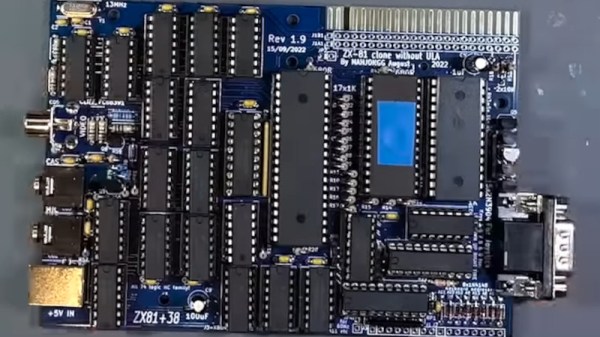
As the supply of genuine retrocomputers dwindles and their prices skyrocket, enthusiasts are turning their eyes in other directions to satisfy their need for 8-bit pixelated goodness. Some take the emulation route, but others demand a solution that’s closer to the original hardware. Following the latter path, [iNimbleSloth] is answering the question as to whether it’s possible to build a Sinclair ZX81 from all-new parts in 2022.
The ZX81 was Sir Clive’s second Z80-based computer, and its low price made it an instant success which paved the way for the legendary ZX Spectrum. From here in 2022 the original Ferranti ULA chip that contained all the logic is unobtainable except by raiding another ’81, so he’s using a design that has the same functionality in 74 series logic. The PCB is the same size as the original, and he’s paired it with a keyboard PCB using tactile switches. The video below the break is the first of what is to be a series, and he will be looking at a readily available 3D printed ZX81 case and the re-manufactured membrane keyboard.
For those of us who first learned to code in its meager 1k of memory the ’81 will always be a special computer. Sure it had many faults, but simply having an affordable real computer at all in 1981 was special. To see one being made from scratch is special then, and it would be nice to think that a few other people might learn how a computer works the Sinclair way.