McTerminals Give The Hamburglar A Chance

The golden arches of a McDonald’s restaurant are a ubiquitous feature of life in so many parts of the world, and while their food might not be to all tastes their comforting familiarity draws in many a weary traveler. There was a time when buying a burger meant a conversation with a spotty teen behind the till, but now the transaction is more likely to take place at a terminal with a large touch screen. These terminals have caught the attention of [Geoff Huntley], who has written about their surprising level of vulnerability.

When you’re ordering your Big Mac and fries, you’re in reality standing in front of a Windows PC, and repeated observation of start-up reveals that the ordering application runs under an administrator account. The machine has a card reader and a receipt printer, and it’s because of this printer that the vulnerability starts. In a high-traffic restaurant the paper rolls often run out, and the overworked staff often leave the cabinets unlocked to facilitate access. Thus an attacker need only gain access to the machine to reset it and they can be in front of a touch screen with administrator access during boot, and from that start they can do anything. Given that these machines handle thousands of card transactions daily, the prospect of a skimming attack becomes very real.

The fault here lies in whoever designed these machines for McDonalds, instead of putting appropriate security on the software the whole show relies on the security of the lock. We hope that they don’t come down on the kids changing the paper, and instead get their software fixed. Meanwhile this isn’t the first time we’ve peered into some McHardware.
Is 3D Printing Up To A Turntable?

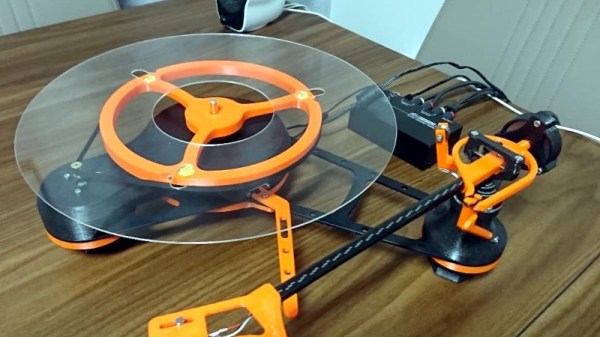
Thanks to a feature by Prusament because it uses their filament, we’ve been interested to read about the SongBird turntable from the British outfit Frame Theory (Note: at time of writing, they have an expired certificate). It’s a commercial product with an interesting twist for the Hi-Fi business: buy the completed turntable or buy a kit of parts and print the rest yourself.

We’re always interested to see new things here at Hackaday but we’re not in the business of promoting commercial products without a tech angle. This turntable has us interested then not because it happens to be 3D printed but because it’s instantly raised our curiosity over how suitable 3D printing is as a medium for a high quality audio component. Without descending into audiophile silliness we cannot overstate the effect that rigidity and mass of turntable components has on its audio quality. Take a look at this one we featured in the past for an extreme example.

So looking more closely at the design, we find that the chassis is aluminium, which makes sense given its visibly thin construction. Close examination of the photos on their site also reveals the tonearm to be made of carbon fibre tube, so it’s clear that they’ve put some effort into making a better turntable rather than a novelty one. This does raise the question though: manufacturing practicalities aside could you 3D print the whole thing? We think that a 3D printed chassis could replace the aluminium one at the cost of much more bulk and loss of the svelte looks, but what about the tonearm? Would one of the carbon-fibre-infused filaments deliver enough stiffness? It would be particularly interesting we think, were someone to try.

Pet Docking Station Was Two Decades In The Making

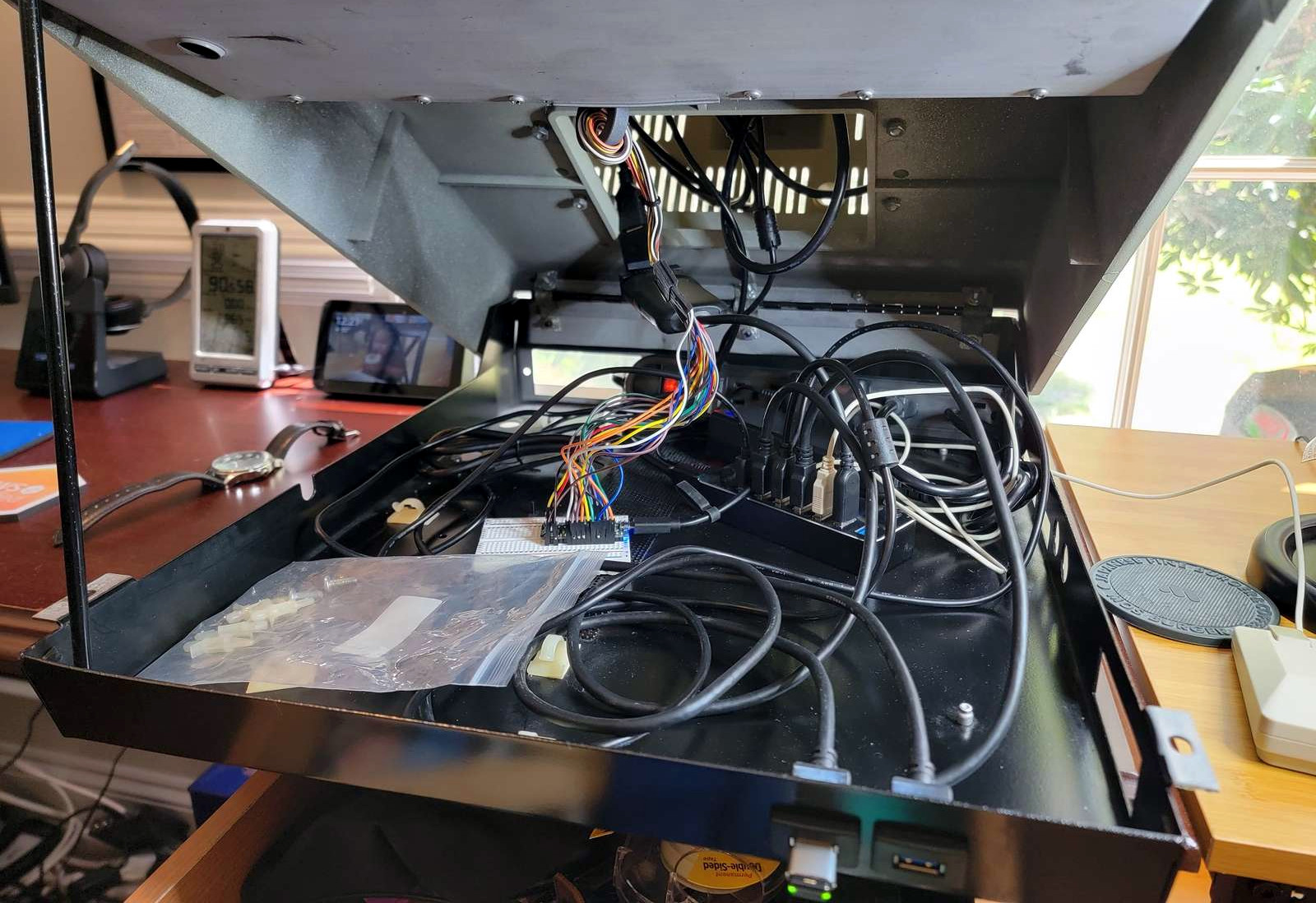
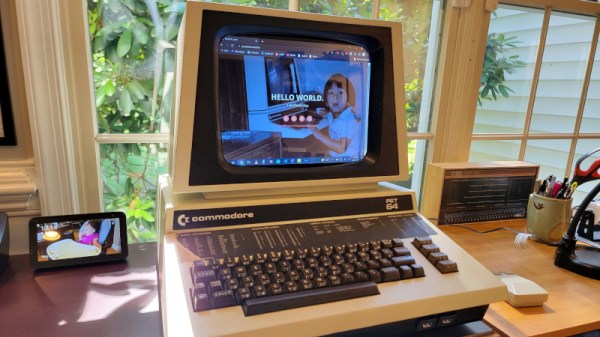
There are some projects which once might have been entirely appropriate, but which now seem sacrilegious. [Dave Luna]’s PC docking station in a Commodore Pet 64 case might at first sight seem to be one of them, but there’s a little more to it than gutting a cherished retrocomputer.

A much younger [Dave] had a dead Pet 64, and because over two decades ago such a thing was considered junk, set about converting it to a PC case. In the way of all ambitious projects it stalled, so here in 2022 he was starting with the metal case and keyboard of a Pet 64 rather than the full computer.

Into the case went a small color TFT monitor, a USB3 hub, a DisplayLink adapter, and and an Arduino Micro doing the job of USB-ifying the Commodore keyboard. The result is a pretty cool docking station, but one which he admits isn’t as nice to use as he’d like. Viewed through rose tinted glasses any PET was an amazing machine in its day, but a slightly lackluster keyboard and a tiny screen don’t quite have the same allure in a world of 4K monitors. Still, we’d have one on our desk.

The Pet appears in quite a few projects that have made it to these pages, for example showing YouTube videos.

Continue reading “Pet Docking Station Was Two Decades In The Making”

The Casio Smartwatch You Never Had

In a way, you have to feel a bit sorry for the engineers at Casio. They can produce the most advanced digital watches ever to grace the wrist, but their work will forever be associated with one of their more lowly creations. The Casio F91 is the archetypal digital watch — it’s affordable, it’s been in production since the Ark, it does the job so well that it’s become a design classic, and it remains a very tough act to follow.

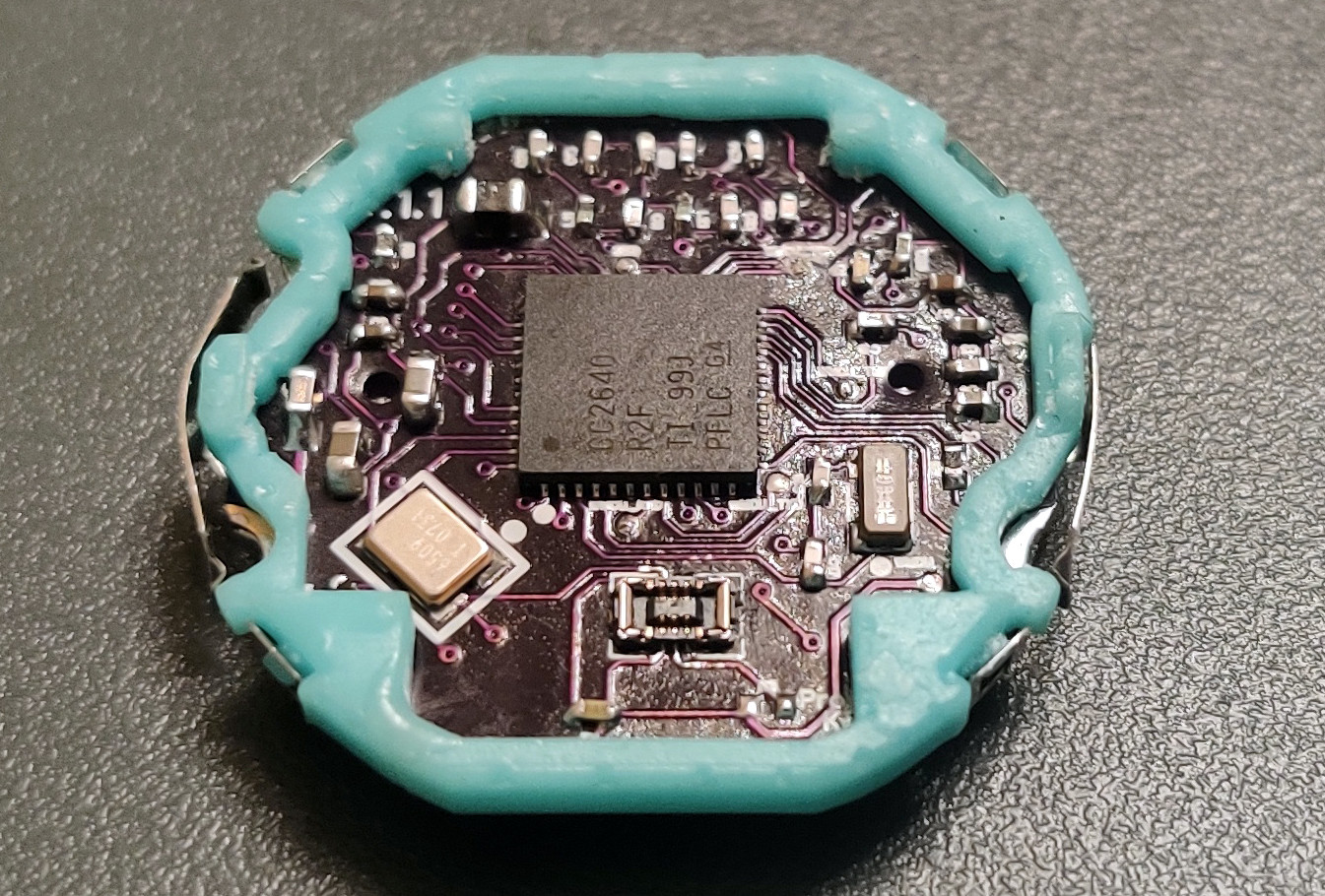
If it has a flaw though, it’s that the functions of a watch from 1989 are very basic. Wouldn’t it be nice if a Casio F91 could be a modern smartwatch! Well thanks to [Pegor] it can, with a complete re-engineering of the classic watch’s internals. Now the simple classic timepiece is fully up-to-date!

All the Casio internals are removed, and a new movement holder supports a fresh PCB with an OLED display mounted via a flexible sub-PCB. The brains comes courtesy of a Texas Instruments CC2640 BLE microcontroller. This gives it a 15-day battery life, which is nothing like what the original watch would have but compares favorably to smartwatches. He admits that the software needs some work, but with hardware this well-executed we hope that others can contribute some improvements.

This is probably the most impressive F91 hack we’ve seen, but it’s by no means the first revamped Casio we’ve shown you.

How To Become A Lego Submariner

A submarine is by necessity a complex and safety-critical machine, but the principle upon which it depends is quite simple. The buoyancy is variable by means of pumping water in and out of tanks, allowing the craft to control the depth at which it sits. The [Brick Experiment Channel] has a series of posts describing in detail the construction of a working submarine, with a hull made from a plastic tube and mechanics made from Lego.

In this submarine the buoyancy tank is a syringe operated by a Lego motor, and the propulsion comes courtesy of a pair of Lego motors driven through ingenious magnetic couplings to avoid a shaft seal. To monitor depth there is both a laser distance sensor and a pressure sensor, and there is a Raspberry Pi Zero to control the whole show.

In the video below the break you can see the craft in action as it zips around a swimming pool at different depths, before setting off on a longer journey with on-board footage along a shady creek. It’s an extremely practical submarine, and one we wish we could try.

This is version 4.0, and it shows.  We had a look at version 3.0 last year, and it’s by no means the first submarine we’ve featured, here’s one made from PVC pipe.

Continue reading “How To Become A Lego Submariner”

Beautiful Inductors, Now Not Such A Lost Art

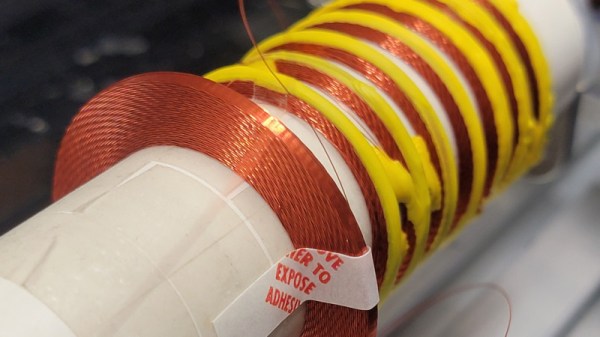
As ferrite technology has progressed into a mastery of magnetic permeability, the size of inductors has gone down to the point at which they are now fairly nondescript components. There was a time though when inductors could be beautiful creations of interleaving layers of copper wire in large air-cored inductors, achieved through clever winding techniques. It’s something that’s attracted the attention of [Brett], who’s produced a machine capable of producing something close to the originals.

Part of the write-up is an investigation of the history, these coils were once present even at the consumer level but are now the preserve of only a few highly secretive companies. They are still worth pursuing though because they can deliver the high “Q” factor that is demanded in a high quality tuned circuit. The rest of the write-up dives in detail into the design of the wire feeder, and the Arduino motor control of the project. There should be enough there for any other experimenters to try their hands at layered inductors, so perhaps we’ll see this lost art make a comeback.

Custom coils are a regular requirement for anything from radios, to musical instruments, to switching power supplies, so it’s not surprising that quite a few projects featuring them have made it here. One of the more unusual of late has been one that winds toroids.

A Home Made Sewing Machine May Be The Only One

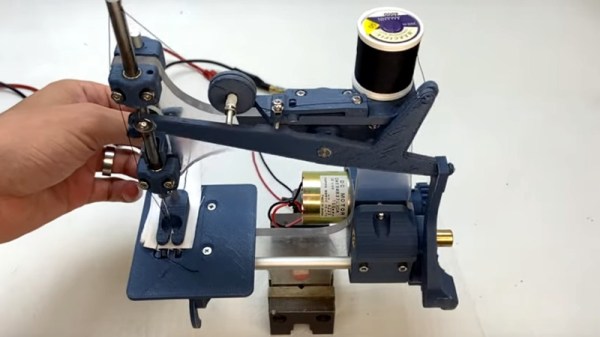
The sewing machine is a tool that many of us will have somewhere around our workshop. Concealed within it lies an intricate and fascinating mechanism. Some of us may have peered inside, but very few indeed of us will have gone to the effort of building our own. In case you had ever wondered whether it was possible, [Fraens] has done just that, with what he claims may be the only entirely homemade sewing machine on the Internet.

If you’ve ever studied the history of sewing machines you’ll notice that it bears a striking resemblance to some of the earliest commercial machines, with a relatively short reach and an entirely open construction. The main chassis appears to be laser-cut acrylic while all the fittings are 3D-printed, with machined brass bushes and aluminum rods for the other metal parts. The design utilizes a hand crank, but is also pictured with a DC motor. It makes for a fascinating illustration of how sewing machines work. Sadly we can’t see any design file links (Update: He’s contacted us to tell us they’re now on Thingiverse.), so you might have to be inventive if that’s the way you want to build your own. Take a look at it in the video below the break.

Fancy a sewing machine but don’t fancy making your own? We’ve got the guide for that, and for filling the rest of your textile bench.

Continue reading “A Home Made Sewing Machine May Be The Only One”