Although hard disks weren’t a common feature yet in many home computers in the 1980s, they were becoming increasingly more affordable. For relative meanings of the word ‘affordable’, naturally. This is illustrated by the 12 MB HDD for the Radio Shack TRS-80 that [Clint] over at LGR recently took a peek at.

Costing a cool $3,495 in 1983 – or $11,932 in 2026 USD – this 12 MB storage wonder used a Tandon TM-603 full-height 5.25″ HDD inside. Lacking a working TRS-80 to try it out with, the video is limited to just a basic powering up and opening up of the unit, but [Clint] will be donating it to a computer museum who can hopefully put it to use again.
The connection to the TRS-80 computer is handled by a ribbon cable, while the HDD has its own built-in power supply, rated at 60 Watt.
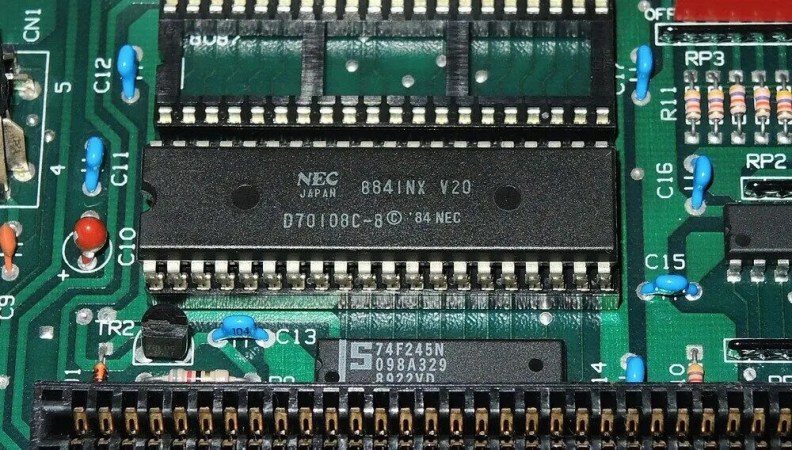
On the main board for the external HDD controller there is a Signetics 8X300 microprocessor that forms the brains of what makes it into an external drive for the TRS-80. Despite its age, it still looks brand new inside, so despite the Rifa capacitors in the PSU, [Clint] decided to power it on. This resulted in an auditory experience that’s probably best compared to a very rusty jet engine spinning up after languishing for a decade prior to spooling up for take-off.
Hopefully we’ll find out whether this particular unit and its HDD are still working in 2026.
Continue reading “Looking At A TRS-80 12 MB External Hard Drive From 1983”

 When you see a listing for an Ethernet switch whose specification list is in effect ‘yes’, with a four-digit price tag when new, and with the seller asking for less than 10% of said $3,000 asking price in an ‘untested’ condition, the only rational thing to do is of course to mash that ‘buy’ button. This is what [This Does Not Compute]
 For a little while vacuum tubes and semiconductors were fighting a heated battle for dominance, with bipolar junction transistors and 1959’s RCA Nuvistor both allowing you to build a compact circuit with relatively low power usage and no high voltages. Although we now know that semiconductor technology won out overwhelmingly, that doesn’t mean that you cannot build a brand new Nuvistor board in 2026,
 As FDM printers keep getting faster, we are forced to deal with a range of bottlenecks, all of which conspire to hold us back from another Benchie world record. A major physical limitation is that of flowrate, as the hotend has to be able to melt the filament that enters the nozzle before it departs said nozzle. One attempt to make a high-flow nozzle involves splitting the material path into three winding sections, which theoretically should help said flowrate. Recently [Thomas Sanladerer] took a poke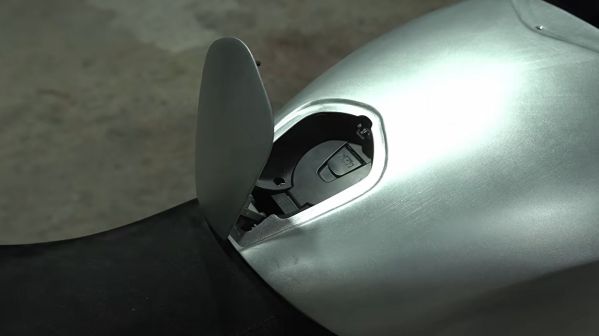
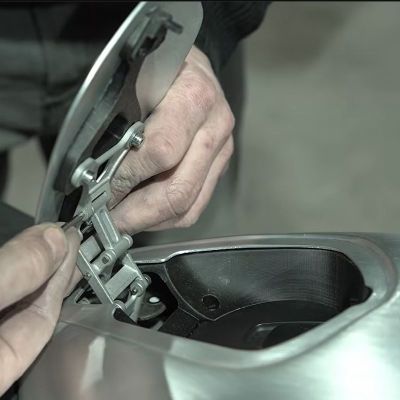 A fun part of modifying something like a motorbike is that you sometimes have to come up with creative solutions to basic questions, like how you can still access the fuel tank’s cap after extending it forward. In the case of [KRTframework] this meant that the fuel cap was now underneath the bodywork, requiring a suitable way to access it. Of course, this meant