Increased Neutron Levels At Chernobyl-4: How Dangerous Is Corium?

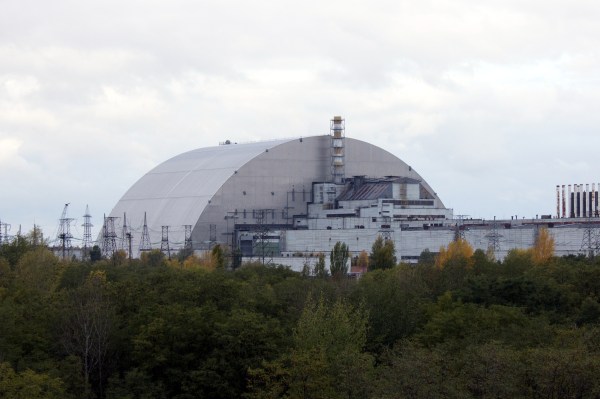
When the Chernobyl nuclear plant suffered the power output surge that would destroy its #4 reactor, a substance called ‘corium‘ was formed. This originally lava-like substance formed out of the destroyed fuel rods along with surrounding materials, like concrete, that made up the reactor. The corium ultimately cooled down and left large amounts of solid corium in the rooms where it had pooled.

Over the past few days there have been numerous reports in the media regarding a ‘sudden surge’ in neutron flux levels from this corium, with some predicting a ‘second Chernobyl disaster’. Obviously, this has quite a few people alarmed, but how dire are these neutron output changes exactly, and what do they tell us about the condition of the corium inside the ruins of the #4 reactor building? Continue reading “Increased Neutron Levels At Chernobyl-4: How Dangerous Is Corium?”
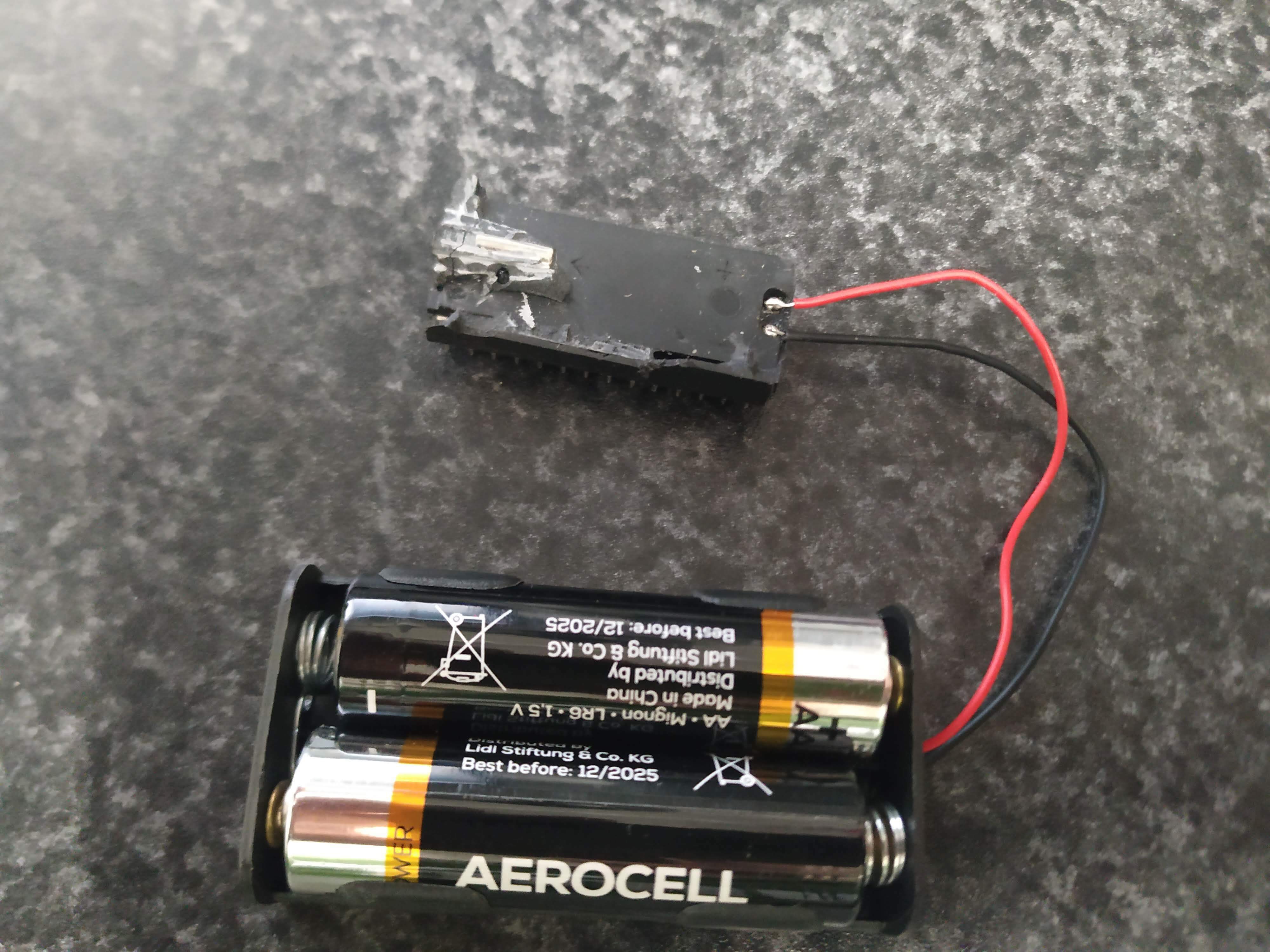
The Coffee Must Flow: Replacing A Spent Lithium Cell In A Coffee Machine

When [hacky] bought a used Douwe Egberts Gallery 200 all-in-one coffee maker, the machine was known to have a ’empty battery’. Being one of those fancy coffee makers that handle everything from the grinding of coffee beans to the application of hot water and steam, it relies on instructions for each coffee recipe. Unfortunately, it turns out that this machine stores these on battery-backed SRAM, as [hacky] found out with help from friendly folk over at the Dutch Tweakers forum.

The Douwe Egberts Gallery 200 is a rebranded machine that’s also sold in Scandinavia as the Wittenborg FB 5100. These machines have an ST M48T58 TimeKeeper module that combines 8 kB of persistent SRAM with a real-time clock. Being powered from a single coin cell (lithium carbon monofluoride chemistry), their lifespan is limited.

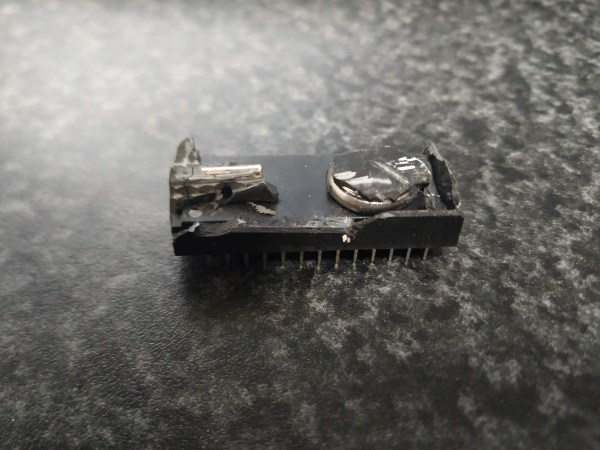
Replacing the coin cell in an M48T58 TimeKeeper module with AA cells.

Fortunatley, a DE-9 connector is provided on the back to provide service/maintenance access to to the hardware. Using a conveniently available programming guide for the hardware, it was easy to figure out the pinout and baud rate (9600, 8 bit, ignore parity, no flow control). This allows for reprogramming the SRAM, but without replacing the battery this data would be gone again on the next start.

Based on the ST M48T58 datasheet, it’s not clear that the clip-on module containing the coin cell and crystal can be replaced, though one could simply plug in a new M48T58 module. Or, as [hacky] did, it’s also possible to cut open the ‘SNAPHAT’ top section and wire in a replacement battery module. With two 1.5V AA cells providing the 3V to the module, it was operational again.

Next up: working out what to write to the SRAM to make the coffee flow again.

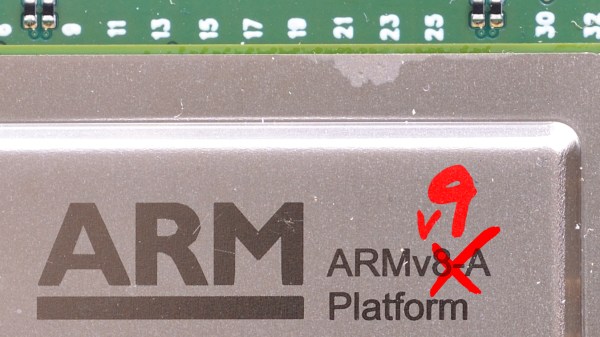
The ARMv9 ISA, And What It Can Do For You

The number of distinct ARM Instruction Set Architectures (ISA) versions has slowly increased, with Arm adding a new version every few years. The oldest ISA version in common use today is ARMv6, with the ARMv6 ISA (ARM11) found in the original Raspberry Pi SBC and Raspberry Pi Zero (BCM2835). The ARMv6 ISA was introduced in 2002, followed by ARMv7 in 2005 (start of Cortex-A series) and ARMv8 in 2011. The latter was notable for adding 64-bit support.

With ARMv7 being the first of the Cortex cores, and ARMv8 adding 64-bit support in the form of AArch64, what notable features does ARMv9 bring to the table? As announced earlier this year, ARMv9’s focus appears to be on adding a whole host of features that should improve vector processing (vector extensions, or SVE) as well as digital signal processing (DSP) and security, with its Confidential Compute Architecture (CCA).

In addition to this, ARMv9 also includes all of the features that were added with ARMv8.1, v8.2, v8.3 and so on. In essence, this makes an ARMv9-based processor theoretically capable of going toe-to-toe with the best that Intel and AMD have to offer.

Continue reading “The ARMv9 ISA, And What It Can Do For You”

The Soviet RBMK Reactor: 35 Years After The Chernobyl Disaster

Thirty-five years ago, radiation alarms went off at the Forsmark nuclear power plant in Sweden. After an investigation, it was determined that the radiation did not come from inside the plant, but from somewhere else. Based on the prevailing winds at that time, it was ultimately determined that the radiation came from inside Soviet territory. After some political wrangling, the Soviet government ultimately admitted that the Chernobyl nuclear plant was the source, due to an accident that had taken place there.

Following the disaster, the causes have been investigated in depth so that we now have a fairly good idea of what went wrong. Perhaps the most important lesson taught by the Chernobyl nuclear plant disaster is that it wasn’t about one nuclear reactor design, one control room crew, or one totalitarian regime, but rather the chain of events which enabled the disaster of this scale.

To illustrate this, the remaining RBMK-style reactors — including three at the Chernobyl plant — have operated without noticeable issues since 1986, with nine of these reactors still active today. During the international investigation of the Chernobyl plant disaster, the INSAG reports repeatedly referred to the lack of a ‘safety culture’.

Looking at the circumstances which led to the development and subsequent unsafe usage of the Chernobyl #4 reactor can teach us a lot about disaster prevention. It’s a story of the essential role that a safety culture plays in industries where the cost of accidents is measured in human life.

Continue reading “The Soviet RBMK Reactor: 35 Years After The Chernobyl Disaster”

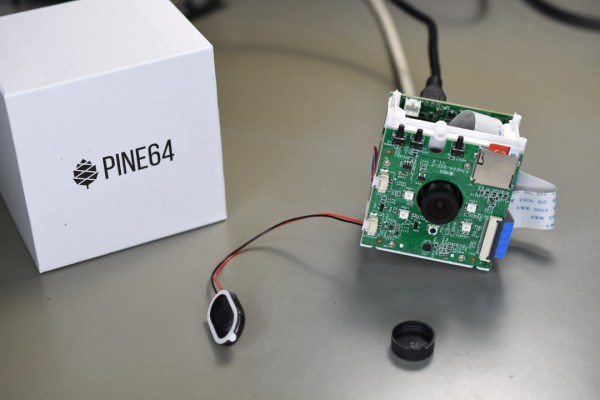
Hands-On With PineCube: An Open IP Camera Begging For Better Kernel Support

When the PineCube was announced by the Pine64 project in 2020, it created a fair bit of interest. Most of this was due to the appeal of a single-board computer (SBC) in a network-based (IP) camera form factor with integrated camera module, for a mere $29.99. Add an enclosure to it, and you would have a neat little package combining a 5 MP camera module with 100 Mbit Ethernet and WiFi. As a bonus, the system could be powered either via an optional battery pack as well as passive PoE, in addition to MicroUSB.

A few weeks ago I bought two of these boards, as part of a client project, and set out to use it for a custom IP camera implementation. With existing Linux-on-SBC and MIPI (CSI) camera experience on my end ranging from the Raspberry Pi to the Odroid, Orange Pi and Banana Pi boards, I felt fairly confident that I could make it work with minimal fuss.

Unfortunately, my experiences were anything but positive. After spending many hours with the PineCube, I’m not able to recommend it for those seeking an IP camera. There are many reasons for this, which I’ll try to explain in this article.

Continue reading “Hands-On With PineCube: An Open IP Camera Begging For Better Kernel Support”

Space Propulsion: Separating Fact From Science Fiction

An unfortunate property of science-fiction is that it is, tragically, fiction. Instead of soaring between the stars and countless galaxies out there, we find ourselves hitherto confined to this planet we call Earth. Only a handful of human beings have ever made it as far as the Earth’s solitary moon, and just two of our unmanned probes have made it out of the Earth’s solar system after many decades of travel. It’s enough to make one despair that we’ll never get anywhere near the fantastic future that was seemingly promised to us by science-fiction.

Yet perhaps not all hope is lost. Over the past decades, we have improved our chemical rockets, are experimenting with various types of nuclear rockets, and ion thrusters are a common feature on modern satellites as well as for missions within the solar system. And even if the hype around the EMDrive vanished as quickly as it had appeared, the Alcubierre faster-than-light drive is still a tantalizing possibility after many years of refinements.

Even as physics conspires against our desire for a life among the stars, what do our current chances look like? Let’s have a look at the propulsion methods which we have today, and what we can look forward to with varying degrees of certainty.

Continue reading “Space Propulsion: Separating Fact From Science Fiction”

Logic Chip Teardown From Early 1990s IBM ES/9000 Mainframe

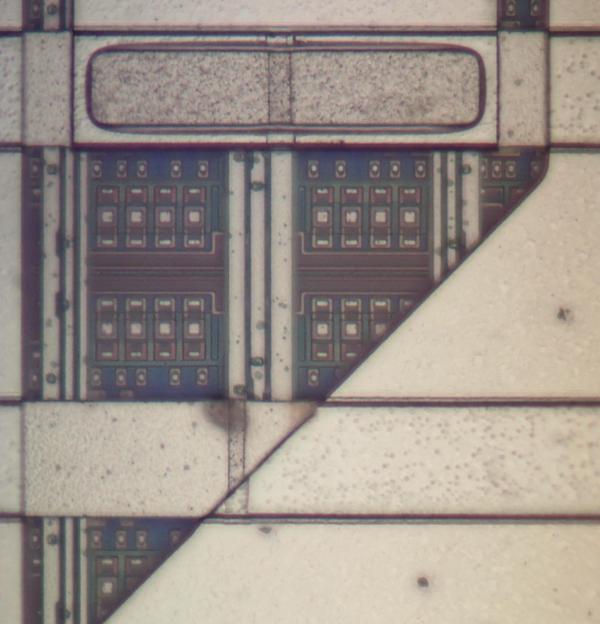
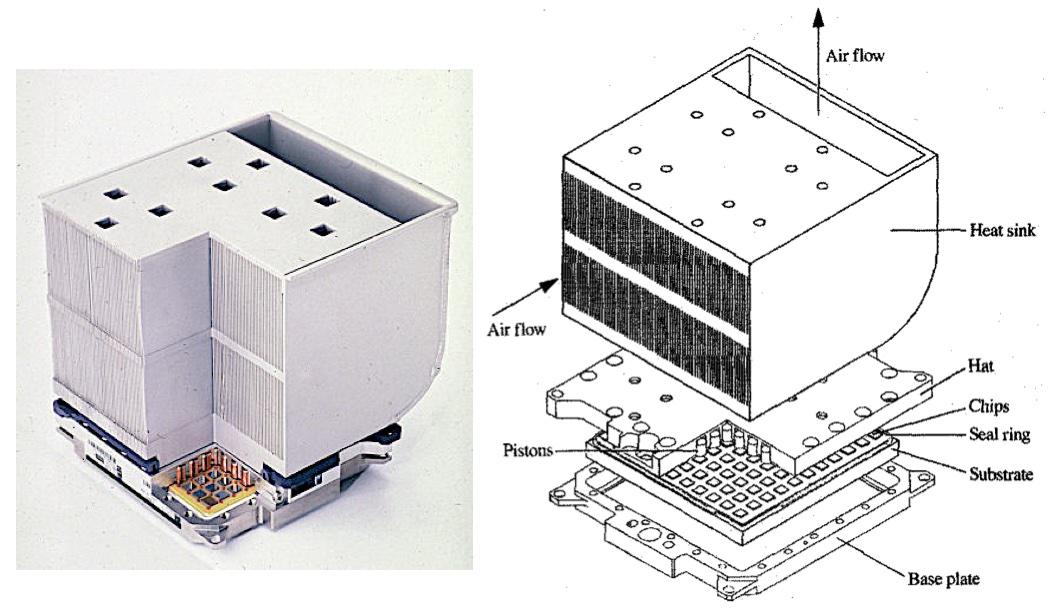
The 1980s and early 1990s were a bit of an odd time for semiconductor technology, with the various transistor technologies that had been used over the decades slowly making way for CMOS technology. The 1991-vintage IBM ES/9000 mainframe was one of the last systems to be built around bipolar transistor technology, with [Ken Shirriff] tearing into one of the processor modules (TCM) that made up one of these mainframes.

A Thermal Conduction Module from an IBM ES/9000 mainframe.

Five of these Thermal Conduction Modules (127.5 mm a side) made up the processor in these old mainframes. Most of note are the use of the aforementioned bipolar transistors and the use of DCS-based (differential current switch) logic. With the already power-hungry bipolar transistors driven to their limit in the ES/9000, and the use of rather massive DCS gates, each TCM was not only fed many amperes of electricity, but also capable of dissipating up to 600 Watts of power.

Each TCM didn’t contain a single large die of bipolar transistors either, but instead many smaller dies were bonded on a specially prepared ceramic layer in which the wiring was added through a very precise process. While an absolute marvel of engineering, the ES/9000 was essentially a flop, and by 1997 IBM too would move fully to CMOS transistor technology.

Over the years we’ve featured a lot of [Ken]’s work, perhaps you’d like to know more about his techniques.