Saying Farewell To Another B-17 And Its Crew

The harsh reality of keeping historical airplanes airworthy and flying is that from time to time one will crash. Thus it was that on October 2nd a Boeing B-17 Flying Fortress crash-landed after technical troubles. Incidentally, this is the very same airplane which we covered only a number of days ago. Painted to look like another B-17 of WWII (Nine-o-Nine, variant B-17G-30-BO), this late-model B-17G-85-DL aircraft wasn’t finished in time to join World War II, but instead spent its 74 years being a flying museum to these amazing airplanes.

Details about the cause of the crash are still scarce, but from radio communication between the crew and tower, it’s understood the B-17 was having having issues with the number 4 engine, which was seen sputtering and smoking by a witness. The airplane’s pilots tried to perform an emergency landing at Bradley International Airport, Connecticut, where it had taken off from only moments ago. Unfortunately the aircraft ran off the runway and struck a building, after which it burst into flames. The NTSB has indicated that they have dispatched a team to investigate the crash, and say that a preliminary report is likely two weeks away.

Of the thirteen people on board, seven died, with the remaining six surviving with injuries. One person on the ground was injured as well. The vintage bomber (civilian registration number N93012) has been all but completely destroyed in the fire, with only a section of the wing and tail remaining recognizable.

We feel terrible about such loss of life and hope the injured make a speedy recovery. The loss of yet another B-17 is also tough to swallow, as this leaves just ten airworthy B-17s. How long until we say farewell to this part of our history, with the final flight of a B-17, or its kin?

(Thanks to Pez for this update)
Using PoE With A Raspberry Pi 3 For About Two Bucks

When the Raspberry Pi 3 Model B+ was announced in March of 2018, one of its new features was the ability to be (more easily) powered via Power-over-Ethernet (PoE), with an official PoE HAT for the low price of just twenty-one USA bucks. The thing also almost worked as intended the first time around. But to some people this just isn’t good enough, resulting in [Albert David] putting out a solution he calls “poor man’s PoE” together for about two bucks.

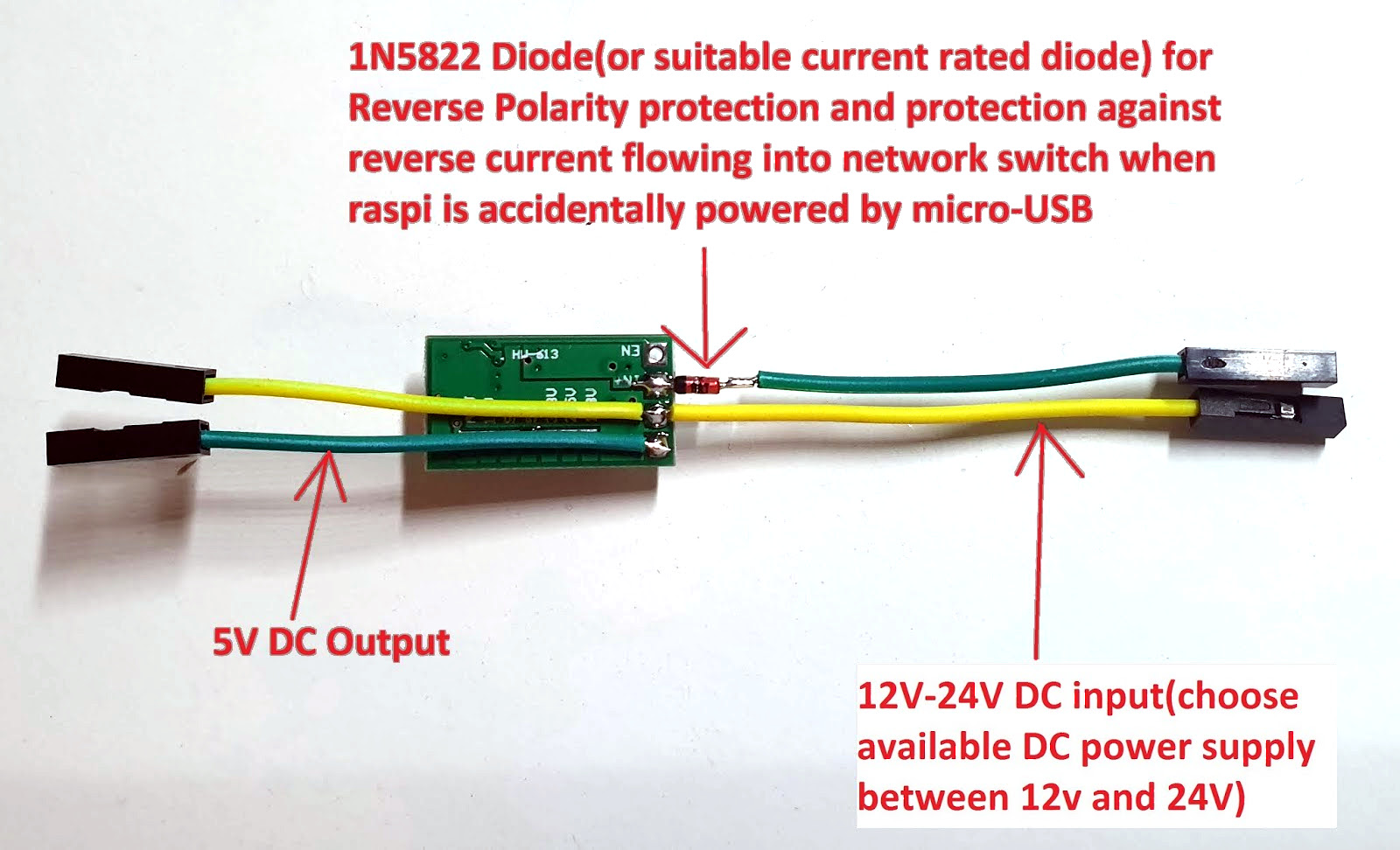
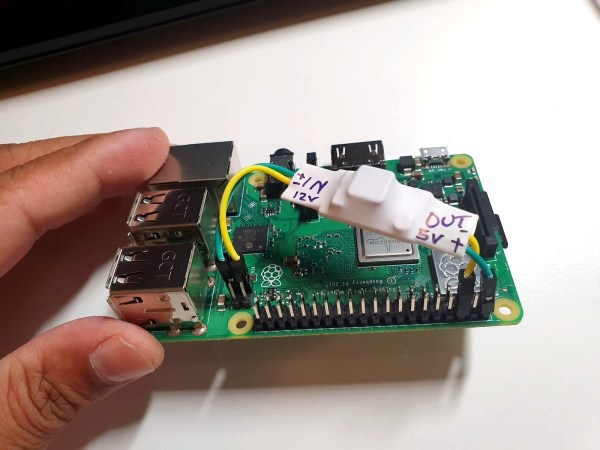
His solution makes it extra cheap by using so-called passive PoE, which injects a voltage onto the conductors of the network cable being used for PoE, without bothering with any kind of handshake. In general this is considered to be a very reliable (albeit non-standard) form of PoE that works great until something goes up in smoke. It’s also ridiculously cheap, with a PoE injector adapter (RJ-45 plug & 2.1×5.5 mm power jack to RJ-45 jack) going for about 80 cents, and a DC-DC buck converter that can handle the input of 12V for about 50 cents.

The rest of the $2 budget is mostly spent on wiring and heatshrink, resulting in a very compact PoE solution that plugs straight into the PoE header on the Raspberry Pi 3 board, with the buck converter outputs going into the ground and +5V pins on the Raspberry Pi’s GPIO header.

A fancier solution would implement any of the standard PoE protocols to do the work of negotiating a suitable voltage. Maybe this could be the high-tech, $5 solution featuring an MCU and a small PCB?

When Your Car Breaks Down, Simply Hack It Into A Simulator

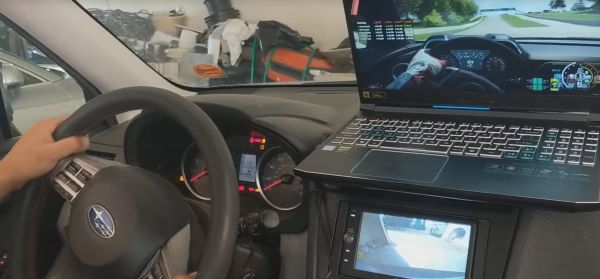
When [Nishanth]’s Subaru BRZ came to a sudden halt, he was saddened by the wait to get a new engine installed. Fortunately, he was able to cheer himself up by hacking it into a car simulator in the mean time. This would have the added benefit of not being limited to just driving on the Road Atlanta where the unfortunate mishap occurred, but any course available on Forza and similar racing games.

On paper it seemed fairly straight-forward: simply tap into the car’s CAN bus for the steering, throttle, braking and further signals, convert it into something a game console or PC can work with and you’re off to the races. Here the PC setup is definitely the cheapest and easiest, with a single part required: a Macchina M2 Under the Dash kit ($97.50). The XBox required over $200 worth of parts, including the aforementioned Macchina part, an XBox Adaptive Controller and a few other bits and pieces. And a car, naturally.

https://www.notion.so/image/https%3A%2F%2Fs3-us-west-2.amazonaws.com%2Fsecure.notion-static.com%2Fd49697c6-29ae-4b4d-a27b-e2da019d32de%2FUntitled.png?table=block&id=ed4e1bf2-91c6-4494-8e0f-f10964620869&width=5120&cache=v2

The Macchina M2 is the part that listens to the CAN traffic via the OBD2 port, converting it into something that resembles a USB HID gamepad. So that’s all a matter of plug’n’play, right? Not so fast. Every car uses their own CAN-based system, with different peripherals and addresses for them. This means that with the Macchina M2 acquired, [Nishanth]’s first task was to reverse-engineer the CAN signals for the car’s controls.

At this point the story is pretty much finished for the PC side of things, but the XBox One console is engineered to only accept official peripherals. The one loop-hole here is the Adaptive Controller, designed for people with disabilities, which allows the use of alternative inputs. This also enables using a car as an XBox One controller, which is an interesting side-effect.

Continue reading “When Your Car Breaks Down, Simply Hack It Into A Simulator”

Tilt Five: A Fresh Take On Augmented Reality Tabletop Gaming

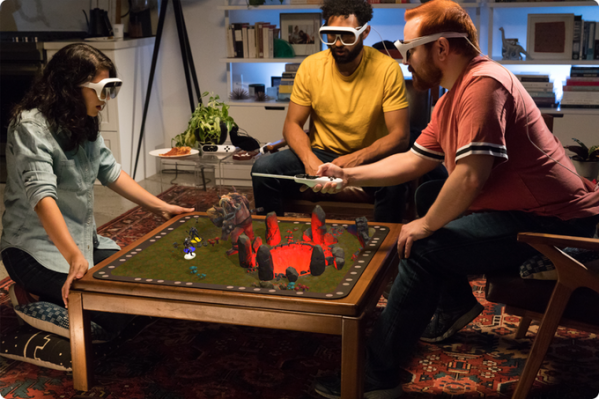
Tilt Five is an Augmented Reality (AR) system developed by Jeri Ellsworth and a group of other engineers that is aimed at tabletop gaming which is now up on Kickstarter. Though it appears to be a quite capable (and affordable at $299) system based on the Kickstarter campaign, the most remarkable thing about it is probably that it has its roots at Valve. Yes, the ones behind the Half Life games and the Steam games store.

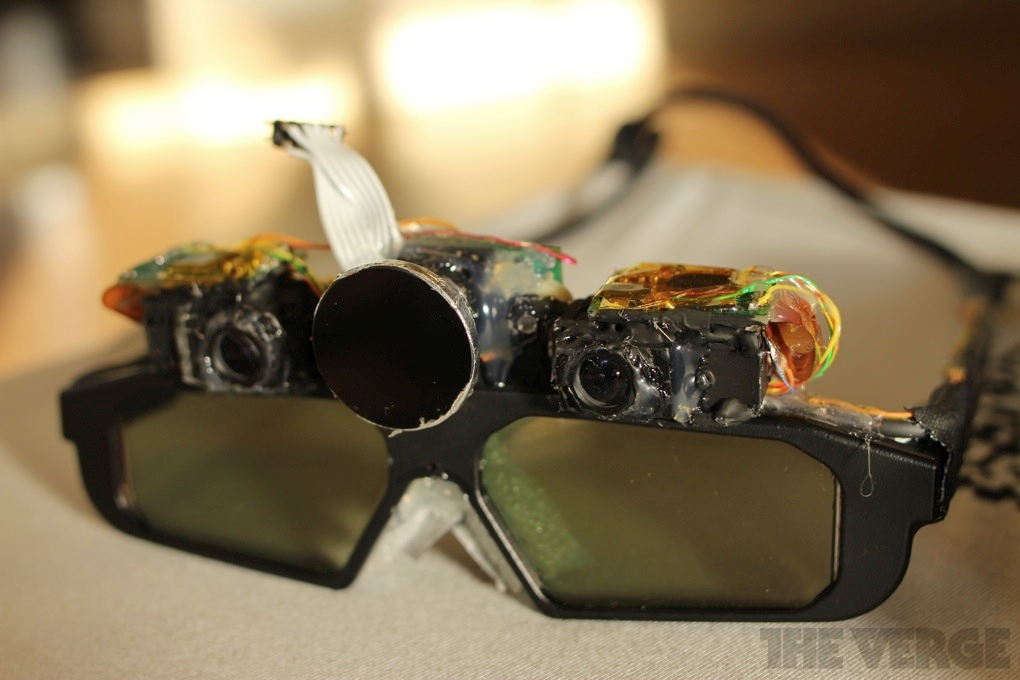
Much of the history of the project has been covered by sites, such as this Verge article from 2013. Back then [Jeri Ellsworth] and [Rick Johnson] were working on project CastAR, which back then looked like a contraption glued onto the top of a pair of shades. When Valve chose to go with Virtual Reality instead of AR, project CastAR began its life outside of Valve, with Valve’s [Gabe] giving [Jeri] and [Rick] his blessing to do whatever they wanted with the project.

What the Tilt Five AR system looked like in its CastAR days. (credit: The Verge)

Six years later Tilt Five is the result of the work put in over those years. Looking more like a pair of protective glasses along with a wand controller that has an uncanny resemblance to a gas lighter for candles and BBQs, it promises a virtual world like one has never seen before. Courtesy of integrated HD projectors that are aimed at the retroreflective surface of the game board.

A big limitation of the system is also its primary marketing feature: by marketing it as for tabletop gaming, the fact that the system requires this game board as the projection surface means that the virtual world cannot exist outside the board, but for a tabetop game (like Dungeons and Dragons), that should hardly be an issue. As for the games themselves, they would run on an external system, with the signal piped into the AR system. Game support for the Tilt Five is still fairly limited, but more titles have been announced.

(Thanks, RandyKC)

Dealing With Invasive Species Through Robotics

Throughout its history, humankind’s travels have often brought unwelcome guests along for the ride, and sometimes introduced species into a new environment for a variety of reasons. These so-called invasive species are all too often responsible for widespread devastation in ecosystems, wiping out entire species and disrupting the natural balance. Now researchers are testing the use of robots for population control of these invasive species.

The mosquitofish is the target of current research by NYU Tandon School of Engineering and the University of Western Australia. Originally from parts of the US and Mexico, it was introduced elsewhere for mosquito control, including in Australia. There it has become a massive problem, destroying native species that used to eat mosquitoes. As a result the mosquito problem has actually worsened.

As the main issue with these invasive species is that they do not have any natural predators that might control their numbers, the researchers created robots which mimic the look and motion of natural predators. In the case of the mosquitofish the largemouth bass is its primary predator. The theory was that by exposing the mosquitofish to something that looks and moves just like one of these predator fish, they would exhibit the same kind of stress response.

So far laboratory tests under controlled condition have confirmed these expectations, with the mosquitofish displaying clear signs of stress upon exposure to the robotic largemouth bass. Even better, they displayed decreasing weight and were found to avoid potentially dangerous areas, indicating that instead of focusing on foraging, they were in survival mode. This should limit their environmental impact, including their ability to procreate.

Who knows, before long the surface waters of Australia may be home to the first robotic species of fish.

(Thanks, [Qes])

FIDO2: The Dream Of Password-Free Authentication On The WWW

Of all the things which are annoying about the modern World Wide Web, the need to create and remember countless passwords is on the top of most people’s lists. From dozens of passwords for everything from social media sites to shopping, company, and productivity-related platforms like Github, a large part of our day is spent dealing with passwords.

While one can totally use a password manager to streamline the process, this does not absolve you from having to maintain this list and ensure you never lose access to it, while simultaneously making sure credentials for the password manager are never compromised. The promise of password-less methods of authentication is that of a world where one’s identity is proven without hassle, and cannot ever be stolen, because it relies on biometrics and hardware tokens instead of an easily copied password.

The FIDO2 project promises Web Authentication that means never entering a password into a website again. But like everything, it comes with some strings attached. In this article, we’ll take a look at how FIDO2 plans to work and how that contrasts with the state of security in general.

Continue reading “FIDO2: The Dream Of Password-Free Authentication On The WWW”

Speeding Up Drawing To MCU-Connected Serial Displays

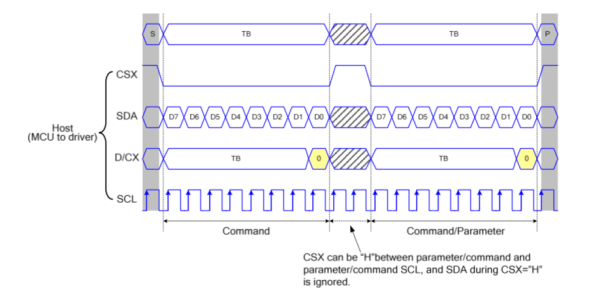
Writing image data to serially connected (SPI/I2C) displays from a microcontroller is easy enough these days, courtesy of standards defined by the MIPI Alliance, yet there are some gotchas in it which may catch someone using it unaware. [Larry Bank] wrote up a good summary of how one can get maximum performance out of such a display link.

At the core is the distinction between pixel data and command transmissions. The change from command to pixel data mode requires signaling, which takes precious clock cycles away from transferring pixel data between the MCU and display. The common MIPI DCS instruction set allows for a big reduction in needed data transfers by allowing parts of the display to be addressed instead of requiring a full refresh. Yet by not properly segmenting command and data transfers, one ends up unnecessarily slowing down the process.

The result is that one can run something like a Pac-Man emulator on an AVR MCU with a sluggish 320×480 SPI LCD at 60 FPS, as one can see in the video that is embedded after the break. Check the article for another demo video as well.

Continue reading “Speeding Up Drawing To MCU-Connected Serial Displays”