Understanding Elliptic Curve Cryptography And Embedded Security

We all know the usual jokes about the ‘S’ in ‘IoT’ standing for ‘Security’. It’s hardly a secret that security in embedded, networked devices (‘IoT devices’) is all too often a last-minute task that gets left to whichever intern was unfortunate enough to walk first into the office that day. Inspired by this situation, All About Circuits is publishing a series of articles on embedded security, with a strong focus on network security.

In addition to the primer article, so far they have covered the Diffie-Hellman exchange (using prime numbers, exponentiation and modular arithmetic) and the evolution of this exchange using elliptic curve cryptography (ECC) which prevents anyone from brute-forcing the key. Barring any quantum computers, naturally. All three articles should be understandable by anyone, with a simple, step-by-step format.

The upcoming articles will cover implementing security on microcontrollers specifically.  For those who cannot wait to learn more, Wikipedia has a number of articles on the topic of Elliptic Curve Cryptography (comparing it to the more older and still very common RSA encryption) specifically, as well as the Elliptic-Curve Diffie-Hellman key agreement protocol as discussed in the All About Circuits article.

A detail of note here is that the hardest problem in secure communications isn’t to keep the communications going, but to securely exchange the keys in the first place. That’s why a much much computationally expensive key exchange scheme using an asymmetric (or public-key) cryptography scheme  is generally used to set up the second part of the communications, which would use a much faster symmetric-key cryptography scheme, where both parties have the means to decode and encode messages using the same private key.

All the math aside, one does have to wonder about how one might denote ‘secure’ IoT. Somehow ‘SIoT’ doesn’t feel very catchy.

Connecting New York City To The Backbone: Meet NYC’s Mesh Network

Access to fast and affordable internet is a big issue in the USA, even in a major metropolis such as New York City. Amidst a cartel of ISPs who simply will not deliver, a group of NYC inhabitants first took it upon themselves to ease this situation by setting up their own mesh-based internet connections way back in 2013. Now they will be installing a new Supernode to take the installation base far beyond the current 300 buildings serviced.

As a community project, NYC Mesh is run as a non-profit organization, with its community members supporting the effort through donations, along with partnerships with businesses. Its router hardware consists out of off-the-shelf equipment (with a focus on the Ubiquiti NanoStation NSM5) that get flashed with custom firmware containing the mesh routing functionality.

As this article by Vice mentions, NYC Mesh is one of 750 community-led broadband projects in the US. Many of those use more traditional fixed wiring with distribution lines, but NYC Mesh focuses fully on wireless (WiFi) links with wireless mesh networking. This has the obvious benefit that given enough bandwidth on the Supernodes that hook into the Internet exchange points (IXP) and an efficient mesh routing protocol, it’s quick and easy to hook up new clients and expand the network.

The obvious downsides of using WiFi and RF in general is that they are not immune to outside influences, such as weather (rain), RF interference (including from other WiFi stations) and of course fairly limited range if there’s no direct line of sight. In a densely populated city such as NYC this is not much of an issue, with short hops between roof tops.

Making Autonomous Racing Drones Lean And Mean

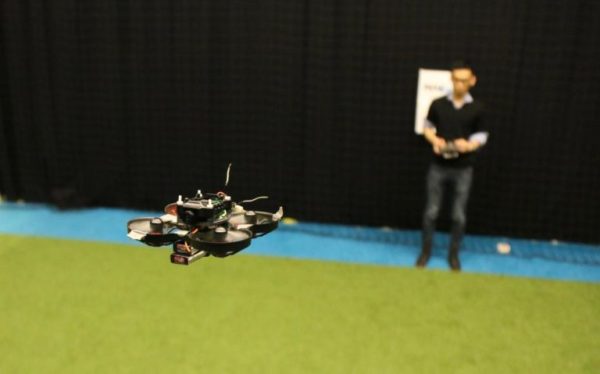
Recently the MAVLab (Micro Air Vehicle Laboratory) at the Technical University of Delft in the Netherlands proudly proclaimed having made an autonomic drone that’s a mere 72 grams in weight. The best part? It’s designed to take part in drone races. What this means is that using a single camera and onboard processing, this little drone with a diameter of 10 centimeters has to navigate the course, while avoiding obstacles.

To achieve this goal, they took an Eachine trashcan drone, replacing its camera with an open source JeVois smart machine vision camera and the autopilot software with the Paparazzi open UAV software. Naturally, scaling a racing drone down to this size came at an obvious cost: with its low-quality sensors, relatively low-quality camera and limited processing power compared to its big brothers it has to rely strongly on algorithms that compensate for drift and other glitches while racing.

Currently the drone is mainly being tested at a four-gate race track at TU Delft’s Cyberzoo, where it can fly multiple laps at a leisurely two meters per second, using its gate-detecting algorithms to zip from gate to gate. By using machine vision to do the gate detection, the drone can deal with gates being displaced from their position indicated on the course map.

While competitive with other, much larger autonomous racing drones, the system is still far removed from the performance of human-controlled racing drones. To close this gap, MAVLab’s [Christophe De Wagter] mentions that they’re looking at improving the algorithms to make them better at predictive control and state estimation, as well as the machine vision side. Ideally these little drones should be able to be far more nimble and quick than they are today.

See a video of the drone in action after the link.

Continue reading “Making Autonomous Racing Drones Lean And Mean”

The Fascinating World Of Solder Alloys And Metallurgy

Solder is the conductive metal glue that one uses to stick components together. If you get the component and the PCB hot enough, and melt a little solder in the joint, it will stay put and conduct reliably. But it’s far from simple.

There are many different solder alloys, and even the tip of the soldering iron itself is a multi-material masterpiece. In this article, we’ll take a look at the metallurgy behind soldering, and you’ll see why soldering tip maintenance, and regular replacement, is a good idea. Naturally, we’ll also touch upon the role that lead plays in solder alloys, and what the effect is of replacing it with other metals when going lead-free. What are you soldering with? Continue reading “The Fascinating World Of Solder Alloys And Metallurgy”

Please Meet ‘Capability Inquiry’, Part Of The MIDI 2.0 Standard

It may have passed you by in the news, but the MIDI Manufacturers Association (MMA) has recently unveiled more details about the upcoming MIDI 2.0 standard. Previously we covered the prototyping phase start of this new standard. The original Musical Instrument Digital Interface standard was revealed all the way back in August of 1983, as a cooperation between companies including Moog Music, Roland, Yamaha, Korg, Kawai and others. It was the first universal interface that allowed one to connect and control all kinds of musical instruments.

Over the years, MIDI has seen use with the composing of music, allowing instruments to be controlled by a computer system and to easily share compositions between composers. Before MIDI such kind of control was limited to a number of proprietary interfaces, with limited functionality.

The MMA lists the key features of MIDI 2.0 as: Bidirectional, Backwards Compatible, and the enhancing of MIDI 1.0 where possible. Using a new technology called MIDI Capability Inquiry (MIDI-CI), a MIDI 2.0 device can exchange feature profiles and more with other 2.0 devices. 1.0 is the fallback if MIDI-CI finds no new functionality. MIDI-CI-based configuration can allow 2.0 devices to automatically configure themselves for their environment.

Suffice it to say, MIDI 2.0 is a far cry from the original MIDI standard. By transforming MIDI into a more versatile, bidirectional protocol, it opens new ways in which it can be used to tie musical devices and related together. It opens the possibility of even more creative hacks, many of which were featured on Hackaday already. What will you make with MIDI 2.0?

See a brief demonstration of this feature of MIDI 2.0 in the below video:

Continue reading “Please Meet ‘Capability Inquiry’, Part Of The MIDI 2.0 Standard”

Zork And The Z-Machine: Bringing The Mainframe To 8-bit Home Computers

Computer games have been around about as long as computers have. And though it may be hard to believe, Zork, a text-based adventure game, was the Fortnite of its time. But Zork is more than that. For portability and size reasons, Zork itself is written in Zork Implementation Language (ZIL), makes heavy use of the brand-new concept of object-oriented programming, and runs on a virtual machine. All this back in 1979. They used every trick in the book to pack as much of the Underground Empire into computers that had only 32 kB of RAM. But more even more than a technological tour de force, Zork is an unmissable milestone in the history of computer gaming. But it didn’t spring up out of nowhere.

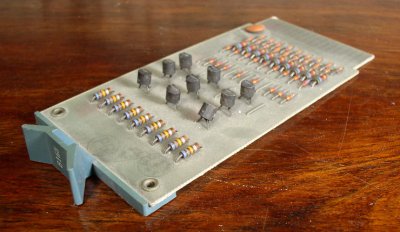
DEC PDP-10 Flip Chip module

The computer revolution had just taken a fierce hold during the second World War, and showed no sign of subsiding during the 1950s and 1960s. More affordable computer systems were becoming available for purchase by businesses as well as universities. MIT’s Laboratory for Computer Science (LCS) was fortunate to have ties to ARPA, which gave MIT’s LCS and AI labs (formerly part of Project MAC) access to considerable computing resources, mostly in the form of DEC PDP systems.

The result: students at the MIT Dynamic Modeling Group (part of LCS) having access to a PDP-10 KA10 mainframe — heavy iron at the time. Though this PDP-10 was the original 1968 model with discrete transistor Flip Chip modules and wire-wrapping, it had been heavily modified, adding virtual memory and paging support to expand the original 1,152 kB of core memory. Running the MIT-developed Incompatible Timesharing System (ITS) OS, it was a highly capable multi-user system.

Naturally, it got mostly used for playing games.
Continue reading “Zork And The Z-Machine: Bringing The Mainframe To 8-bit Home Computers”

Wing Opens The Skies For Drones With UTM

Yesterday Alphabet (formerly known as Google) announced that their Wing project is launching delivery services per drone in Finland, specifically in a part of Helsinki. This comes more than a month after starting a similar pilot program in North Canberra, Australia. The drone design Wing has opted for consists not of the traditional quadcopter design, but a hybrid plane/helicopter design, with two big propellers for forward motion, along with a dozen small propellers on the top of the dual body design, presumably to give it maximum range while still allowing the craft to hover.

With a weight of 5 kg and a wingspan of about a meter, Wing’s drones are capable of lifting and carrying a payload of about 1.5 kg. This puts it into a category of drones far beyond of what hobbyists tend to fly on a regular basis, and worse, it involves Beyond Visual Line Of Sight (BVLOS for short) flying, which is frowned upon by the FAA and similar regulatory bodies. What Google/Alphabet figures that can enable them to make this kind of service a commercial reality is called Unmanned aircraft system Traffic Management (UTM).

UTM is essentially complementary to the existing air traffic control systems, allowing drones to integrate into these flows of manned airplanes without endangering either. Over the past years, it’s been part of NASA’s duty to develop the systems and infrastructure that would be required to make UTM a reality. Working together with the FAA and companies such as Amazon and Alphabet, the hope is that before long it’ll be as normal to send a drone into the skies for deliveries and more as it is today to have passenger and cargo planes with human pilots take to the skies.