Learning The Ropes With A Raspberry Pi Mandelbrot Cluster

You’ve probably heard it said that clustering a bunch of Raspberry Pis up to make a “supercomputer” doesn’t make much sense, as even a middle-of-the-road desktop could blow it away in terms of performance. While that may be true, the reason most people make Pi clusters isn’t for raw power, it’s so they can build experience with parallel computing without breaking the bank.

So while there was probably a “better” way to produce the Mandelbrot video seen below, creator [Michael Kohn] still learned a lot about putting together a robust parallel processing environment using industry standard tools like Kubernetes and Docker. Luckily for us, he was kind enough to document the whole process for anyone else who might be interested in following in his footsteps. Whatever your parallel task is, and whatever platform it happens to be running on, some of the notes here are likely to help you get it going.

It’s not the biggest Raspberry Pi cluster we’ve ever seen, but the four Pi 4s and the RGB LED festooned enclosure they live in make for an affordable and space-saving cluster to hone your skills on. Whether you’re practicing for the future of software development and deployment, or just looking for something new to play around with, building one of these small-scale clusters is a great way to get in on the action.

Continue reading “Learning The Ropes With A Raspberry Pi Mandelbrot Cluster”

Ultra Cheap PCB Wrenches Make Perfect Kit Accessory

Let’s make one thing abundantly clear. We do not, under any circumstances, recommend you replace your existing collection of wrenches with ones made out of PCBs. However, as creator [Ben Nyx] explains, they do make for an extremely cheap and lightweight temporary tool that would be perfect for distributing with DIY kits.

This clever open hardware project was spawned by [Ben]’s desire to pack an M3 wrench in with the kits for an ESP32-based kiln controller he’s developing. He was able to find dirt cheap screwdrivers from the usual import sites, but nobody seemed to stock a similarly affordable wrench. He experimented with 3D printing them, but in the end, found the plastic just wasn’t up to the task. Then he wondered how well a tiny wrench cut from a PCB would fare.

The answer, somewhat surprisingly, is pretty well. We wouldn’t advise you try to crank your lug nuts down with one, but for snugging up a couple nuts that hold down a control board, they work a treat. [Ben] came up with a panelized design in KiCad that allows 18 of the little wrenches to get packed into a 100 x 100 mm PCB suitable for production from popular online board houses. Manufactured from standard 1.6 mm FR4, they come out to approximately 10 cents a pop.

Since [Ben] has been kind enough to release his design under the MIT license, you’re free to spin up some of these wrenches either for your own kits or just to toss in the tool bag for emergencies. We’d love to see somebody adapt the design for additional sizes of nuts, or maybe figure out some way to nest them to sneak out a couple extra wrenches per board.

We’ve seen plenty of folks make cheap tools for themselves in the past, but projects that can produce cheap tools in mass quantities is uniquely exciting for a community like ours.

Continue reading “Ultra Cheap PCB Wrenches Make Perfect Kit Accessory”

Improving An Already Phenomenal Star Trek Prop

When Star Trek: Voyager was in the development phase, concept art was created for a new style of tricorder to be used by the crew of the titular starship. But as it often the case with a younger sibling, the show ended up having to largely make do with the hand-me-down props from Star Trek: The Next Generation, which had recently finished its TV run.

Trek aficionado [Mangy_Dog] completed a jaw-dropping recreation of this unused tricorder design back in 2019, but unable to leave well enough alone, he’s recently completed a second version that truly raises the bar for fan replicas. It’s not hyperbole to say that the prop he’s created is of a far higher quality and fidelity than anything they would have had during the actual filming of the show.

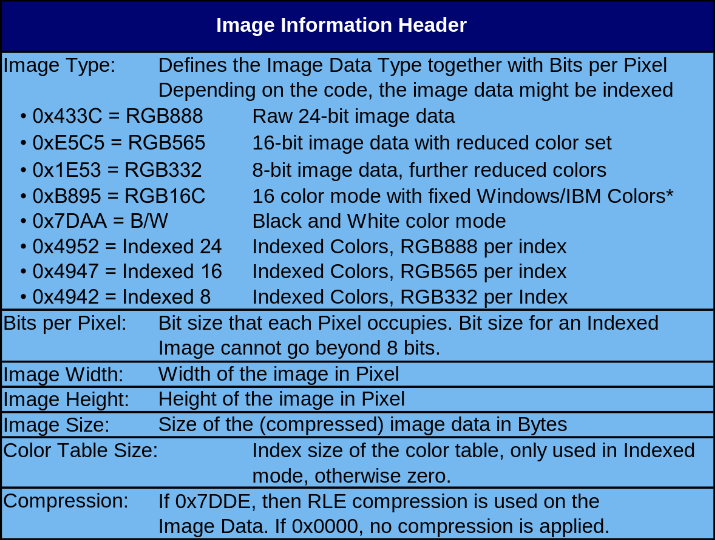
Now you might be thinking that building the second version of the tricorder was easier than the first, and indeed, [Mangy_Dog] learned some important lessons from the earlier build. But that’s not to say that construction of this new replica, which was actually done on commission, went off without a hitch. In fact, he almost immediately ran into a serious problem. When he attempted to order a new display from Nextion, he found the quality had dropped significantly from the ones he’d used previously. The viewing angles and color reproduction were abysmal, so he was forced to go back to the drawing board and not only find a new display, but a completely new graphics chip to talk to it. Continue reading “Improving An Already Phenomenal Star Trek Prop”

Hackaday Podcast 151: The Hackiest VR Glove, Plotting Boba Fett With Shoelaces, ECU Hacking, And Where Does Ammonia Come From?

Hackaday Editor-in-Chief Elliot Williams and Managing Editor Tom Nardi are back again to talk about all the weird and wonderful stories from our corner of the tech world. Canon had to temporarily give up on chipping their ink cartridges due to part shortages, and that’s just too perfect to ignore. There’s also some good news for the International Space Station as the White House signals they’re ready to support the orbiting outpost until 2030.

We’ll also look at an extremely promising project to deliver haptic feedback for VR, programming bare-metal x86 with the Arduino IDE, and the incredible reverse engineering involved in adding a DIY autonomous driving system to a 2010 Volkswagen Golf. Finally we’ll find out why most of the human life on this planet depends on a process that many people have never heard of, and learn about the long history of making cars heavier than they need to be.

Take a look at the links below if you want to follow along, and as always, tell us what you think about this episode in the comments!

Direct download

Continue reading “Hackaday Podcast 151: The Hackiest VR Glove, Plotting Boba Fett With Shoelaces, ECU Hacking, And Where Does Ammonia Come From?”

Arduino IDE Creates Bootable X86 Floppy Disks

Arguably the biggest advantage of the Arduino ecosystem is how easy it is to get your code running. Type a few lines into the IDE, hit the button, and in a few seconds you’re seeing an LED blink or some text get echoed back over the serial port. But what if that same ease of use didn’t have to be limited to microcontrollers? What if you could use the Arduino IDE to create computer software?

That’s exactly what boot2duino, a project developed by [Jean THOMAS] hopes to accomplish. As you might have guessed from the name, the code you write in the Arduino is turned into a bootable floppy disk image that you can stick into an old PC. After a few seconds of beeping and grinding your “Hello World” should pop up on the monitor, and you’ve got yourself the world’s biggest Arduino.

A minimal x86 Arduino sketch.

Now to be clear, this isn’t some kind of minimal Linux environment that boots up and runs a compiled C program. [Jean] has created an Arduino core that provides basic functionality on x86 hardware. Your code has full control over the computer, and there’s no operating system overhead to contend with. As demonstrated in a series of videos, programs written with boot2duino can display text, read from the keyboard, and play tones over the PC’s speaker.

The documentation for boot2duino says the project serves no practical purpose, but we’re not so sure. While the feature set is minimal, the low overhead means you could theoretically press truly ancient PCs into service. There’s certainly an appeal to being able to write your code on a modern OS and effortlessly deploy it on a retrocomputer, from somewhat modernized versions of early computer games to more practical applications. If any readers end up exploring this concept a bit further, be sure to let us know how it goes.

Continue reading “Arduino IDE Creates Bootable X86 Floppy Disks”

Honda Ignition Coils Sing The Song Of Their People

High-voltage experimenters have been using automotive ignition coils to generate impressive sparks in the home lab for decades, and why not? They’re cheap, easily obtainable, and at the end of the day, producing sparks is literally what they’re designed to do. But that doesn’t mean there isn’t room for improvement.

In his latest Plasma Channel video [Jay Bowles] revisits this classic experiment, bringing to bear the considerable high-voltage experience he’s gained over the last several years. Building on an earlier setup that used a single Honda ignition coil, this new dual-coil version can produce up to 60,000 volts and is driven by a cleaner and more reliable circuit based on the iconic 555 timer. A pair of potentiometers on the front of the driver can adjust its square wave output from 1 to 10 kilohertz manually, while a commercial Bluetooth audio receiver tied into the 555 circuit allows the output to be modulated by simply playing audio from a paired device.

Continue reading “Honda Ignition Coils Sing The Song Of Their People”

Raspberry Pi Pico Gets A Tiny Keyboard On Its Back

With hackers and makers building custom computing devices that don’t necessarily follow conventional design paradigms, there’s been a growing demand for smaller and smaller keyboards. Many of the cyberdecks we’ve seen over the last couple of years have used so-called 60% or even 40% keyboards, and there’s been a trend towards repurposing BlackBerry keyboards for wearables and other pocket-sized gadgets. But what if you need something even smaller?

Enter this incredibly diminutive keyboard created by [TEC.IST]. With 59 keys crammed into an area scarcely larger than three US pennies, it may well be the smallest keyboard ever made. The PCB has been designed to mount directly onto the back of a Raspberry Pi Pico, which is running some CircuitPython code to read the switch matrix and act as a standard USB Human Interface Device. The board design files as well as the source code for the Pico have been released on the project’s Hackaday.io page, giving you everything you need to spin up your own teeny tiny input device.

The Pi Pico’s castellated pads make attaching the PCB a snap.

Of course, you probably won’t be breaking any speed records when banging out text on this thing. We know from past Hackaday badges that an array of microswitches make for a functional, if somewhat unpleasant, method of text entry.

Continue reading “Raspberry Pi Pico Gets A Tiny Keyboard On Its Back”