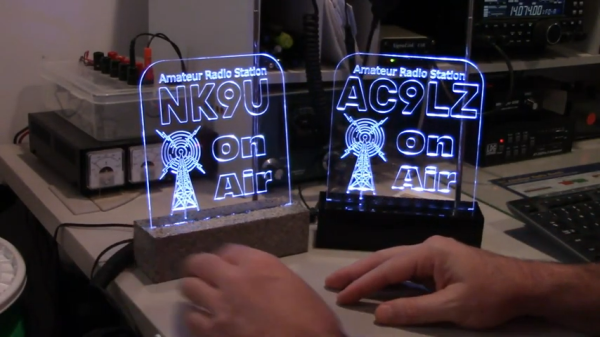
Sign Detects RF To Show You Are On The Air

Like a lot of hams, [Stuart] wanted an “on the air” sign. These signs often connect to a PTT switch or maybe an output from the transmitter that also does things like switches antennas or switches in an amplifier. [Stuart’s] version, though, simply senses the radio frequency emissions from the transmitter and lights up that way. You can see two videos about the sign, below.

Honestly, we are a little worried that he might have too much RF at his operating position. Presumably, the device is pretty sensitive, especially if there’s any actual antenna on the sign. A comparator and a pot let you set the sensitivity so it doesn’t light up when your garage door opens.

Continue reading “Sign Detects RF To Show You Are On The Air”
A Microwave Frequency Doubler

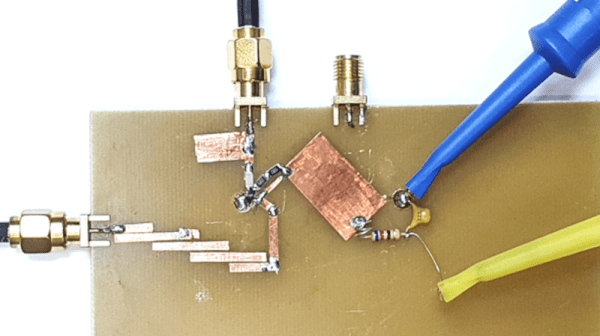
It is an age-old problem. You have a 2.5 GHz source and you want it at 5 GHz. You need a frequency doubler. [All Electronics Channel] has an interesting video that talks not only about the theory of such a device but shows a practical one made with copper strips on a blank PCB substrate.

A fun thing about microwaves is that even little strips of copper are circuit elements since the wavelength at 2.5 GHz is only 12cm. That means a quarter-wave stub is only 3 cm — just over an inch.

The construction technique used is simple and, as he points out, experimenting with a real circuit will give you much more feel for how these circuits work than just reading and working out the math.

The multiplier drives an amplifier into nonlinearity which, of course, generates harmonics. Then a bandpass filter selects the second harmonic. If you haven’t dealt with stub circuits before, you might want to read up on how a piece of copper connected at one end can act like an inductor, a capacitor, or even a tuned circuit.

If you want more detail on the copper tape technique, we can help. If you don’t want to double frequency, maybe you would prefer to try voltage.

Continue reading “A Microwave Frequency Doubler”

The HP3458A: King Of Multimeters For Three Decades

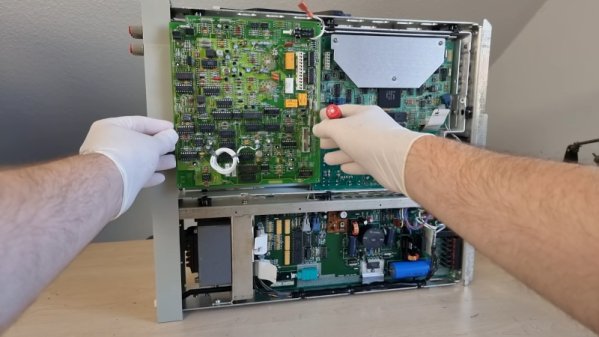
[Marco] looks at a lot of meters. However, he considers the HP3458A the best even though they were introduced more than 30 years earlier in 1989. Someone donated one to [Marco] but it presented some error messages on startup and exhibited erratic behavior, so he had some repairs to do.

The error codes hinted there were issues with the multislope analog to digital converter and that’s what sets the meter apart, according to [Marco]. The meter has 8.5 digits, so a normal conversion stage won’t cut it.

Continue reading “The HP3458A: King Of Multimeters For Three Decades”

Electronic Covid Test Tear Down Shows Frustrating Example Of 1-Time-Use Waste

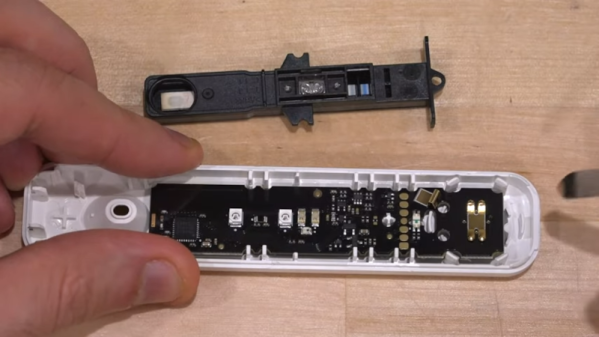
The latest video from [TheSignalPath] is a result of his purchase of a home COVID-19 test. He found an electronic version that connects to your cell phone and displays the results on the phone. The device is an antigen test and, internally, works like the home tests that show the results using lines similar to a pregnancy test. So, somehow, the phone version reads the lines and communicates with the phone. But how? That’s the point of the video, which you can see below.

In a traditional test, there’s a control line that has to appear to show that the test was done correctly. Then a line under that indicates detection of the virus. The circuit board inside the electronic test has a plastic unit onboard that contains a similar strip and has optical sensors for both the reference line and the detection line. Since it is essentially an optical device — there are some lenses in the strip assembly that look like they are detecting the dye as it moves through the strip with LEDs onboard to shed light on the situation.

Under the microscope, the CPU is a typical Bluetooth-capable ARM chip from Nordic. The board did power up, but the device is made to only operate once because of the test strip. The video notes — and we agree — it seems wasteful to create an entire Bluetooth-enabled microcontroller board with optical components just to read a strip one time that is pretty easy to read to start with. We’ll stick with the simple test strip. Still, it is interesting to see the insides.

If you want to read more about antigen tests, we covered that. We also talked about PCR testing.

Continue reading “Electronic Covid Test Tear Down Shows Frustrating Example Of 1-Time-Use Waste”

Fail Of The Week: Magnetic Levitation

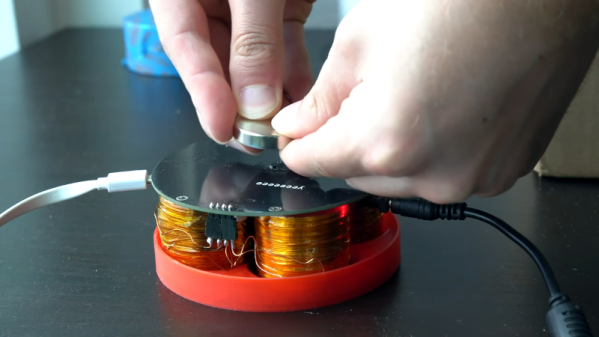
We are big fans of the little desktop magnetic levitation setups that float a small object on a magnet. As [3D Printed Life] points out, they look like magic. He was surprised that the commercial units use analog electronics. He decided to build a digital version but didn’t know what he was getting into. He details his journey in the video you can see below.

Along with a custom control board, he decided to wind his own electromagnets. After finding that tedious he built a simple coil winder to automate some of the work.

Continue reading “Fail Of The Week: Magnetic Levitation”

Learn DMX512 Basics

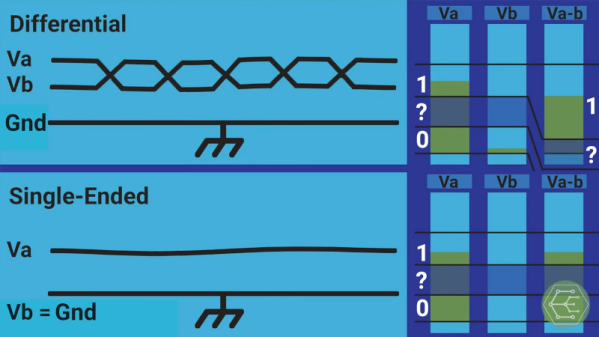
If you’ve done anything with modern lighting effects, you’ve probably heard of DMX, also known as DMX512. Ever wonder what’s really happening under the hood? If so, then you should have a look at [EEForEveryone’s] video on the topic, which you can see below.

At the core, the DMX512 uses RS485, but adds software layers and features. The video uses the OSI model to show how the system works.

Continue reading “Learn DMX512 Basics”

Better History Through X-Rays

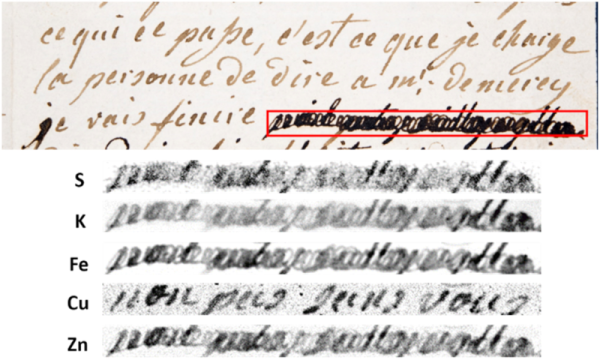
Even if you aren’t a giant history buff, you probably know that the French royal family had some difficulties in the late 1700s. The end of the story saw the King beheaded and, a bit later, his wife the famous Marie Antoinette suffered the same fate. Marie wrote many letters to her confidant, and probable lover, Swedish count Axel von Fersen. Some of those letters have survived to the present day — sort of. An unknown person saw fit to blot out parts of the surviving letters with ink, rendering them illegible. Well, that is, until now thanks to modernĀ x-ray technology.

Anne Michelin from the French National Museum of Natural History and her colleagues were able to foil the censor and they even have a theory as to the ink blot’s origin: von Fersen, himself! The technique used may enable the recovery of other lost portions of historical documents and was published in the journal Science Advances.

Continue reading “Better History Through X-Rays”