3D Print In The Air With A Little Software Support

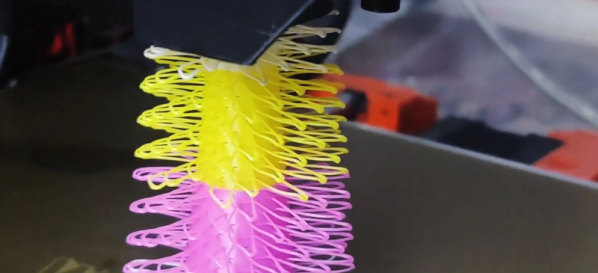
We all love 3D printing, but printing anything that has an overhang requires support, right? Maybe not. [Create Inc] has a video showing some 3D prints that seem to hang impossibly in the air — not bridges, but loops just floating in the air. You can see the effect in the video below.

The first part of the post covers gcode basics. Around the 5:30 mark, [Create] talks about his inspiration: FullControl Gcode Designer. You can do a lot with this tool and it inspired [Create’s] similar web-based version.

The point of these tools is to make it easier to create gcode directly instead of using a slicer. You can think of it as assembly language for 3D printing — you can do almost everything in the high-level language — 3D models — but if you want ultimate control you use assembly language, or, in this case, gcode.

The original tool uses Excel which didn’t visualize the output directly and could not provide proper error checking. The new tool solves those problems and is much easier to use.

If you know gcode, you can do a lot of interesting things. You can even put a spring in your step.

Continue reading “3D Print In The Air With A Little Software Support”
Improving Cheap SDR Antennas

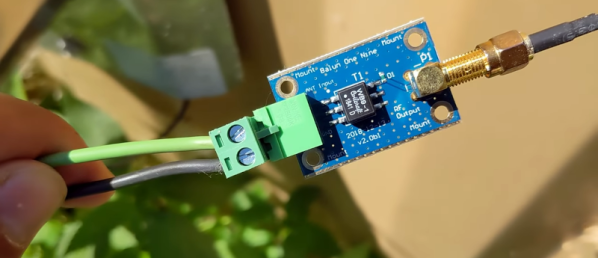
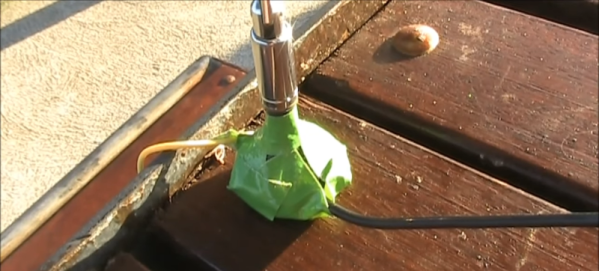
[VK3YE] knows there are at least two things wrong with the cheap antennas you get with most SDR dongles. First, they are too short. You’d like to have enough to pull out a quarter wavelength on the longest frequency you want to operate. The second problem is there’s no real ground. He fixed both of these problems, as you can see in the video below.

The result might be called an ugly duckling rather than a rubber ducky. But it does seem to work. You could probably come up with something nicer to reseal the base, but the tape does work. A nice 3D printed housing would work, too, and might improve the appearance. We also thought about the goop you use on tool handles.

We actually have simply cut these antennas off and reused the cable and connector to hook up a better antenna. You might get more mileage out of that approach. On the other hand, the magnetic base and reasonably small form factor is pretty attractive.

If you want to do before and after testing, we’d suggest using Python. Or, just bite the bullet and build something that looks like it belongs in a movie.

Continue reading “Improving Cheap SDR Antennas”

DeWalt Literal Hack Upgrades Battery

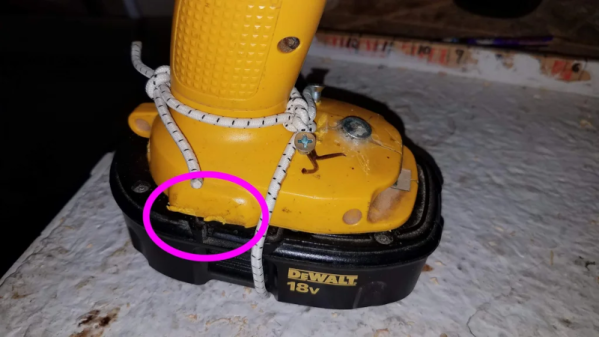
There are several important decisions you make in your life: Coke or Pepsi; vi or emacs; PC or Mac. But, lately, you need to pick a battery ecosystem for your tools. DeWalt? Black & Decker? Or just cheapies from Harbor Freight? But what happens when your vendor of choice changes their batteries? That’s the situation [jleslie48] found when a DeWalt 14.4V battery died. All the new tools require 18V batteries, so buying an old battery for one tool didn’t make sense. Time to literally hack the old tool to accept the new battery.

Presumably, nothing in the drill will mind the higher voltage. It is all a matter of mechanics and nothing a Dremel tool won’t fix. Since the tool was old and the 18V batteries relatively new, [jleslie48] decided to limit modifications to the tool only leaving the batteries intact for use with the newer tools.

The only problem once you remove the pins and clips that interfere with the battery fit, it won’t actually stay on the drill. We might have turned to duct tape or zip ties, but bungee cord works, too, as you can see in the finished product.

Honestly, though, the bungee is good because you can stretch it to remove the battery for charging. We might have just cannibalized the drill for its motor, but next time you have a tool with no battery, it might be worth looking to see if you could modify the tool.

Bungees are great for robots, too. Or, you can lay siege on your neighbors.

CNC Saves Water Cooling Setup

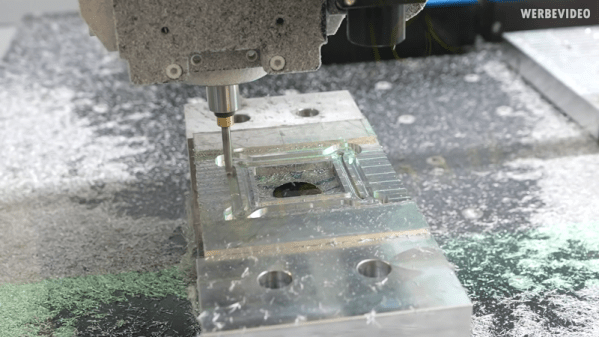
A classic problem. You have a new CPU and a 15-year old water cooling system. Of course, the bracket doesn’t fit. Time to buy a new cooler? Not if you are [der8auer]. You design a new bracket and mill it out of aluminum.

Honestly, it might seem overkill, but it makes sense. After all, no matter how new the CPU is, using water to cool it still works the same way, in principle.

Continue reading “CNC Saves Water Cooling Setup”

Interpreters In Scala

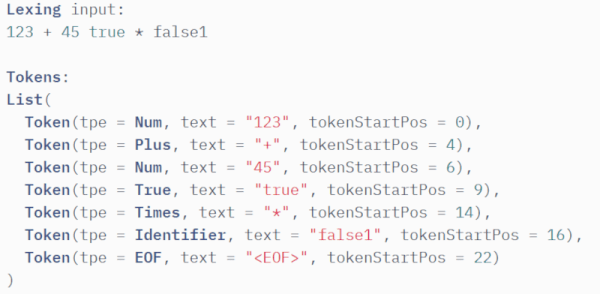
You might think of interpreters as only good for writing programs. Many people learned programming on some kind of interpreter — like BASIC — because you get immediate feedback and don’t have to deal with the complexities of a compiler. But interpreters can have other uses like parsing configuration files, for example. [Sakib] has a very complete tutorial about writing an interpreter in Scala, but even if you use another language, you might find the tutorial useful.

We were impressed because the tutorial uses formal parsing using a lexer and a parser. This is how you’d be taught to do it in a computer science class, but not how everyone does it.

Continue reading “Interpreters In Scala”

A Cheap Dipole Antenna From An Extension Cord

Dipoles are a classic builder’s antenna, after all they are usually little more than two pieces of wire and a feedline. But as [Rob] shows us in the video below, there are a few things to consider.

The first thing is where to get the wire. A damaged extension cord donated the wire. That’s actually an interesting idea because you get multiple wires the same length inside the extension cord.  Continue reading “A Cheap Dipole Antenna From An Extension Cord”

You Are Doomed To Learn WebAssembly

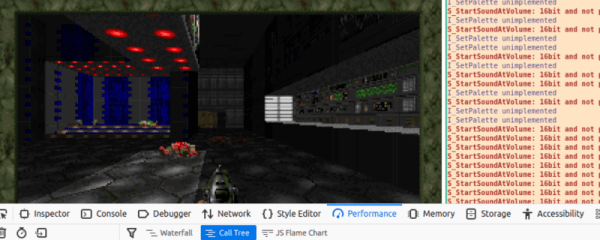
At first, Web browsers displayed HTML pages. But then people wanted those pages to do something. So we got — among other things — JavaScript. Then people wanted to do super complicated and compute-intensive things. So now we have WebAssembly. If you want to learn it, [diekmann] has a 4-part series that covers everything from getting started to porting Doom into your browser.

Paradoxically, instead of using a browser, he uses the wasm binary toolkit to run code more like a standard assembler. And wasm — what most people call WebAssembly — isn’t like most assemblers you know. Instead of labels, there are blocks that work much more like high-level language constructs such as while loops in C.

Continue reading “You Are Doomed To Learn WebAssembly”