EDSAC Lives In MiSTer

There’s a lot of argument over which was the first modern computer to be built. There’s room for debate, but EDSAC — the work of Dr. Maurice Wilkes — certainly was among the first. While we’ve seen simulators before, [hrvach’s] FPGA-based simulator for the MiSTer platform has a lot going for it. Check out the video, below.

So much of what we take for granted today was first developed on the EDSAC. For example, the “Wheeler jump” (named after graduate student David Wheeler) was the origin of the idea of a subroutine.

Continue reading “EDSAC Lives In MiSTer”

Docking With ISS Isn’t As Easy As You Might Think

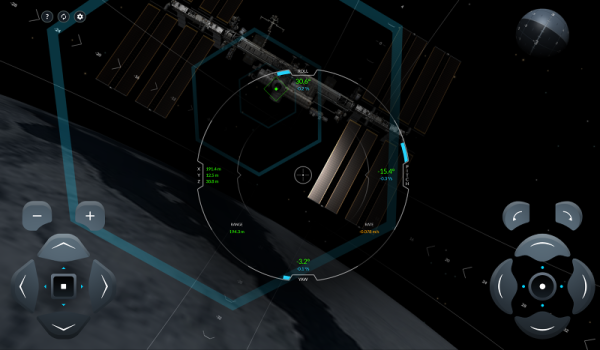
Complexity is a funny thing. In prehistoric times, a caveman might float across a lake on a log. That’s simple. But as you add a rudder, a sail, or even a motor, it gets more and more complex. But if you add enough complexity — a GPS and an autopilot, for example, it becomes simple again. The SpaceX Dragon capsule actually docks itself to the ISS. However, the crew on the station can take over manually if they need to. What would that be like? Try the simulation and find out. If you don’t make it on the first, try, [Scott Manley’s] video below might help you out.

This isn’t a flashy Star Wars-style simulator. Think more 2001. Movement is slow and it is easy to get out of control. The user interface is decidedly modern compared to the old Apollo era

Continue reading “Docking With ISS Isn’t As Easy As You Might Think”

The Mark 14 Torpedo — When Just About Everything Goes Wrong, Even The Testing

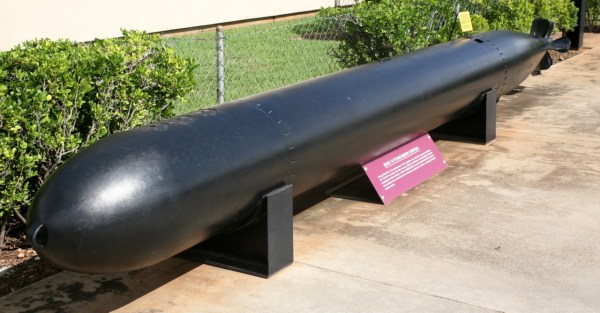
I am a fan of the saying that those who don’t know history are doomed to repeat it. After all, humans have been building things for a number of centuries and we should learn from the engineers of the past. While you can learn a lot studying successes, sometimes — maybe even most of the time — we learn more from studying failure. The US Navy’s Mark 14 torpedo certainly has a lot to teach us.

The start of the story was the WWI-era Mark 10 torpedo which was fine for its day, but with faster destroyers and some additional data about how to best sink enemy ships it seemed necessary to build a new torpedo that would be faster, carry more explosive charge, and use a new method of detonation. Work started in 1931 with a $143,000 budget which may sound laughable today, but that was a lot of coin in the 1930s. Adjusted for inflation, that’s about $2.5 million.

Continue reading “The Mark 14 Torpedo — When Just About Everything Goes Wrong, Even The Testing”

Foamboard Makes For A Light Hovercraft

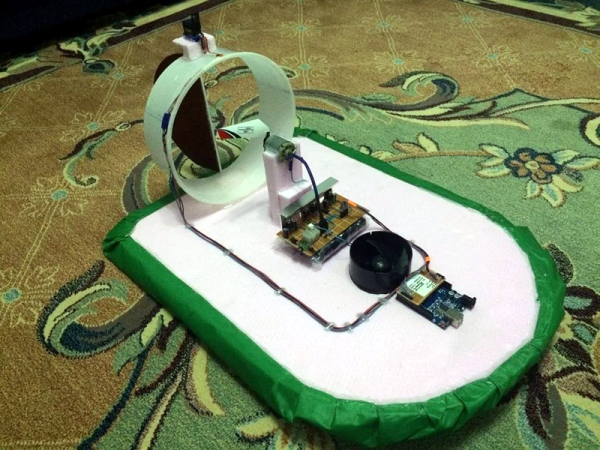
If we are to believe many science fiction movies, one day throngs of people wearing skin-tight silver spandex jumpsuits will be riding around on hovercraft. Hovercraft haven’t really taken the world by storm, but [Fitim-Halimi] built his own model version and shows you how he did it. You can see the little craft moving in the video below.

In theory, a hovercraft is pretty simple, but in practice they are not as easy as they look. For one thing, you need a lot of air to fill the plenum chamber to get lift. That’s usually a noisy operation. The solution? In this case, a hairdryer gave up its motor for the cause. In addition, once floating on a near-frictionless cushion of air, you have to actually move without contacting the ground. Like many real hovercraft, this design uses another fan to push it along. You can see in the video that the designer uses Jedi hand motions to control the vehicle.

Continue reading “Foamboard Makes For A Light Hovercraft”

Open Source Raman Spectrometer Is Cheaper, But Not Cheap

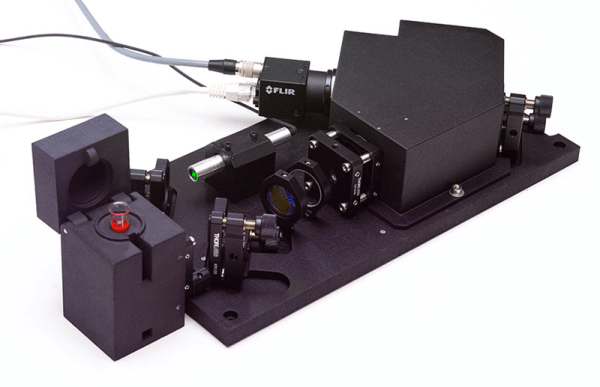
Raman spectrography uses the Raman scattering of photons from a laser or other coherent light beam to measure the vibrational state of molecules. In chemistry, this is useful for identifying molecules and studying chemical bonds. Don’t have a Raman spectroscope? Cheer up! Open Raman will give you the means to build one.

The “starter edition” replaces the initial breadboard version which used Lego construction, although the plans for that are still on the site, as well. [Luc] is planning a performance edition, soon, that will have better performance and, presumably, a greater cost.

Continue reading “Open Source Raman Spectrometer Is Cheaper, But Not Cheap”

No More Floppy Drives For This Agilent Scope

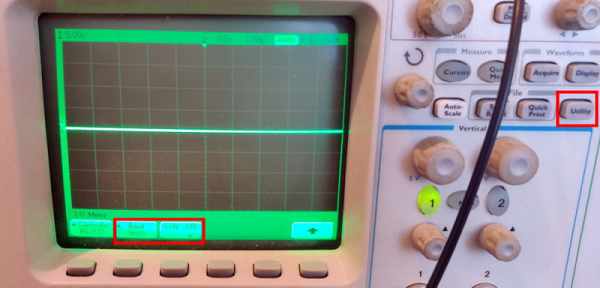
When [kiwih] picked up an Agilent 54621A scope, he was amused that it had a floppy disk. At one time, it was high-tech to use a disk to transfer scope data to your computer. Today, not so much. However, on the back was a serial port. Surely it was possible to read data from there. It is, and what results is a nice walkthrough of finding the port’s info and interfacing with it using Python.

Normally, you’d use the included BenchLinkXL software to grab data from the port, but that software is so old it would not run under Windows 10 or Wine. Searching didn’t turn up much on the serial port, but it did locate a manual for a similar Agilent scope. That manual wasn’t too helpful since it assumed you were connecting via a LAN or USB. However, it did make reference to an older model that was also similar and that was the key to finding a manual that did explain the serial port protocol.

The command set looks suspiciously like SCPI — Standard Commands for Programmable Instruments — which is a layer on top of the GPIB protocol. Many scopes speak that language, so that’s not surprising. That also means if you are in the mood to communicate with an SCPI scope, you might find the code useful, even if you don’t use a serial port or have this exact Agilent model.

SCPI has a lot of uses. For example, try talking to your scope. The cheap Rigol and similar scopes usually have SCPI and you can control and read them using the same kind of techniques.

Measuring The Speed Of Light In 1927

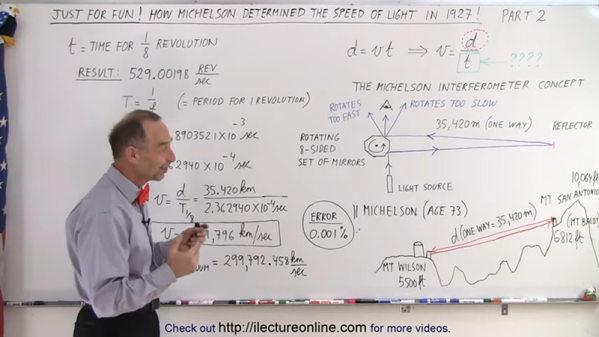
It is hard to remember that a lot of high tech research went on well before the arrival of electronic computers, lasers, and all the other things that used to be amazing but are now commonplace. That’s why we enjoyed [Michel van Biezen’s] two part post on how Michelson computed the speed of light in 1927. You can see the videos below.

Michelson wasn’t the first, of course. Galileo tried. He sent an assistant to the top of a hill with a lantern. When the assistant saw Galileo’s lantern, he was to uncover his lantern. They practiced near each other to account for reaction time. But when the assistant was 3 km away, it didn’t take any more time. The implication was that light traveled instantaneously, but, of course, it is actually just really fast.

By 1927, Michelson tried what was in effect the same technique but with better technology, and this time they put a reflector about 35 km away meaning the light had to go to the reflector and back for a total of about 70 km.

Continue reading “Measuring The Speed Of Light In 1927”