It is hard to find anyone that does any kind of software development that doesn’t have some interaction with GitHub. Even if you don’t host your own projects there, there are so many things to study and borrow on the site, that it is nearly ubiquitous. However, when you’ve needed GitHub on the run, you’ve probably had to turn to your phone browser and had a reduced experience. GitHub for Mobile is now out of beta and promises a more fluid phone-based GitHub experience.
In addition to working with tasks and issues, you can also review and merge pull requests. The app sends your phone notifications, too, which can be handy. As you might expect, you can get the app for Android or iPhone in the respective stores.
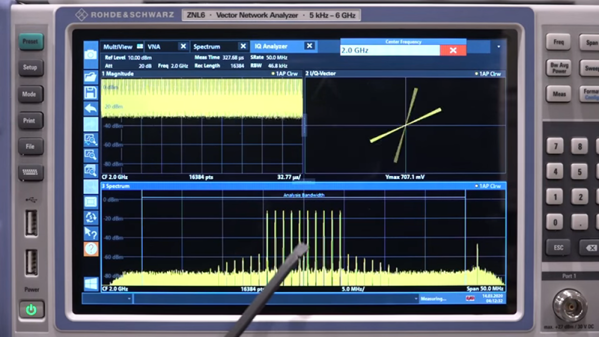
[The Signal Path] snagged a fancy Rohde & Schwarz vector signal generator that can go up to 3.2 GHz, but sadly it wasn’t in working order. It powered up and even put out a 1 GHz signal, but the amplitude output was very wrong. Interestingly relative changes to the output were correct, it was just that the absolute output amplitude was off by quite a bit and changed with frequency. That started a detective job which you can follow along in the video below.
The instrument is pretty high-end, and did not report any problems even during self-check. This implied that all the internals were probably good and whatever was wrong probably lay close to the output. The service manual’s block diagram wasn’t terribly useful, especially given that all the processing portions appear to work well.
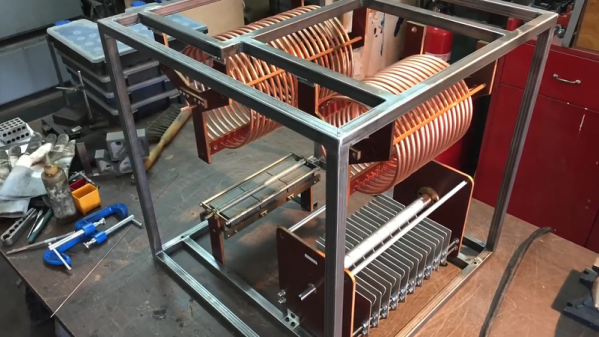
Remember “Wordless Workshop” in Popular Science? [Roy Doty] illustrated a household problem and the solution for it cobbled up in the main character’s garage workshop. We wonder what [Roy] would have done with YouTube? Maybe something like the video from [VE2TAE] and [VE2AEV] showing their link coupling antenna tuning build. You can watch the video after the break, and if you aren’t a fan of Jazz, you can mute the volume.
Like [Doty’s] cartoons, the video presumes you are going to have your own idea about dimensions and component values to fit your needs. But the construction is beautiful in its own right. The tubing wound into giant coils is impressive and brings back memories of the old days. However, the construction of the variable capacitors really got us excited. Big air variable caps may be hard to find, but the video makes them look easy to make.
A couple of nice looking knobs and panel meters make for a great looking tuner. With that spacing, we imagine it would handle full legal power without any difficulty at all. If you want to learn more about this type of tuner, [VK1OD] had a great page about it which seems to be defunct now. But the Internet Archive comes to our rescue, as usual.
The design is quite old, so even a 1934 copy of “Radio” can explain it (look on page 6). If you want to see a more wordy example of making variable capacitors — although they are smaller, the same principles apply — [N4DFP] has a good write up for that.
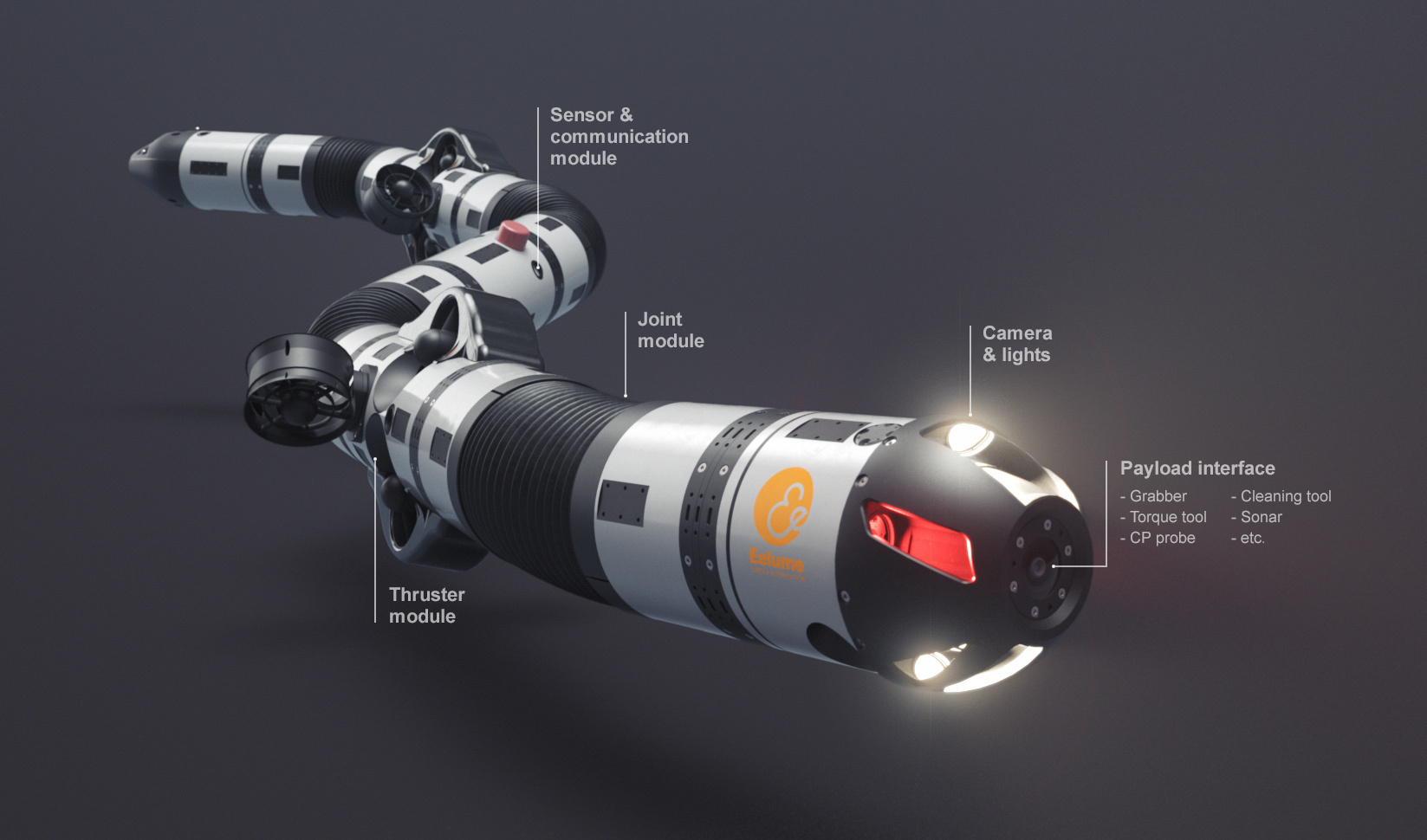
We can’t tell if the Eelume actually exists, or if it’s just a good CG and a design concept, but when we saw the video below, we wanted to start working on our version of it immediately. What’s an Eelume? A robotic eel that lives permanently under the ocean.
If you have to take care of something underwater — like a pipeline — this could be much more cost-effective than sending divers to the ocean floor. We liked the natural motion and we really liked the way the unit could switch batteries and tool heads.
We do have some questions, though. How do you get rid of one battery and pick up another? There would have to be some battery capacity that doesn’t exchange, but that’s not very efficient since the new battery would have to recharge the internal battery. Perhaps you can add batteries at either end. Some of the still pictures don’t clearly show how the batteries fit in, although they do show the flexible joints, sensors, cameras, and thrusters, which are all modular.
According to the web site, tools can go on either end and there’s a robot arm. The device can apparently shape itself like a U to bring both ends to bear on the same area. Generally, we like robots that mimic nature, but this is one of the best examples of that being practical we’ve seen.
There’s a video on the site of what appears to be real hardware tethered in a swimming pool, though we couldn’t tell how much of the device was subject to remote control and how much would be autonomous. Communicating underwater is finicky and usually requires either an antenna on the surface or a very low frequency (and, thus, not much bandwidth). While completely duplicating this would probably be a feat, it might inspire some hacker-friendly eels.
We wish we had met [Mr. Mueller] when we were in high school. After 20 years as a digital design engineer, he decided to teach a digital electronics class at the high school level at LASA high school in Austin, Texas. He’s been doing it for seven years and has made his course material available via Google Docs.
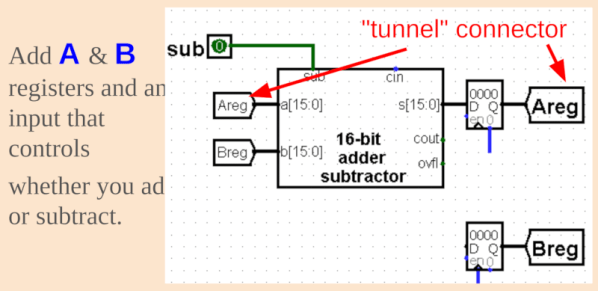
Don’t let the high school level fool you. Topics range from simple electronics to Spice. There’s coverage of discrete devices, oscilloscopes, and Arduinos. There’s plenty of digital logic, of course, and a simple 16-bit microprocessor, too. There are labs for FPGAs using Verilog and talks about ARM. It’s pretty comprehensive and we wonder if they can really cram all this into a single school year. One thing we saw that caught our eye was the simulation of a transistor using Play-Doh. Turns out it isn’t an electrical simulation, but a simulation of how photolithography creates transistors. Still good stuff.
This would be great for teaching students of pretty much any age, even if you took only parts of it. It would also be worthwhile for self-study. We know how much work it takes to put something like this together, and we can’t commend [Mr. Mueller] and the LASA high school enough for making it available to everyone.
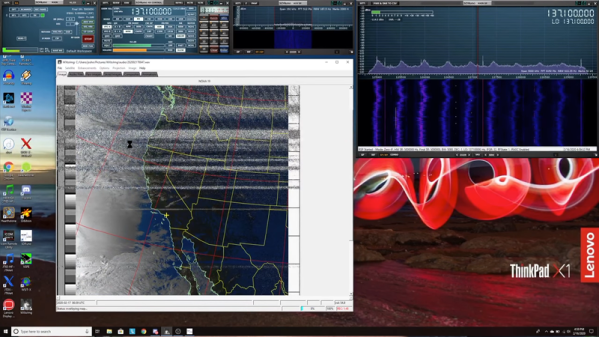
[Josh] has a series called Ham Radio Crash Course and a recent installment covers how you can grab satellite images directly from weather satellites. This used to be more of a production than it is now thanks to software defined radio (SDR). Josh also has another project using a 3D printer to make an antenna suitable for the job. You can see the video below.
The software is the venerable WXtoImg program. This is abandonware, but the community has kept the software available. The program works on Linux, Windows, and Mac. The satellites in question operate around 137 MHz, but that’s easily in the range of even the cheap SDR dongles. [Josh] shows how to use a virtual audio cable on Windows to connect the output of the radio to the input of the WXtoImg program. Under Linux, you can do this with Pulse or Jack very easily without any extra hardware.
There’s some setup and calibration necessary for the software. You’ll also need the current orbital data and the program will tell you when you can find the next satellite passing overhead. Generally speaking you’ll want your antenna outside, which [Josh] solved by taking everything outdoors and having some lunch during the pass. It also takes some time to post-process the data into images and audio.
We know this isn’t new. But we did like [Josh’s] clear and up-to-date guide. We remember watching NOAA 15 as it started to lose its electronic mind.
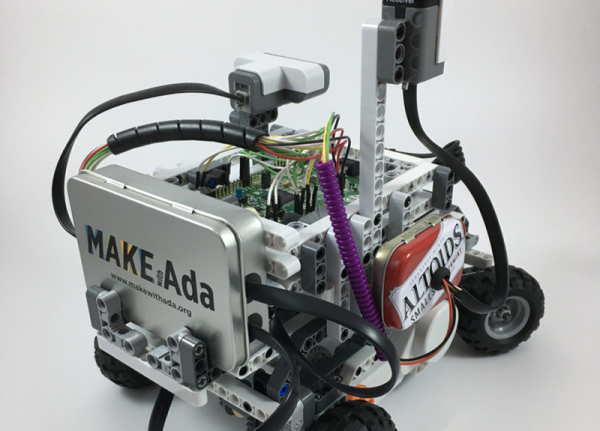
Back in the last century, the US Department of Defense declared that Ada was going to be used everywhere and for everything. Books were published, schools build curriculum. Working programmers, however, filled out waivers to continue working in their languages of choice. As a result, only a little bit of safety-critical software really used Ada. However, we’ve noticed a bit of a resurgence lately. Case in point: an RC car using Ada for the brains. You can watch it tool around in the video below.
This isn’t the first time we’ve heard about Ada in the past few months. Partially, this could be because of the availability of the GNU compiler, although that’s been around since 1995, so maybe there’s another explanation. Ada’s strong typing does tend to plug holes that hackers exploit, so while we would hate to say it is hack proof, it certainly is hack resistant compared to many popular languages.