Hoverboard Circles Bastille Day

According to reports, a turbine-powered flying board buzzed around Bastille Day celebrations carrying its inventor [Franky Zapata] toting a rifle to promote the military applications of the Flyboard Air. You can see the video record, below.

We’ve heard the board costs a cool $250,000 so you may want to start saving now. There are several versions including one that qualifies in the United States as an ultralight. The board Zapata used can reach speeds of 190 km/h and can run for up to 10 minutes, although the website claims 200 km/h is possible and the company also claims to routinely reach 140 km/h. and 6 minute flight times.

Continue reading “Hoverboard Circles Bastille Day”

Pedal Faster! I Need To Join A Conference Call!

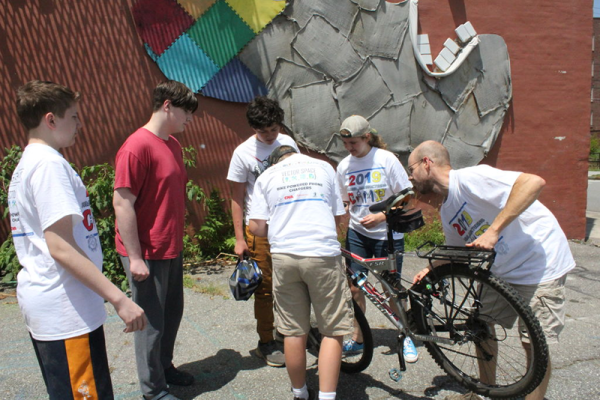
It is rare to find a car these days without some mechanism for charging a cell phone. After all, phones need charging all the time and we spend a lot of time in our cars. But what if you spend a lot of time on your bike? Five teens from Lynchburg, Virginia decided to build something to charge their phones from pedal power.

This isn’t a new idea, of course. Your alternator is charging your phone in your car, and bikes have had alternators connected to them for lights and other purposes. According to the team, you need to pedal about 4 miles per hour to get enough voltage to charge the phone. You can go faster though, because the circuit has a regulator. We especially liked how they determined the speed versus the voltage using a tachometer and an electric drill. We also liked the 3D printed parts such as the handlebar mount that you could probably repurpose for other things.

Continue reading “Pedal Faster! I Need To Join A Conference Call!”

The Basics Of SCRs

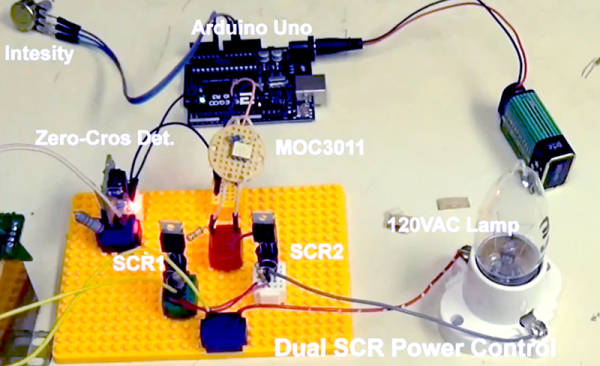
Although the silicon controlled rectifier or SCR has been around since 1957, it doesn’t get nearly the love an ordinary transistor does. That’s a shame because they are quite handy when it comes to controlling AC and DC voltages in things such as lamp dimmers, motor speed controllers, and even soldering iron temperature controllers. [Lewis Loflin] has a short video introduction that will help you get started with these devices.

One of the interesting properties of the device is that once you turn it on it will stay on until you do something specific to turn it back off — sort of, [Lewis] explains it in the video.

Continue reading “The Basics Of SCRs”

Fourier Explained: [3Blue1Brown] Style!

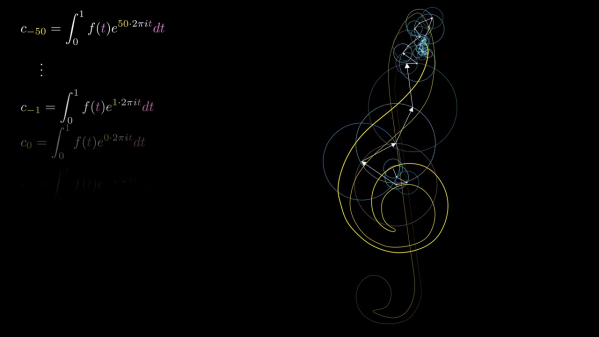
If you ask most people to explain the Fourier series they will tell you how you can decompose any particular wave into a sum of sine waves. We’ve used that explanation before ourselves, and it is not incorrect. In fact, it is how Fourier first worked out his famous series. However, it is only part of the story and master video maker [3Blue1Brown] explains the story in his usual entertaining and informative way. You can see the video below.

Paradoxically, [3Blue1Brown] asserts that it is easier to understand the series by thinking of functions with complex number outputs producing rotating vectors in a two-dimensional space. If you watch the video, you’ll see it is an easier way to work it out and it also lets you draw very cool pictures.

Continue reading “Fourier Explained: [3Blue1Brown] Style!”

You Are Probably Using NASA Technology

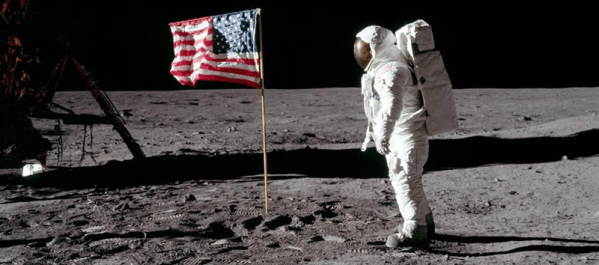
You often hear people — especially non-hacker types — complain that money spent on space travel would be better off spent here on Earth. Of course that ignores one big factor, that space programs have resulted in a host of spin off technologies, many of which you use every day. JPL has an infographic that covers twenty things we wouldn’t have without space travel, and while it could be said that some of these things might have been invented anyway it would doubtless have taken much longer without the necessity and the income from space programs. If you want more detail, Tech Briefs has an interesting interview on the subject of what tech spun off the Apollo program.

Some of the inventions are pretty obvious, and others are more refinements of things that already existed. We all knew NASA pioneered freeze drying for food, for instance. However, some of them are pretty surprising. For example, according to the infographic, NASA asking Black and Decker to develop a moon sample collector led to the Dust Buster.

Continue reading “You Are Probably Using NASA Technology”

Linux Fu: Named Pipe Dreams

If you use just about any modern command line, you probably understand the idea of pipes. Pipes are the ability to connect the output from one program to the input of another. For example, you can more easily review contents of a large directory on a Linux machine by connecting two simple commands using a pipe:

ls | less

This command runs ls and sends its output to the input of the less program. In Linux, both commands run at once and output from ls immediately appears as the input of less. From the user’s point of view it’s a single operation. In contrast, under regular old MSDOS, two steps would be necessary to run these commands:

ls > SOME_TEMP_FILE
less < SOME_TEMP_FILE

The big difference is that ls will run to completion, saving its output a file. Then the less command runs and reads the file. The result is the same, but the timing isn’t.

You may be wondering why I’m explaining such a simple concept. There’s another type of pipe that isn’t as often used: a named pipe. The normal pipes are attached to a pair of commands. However, a named pipe has a life of its own. Any number of processes can write to it and read from it. Learn the ways of named pipes will certainly up your Linux-Fu, so let’s jump in!

Continue reading “Linux Fu: Named Pipe Dreams”

The Physics Behind Antennas

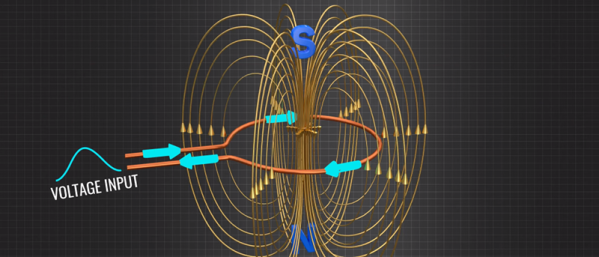
If you have done any sort of radio work you probably have a fair idea about what antennas do. It is pretty easy to have a cursory understanding of them, too. You probably know there’s something magic about antennas that are a quarter wave long or a half wave long and other multiples. But do you know why that matters? Do you understand the physics of why wire in a special configuration will cause signals to propagate through space? [Learn Engineering] does, and their new video is one of the best graphical explanations of what’s really going on in an antenna that we’ve seen. You can watch the video below.

If you tackle antennas using math, it is a long discussion. However, this video is about 8 minutes long and uses some great graphics to show how moving charges can produce a propagating electromagnetic field.

Continue reading “The Physics Behind Antennas”