Couch Potato Refined: Self-Rotating TV Uses Plywood Gears

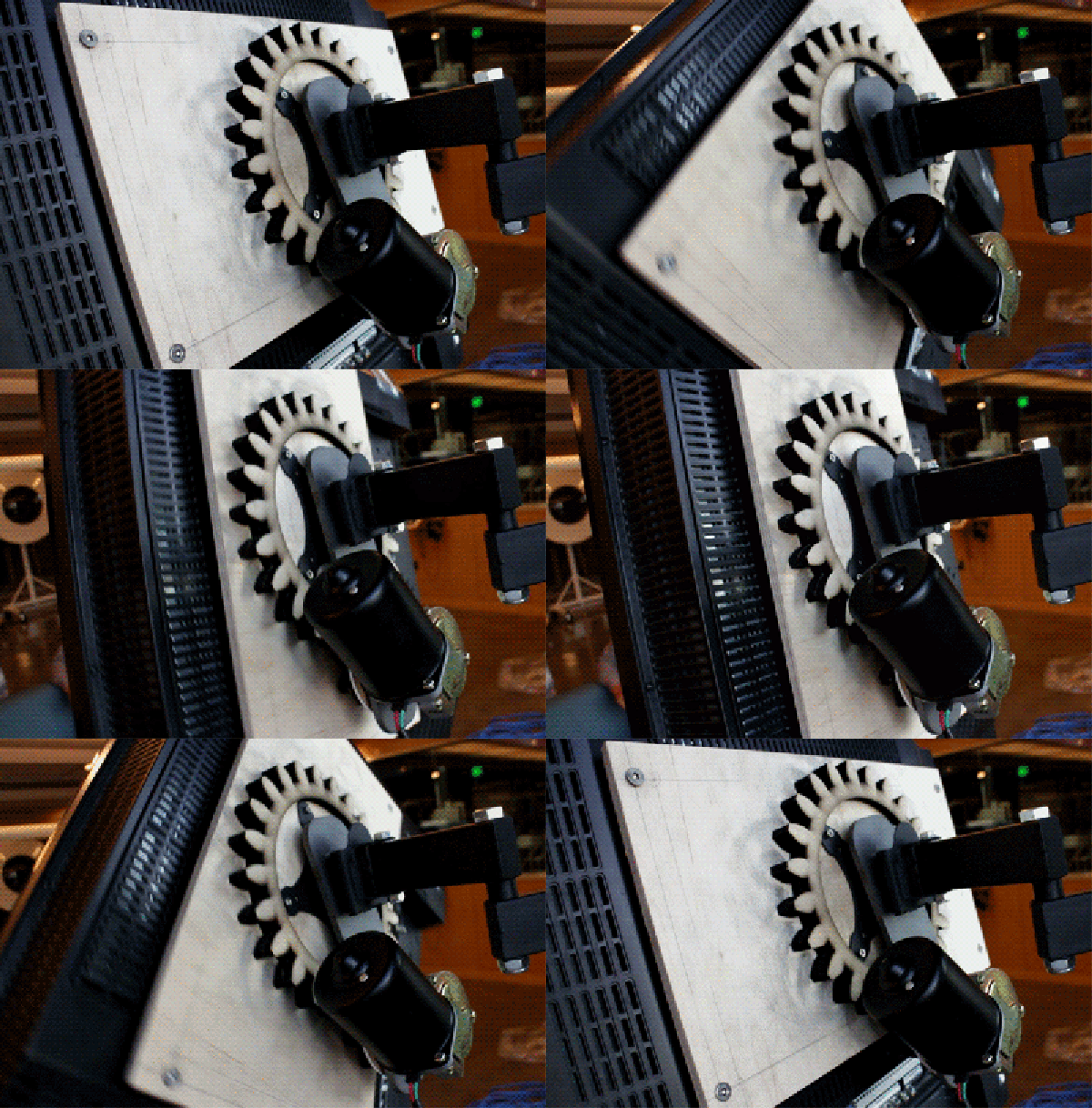
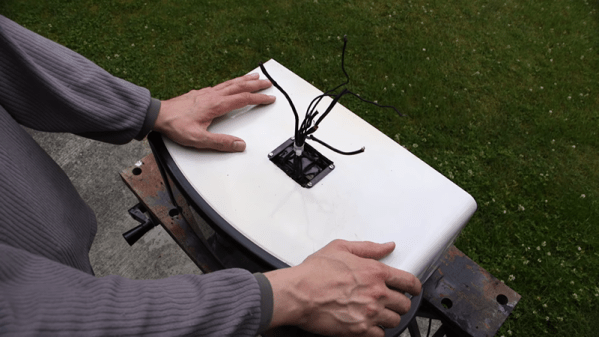
When we first saw [Mikeasaurus’] project to rotate his TV 90 degrees in case he wanted to lay down and channel surf we were ready to be unimpressed. But it grew on us as we read about how he fabricated his own gearing system to make a car seat motor rotate the TV.

The gearing system is made from plywood and the design was from geargenerator.com, a freebie design tool we’ve covered before. You’d think you’d need a laser cutter, but in this case, the gear forms were printed out, glued on the plywood and then cut out manually. Each gear is made of several laminated together.

Continue reading “Couch Potato Refined: Self-Rotating TV Uses Plywood Gears”

Was The Self Driving Car Invented In The 1980s?

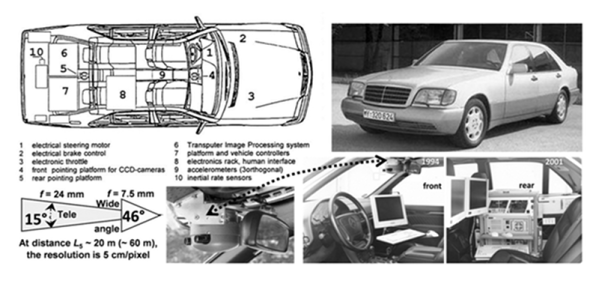
The news is full of self-driving cars and while there is some bad news, most of it is pretty positive. It seems a foregone conclusion that it is just a matter of time before calling for an Uber doesn’t involve another person. But according to a recent article, [Ernst Dickmanns] — a German aerospace engineer —  built three autonomous vehicles starting in 1986 and culminating with on-the-road demonstrations in 1994 for Daimler.

It is hard to imagine what had to take place to get a self-driving car in 1986. The article asserts that you need computer analysis of video at 10 frames a second minimum. In the 1980s doing a single frame in 10 minutes was considered an accomplishment. [Dickmanns’] vehicles borrowed tricks from how humans drive. They focused on a small area at any one moment and tried to ignore things that were not relevant.

Continue reading “Was The Self Driving Car Invented In The 1980s?”

3D Printing, Cybersecurity, And Audio Fingerprinting

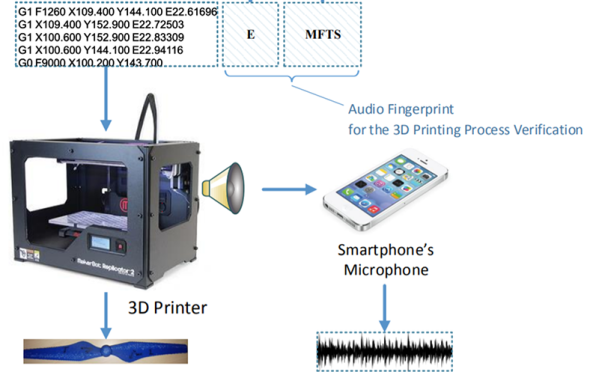
We all understand the risk of someone taking over our computers or phones for nefarious purposes. But remote access to printers and fax machines was something most people took a little less seriously. After all, you might get some obscene printouts or someone wasting some paper, but in general, those are not big deals. Some researchers however have lately been pondering what might happen should someone break into your 3D printer. Of course, you could bring a printer down to deny service, or cause things to malfunction — maybe even in ways that could be dangerous if the printer didn’t have sufficient safety features. But these researchers are more crafty. They are studying how you know what you’ve printed hasn’t been subtly sabotaged. They also think they have an answer.

If you are printing another Benchy at home this probably isn’t a real concern. However, according to the paper, 3D printing now accounts for over $6 billion of revenue with 33.8% of all parts having some function. This includes a recent FAA approval for a 3D-printed fuel nozzle for a jet engine. So indulge us in a little science fiction. You are about to fly your drone to take video of an important social function. You are worried about one of your props, so you 3D print a new one. Too bad your competitor has hacked your computer with a phishing e-mail and modified your STL files so that the new prop will have built-in weak spots internally. The prop will look fine and you’ll be able to install it. But it is going to fail right when you are taking those critical shots.

Continue reading “3D Printing, Cybersecurity, And Audio Fingerprinting”

Edwin Armstrong’s Battle For FM Radio

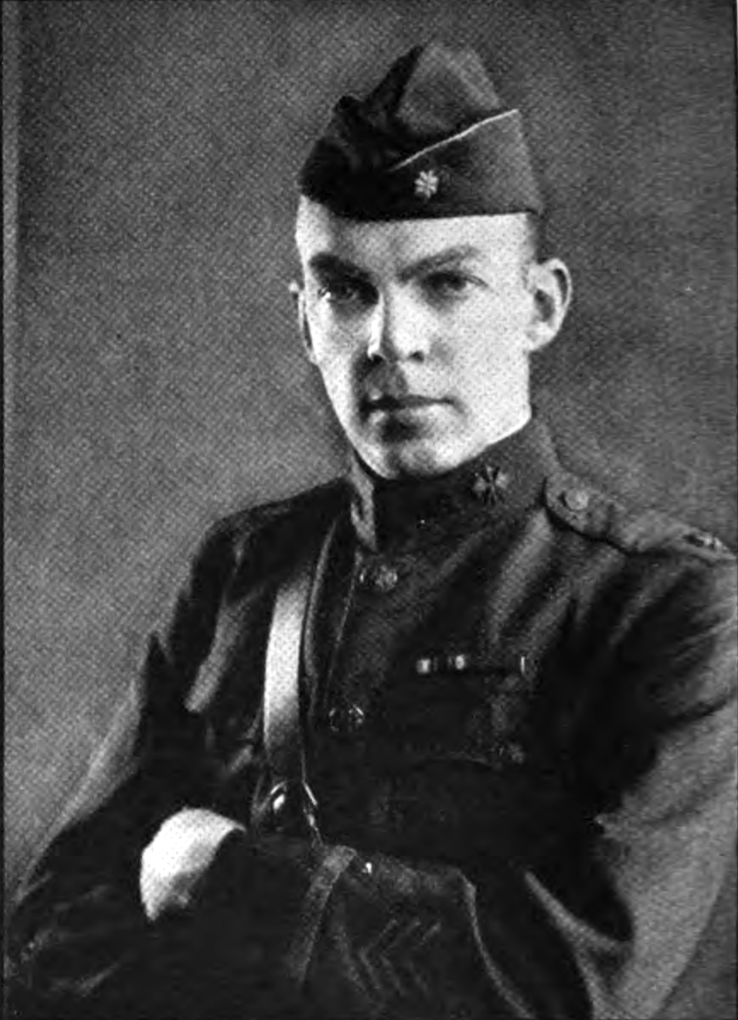
Chances are you have at least one radio that can receive FM stations. Even though FM is becoming less used now with Internet and satellite options, it still is more popular than the older AM radio bands. FM was the brainchild of an inventor you may have heard of — Edwin Armstrong — but you probably don’t know the whole story. It could make a sort of radio-themed soap opera. It is a story of innovation, but also a story of personal vanity, corporate greed, stubbornness, marital problems, and even suicide. The only thing missing is a long-lost identical twin sibling to turn it into a full telenovela.

Early Days
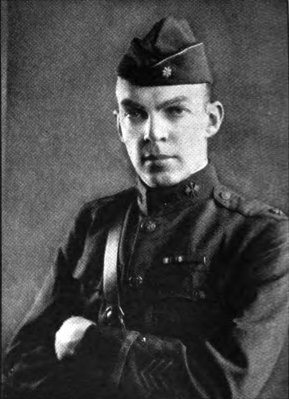
Armstrong grew up in New York and because of an illness that gave him a tic and caused him to be homeschooled, he was somewhat of a loner. He threw himself into his interest in electric and mechanical devices. By 1909 he was enrolled in Columbia University where professors noted he was very focused on what interested him but indifferent to other studies. He was also known as someone more interested in practical results than theory. He received an electrical engineering degree in 1913.

Unlike a lot of college graduates, Armstrong didn’t go work for a big firm. Instead, he set up a self-financed independent lab at Columbia. This sounded good because it meant that he would own the patents on anything invented there. But it would turn out to be a two-edged sword.

Continue reading “Edwin Armstrong’s Battle For FM Radio”

Repairing A Capacitor Inside A Potted Transformer

We always enjoy watching [Mr. Carlson’s] videos because he looks like he is taping in a rocket ship set from a 1950s drive-in movie. In a recent video, he identified an old oscilloscope that had a transformer assembly that is potted with a pair of capacitor inside. The capacitor failed so [Carlson] decided he would repair it. The problem? The transformer and capacitor are potted together with some sort of tar compound. You can see the result in the video below.

He actually didn’t know for sure the capacitor was really in the transformer, but they were in the schematic and by process of elimination, it had to be inside. Once he liberated the transformer, he did some tests to identify the capacitor before the depotting. The depotting takes a lot of heat and could damage the transformer, so he wanted to make sure it was really in there.

Continue reading “Repairing A Capacitor Inside A Potted Transformer”

Recycle LCDs Into LEDs

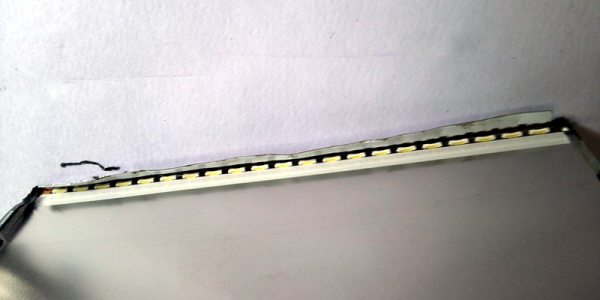
We always find it funny when we see ads for modern LED TVs. These TVs don’t use LEDs to show the picture. They are nothing more than LCD screens with LED backlighting instead of cold cathode fluorescent lamps. [Akshaylals] had a few LCD laptop and phone panels that were defunct and decided to recycle them to get to the LEDs within.

Most panels are lit from one or two edges with a bar of LEDs. You only have to peel off some tape and plastic. If you wonder what all those plastic sheets do, see the [Engineer Guy’s] video, below.

Continue reading “Recycle LCDs Into LEDs”

Wire Wound Resistors On Your Own

In all kinds of engineering, we build on abstractions in a kind of inverted pyramid. Lots of people can, for example, design a system using ready-made building blocks on printed circuit boards. Fewer people can do the same design using ICs. Fewer still can design with components. But who designs the components? Even fewer people. Then there are the people designing the constituent elements of those components. [Learnelectronics] wanted to break one of those abstraction layers so he shows how to make your own wire-wound resistors.

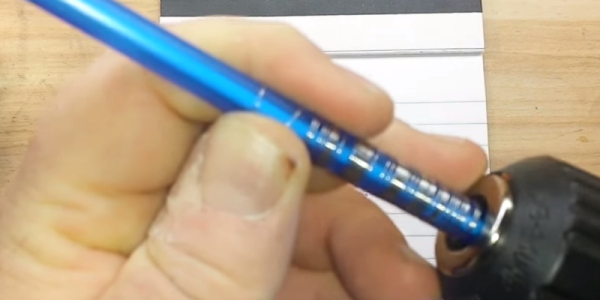
Wire-wound resistors are often used when you need resistance with a higher power dissipation than a common film or composition resistor. Using nichrome wire makes this more practical since a meter of it has nearly 20 ohms of resistance. A regular wire has much less resistance.  The video shows a drill winding a coil of wire neatly, but this also highlights one of the problems with wire wound resistors.

Continue reading “Wire Wound Resistors On Your Own”