MRI To 3D Print Gets Much Faster

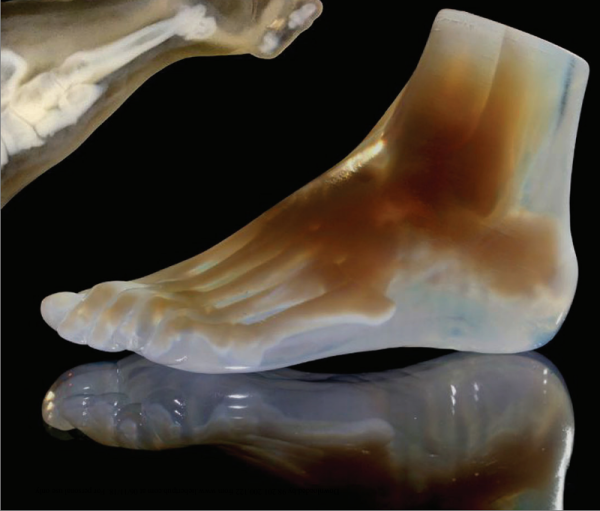
A surprising use of 3D printing has been in creating life-like models of human body parts using MRI or CT scans. Surgeons and other medical professionals can use models to plan procedures or assist in research. However, there has been a problem. The body is a messy complex thing and there is a lot of data that comes out of a typical scan. Historically, someone had to manually identify structures on each slice — a very time-consuming process — or set a threshold value and hope for the best. A recent paper by a number of researchers around the globe shows how dithering scans can vastly improve results while also allowing for much faster processing times.

As an example, a traditional workflow to create a 3D printed foot model from scan data took over 30 hours to complete including a great deal of manual intervention. The new method produced a great model in less than an hour.
Continue reading “MRI To 3D Print Gets Much Faster”

Homebrew Calibration For Test Equipment

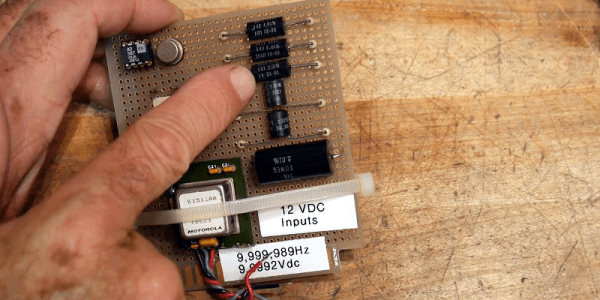
If you work for a large company, you probably have test equipment that is routinely calibrated. Some companies have their own metrology labs and others send out to an external lab. In a garage lab, you are less likely to do calibrations and — in our experience — that isn’t usually a problem. Still, it is nice to be able to do at least a sanity check on your gear. Also, if you buy old test gear and repair it, it would be nice to be able to check it, as well. [IMSAI guy] built his own little calibration setup, adding to it over the years, and he shares the details in a recent video, which you can see below.

The board started out simply as one voltage regulator and some 0.01% resistors. Over time, though, he added a few more bells and whistles. The setup isn’t going to rival a NIST-traceable lab setup, but for your garage it is perfectly fine.

Continue reading “Homebrew Calibration For Test Equipment”

Smoothing PLA With Two Paints

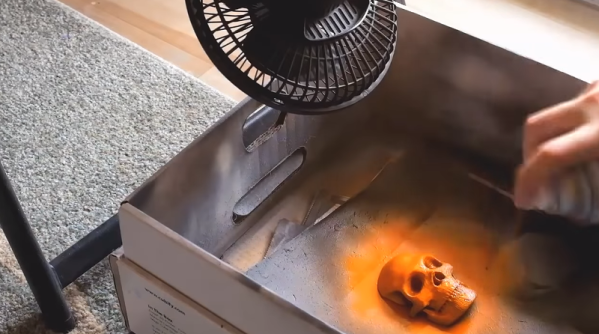
There was a time when most 3D printers used ABS plastic. It stinks, is probably bad for you, and tends to warp unless printed in a heated enclosure. So most people have gone to something else, mostly PLA. But ABS also dissolves in a readily-available solvent, acetone, and this is useful for smoothing the layer artifacts from a 3D print. [3DSage] has a technique that works for PLA or — he says — probably any filament. You can see what he’s doing in the video below.

The video starts out with a recap of things most Hackaday readers will already know. But hang in there because at about 1:20, he reveals his method.

Continue reading “Smoothing PLA With Two Paints”

Retrotechtacular: Voice Controlled Robot From 1961

We like to think that all these new voice-controlled gadgets like our cell phones, Google Home, Amazon Echo, and all that is the pinnacle of new technology. Enabled by the latest deep learning algorithms, voice-controlled hardware was the stuff of science fiction back in the 1961s, right? Not really. Turns out in around 1960, Ideal sold Robot Commando, a kid’s toy robot that featured voice control.

Well, sort of. If you look at the ad in the video below, you’ll see that a kid is causing the robot to move and fire missiles by issuing commands into a microphone. How did some toy company pull this off in 1961?

Continue reading “Retrotechtacular: Voice Controlled Robot From 1961”

Extracting Water From Fog

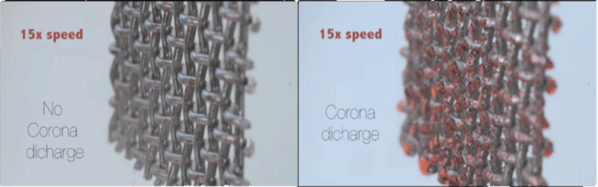
Most of us take it for granted that water is as close as your kitchen tap. But that’s not true everywhere. Two scientists at MIT have a new method for harvesting water from fog, especially fog released from cooling towers such as those found from power plants. It turns out, harvesting water from fog isn’t a new idea. You typically insert a mesh into the air and collect water droplets from the fog. The problem is with a typical diameter of 10 microns, the water droplets mostly miss the mesh, meaning they typically extract no more than 2% of the water content in the air.

The team found two reasons for the low efficiency. Water clogs the mesh openings which can be somewhat mitigated by using coated meshes that shed water quickly. Even in the lab that only increases the yield to about 10%. The bigger problem, though, is basically only some of the droplets hit the mesh, and even those that do may not stick because of drag. Fine meshes can help but are harder to make and have low structural integrity. Their solution? Inject ions into the fog to charge the water droplets and impart the opposite charge on the mesh.

Continue reading “Extracting Water From Fog”

Simplifying Basic LED Effects

There was a time when having a blinking blue LED on a project was all you needed to be one of the cool kids. But now you need something more complex. LEDs should not just snap on, they should fade in and out. And blinking? Today’s hotness is breathing LEDs. If that’s the kind of project you want, you should check out [jandelgado’s] jled library.

At first glance, an Arduino library for LED control might seem superfluous, but if you are interested in nice effects, the coding for them can be a bit onerous. If you don’t mind stopping everything while you fade an LED on (or off) then sure, you just write a loop and it is a few lines of code. But if you want to have it happen while other things continue to execute, it is a little different. The library makes it very simple and it is also nicely documented.

Continue reading “Simplifying Basic LED Effects”

Hair-Raising Tales Of Electrostatic Generators

We tend to think of electricity as part of the modern world. However, Thales of Mietus recorded information about static electricity around 585 BC.  This Greek philosopher found that rubbing amber with fur would cause the amber to attract lightweight objects like feathers. Interestingly enough, a few hundred years later, the aeolipile — a crude steam engine sometimes called Hero’s engine — appeared. If the ancients had put the two ideas together, they could have invented the topic of this post: electrostatic generators. As far as we know, they didn’t.

It would be 1663 before Otto von Guericke experimented with a sulfur globe rubbed by hand. This led to Isaac Newton suggesting glass globes and a host of other improvements from other contributors ranging from a woolen pad to a collector electrode. By 1746, William Watson had a machine consisting of multiple glass globes, a sword, and a gun barrel. Continue reading “Hair-Raising Tales Of Electrostatic Generators”