An Hour To Surface Mount

Most of us have made the transition from through hole parts to surface mount. There are lots of scattered tutorials, but if you want to learn some techniques or compare your technique to someone else’s, you might enjoy [Moto Geek’s] hour-long video on how he does surface mount with reflow soldering. You can see the video below.

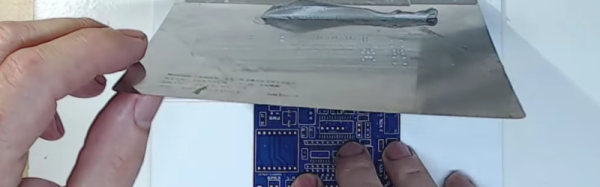
What makes the video interesting is that it is an hour long and covers the gamut from where to get cheap PCBs, to a homebrew pick and place pencil. [Moto Geek] uses a stencil with solder paste, and he provides links to the materials he uses. Continue reading “An Hour To Surface Mount”
A Crash Course In Thingiverse Customizer

OpenSCAD is a great way to create objects for 3D printing (or other purposes), especially if you are already used to programming. For things like front panels, it is great because you can easily make modifications and — if you wrote your code correctly–everything will just adjust itself to new positions.

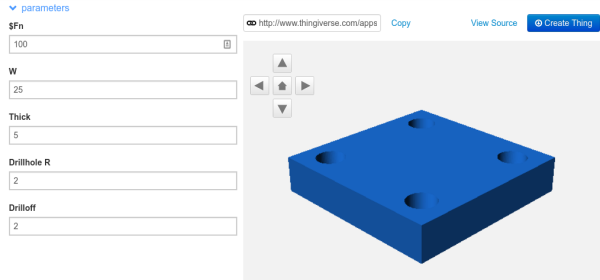
However, what if you have a general-purpose piece of code, and you want people to have the ability to customize it? For example, consider this code:
$fn=100;
difference()
{
  cube([25,25,5]);
  translate([4,4,-1]) cylinder(h=7,r=2);
  translate([25-4,4,-1]) cylinder(h=7,r=2);
  translate([4,25-4,-1]) cylinder(h=7,r=2);
  translate([25-4,25-4,-1]) cylinder(h=7,r=2);
}

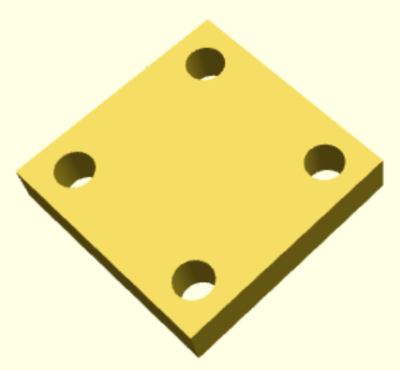
That creates the plate with four drill holes you see on the right.

Continue reading “A Crash Course In Thingiverse Customizer”

Simple Wave Generation In Python (and SciPy)

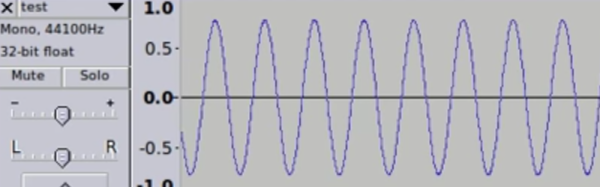
[153Armstrong] did a short post on how easy it is to generate waveforms using Python. We agree it is simple, but actually, it isn’t so much Python per se, it is some pretty cool libraries (SciPy, in particular) that do all the hard work. That may be splitting hairs, but it is worth nothing that SciPy (pronounced “Sigh Pie”) also does other handy tricks like Fourier transforms, too. You can see a video of his results, below.

The code is simple and one of the commenters pointed out an even more efficient way to write the data to a WAV file. The basic idea is to create an array of samples in a buffer using some features of SciPy’s NumPy component.

Continue reading “Simple Wave Generation In Python (and SciPy)”

MEMS: The Biggest Word In Small

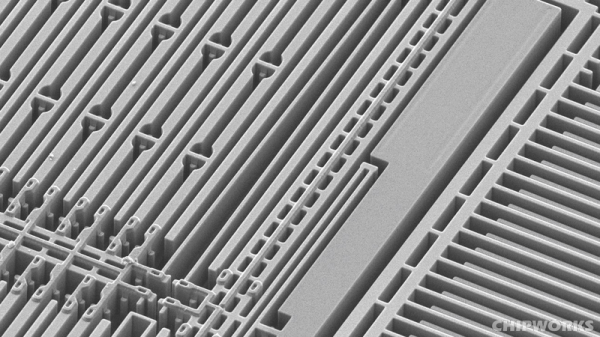
What’s tiny and on track to be worth $22 billion dollars by 2018? MEMS (Micro Electrical Mechanical Systems). That’s a catch-all phrase for microscopic devices that have moving parts. Usually, the component sizes range from 0.1 mm to 0.001 mm, which is tiny, indeed. There are some researchers working with even smaller components, sometimes referenced as NEMS (Nano Electrical Mechanical Systems).

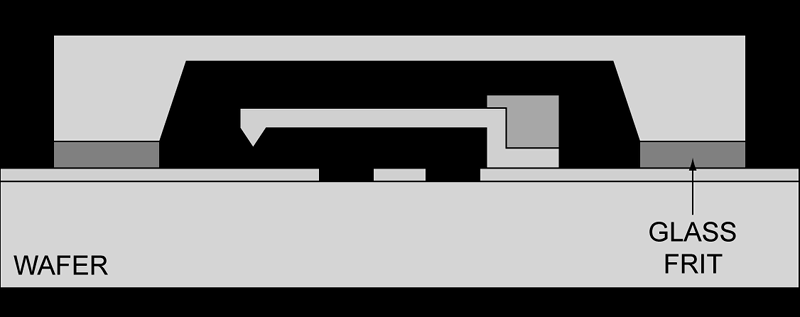
Resonant Cantilever by [Pcflet01], CC BY-SA 3.0
MEMS have a wide range of applications including ink jet printers, accelerometers, gyroscopes, microphones, pressure sensors, displays, and more. Many of the sensors in a typical cell phone would not be possible without MEMS. There are many ways that MEMS devices are built, but just to get a flavor, consider the cantilever (see right), one of the most common MEMS constructions.

Continue reading “MEMS: The Biggest Word In Small”

Another Helping Hands Build

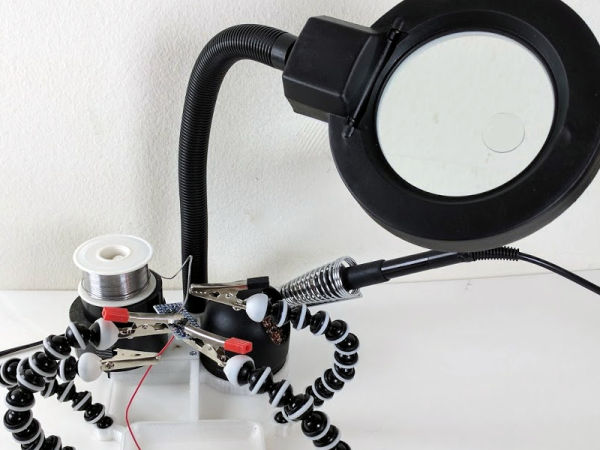
[Punamenon2] wanted a soldering station with integrated helping hands. He couldn’t find one, but he decided it would be a good 3D printed project. In all fairness, this is really 3D printing integrating several off-the-shelf components including a magnifier, a soldering iron holder, a soldering iron cleaner, a couple of “octopus” tripods, and some alligator clips. Total cost? Less than $30.

In addition to holding the Frankenstein monster together, the 3D printed structure also provides a storage tray with special sloped edges to make removing small screws easier.

Continue reading “Another Helping Hands Build”

Listen To Your Body

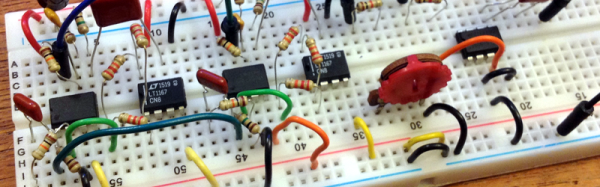
[John Miller] has the perfect response next time he complains about an ache or pain and one of his friends says, “You should listen to your body!” As you can see in the video below, he already does. Using two 9V batteries and some instrumentation amplifiers, [John] built an electromyography (EMG) rig.

If you haven’t heard of EMG, think of EEG or EKG, but for muscles instead of your brain or your heart. The LT1167 amplifier is well-suited for this application and even has a data sheet showing how to create an EMG circuit. [John] also used some more garden-variety op amps and the ubiquitous LM386N chip for audio amplification.

Continue reading “Listen To Your Body”

Heathkit’s New RF Meter: Who Is It For?

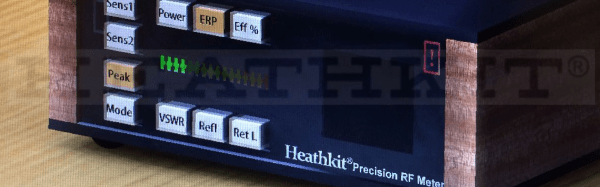
Electronic hackers and ham radio operators of a certain age have a soft spot for the Heathkit brand. Maybe that’s why we had a rush of nostalgia when we saw the Heathkit site had a new product. You may recall that Heathkit had gone the way of the dodo until a few years ago when the brand started to resurface. Their latest kit is a precision RF meter which is available on preorder.

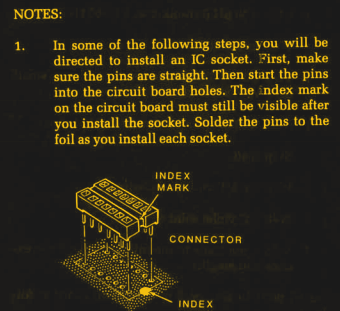
Before there were websites and hacker spaces and all the modern push to “do it yourself,” Heathkit was teaching people electronics through kit building. Sure, they were known for ham radio and test equipment, but many people built stereos (hi-fi), TVs, radio control gear, computers, and even robots. All with manuals that are hard to imagine if you haven’t seen one. They were world-class.

Continue reading “Heathkit’s New RF Meter: Who Is It For?”