EV3DEV Lego Linux Updated

The ev3dev Linux distribution got an update this month. The distribution targets the Lego EV3 which is a CPU Lego provides to drive their Mindstorm robots. The new release includes the most recent kernel and updates from Debian 8.8. It also contains tools needed for some Wi-Fi dongles and other updates.

If you haven’t seen ev3dev before, it is quite simply Linux that boots on the EV3 hardware using an SD card. You don’t have to reflash the computer and if you want to return to stock, just take out the SD card. You can also use ev3dev on a Raspberry Pi or BeagleBone, if you like. There’s a driver framework included for handling sensors, motors, and other items using the file system.

Continue reading “EV3DEV Lego Linux Updated”

A Minority Report Arduino-Based Hand Controller

Movies love to show technology they can’t really build yet. Even in 2001: A Space Oddessy (released in 1968), for example, the computer screens were actually projected film.  The tablet they used to watch the news looks like something you could pick up at Best Buy this afternoon. [CircuitDigest] saw Iron Man and that inspired him to see if he could control his PC through gestures as they do on that film and so many others (including Minority Report). Although he calls it “virtual reality,” we think of VR as being visually immersed and this is really just the glove, but it is still cool.

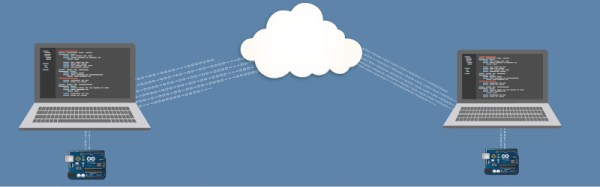
The project uses an Arduino on the glove and Processing on the PC. The PC has a webcam which tracks the hand motion and the glove has two Hall effect sensors to simulate mouse clicks. Bluetooth links the glove and the PC. You can see a video of the thing in action, below.

Continue reading “A Minority Report Arduino-Based Hand Controller”

Converting A Robotic Motor For Lego Blocks

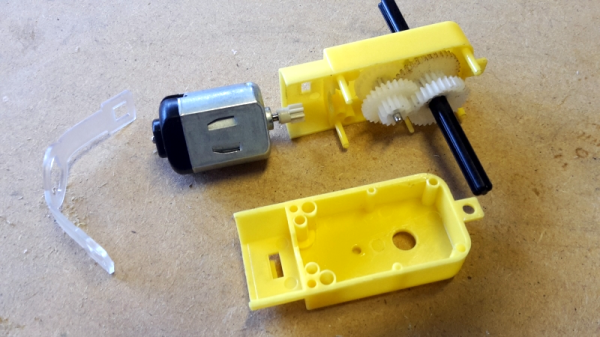
The Internet has brought a lot of advantage to life, not the least of which is access to really cheap electronic parts. [KarelK166] was buying cheap geared motors for projects, but they didn’t easily work with Lego blocks. He found an easy way to adapt them and–lucky for us–decided to share.

The process is pretty simple. The gearbox has two screws and an elastic band holding it together. Once the gears are exposed, you can drill a hole in two of them with a 4.8mm drill bit. This might take a little practice since the gear needs to hold still, but you also don’t want to crush the plastic teeth. You also need to enlarge a hole in the casing, but that’s easier to clamp down in a vise.

Continue reading “Converting A Robotic Motor For Lego Blocks”

VIM Normalization

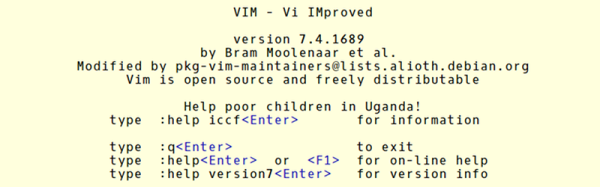
Linux users–including the ones at the Hackaday underground bunker–tend to fall into two groups: those that use vi and those that use emacs. We aren’t going to open that debate up again, but we couldn’t help but notice a new item on GitHub that potentially negates one of the biggest complaints non-vi users have, at least for vim which is the most common variant of vi in use on most modern systems. The vim keybinding makes vim behave like a “normal” editor (and to forestall flames, that’s a quote from the project page).

Normally vi starts out in a command mode that it calls normal mode. Pressing a key will execute an editing command, unlike most other modern editors which just insert characters into the open file. For example, pressing x will delete a character. This surprises most people who aren’t familiar with vi. In all fairness, there are other older editors that work this way, but they usually were not screen-oriented.

Continue reading “VIM Normalization”

Codebender Rises From The Ashes

If you were sad that Codebender had bit the dust, cheer up. A site called codeanywhere has acquired the online Arduino development environment and brought it back to life. In addition to the main Codebender site, the edu and blocks sites are also back on the air.

Not only is this great news, but it also makes sense. The codeanywhere site is a development IDE in the cloud for many different programming languages. The downside? Well, all the people who said they’d be glad to pay to keep Codebender alive will get a chance to put their money where their mouth is.

Continue reading “Codebender Rises From The Ashes”

Testing The Outernet Dreamcatcher SDR

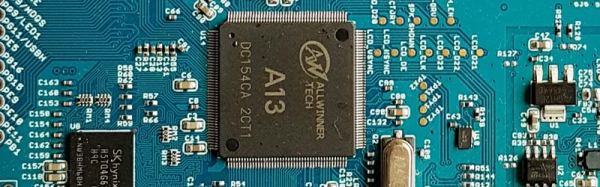
What do you get when you cross an ARM-based Linux PC and an RTL-SDR? Sounds like the start of a joke, but the answer is Outernet’s Dreamcatcher. It is a single PCB with an RTL-SDR software defined radio, an L-band LNA, and an Allwinner A13 processor with 512MB of RAM and a 1 GHz clock speed. The rtl-sdr site recently posted a good review of the $99 board.

We’ll let you read the review for yourself, but the conclusion was that despite some bugs, the board was no more expensive than pulling the parts together separately. On the other hand, if you uses, for example, a Raspberry Pi 3, you might expect more support and more performance.

Despite the L-band hardware, there is a bypass antenna jack that allows you to receive other frequencies. There’s also two SD slots, one to boot from and another for storage. Several pieces of software had trouble running on the somewhat sluggish CPU, although some software that is optimized for the particular processor used fared better. You can read the details in the review.

The board is interesting, although unless you have a special packaging problem, you are probably as well off to combine a Pi and a dongle, as we have seen so many times before. If you have more horsepower you can even make the Pi transmit, although we’d suggest some filtering if you were going to do that for real.

An Antenna That Really Cooks–Really

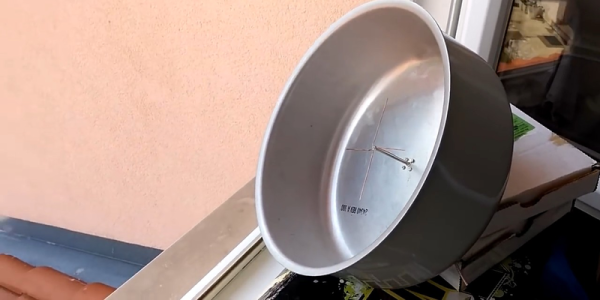
[9A4OV] set up a receiver using the HackRF board and an LNA that can receive the NOAA 19 satellite. Of course, a receiver needs an antenna, and he made one using a cooking pot. The antenna isn’t ideal – at least indoors – but it does work. He’s hoping to tweak it to get better reception. You can see videos of the antenna and the resulting reception, below.

The satellite is sending High-Resolution Picture Transmission (HRPT) data which provides a higher image quality than Automatic Picture Transmission (APT). APT is at 137 MHz, but HRPT is at 1698 MHz and typically requires a better receiver and antenna system.

Continue reading “An Antenna That Really Cooks–Really”