Documentation By Markup

Things seem to go in cycles. Writing a document using old-fashioned tools like TROFF or LaTeX is like knowing a secret code. Visual editors quickly took over, although even WordStar had some “dot commands” that you put in as text. Then HTML showed up and we were back to coding formatting as text strings.

Fast forward to the present, and HTML’s ubiquity makes that seem normal. Sure, there are visual editors, but it seems perfectly normal now to write <b> for bold text. However, as HTML grows to handle more tasks it also gets more complex. That’s led to the creation of things like Markdown which is just for simple text formatting. Continue reading “Documentation By Markup”

High-Power LED + 3D Printer = Mega Flashlight

If you remember old computer magazines (or browse them today), you’ll see that back in the late 1970s and early 1980s, you weren’t always sure what you were going to do with a computer. Games were a staple, but they weren’t very exciting. Visionaries talked about storing recipes, writing Christmas letters (to send via snail mail), and keeping home inventories. You probably don’t do any of those things with your computer today, unless you count e-mailing instead of sending Christmas cards. We think sometimes 3D printers fall into that category today. Sure, you want one. But what are you really going to do with it? Print keychains?

That’s why we always like seeing practical designs for 3D printed items. Like this 100W flashlight. The electronics part of the build is simple enough: a 100W LED module, an off-the-shelf driver board, plus an old PC cooler and some batteries. But the 3D printed parts makes it all come together and it looks great!

Continue reading “High-Power LED + 3D Printer = Mega Flashlight”

[Dave’s] Not Just A Member Of The Air Club For Tweezers

We are always surprised how much useful hacking gear is in the typical craft store. You just have to think outside the box. Need a hot air gun? Think embossing tool. A soldering iron? Check the stained glass section. Magnification gear? Sewing department.

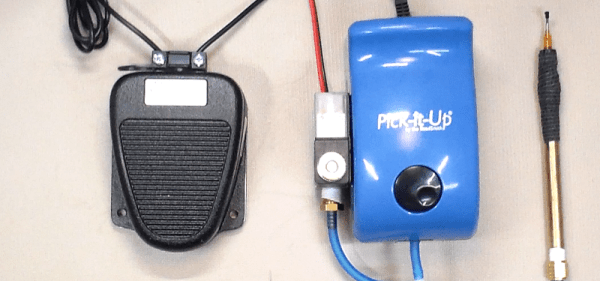
We’ve figured out that people who deal with beads use lots of fine tools and have great storage boxes. But [Dave] found out they also use vacuum pickup tweezers. He had been shopping for a set and found that one with all the features he wanted (foot pedal, adjustable air flow, and standard tips) would run about $1000.

By picking up a pump used for bead makers and adding some components, he put together a good-looking system for about $200. You can see a video of the device, below, and there are several other videos detailing the construction.

Continue reading “[Dave’s] Not Just A Member Of The Air Club For Tweezers”

Retrotechtacular: Social Hacking Is Nothing New

If you watch enough mainstream TV and movies, you might think that hacking into someone’s account requires a huge monitor, special software, and intricate hand gestures. The reality is way more boring. Because people tend to choose bad passwords, if you have time, you can task a computer with quietly brute-forcing the password. Then again, not everyone has a bad password and many systems will enforce a timeout after failed attempts or require two-factor authentication, so the brute force approach isn’t what it used to be.

Turns out the easiest way to get someone’s password is to ask them for it. Sure, a lot of people will say no, but you’d be surprised how many people will tell you. That number goes up dramatically when you make them think you are with the IT department or their Internet provider. That’s an example of social engineering. You can define that many ways, but in this case it boils down to getting people to give you what you want based on making them believe you are something you aren’t.

Everything Old…

We think of social engineering as something new, but really–like most cybercrime–it is just the movement of old-fashioned crime to the digital world. What got me thinking about this is a service from Amazon called “Mechanical Turk.”

That struck me as odd when I first heard it because for product marketing it is pretty bad unless you are selling turkey jerky or something. If you tell me “Amazon Simple Storage Service” I can probably guess what that might be. But what’s Mechanical Turk?

Mechanical Turk

Continue reading “Retrotechtacular: Social Hacking Is Nothing New”

FPGA Computer Covers A To Z

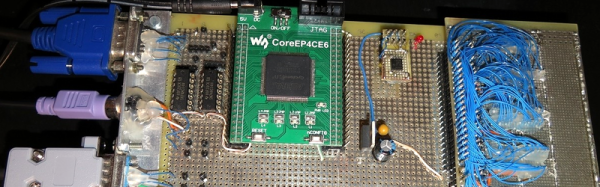
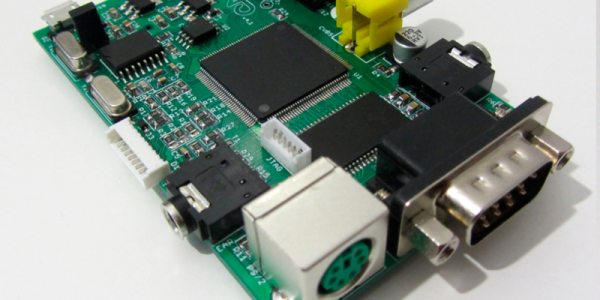
[F4HDK] calls his new computer A2Z because he built everything from scratch (literally, from A to Z). Well, strictly speaking, he did start with an FPGA, but you have to have some foundation. The core CPU is a 16-bit RISC processor with a 24-bit address bus and a 128-word cache. The computer sports 2 megabytes of RAM, a boot ROM, a VGA port and keyboard, and some other useful I/O. The CPU development uses Verilog.

Software-wise, the computer has a simple operating system, a filesystem, and basic programs like a text editor and an image viewer. Development software includes an assembler and a compiler for a BASIC-like language that resides on the PC. You can also run an emulator to experiment with A2Z without hardware. You can see a “car game” running on A2Z in the video below. You can also see videos of some other applications.

Continue reading “FPGA Computer Covers A To Z”

Crippled Calculator Features Unlocked With Automated Help

[Aguilera Dario] likes his Casio fx-82ES calculator. However, it was missing a few functions, including complex numbers. A Casio fx-991ES has more functions but, of course, costs more. A quick Google revealed that if you press the right buttons, though, you can transform an fx-82ES into an fx-991ES.

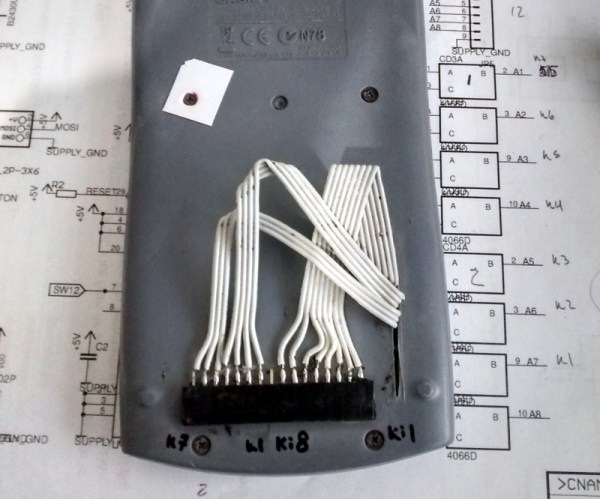
Because it is apparently a buffer overflow exploit, the hack involves a lot of keys and once you cycle the power you have to do it again. [Aguilera] realized this would be a good candidate for automation and added a microcontroller to push his buttons. You can see a video of a breadboard version below. He also has a PCB version in the works that should be better integrated.

Continue reading “Crippled Calculator Features Unlocked With Automated Help”

Retro ZX Spectrum Lives A Spartan Existence

FPGAs (like Xilinx’s Spartan series) are great building blocks. They often remind us of the 100-in-1 electronic kits we used to get as kids. Lots of components you can mix and match to make nearly anything. However, like a bare microcontroller, they usually don’t have much in the way of peripheral devices. So the secret sauce is what components you can surround the chip with.

If you are interested in retro computing, you ought to have a look at the ZX-Uno board. It hosts a Spartan 6 FPGA. They are for sale, but the design is open source and all the info is available if you prefer to roll your own or make modifications. You can see a video of the board in action, below (as explained in the video, the color issues are due to the capture card trying to deal with the non-standard sync rate).

Here are the key specifications:

  • FPGA Xilinx Spartan XC6SLX9-2TQG144C
  • Static Memory 512Kb, AS7C34096A-10TIN
  • 50MHz Oscillator
  • Video output (composite)
  • PS/2 keyboard
  • Stereo audio jack
  • EAR jack connector (for reading cassette tapes)
  • Connectors for JTAG and RGB
  • Slot for SD Cards
  • Expansion port with 3 male pin strips
  • Micro-USB power connector
  • PCB Size: 86×56 mm. (Compatible with Raspberry Pi cases)

Continue reading “Retro ZX Spectrum Lives A Spartan Existence”