The Internet Of Linux Things

The Linux Foundation is a non-profit organization that sponsors the work of Linus Torvalds. Supporting companies include HP, IBM, Intel, and a host of other large corporations. The foundation hosts several Linux-related projects. This month they announced Zephyr, an RTOS aimed at the Internet of Things.

The project stresses modularity, security, and the smallest possible footprint. Initial support includes:

  • Arduino 101
  • Arduino Due
  • Intel Galileo Gen 2
  • NXP FRDM-K64F Freedom

The project (hosted on its own Website) has downloads for the kernel and documentation. Unlike a “normal” Linux kernel, Zephyr builds the kernel with your code to create a monolithic image that runs in a single shared address space. The build system allows you to select what features you want and exclude those you don’t. You can also customize resource utilization of what you do include, and you define resources at compile time.

By default, there is minimal run-time error checking to keep the executable lean. However, there is an optional error-checking infrastructure you can include for debugging.

The API contains the things you expect from an RTOS like fibers (lightweight non-preemptive threads), tasks (preemptively scheduled), semaphores, mutexes, and plenty of messaging primitives. Also, there are common I/O calls for PWM, UARTs, general I/O, and more. The API is consistent across all platforms.

You can find out more about Zephyr in the video below. We’ve seen RTOS systems before, of course. There’s even some for robots. However, having a Linux-heritage RTOS that can target small boards like an Arduino Due and a Freedom board could be a real game changer for sophisticated projects that need an RTOS.
Continue reading “The Internet Of Linux Things”

Lego Nuclear Reactor Uses Arduino

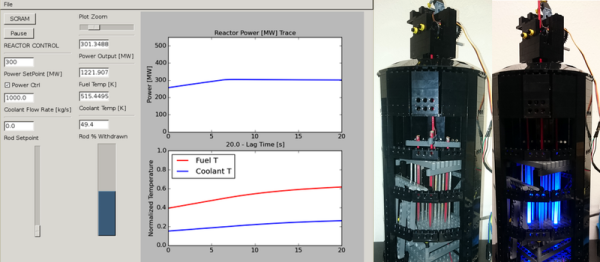
Before the NSA deletes this post, we’ll be clear: We’re talking about a model of a nuclear reactor, not the real thing. Using Legos, [wgurecky] built a point kinetic reactor model that interfaces with the reactor simulator, pyReactor.

Even without the Lego, the Python code demonstrates reactor control in several modes. In power control mode, the user sets a power output, and the reactor attempts to maintain it. In control rod mode, the user can adjust the position of the control rods and see the results.

If things get out of hand, there’s a SCRAM button to shut the reactor down in a hurry. The Lego model uses an Arduino to move the rods up and down (using a servo) and controls the simulated Cherenkov radiation (courtesy of blue LEDs).

We’ve been excited to see more high schools with significant engineering programs. This would be a good project for kids interested in nuclear engineering. It certainly is a lot safer than one of our previous reactor projects.

Ski Buddy Jacket Uses Arduino To Teach Youngsters To Ski

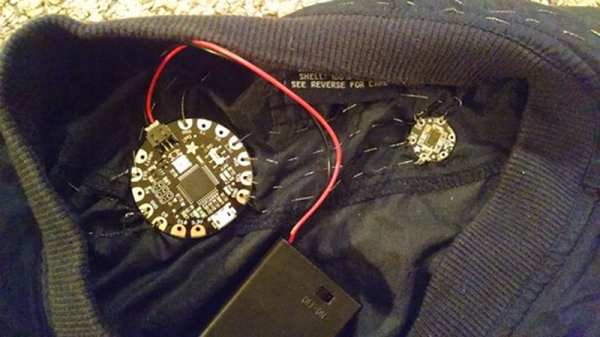
Snow skiing looks easy, right? You just stay standing, and gravity does the work. The reality is that skiing is difficult for beginners to learn. [19mkarpawich] loves to ski, but he was frustrated seeing crying kids on skis along with screaming parents trying to coach them. Inspired by wearable electronics, he took an Arduino, an old jacket, some LEDs, and created Ski Buddy.

Continue reading “Ski Buddy Jacket Uses Arduino To Teach Youngsters To Ski”

Smart Sweatbands

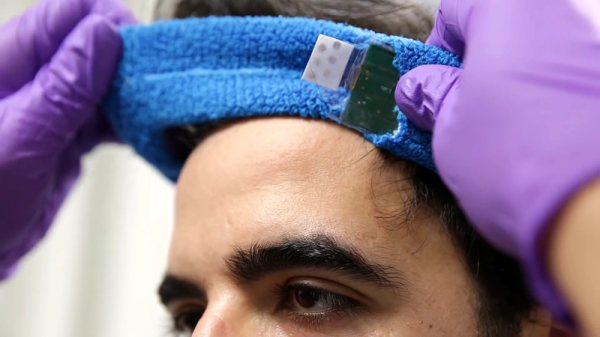
If you’ve ever known anyone who has to monitor their blood glucose level, you know it is annoying to have to prick your finger with a lancet to draw blood for each measurement. A new sweatband that incorporates flexible electronics can measure glucose–as well as sodium, potassium, and lactate–from your sweat, without a painful pin prick.

Continue reading “Smart Sweatbands”

Mini Quadcopter Becomes Paper Airplane

Several of us got Cheerson CX-10 mini quadcopters last year. We even bought some more to hand out as Christmas gifts. If you haven’t seen them, they are diminutive little flyers about the size of an English muffin. Thee’s no denying they are fun to fly around the house, and they do annoy the dogs.

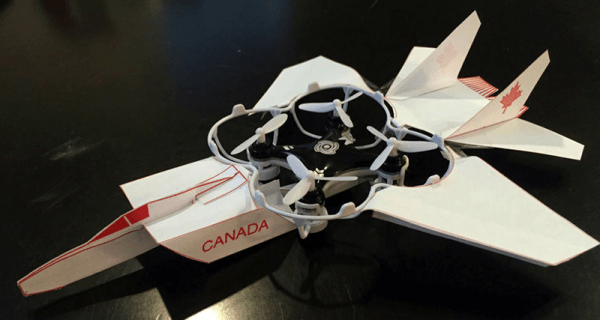
However, like all cute toys, you eventually get bored just buzzing the dogs and cats. [JustforFun Media TK] decided that his needed a facelift, so he converted it into a paper airplane. This isn’t the paper airplane you folded up in school, either. This is a slick-looking jet aircraft.

Continue reading “Mini Quadcopter Becomes Paper Airplane”

MDF Omniwheel Uses No Metal Or Plastic

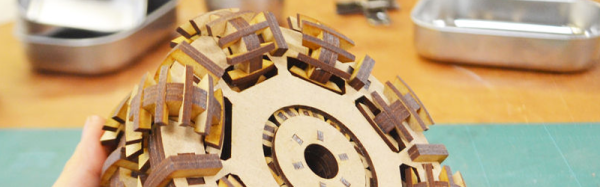
What’s better than a caster? An omniwheel. These wheels are like a big wheel with little wheels at different angles that can roll in any direction. [Sonodera] built an omniwheel out of laser cut MDF. MDF–or Medium Density Fiberboard–makes up all the parts of the wheel. There’s no plastic or metal at all.

[Sonodera’s] wheel is more of a passive design like a caster. It would be possible to drive the wheel through the center in two directions, but the right-angle rollers are passive.

We’ve seen several robots with omniwheels before. In fact, this tripod-inspired robot also has passive rollers and the three-legged design takes advantage of them (the so-called Kiwi drive). Some schemes combine multi-directional wheels with conventional wheels (usually the standard wheels are in the center). There are other multi-directional wheel designs out there, including the Mecanum wheel. You can see a video of the MDF wheel in action, below.