Suddenly, 4G Feels Slow

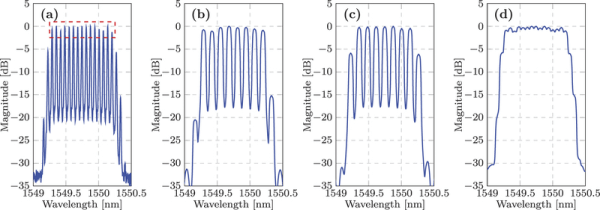
Researchers at University College London successfully transferred data over an optical transmission system at a rate of 1.125 Tb/s. That’s over ten times as fast as typical commercial optical systems, and thousands of times faster than the standard broadband connection. The study appeared in Scientific Reports and takes advantage of encoding techniques usually seen in wireless systems.

The prototype system uses fifteen channels on different wavelengths. Each channel used 256QAM encoding (the same as you see on cable modems, among other things). A single receiver recovers all of the channels together. The technology isn’t commercially available yet. It is worth noting that the experiment used a transmitter and receiver very close to each other. Future tests will examine how the system performs when there are hundreds or thousands of feet of optical fiber between them.
Continue reading “Suddenly, 4G Feels Slow”

Ridiculously Automated Dorm Room

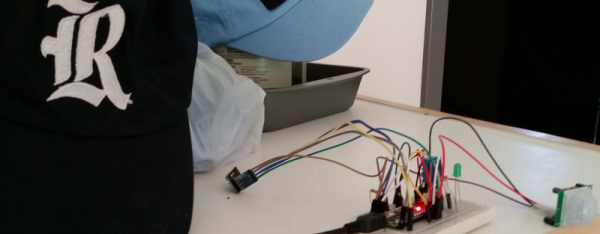
Take three NRF24L0+ radios, two Arduino Nanos, and a Raspberry Pi. Add a bored student and a dorm room at Rice University. What you get is the RRAD: Rice Ridiculously Automated Dorm. [Jordan Poles] built a modular system inspired by BRAD (the Berkeley Ridiculously Automated Dorm).

RRAD has three types of nodes:

  • Actuation nodes – Allows external actuators like relays or solenoids
  • Sensory nodes – Reports data from sensors (light, temperature, motion)
  • Hub nodes – Hosts control panel, records data, provides external data interfaces

Continue reading “Ridiculously Automated Dorm Room”

Cover Your Glass: A Lesson In Design Trades

Penn and Teller once had a show about “What is the best?” Engineers know that’s not a complete question. Think about a car. What makes the “best” car? It depends on why you want a car. For a race car driver, it might be that speed is the most important factor. A mom might value safety. Someone who commutes four hours a day might like a car that’s comfortable. A teenager wants something affordable.

If you think about it, though, it is even more complicated than that. For example, just about everyone wants a car that is safe. Reliability is pretty important, too. So the reality is, most people want a car that has multiple attributes. Worse still, they sometimes conflict; making one better will make some other ones worse. Mom wants a safe car, but not one that takes half a day to drive to the corner market. Nor does she want to pay a half million dollars for a safe car.

Continue reading “Cover Your Glass: A Lesson In Design Trades”

Digital Communications 1830s Style

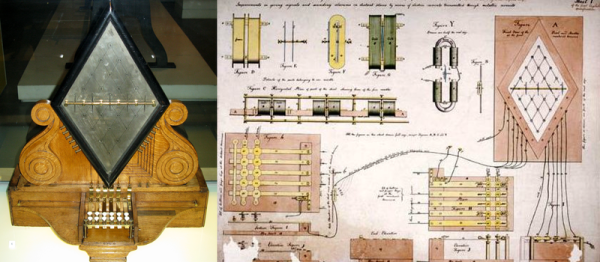
We think of digital communications as a modern invention. But the reality is that semaphores, smoke signals, and Aldis lamps are all types of digital communication. While telegraphs are not as old as smoke signals, they, too, are a digital mode. The problem with all of these is that they require the operator to learn some kind of code. People don’t like to learn code because it is difficult, and employers don’t like to pay high wages to trained operators.

In the late 1830s, a man named William Cooke proposed a complex telegraph to a railway company. The company didn’t care for it and asked for something simpler. The railway didn’t like that either, so Cooke joined up with Charles Wheatstone and patented something that was a cross between a telegraph and a Ouija board.

Continue reading “Digital Communications 1830s Style”

Dumping U8Plus Smartwatch ROM Via Vibration Motor

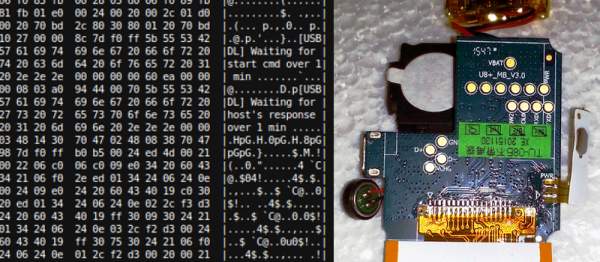
[Lee] continues with his exploration of the U8Plus (a cheap smartwatch). He hasn’t got it all cracked, yet, but he did manage to get a dump of the device’s ROM using an unusual method. At first, [Lee] thought that the JTAG interface (or, at least, the pins presumed to be the JTAG interface) would be a good way to explore the device. However, none of the people experimenting with the device have managed to get it to work.

Instead, [Lee] went through the serial bootloader and dumped the flash memory. He found out, though, that the bootloader refused to read the ROM area. It would, however, load and run a program. Unfortunately, no one has found how to access the UART device directly, but they have found how to drive the vibration motor.

[Lee] took off the vibration motor and used it as an output port for a simple program to dump the ROM. An Arduino picked up the data at a low baud rate and produced an output file. This should allow more understanding of how to drive the watch hardware.

We covered the initial teardown of this watch earlier this year. Of course, if you don’t want to reverse engineer a smartwatch, you could always build your own.

This Car Lets You Fistbump To Unlock

In the dark ages, you had to use a key to lock and unlock your car doors. Just about every car now has a remote control on the key that lets you unlock or lock with the push of a button. But many modern cars don’t even need that. They sense the key on your person and usually use a button to do the lock or unlock function. That button does nothing if the key isn’t nearby.

[Pierre Charlier] wanted that easy locking and unlocking, so he refitted his car with a Keyduino to allow entry with an NFC ring. What results is a very cool fistbump which convinces your car to unlock the door.

Keyduinio is [Pierre’s] NFC-enabled project, but you can also use a more conventional Arduino with an NFC and relay shield. The demo also works with a smartphone if you’re not one for wearing an NFC ring. Going this round, he even shows how to make it work with Bluetooth Low Energy (BLE).

Continue reading “This Car Lets You Fistbump To Unlock”

BBQ Thermometers Get Serious

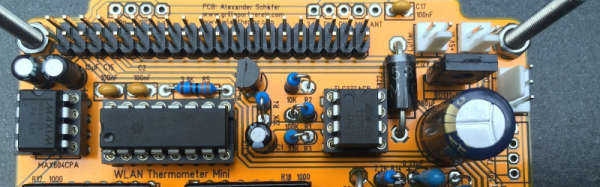
You can write with a fifty cent disposable pen. Or you can write with a $350 Montblanc. The words are the same, but many people will tell you there is something different about the Montblanc. Maybe that’s how [armin] feels about meat thermometers. His version uses a Raspberry Pi and has a lengthy feature list:

  • 8 Channel data logging
  • Plotting
  • Webcam (USB or Raspicam)
  • Alarms via a local beeper, Web, WhatsApp, or e-mail
  • Temperature and fan control using a PID
  • LCD display

You can even use a Pi Zero for a light version. There’s plenty of information on Hackaday.io, although the full details are only in German for the moment. As you can see in the video below, this isn’t your dollar store meat thermometer.

Even though a disposable pen does the same job as a Montblanc, most of us would rather have a Montblanc (although Hackday would have to hand out some pretty steep raises before we start using the Meisterstück Solitaire Blue Hour Skeleton 149).

We might have done more with an ESP8266 and then done more work on the client, but we have to admit, this is one feature-packed thermometer. We’ve seen simpler ones that use Bluetooth before, along with some hacks of commercial units.

Continue reading “BBQ Thermometers Get Serious”