Poland’s railways have recently come under a form of electronic attack, as reported by Wired. The attack has widely been called a “cyber-attack” in the mainstream media, but the incident was altogether a more simple affair pursued via good old analog radio.
The attacks were simple in nature. As outlined in an EU technical document, Poland’s railways use a RADIOSTOP system based on analog radio signals at around 150 MHz. Transmitting a basic tone sequence will trigger any duly equipped trains receiving the signal to engage emergency braking. It’s implemented as part of the PKP radio system on the Polish railway network. Continue reading “Polish Railways Fall Victim To Cheap Radio Attack”→
The results from your 3D printer may be improved if you use a dedicated enclosure for the job. This is particularly helpful for printing certain materials which are more sensitive to cold drafts or other thermal disruptions to the working area. If you want an elegant solution to the problem, consider getting yourself an IKEA Billy bookshelf, says [wavlew].
The Billy makes a remarkably elegant 3D printing workstation, overall. It’s got a nifty slide-out drawer that makes a perfect mounting point for a 3D printer. It lets you slide out the printer for maintenance, using the controls, or extracting finished prints. It also naturally features plenty of storage for your filament, tools, and other accoutrements. When it comes to the business of actually printing though, you just slide the printer inside and shut the door. Its thermal and noise isolating performance can also be further improved by adding a silicone door seal.
We love this idea. Too often, 3D printers are left chugging away on messy desks, where they’re subject to blasts from AC vents and other disruptions. Having everything tidily tucked away in a cupboard neatens things significantly, and could also prove helpful if you pursue fume extraction, too.
If you’ve identified any other nifty maker applications for IKEA furniture, be sure to let us know!
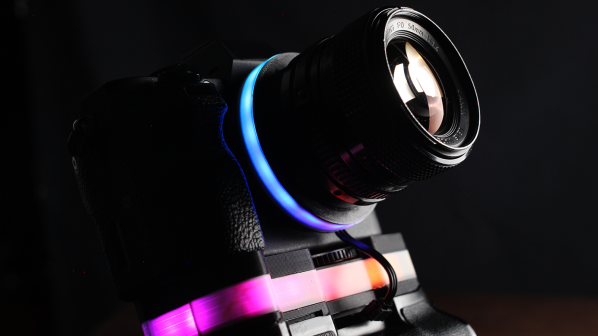
RGB LEDs can be found on everything from motherboards to sticks of RAM these days. [dslrdiy] wanted to bring this same visual flair to his camera setup, so built what he’s calling the world’s first RGB camera grip.
The build is based on an existing off-the-shelf camera grip. It’s disassembled for the build, with a pair of 18650 lithium batteries installed inside as a power supply. They run a small DC-DC converter, which powers a Raspberry Pi Zero and a WS2812B LED strip which provides the lovely colorful lighting effects. The LEDs light up a translucent spacer installed in the camera grip solely for the purpose of aesthetics.
So far, so straightforward. However, [dslrdiy] also implemented one more useful feature. The Pi Zero is able to scrape photos from the camera, and automatically load them on to a Windows network share. That’s a nice zero-fuss way to get pictures off your camera when you return to your home network.
We’re not sure too many professional photographers will rush after the RGB grip, as it’s often poor practice to introduce strange uncontrolled colorful lights into a scene. However, the wireless tethering feature does seem attractive depending on your usual workflow. Video after the break.
If you’ve ever had trouble with a footpath, bus stop, or other piece of urban infrastructure, you probably know the hassles of dealing with a local council. It can be incredibly difficult just to track down the right avenue to report issues, let alone get them sorted in a timely fashion.
The aviation industry is always seeking advancements to improve efficiency and reduce carbon emissions. The former is due to the never-ending quest for profit, while the latter helps airlines maintain their social license to operate. Less cynically, more efficient technologies are better for the environment, too.
One of the latest innovations in this space is a new sharkskin-like film applied to airliners to help cut drag. Inspired by nature itself, it’s a surface treatment technology that mimics the unique characteristics of sharkskin to enhance aircraft efficiency. Even better, it’s already in commercial service! Continue reading “Sharkskin Coating Reduces Airliner Fuel Use, Emissions”→
As the Earth continues to warm at a worrying rate, scientists continue to work to understand the processes and mechanisms at play. Amidst the myriad of climate-related theories and discussions, the clathrate gun hypothesis stands out not only for its intriguing name but for the profound implications it might have on our understanding of global warming events.
Delving into this hypothesis is akin to reading a detective novel written by Mother Earth, with clues hidden deep beneath the ocean and Arctic ice. It’s a great example of how scientists attempt to predict the future by unpicking the mysteries of the past.
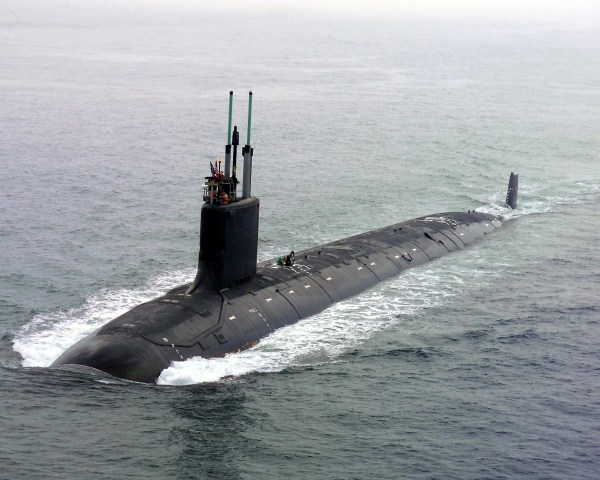
Submarines have always been about stealth; that’s always been the whole point of putting them underwater. Tracking them can be difficult, even to this day, but China may have a new technique to help in this endeavour, as reported by the South China Morning Post.
Nuclear missile subs are nicknamed “boomers,” and can spend months underwater. Tracking them is of prime concern to many countries around the world. US Navy
The news comes from a study published in a Chinese journal, regarding detection of the most advanced American submarines. The stealthiest examples use all kinds of sophisticated systems to damp vibrations and reduce acoustic signatures to make detection as hard as possible. However, a new type of magnetic detector could change all that.
A research team used computer simulations to determine whether nuclear-powered submarines could be detected via the bubbles produced when cruising at high speed underwater. When these bubbles inevitably collapse, it can apparently produce a detectable signal that is orders of magnitude higher than the sensitivity of the best magnetic anomaly detectors. The signal is found on the order of 34.19 to 49.94 Hz, deep in the ELF range, according to researchers.
This could yet create another arms race, as submarine designers begin designing vessels to reduce bubble shedding at speed. Or, for all we know, this is already a well-known principle in the high-stakes world of submarine surveillance and combat. If you’re in the know, please don’t reveal any classified information in the comments section. It’s not worth your job or ours! If you recreate such a detector at home in a non-treasonous manner, though, don’t hesitate to let us know!