Java Is Now On The Nintendo 64!

Whether it’s your favorite programming language, or your favorite beverage, there’s no denying Java is everywhere. Now, it’s even on the Nintendo 64, thanks to the valiant efforts of [Mike Kohn]. Even better, he’s coded a demo to show off its capabilities!

The project took plenty of work. [Mike] went all the way down to the assembly level to get Java code running on the N64. The project builds on the work that he did previously to get Java running on the PlayStation 2. Notably, both the Sony and Nintendo consoles do have some similarities — both are based on MIPS CPUs.

The demo itself is a work of art. It features the typical “3 billion devices run Java” screen, followed by some truly chunky bass and wailing guitar sounds. It’s followed by all the dancing shapes, sinusoidal text, and bright colors you could shake a stick at.

For those interested in the nitty gritty, [Mike] delves deep into the details of what it took to get everything running. That includes both using the code in an emulator, as well as how to get it going on real Nintendo hardware, something we’ve looked at before.

Continue reading “Java Is Now On The Nintendo 64!”

DIY Game Boy Games Make The Perfect Christmas Gift

Sometimes, the best gift is the one you make yourself. [Pigeonaut] decided to whip up a few Game Boy games of their very own creation to gift to the special people in their life.

The games were crafted using a platform called GB Studio. It’s a tool that allows the drag-and-drop creation of games for the Game Boy and Game Boy Color handhelds. It’s capable of creating ROM files to run in an emulator, within a web page, or they can be flashed to a cartridge and played on real Nintendo hardware.

For the full effect, [Pigeonaut] went with the latter method. Four games were created: Phantom Shock, Climbing Mount Crymore, Cozy Cat Cafe, and A Tiny Hike. Each was flashed onto a real cart and given a high-quality label to make a lovely tangible gift. Upon gifting, [Pigeonaut]’s friends and partner were able to play their way through their personalized titles on a GameCube running the Game Boy Player accessory.

It’s hard to imagine a more touching gift than a personal game crafted from the ground up. Getting to play it on a real Nintendo is even better, and we’ve seen hardware that can achieve that before. Try out the games in your web browser via the links above, or send us in your own cool homebrew hacks to the Tipsline!

Organic Fibonacci Clock Is All About The Spiral

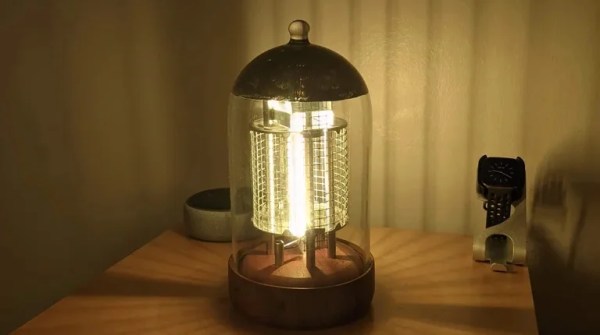
Whether you’re a fan of compelling Tool songs, or merely appreciate mathematical beauty, you might be into the spirals defined by the Fibonacci sequence. [RuddK5] used the Fibonacci curve as the inspiration for this fun clock build.

The intention of the clock is not to display the exact time, but to give a more organic feel of time, via a rough representation of minutes and hours. A strip of addressable LEDs is charged with display duty. The description is vague, but it appears that the 24 LEDs light up over time to show the amount of the day that has already passed by. The LEDs are wound up in the shape of a Fibonacci spiral with the help of a 3D printed case, and is run via a Wemos D1 microcontroller board.

It’s a fun build, and one that we can imagine would scale beautifully into a larger wall-hanging clock design if so desired. It at once could display the time, without making it immediately obvious, gradually shifting the lighting display as the day goes on.

We’ve seen other clocks rely on the mathematics of Fibonacci before, too. If you’ve cooked up your own fun clock build, don’t hesitate to let us know!

Walk-Bot Is A Navigation Device For The Vision-Impaired

For the vision impaired, there are a wide variety of tools and techniques used to navigate around in the real world. Walk-bot is a device that aims to help with this task, using ultrasound to provide a greater sense of obstacles in one’s surroundings.

Is trigonometry the most useful high school maths out there? There’s an argument that says yes.

Created by [Nilay Roy Choudhury], the device is intended to be worn on the waist, and features two sets of ultrasonic sensors. One set is aimed straight ahead, while the other points upwards at an angle of 45 degrees. An infrared sensor then points downward at an angle of 45 degrees, aimed at the ground.

The distance readings from these sensors are then collated by a microcontroller, which uses trigonometry to determine the user’s actual distance to the object. When objects are closer than a given threshold, the device provides feedback to the user via a buzzer and a vibration motor. The combination of three sensors looking out at different angles helps capture a variety of obstacles, whether they be at head, chest, or knee height.

It’s unlikely that a complex electronic device would serve as a direct replacement for solutions like the tried-and-tested cane. However, that’s not to say there isn’t value in such tools, particularly when properly tested and designed to suit user’s needs.

We’ve seen some great projects regarding visual impairment before, like this rig that allows users to fly in a simulator. If you’ve been working on your own accessibility tools, don’t hesitate to drop us a line!

An All-Billet, Single-Piece, Flexure-Based Nutcracker

Typical nutcrackers rely on simple pin hinges to join two handles for the cracking task. However, [adam the machinist] has demonstrated that a single-piece nutcracker is possible by using the flexural properties of the right grade of steel.

The nutcracker is manufactured out of 17-4 PH stainless steel, heat treated to the H900 condition. A flexural spring section at the top of the nutcracker takes the place of the usual hinge, allowing the handles to be squeezed together and the teeth of the cracker to open the nut. Machining the flexural section is first achieved with a series of CNC drill operations on the billet stock, before regular milling is used to shape the rest of the spring section and tool. The video dives deep into the finer points of the CNC operations that produce such a great finish on the final part. It even covers the use of a tiny scissor jack to help hold the handles still during machining.

The result is a highly attractive and desirable nutcracker that looks far more special than the regular fare you might pick up at Walgreens. The all-billet tool is a nutcracker very much fit for a sci-fi set. We’ve seen some other kitchen tools around here before, too, albeit of more questionable utility.

Continue reading “An All-Billet, Single-Piece, Flexure-Based Nutcracker”

Wear Your Fave Cassette Tapes As A Necklace With This 3D Printed Adapter

While packing merch for a recent gig, I realised I had the opportunity to do something a little fun. I’d released an album on tape, and spent a little extra to ensure the cassette itself was a thing of beauty. It deserved to be seen, rather than hidden away in a case on a shelf. I wanted to turn this piece of musical media into a necklace.

Of course, cassette tapes aren’t meant to be used in this way. Simply throwing a chain through the cassette would lead to tape reeling out everywhere. Thus, I fired up some CAD software and engineered a solution to do the job! Here’s how I built an adapter to turn any cassette tape into a cool necklace.

Find the design on Thingiverse, and more details below!

Continue reading “Wear Your Fave Cassette Tapes As A Necklace With This 3D Printed Adapter”

Drone Rescue Uses VHS Tape And Careful Planning

If you regularly fly your drones outdoors, you’ve probably worried about getting your pride and joy stuck in a big tree at some point. But flying indoors doesn’t guarantee you’ll be safe either, as [Scott Williamson] found out. He once got his tiny 65 mm Mobula 6HD quadcopter stuck in a roof beam at an indoor sports complex, and had to set about a daring rescue.

The first job was recon, with [Scott] sending up another drone to survey the situation. From there, he set about trying to prod the stuck quadcopter free with a improvised lance fitted to the front of a larger drone. But this ended up simply getting the larger bird stuck as well. It eventually managed to free itself, though it was damaged severely when [Scott] caught it as it fell. As told to Hackaday, [Scott] thus decided he needed to build a mock-up of the situation at home, to help him devise a rescue technique.

In the end, [Scott] settled on a grappling hook made of paperclips. A drone lofted a long length of VHS tape over the roof beam, and he then attached the grappling hook from ground level. The VHS tape was then used to reel the hook up to the rafters, and snare the drone, bringing it back down to Earth.

It took some perseverance, but [Scott] ended up rescuing his tiny drone from its lofty prison. The part we love most about this story, though, is that [Scott] planned the recovery like a heist or a cave rescue operation.

Continue reading “Drone Rescue Uses VHS Tape And Careful Planning”