Samsung Printer Is The Next Frontier Of Minecraft Servers

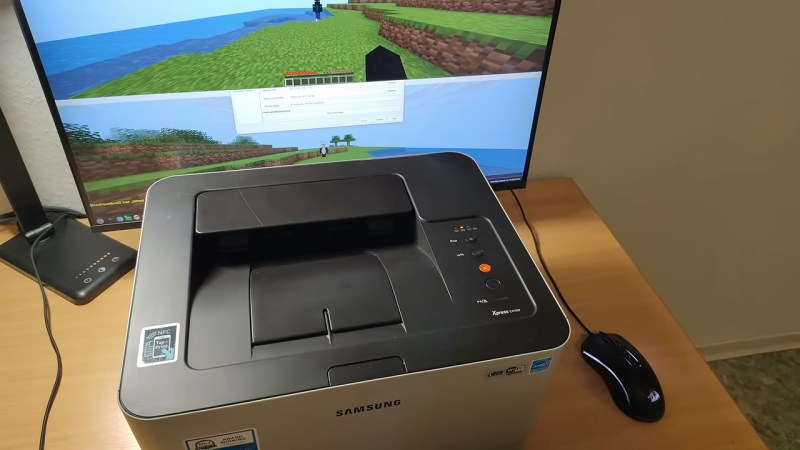
While DOOM remains the undisputed champion of ‘game you play on every piece of hardware’ it seems that the role of ‘game you play on everything just because you can’ is slowly being shifted to Minecraft, as we have yet another Minecraft server somewhere Minecraft has no business being served– in this case, a Samsung Printer.

The hack actually requires opening up the printer to get at the debug ports to bang your way in via serial, but as any security expert will tell you, once the black hats have physical access to a machine, they own it. That isn’t to say it’s easy– [vimpo] had to dump the firmware and find an exploit. Since it’s 2026 [vimpo] tried to get an LLM to do all that hard work for him, and while it helped with identifying functions in the dump, ultimately the hacking still fell upon [vimpo]’s human intelligence, though not before burning through millions of tokens.  Having found a good old fashioned UDP overflow exploit, he’s gets control of the printer and puts an improved version of his lightweight Minecraft server, UCraft, on it.  Like the server, the exploit is also on GitHub but you’ll very likely need the exact same printer to get it to work: a Samsung C410W with firmware V3.00.02.20, DEC-15-2015. One important caveat is that while you can still use the printer as intended after this hack, you cannot do so while playing Minecraft: it crashes the server if you try. Good to know.

In case you’re wondering, yes, this is the same guy who got a Minecraft server running on a light-bulb, which arguably more impressive. Where he might mine and/or craft next is anybody’s guess. Somebody else already did the ESP32-C3, and while we suspect nothing will ever beat the 1960s Univac implementation for sheer impracticality, we’re willing to be surprised.

Continue reading “Samsung Printer Is The Next Frontier Of Minecraft Servers”
Homebrew 68K Machine Has A PCI Bus

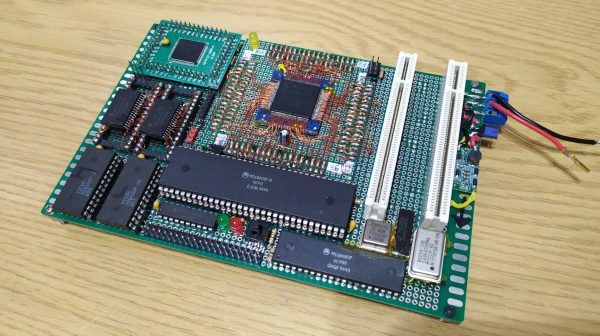
The Peripheral Component Interconnect (PCI) bus was first introduced all the way back in 1992. It quickly became the standard way to interface add-on cards on the PC platform, supplanting earlier buses like ISA and various other oddball standards. You wouldn’t expect to see a PCI bus on a Motorola-based machine, but [maniek86]’s homebrew rig offers just that. 

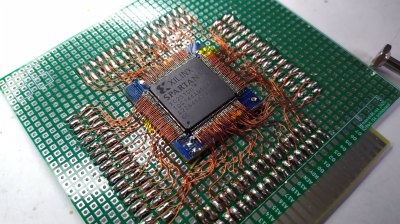
That’s a lot of soldering.

This computer is a beautiful piece of homebrew engineering, constructed out of protoboard and loose wires rather than any fancy PCB. At the heart of the build lies a Motorola 68000 running at 10 MHz. It’s got 1 MB of SRAM, 4 KB of ROM, and a MC68681P acting as a UART, timer source, and I/O controller. Where things get special, though, is in the inclusion of a Xilinx Spartan II FPGA (XC2S100), which acts as a PCI bridge. It provides the machine with two 32-bit 5-volt PCI slots which are interrupt capable, albeit with no bus mastering. A XC95144XL CPLD also sits present to act as glue logic to help lace everything together.

[maniek86] does a great job of explaining exactly why the PCI bus was hard to implement, and how it was pulled off in the end. The guide also covers how the system was able to interface various cards, from a PCI serial expansion to a Cirrus VGA adapter. It’s all good stuff.

We’ve featured other work from [maniek86] before, too, like this brilliant 486-based single-board computer. Video after the break.

Continue reading “Homebrew 68K Machine Has A PCI Bus”

Foldable OLED Displays And The Bane Of Dust

Much like Apple’s once vaunted super-slim butterfly keyboard, today’s range of portable devices featuring flexible OLED displays – which can fold said display into a much smaller form factor – are a marvel of engineering.

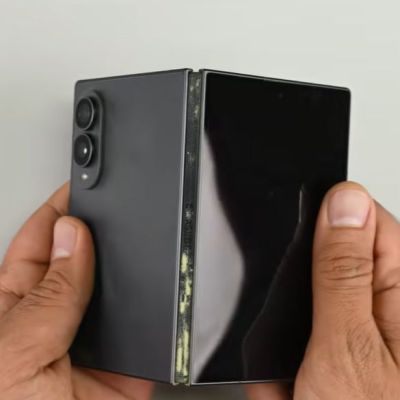
The foldable phone after a dusty encounter. (Credit: iFixit, YouTube)

Unfortunately engineering can only do so much against fundamental flaws. In the case of both these flexible OLEDs and butterfly keyboards the main issue is that of dust intrusion, with a recent teardown by [iFixit] going over the reasons for this.

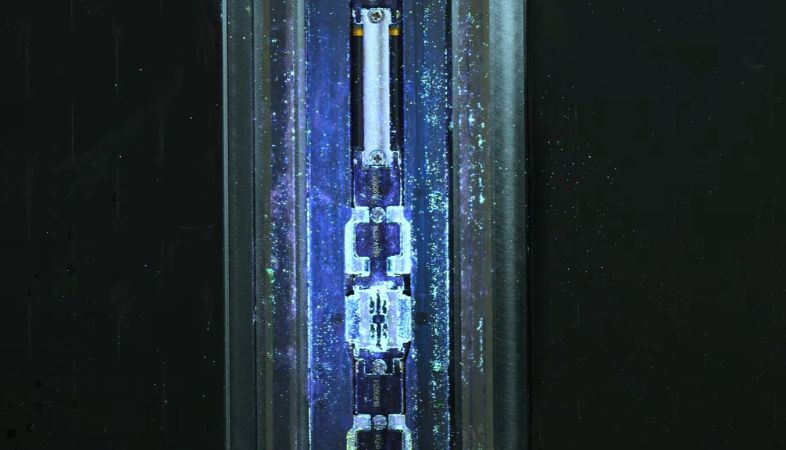
As test subject we got a Galaxy Z Fold 8, as an example of a modern-day foldable smartphone-tablet hybrid. This phone has an IP48 rating, meaning that it’s water-resistant, but not dust-resistant for particles smaller than 1 mm. To test this, [iFixit] used UV-reactive dust particles, making sure that they got literally everywhere inside the phone’s hinge mechanism.

After this treatment, trying to fold the phone caused the hinge mechanism to make absolutely horrific crunching noises, confirming that it’s reached dust-under-butterfly-keycap levels of unusable. During the subsequent teardown a quick pass with the UV lamp showed that not much of the dust had penetrated into the two halves of the device at least, but the hinge mechanism wasn’t as lucky.

Getting to the hinge is sadly rather destructive, as it involves removing the flexible OLED. Once the hinge was exposed and subjected to UV light the spectacle was something to marvel at, as can be seen in the above screenshot. With the dust caking literally every part of the mechanism, it was little wonder that the hinge had ceased to work.

Although this was obviously an extreme case of dust exposure, and the average flexible OLED screen’s hinge won’t see nearly as much dust, one can’t help but feel slightly disconcerted at that crunching noise, knowing that it’s just one big dust exposure away.

Continue reading “Foldable OLED Displays And The Bane Of Dust”

Art of 3D printer in the middle of printing a Hackaday Jolly Wrencher logo

3D Printering: Why Is My PLA So Brittle?

Over the years poly(lactic acid) (PLA) – also known as polylactide – has become a popular thermoplastic for a variety of reasons. One of these reasons is that it’s easily produced from a renewable resource, i.e. lactic acid, with the resulting polymer even being compostable if you assume that your compost pile hits a steady 65°C or more, well above the polymer’s glass transition temperature (Tg).

That said, PLA by itself is a pretty crummy material, being exceedingly brittle and inferior to common alternatives like PET(G) in many metrics. Over the decades much research has gone into figuring out this material, its amorphous and crystalline states, as well as how to use plasticizers, copolymers, mechanical manipulation and PLLA/PDLA blends to produce more useful variants of PLA.

Today’s spools of thermoplastic filament that gets marketed as ‘PLA’ are the result of such engineering, though with plenty of remaining issues, as anyone who has struggled through a spool of brittle PLA filament can attest to. Although you can find plenty of tips online about how you should ‘just’ toss said spool into an filament dryer, oven or similar to bake it – with accusing fingers pointed at moisture intrusion, hydrolysis and kin – it helps to understand the fundamentals of how PLA works, and how it degrades.

Continue reading “3D Printering: Why Is My PLA So Brittle?”

Miniaturizing The Atari 2600 Console

For as popular as Atari was in their heyday, it wasn’t until well after they were on their famous decline that they released their first handheld, the Atari Lynx. In retrospect, competing with the Game Boy was not going to be a recipe for success even without considering their other problems as a company, and as a result was their penultimate console before exiting the market completely. But [Nick]’s most recent project asks what the world would have been like with an Atari handheld from their golden era, and has been working on this miniaturized version of the 2600.

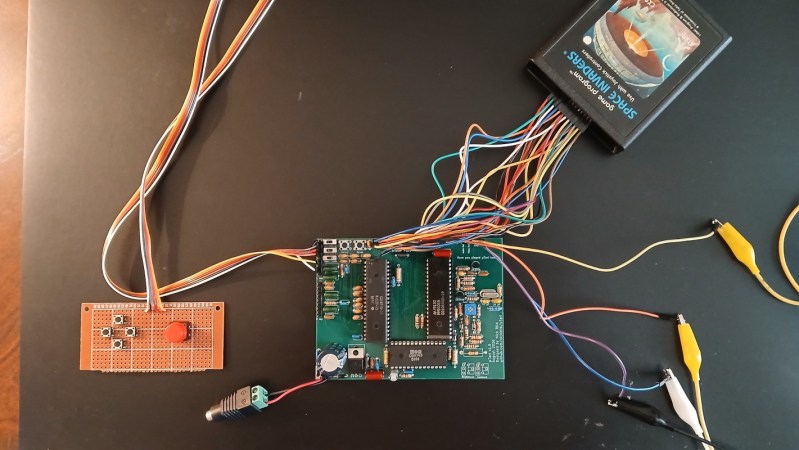
Unlike any modern emulators which can easily handle Atari 2600 games in almost any form factor today, this console is doing it all with as much original hardware as possible. It uses much smaller switches and buttons compared to the original, and omits some other unnecessary hardware for today’s world like the RF modulator. [Nick] has also designed a custom PCB that reduces the overall footprint considerably as well, and has relocated the cartridge port in preparation for its eventual handheld shape. The result is a console using original hardware that’s less than half the footprint of the original.

Although there were around 30 million Atari 2600 consoles sold and the system is unlikely to be a real collector’s item anytime soon, [Nick] makes sure to note that no real 2600 hardware was harmed in this build. And, as far as its handheld nature, this is a stepping stone on the path to that eventual goal. We’ll look forward to an eventual system that integrates a screen and controller as well as a port for the original cartridges. In the meantime, here’s another handheld 2600 that fits completely inside one of those cartridges.

Continue reading “Miniaturizing The Atari 2600 Console”

An Early History Of Space Stations: The Brick Moon Made Real

People have lived in space stations for decades now, but something is wrong with them. Where are the big rotating wheels? You know the ones. They show up in old paintings of the future and, perhaps most memorably, in 2001: A Space Odyssey. Spin a great wheel in space, and people can stroll around inside with something that feels suspiciously like gravity. It seems like an obvious idea.

It is also an old idea. Much older than actual spaceflight, in fact. But to find the beginning of the space station, we have to go back to a time when powered aircraft were still several decades in the future.

A Moon Made of Bricks

In 1869, Edward Everett Hale published The Brick Moon in The Atlantic Monthly. The moon in question wasn’t natural. Hale imagined building a 200-foot-diameter sphere made from bricks and putting it into orbit as a navigation aid. Sailors could sight it and use its known orbit to determine their longitude. There was only one small problem: the thing was accidentally launched with people aboard.

That makes The Brick Moon generally regarded as not only the first fictional artificial satellite, but also the first fictional space station. Hale followed it in 1870 with Life on the Brick Moon, describing how the accidental colonists got along up there.

Hale didn’t have rockets. He proposed flinging the thing into the sky with giant flywheels, but, then again, it was 1869, so we’re inclined to cut him some slack. As the 19th century turned into the 20th, however, people started doing the math.

Konstantin Tsiolkovsky is best remembered for putting rocket flight on a sound theoretical footing. The Russian schoolteacher wrote extensively about orbital flight and space habitation, envisioning people living in orbit long before anyone had demonstrated that a liquid-fueled rocket actually worked. His ideas included rotating habitats to provide artificial gravity.

Hermann Oberth’s 1923 book Die Rakete zu den Planetenräumen — The Rocket into Planetary Space — Oberth went beyond fiction and seriously considered a permanently inhabited station. He envisioned it being periodically supplied by smaller rockets, serving as an observation and communications platform, and even acting as a jumping-off point for trips farther into space. He also suggested spinning the station to give the crew artificial gravity.

Continue reading “An Early History Of Space Stations: The Brick Moon Made Real”

Teardown Shows Low-Fi Microphone Is Surprisingly Sophisticated

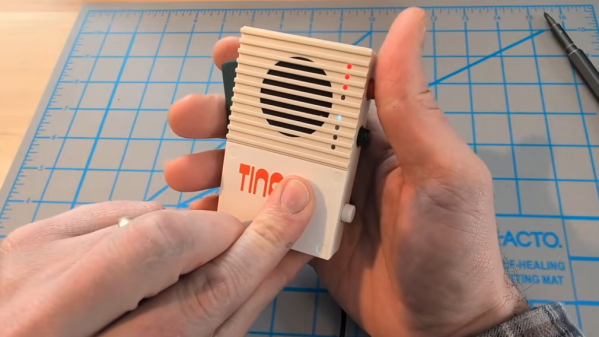
The Ting FX EP-2350 by Teenage Engineering is a standalone microphone with a few extras, including samples and built-in effect presets that can be modified by the user. It also has a distinctive design, and [Sam Holland] does an in-depth teardown that offers some insights that are worth keeping in one’s back pocket. The large, side-mounted lever in particular is an interesting bit, but more about that in a moment.

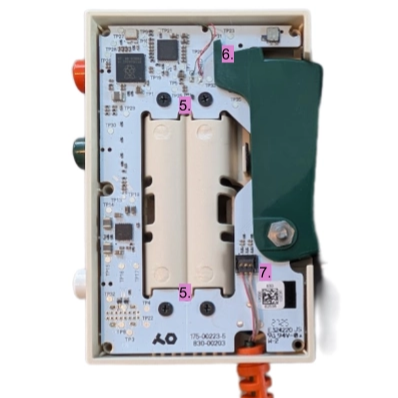
Inside the device is a single PCB, which has a cutout in the middle for a pair of AAA cells. A Raspberry Pi 2350 drives the device’s functions, supported by various components which [Sam] identifies, although he mostly looks at everything from the perspective of a mechanical engineer as he critiques the design. It’s a clean-looking, intentionally low-fi design that belies how complex the device really is.

The multi-function, chunky, spring-loaded side lever is of particular interest. It has three sensors: two switches and a potentiometer. One switch detects when the lever is at rest, or depressed by any amount at all. The potentiometer mates with the pivot point of the lever, allowing the device to directly sense how far the lever is pushed. The last switch triggers when the lever is pushed all the way in. Together, it forms an intuitive input that combines powering on (the device wakes up from sleep mode as soon as the lever is pressed) with the ability to adjust effects in proportion with how far the lever is pressed, while also bottoming out with a distinct click that itself acts as an input signal.

One other interesting bit is the light pipes that carry light from multiple indicator LEDs to the outside of the device. A textured surface acts as a diffuser and helps the lit surface look smooth, while a coating of silver paint prevents light bleed and (probably) maximizes light transmission through the plastic. Hot glue makes a pretty good light pipe material but if DIY light pipes end up in your next project, sanding the exit surface and giving the rest a coating of silver paint just might be worth a shot. Continue reading “Teardown Shows Low-Fi Microphone Is Surprisingly Sophisticated”