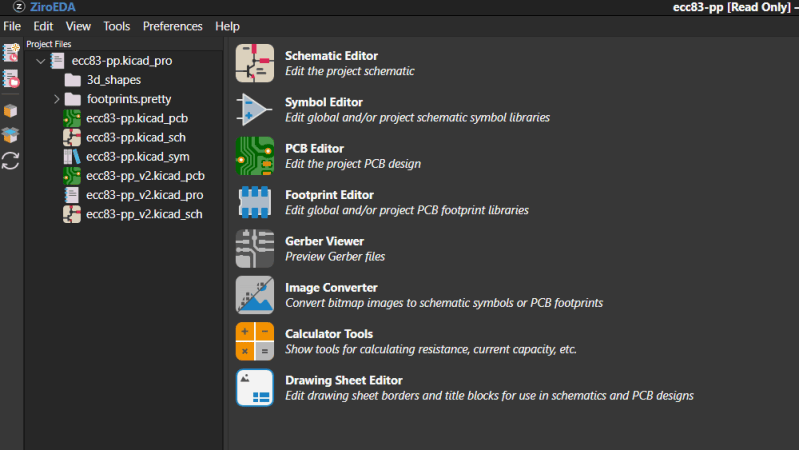
KiCad is a useful tool for designing printed circuit boards, but it’s of no use to you if you can’t install it on the computer you’re on. To get around that, [Akshay Rukade] has whipped up a browser-based alternative to help keep you working in less permissive environments. It’s called ZiroEDA.
Quite simply, ZiroEDA is a TypeScript port of KiCad 10.0.6’s C++ source code. You get the schematic editor, the PCB editor, the interactive router, and the electrical and design rule checkers all running in a browser. It can open .kicad_pro files as you’d expect, and you can edit and save them as you would if you were working in standard KiCad directly.
[Akshay] reports that KiCad’s own kicad-cli was used for compatibility testing, and that zone fills came out vertex-identical from ZiroEDA versus using KiCad itself. With that said, the project is still a work in progress, and some dialogs from the original software are still missing. Projects are said to be end-to-end encrypted, but you’ll hopefully lose your job quickly if you try and put anything important to national security through a tool like this. You can always try it, just to give your higher-ups a heart attack.
Source is available on GitHub if you want to see how it all ticks. We’ve featured other great KiCad hacks before, too, like this GPU-accelerated autorouter. If you’re working on PCB tools of your own, don’t hesitate to notify the tipsline.




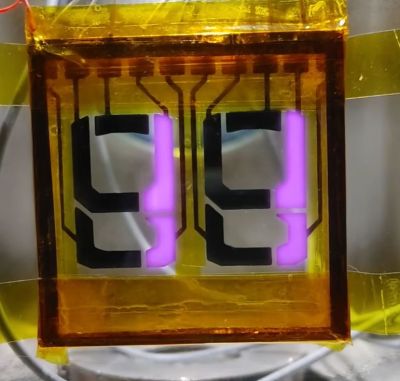 Rather than neon, this uses argon as the gas. The anode is formed by the indium-tin oxide layer on a piece of glass, with the cathode sputtered onto the other side in the form of first a titanium layer followed by platinum. This combination helps to prevent the latter from flaking off due to incompatibilities between the molecular matrices of the glass and platinum.