CX-6000 Pen Plotter Upgrade

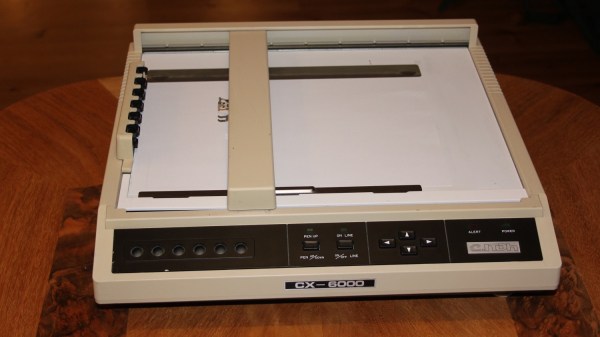
[Terje Io] decided to breathe new life into an old pen plotter — the CX6000 from C. Itoh, a Japanese company that made several printers for Apple in the 1980s. He keeps most of the framework, but the electronics get a major overhaul. The old motors are replaced, the controller and motor drivers are modernized using a Raspberry Pi Pico and stepper motor drivers. After tending to other auxiliary electronics like the control panel and limit switches, it’s time to deal with the firmware.
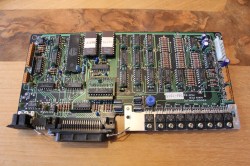
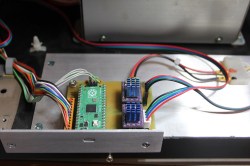
Rather than reinvent the wheel, [Terje] sensibly built upon existing projects and refactored them for his application. G-Code processing is done by grblHAL, with an added mode to handle HPGL code. He modified the firmware from Motöri the Plotter project to parse HPGL, making his new CX6000+ bilingual.

We covered Motöri way back in 2009, and more recently we wrote about the Teensy Controller using grblHAL, one of the 32-bit big brothers of GRBL. Have you ever restored one of these old plotters? Or is it easier to just build your own these days?

Illustrated Kristina with an IBM Model M keyboard floating between her hands.

Keebin’ With Kristina: The One With The Ballpoint Typewriters

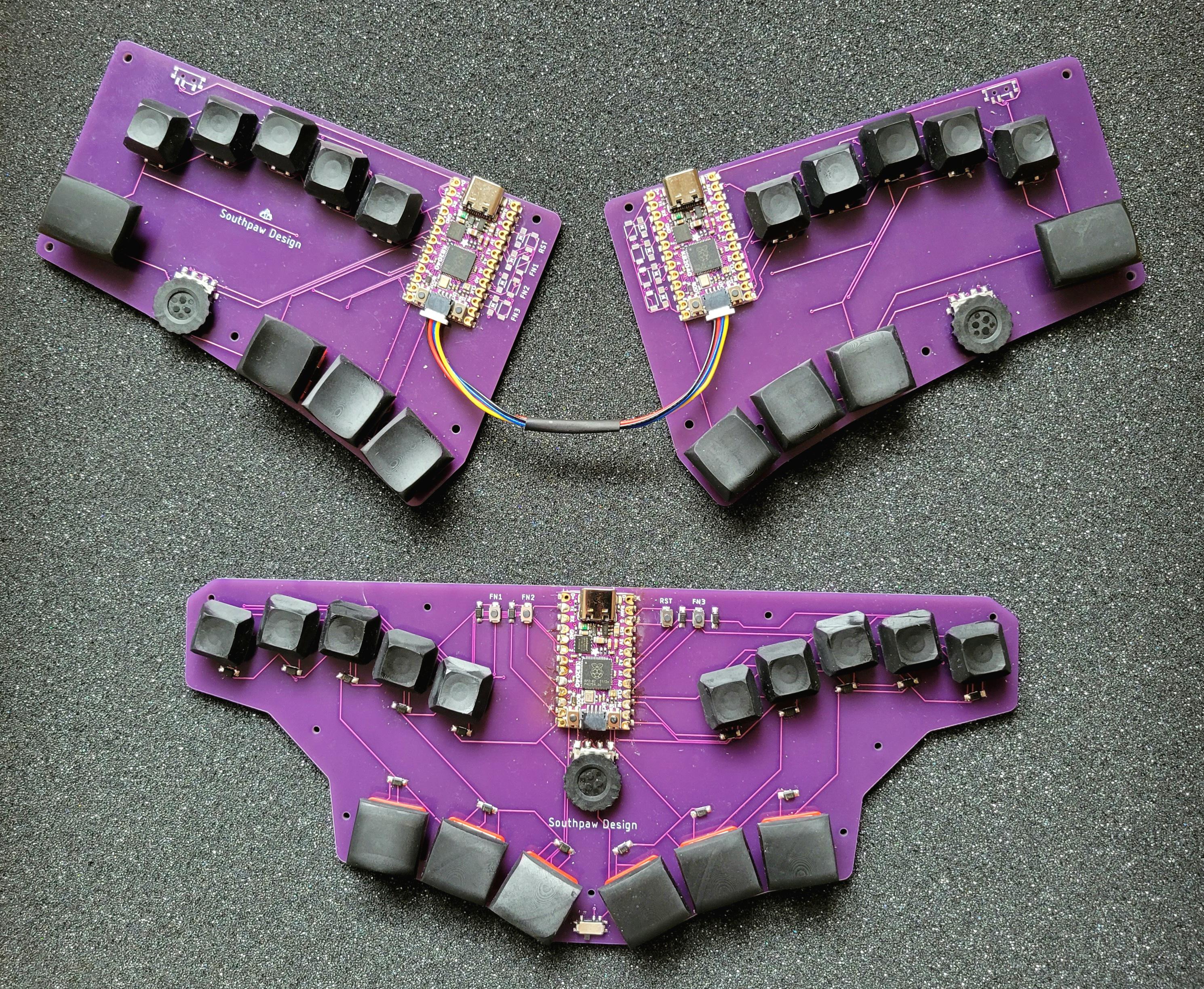
So you want to minimize finger movement when you type, but don’t have three grand to drop on an old DataHand, or enough time to build the open-source lalboard? Check out these two concept keebs from [SouthPawEngineer], which only look like chord boards.

Every key on the home row is a five-way switch — like a D-pad with straight down input. [SouthPawEngineer] has them set up so that each one covers a QWERTY column. So like, for the left pinky switch, up is Q, right is A, down is Z, and left is 1. Technically, the split has 58 keys, and the uni has 56.

Both of these keebs use KB2040 boards, which are Adafruit’s answer to the keyboard-building craze of these roaring 2020s. These little boards are of course easy to program with CircuitPython, which supports KMK, an offshoot of the popular QMK. Thanks for the tip, [foamyguy]!

Continue reading “Keebin’ With Kristina: The One With The Ballpoint Typewriters”

Ask Hackaday: What’s Going On With Mazdas In Seattle?

What hacker doesn’t love a puzzle? We have a doozy for you. According to KUOW — the NPR affiliate in Seattle — they have been getting an unusual complaint. Apparently, if you drive a Mazda made in 2016 and you tune to KUOW, your radio gets stuck on their frequency, 94.9 MHz, and you can’t change it.

According to a post from the radio station, it doesn’t just affect the FM radio. A listener named Smith reported:

“I tried rebooting it because I’ve done that in the past and nothing happened,” Smith said, “I realized I could hear NPR, but I can’t change the station, can’t use the navigation, can’t use the Bluetooth.”

Continue reading “Ask Hackaday: What’s Going On With Mazdas In Seattle?”

A Simple 3D Printed Rover Design

There are plenty of RC cars and robot platforms out there that you can buy. However, there’s an understanding that’s gained from building your own rover from the ground up. Which is precisely what [Alex] got from developing this compact 3D printed rover design.

The design is by no means fast; it’s intended more for crawling around “at a slow deliberate pace” as [Alex] puts it. Off-the-shelf 12 V gear motors are used to provide plenty of torque to get around. The modular design means that it can be built with just wheels, or set up with tracks fitted for additional performance in softer terrain. Skid steering is used to turn the platform.

Fitted with a Raspberry Pi Zero 2W, the rover can be controlled remotely over WiFi. A separate FPV camera and transmitter is then used to stream video remotely to pilot the bot. However, if you’re so inclined, you can probably use the Raspberry Pi to stream the video, too.

It’s a fun build and a great way to learn about building rovers and robots that move. We’ve seen some other interesting tracked rovers before, too. Video after the break.

Continue reading “A Simple 3D Printed Rover Design”

Breakbeats Courtesy Of The RP2040

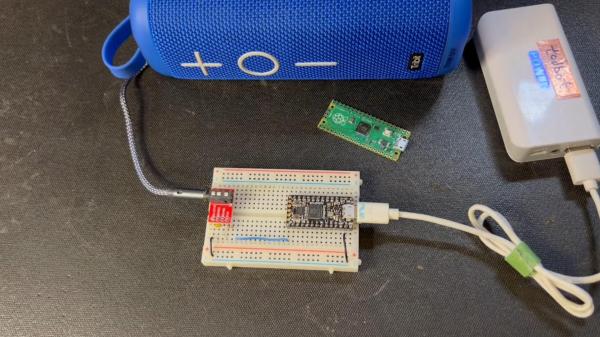
While one often listens to songs or albums in full, sometimes you just want to lay down a simple beat. [todbot]’s latest project promises to do just that.

The build relies on a Raspberry Pi Pico or any other RP2040-based microcontroller board, and is programmed in CircuitPython. The PWM feature is used for audio output, and it’s loaded with different WAV samples of the classic “Amen” break.

Each measure, a random new sample is chosen and played, changing the beat. Even better, all the samples can loop, and they come in varying lengths, allowing them to overlap and lay over each other to add further depth to the mix. It’s a cinch to setup, as CircuitPython has an AudioMixer object built in.

Those wishing to tinker for themselves can find all the code and samples on Github. A build like this one is a great way to start learning about working with audio and music, after all. We’ve seen [todbot]’s work here before, too. Video after the break.

Continue reading “Breakbeats Courtesy Of The RP2040”

How Can 335 Horses Weigh 63 Pounds?

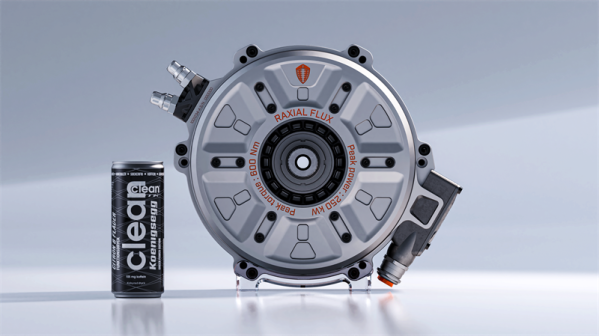
Koenigsegg, the Swedish car company, has a history of unusual engineering. The latest innovation is an electric motor developed for its Gemera hybrid vehicle. The relatively tiny motor weighs 63 pounds and develops 335 horsepower and 443 lb-ft of torque. Dubbed the Quark, the motor uses both radial and axial flux designs to achieve these impressive numbers.

There is a catch, of course. Like most EV motors, those numbers are not sustainable. The company claims the motor can output peak power for 20 seconds and then drops to 134 horsepower/184 lb-ft of torque. The Gemera can supplement, of course, with its internal combustion engine — a 3 cylinder design.

Continue reading “How Can 335 Horses Weigh 63 Pounds?”

3-Wheeled Electric Skateboard Does Things Differently

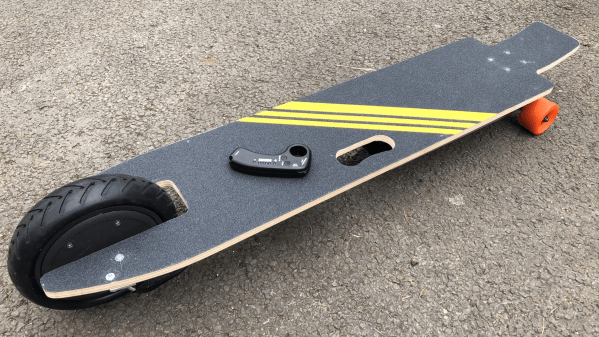
Typically, electric skateboards drive one or more wheels with brushless motors, while keeping everything mounted on otherwise fairly-standard trucks to maintain maneuverability. However, [swedishFeetballs] decided to go a different route, building a 3-wheeled design using some interesting parts.

The build relies on a large combined hub motor and wheel, similar to those you would find on a hoverboard or some electric scooters; this one is a Xiaomi part sourced from eBay. It’s controlled via an off-the-shelf electric skateboard speed controller that comes complete with its own remote.

The hardware is all bolted up to a custom skateboard deck built from scratch to accept the large single rear wheel. Up front, a regular skateboard truck is used. Batteries are mounted under the deck. Reportedly, the board has a top speed of 15 mph, which unsurprisingly matches that of the Xiaomi M365 the hub motor is sourced from.

It’s a neat way to build an electric skateboard, and to be honest we couldn’t be more curious as to how it rides. Unfortunately, only a few seconds of footage is available, but we’ve embedded it below for your watching pleasure!

Meanwhile, you might also be curious as to the benefits of a half-track skateboard. Video after the break.

Continue reading “3-Wheeled Electric Skateboard Does Things Differently”