Announcing The Next Round Of Remoticon Talks

It’s coming up fast — Hackaday Remoticon 2021 is just a few weeks away, and we’re working around the clock to load up the weekend with awesome and inspiring talks that are bound to get the creative juices racing through your crazy straw brain.

Come and practice your neuroplasticity with us on November 19th and 20th. Remoticon is free-as-in-beer this year, unless you want a t-shirt. Even then, $25 is peanuts, because we’re sure that you’ll find a few talks that are priceless, and you’ll have a cool shirt to remember them by. Grab your ticket right now! We’ll wait.

A few days ago we announced mechanical engineering marvel Jeremy Fielding as our second keynote speaker. Passion is paramount to all projects, and Jeremy’s passion is making things move. He’s a renaissance man with a quiver full of self-taught skills, and is sure to bring enthusiasm to his keynote talk, which focuses on building hardware that moves, and how to handle the mechatronic mysteries that arise when trying to scale things up.

For now, let us indulge you with a preview of the second round of talks and speakers that we’ll be showcasing on November 19th and 20th. There’s plenty more where these came from, and we’ll be serving up fresh samples all the way until Remoticon weekend.

Continue reading “Announcing The Next Round Of Remoticon Talks”

A 1971 Thermos compliments this mid-century corner of my office.

The Incredible Tech Of The Vacuum-Seal Flask

I recently started using a 50-year-old vacuum-seal flask that belonged to my Grandpa so that I don’t have to leave the dungeon as often to procure more caffeine. Besides looking totally awesome on my side desk, this thing still works like new, at least as far as I can tell — it’s older than I am.

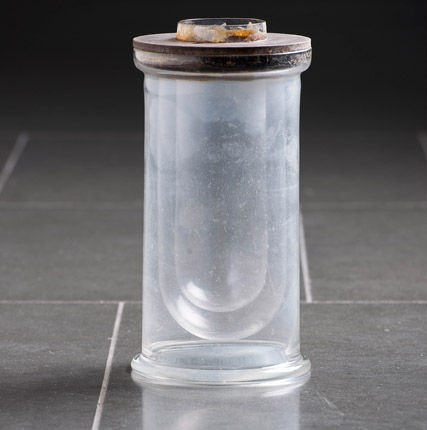
Sir James Dewar's original vacuum-seal flask.
Sir James Dewar’s original vacuum-seal flask. Image via the Royal Institute

Of course this got me to wondering how exactly vacuum-seal flasks, better known in household circles as Thermoses work, and how they were invented. The vacuum-seal flask is surprisingly old technology. It was first invented by Scottish chemist Sir James Dewar and presented to the Royal Institute in 1892. Six years later, he would be the first person to liquefy hydrogen and is considered a founding father of cryogenics. Continue reading “The Incredible Tech Of The Vacuum-Seal Flask”

Raspberry Pi Tablet Gets Radio Surgical Enhancement

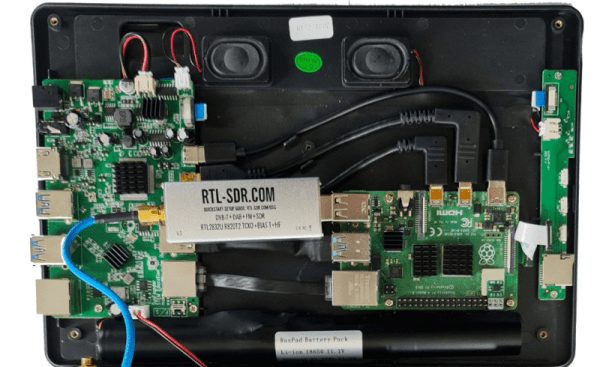
We always get excited when we buy a new tablet. But after a few months, it usually winds up at the bottom of a pile of papers on the credenza, a victim of not being as powerful as our desktop computers and not being as convenient as our phones. However, if you don’t mind a thick tablet, you can get the RasPad enclosure to fit around your own Raspberry Pi so it can be used as a tablet. Honestly, we weren’t that impressed until we saw [RTL-SDR] add an SDR dongle inside the case, making it a very portable Raspberry Pi SDR platform.

The box is a little interesting by itself, although be warned it costs over $200. For that price you get an LCD and driver board, a battery system, speakers, and an SD extension slot with some control buttons for volume and brightness. There’s a video of the whole setup (in German) below.

Continue reading “Raspberry Pi Tablet Gets Radio Surgical Enhancement”

Quit Hunching Over Your Screen With A Little Robotic Help

[Norbert Zare] has identified a problem many of us suffer from – chronically bad posture. Its very common to see computer users hunched forwards over a screen, which eventually will lead to back problems. He mentions that most posture correction devices are pretty boring, so the obvious solution to [Norbert] was to build a simple robot to give you a friendly nudge into the correct position.

This simple Arduino-based build uses the ubiquitous MPU-6050 which provides 3-axis acceleration and 3-axis gyro data all processed on-chip, so it can measure where you’re going, which way you are orientated and how fast you are rotating. This is communicated via the I2C bus, so hooking into an Arduino or Raspberry Pi is a simple affair. There are plenty of Open Source libraries to work with this very common device, which helps reduce the learning curve for those unfamiliar with programming a fairly complex device.

At the moment, he is mounting the sensor on his body, and hard-wiring it, so there’s already some scope for improvement there. The operating premise is simple, if the body angle is more than 55 degrees off vertical, move the servos and shove the body back in to the correct position.

The project GitHub has the code needed, and the project page over on Hackaday.io shows the wiring diagram.

We have seen quite a few projects on this subject over the years, like this one that sends you mobile notifications, an ultrasonic rangefinder-based device, and one that even uses a webcam to keep an eye on you. This one has the silliness-factor, and we like that round these parts. Keep an eye on [Norbert] we’re sure there more good stuff to come!

Continue reading “Quit Hunching Over Your Screen With A Little Robotic Help”

Building A Hammer Powered By Gunpowder

Hammers are pretty straightforward tools. If you need more impact force, just get a bigger hammer. Alternatively, you can look at enhancing performance with chemical means, and we don’t mean by using steroids. No, instead, you can try hammering with the aid of gunpowder, and [i did a thing] has done just that.

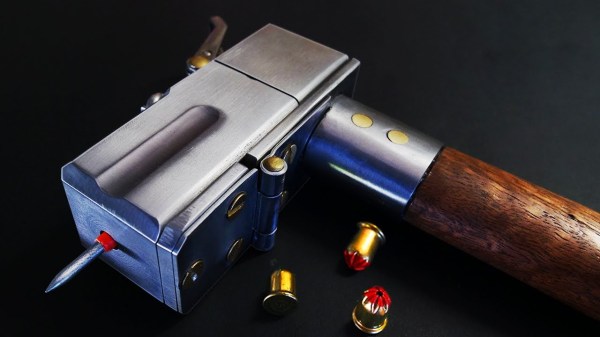
The build relies on using 6.8mm blank cartridges designed for the Ramset brand of explosive nail drivers. However, rather than buying such a tool off the shelf, [i did a thing] built one in a traditional hammer format instead. The device looks like a hammer, with a hinge on the two-piece head, which allows a blank cartridge to be placed inside. When the hammer is swung at a hard surface, the impact triggers the blank which drives the nail forward with incredible force.

[i did a thing] was able to pierce steel with the device, and sent a nail clean through a surfboard, too. It’s a very dangerous thing, so if you’re experimenting in this space, do be careful. Video after the break.

Continue reading “Building A Hammer Powered By Gunpowder”

Tech In Plain Sight: Glucose Meters

If you or someone you know is diabetic, it is a good bet that a glucose meter is a regular fixture in your life. They are cheap and plentiful, but they are actually reasonably high tech — well, at least parts of them are.

The meters themselves don’t seem like much, but that’s misleading. A battery, a few parts, a display, and enough of a controller to do things like remember readings appears to cover it all. You wouldn’t be surprised, of course, that you can get the whole affair “on a chip.” But it turns out, the real magic is in the test strip and getting a good reading from a strip requires more metrology than you would think. A common meter requires a precise current measurement down to 10nA. The reading has to be adjusted for temperature, too. The device is surprisingly complex for something that looks like a near-disposable piece of consumer gear.

Of course, there are announcements all the time about new technology that won’t require a needle stick. So far, none of those have really caught on for one reason or another, but that, of course, could change. GlucoWatch G2, for example, was a watch that could read blood glucose, but — apparently — was unable to cope with perspiration.

Even the meters that continuously monitor still work in more or less the same way as the cheap meters. As Hackaday’s Dan Maloney detailed a few years back, continuous glucose monitors leave a tiny sensor under your skin and measure fluid in your body, not necessarily blood. But the way the sensor works is usually the same.

For the purposes of this article, I’m only going to talk about the traditional meter: you insert a test strip, prick your finger, and let the test strip soak up a little bit of blood.

Continue reading “Tech In Plain Sight: Glucose Meters”

Refining The Greatest Joystick Of The 1980s

The Competition Pro joystick is often considered to be the pinnacle of input devices, at least as far as the 1980s gaming goes. But the design isn’t perfect, and time hasn’t been kind to certain aspects of its mechanism. For example, the large rubber disc used to keep the stick centered on early generations of the hardware will invariably be hardened up on any surviving specimens. Looking to return these classic controllers to their former glory, and then some, [mageb] has released a number of 3D printed modifications for the Competition Pro that should be of great interest to the vintage gamer.

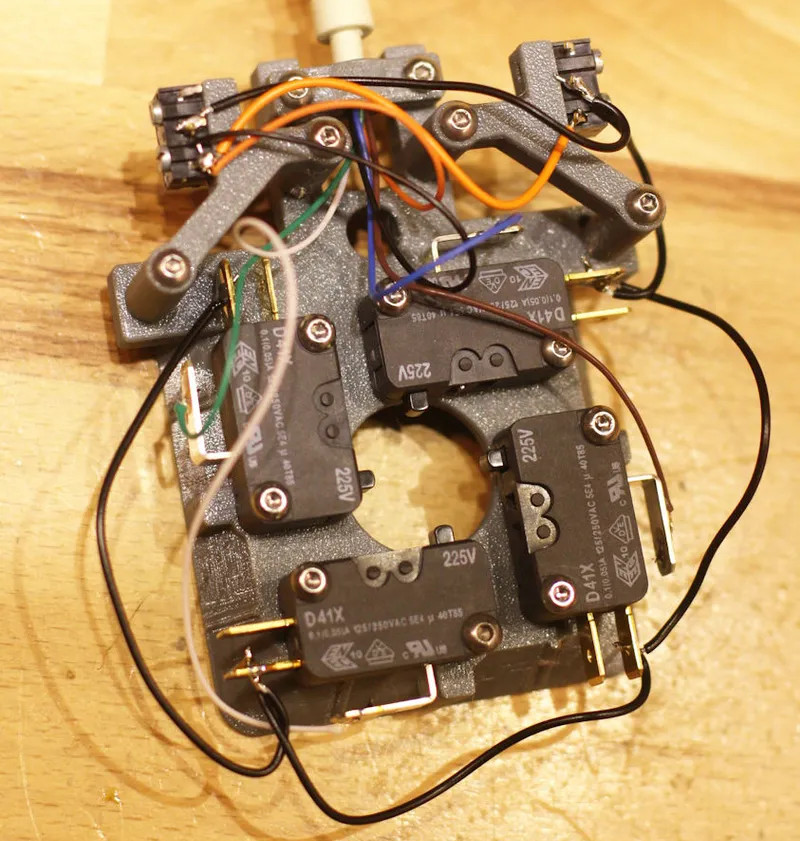
The new microswitches

First and foremost is the deletion of the original rubber disc for a new spring mechanism. Even if this is the only modification you do, [mageb] says you’ll already have a better and longer-lasting joystick to show for it. But if you want to continue with the full rebuild, be aware that there’s no going back to stock. Once you start cutting the original parts, you’re committed to taking it all the way.

Assuming you’re not afraid to get your hands dirty, the next step is cutting the metal contacts from the bottom of the face buttons so they’ll work with the new microswitch array he’s designed. Each button gets its switch, and four handle movement of the joystick. You can try out different switches to adjust the feel of the joystick, but [mageb] assures us that he’s already done the research and put the best quality switches in the bill of materials.

The end result is a Competition Pro joystick that looks more or less the same from the outside, but is considerably improved internally. That’s always a win in our books, though we’re sure somebody out there is going to get mad that the brittle old rubber disc wasn’t sent to the Smithsonian.