New Record Resurrects Long-Dead CD Graphics Format

Audio CDs were the ubiquitous audio format of the 1990s. Lesser known were the extensions to the format that packaged all kinds of interesting additional data into a musical release. Now, a new record from [Aizysse Baga] has brought back some of the most quirky and obscure CD features that time and industry long forgot.

[Aizysse Baga] worked with [Adelaide] on the Divacore record, which was to be released on a mini-CD. The original plan was to include additional CD+G data, featuring artwork to go with the music. CD+G, or CD+Graphics, was often used to display synchronized lyrics for karaoke releases, and stored data in formerly-unused subcodes next to the track start, track number, and running time data. This format allowed storing a slideshow of images with a resolution of 288 x 192 with a 16 color palette.

Note the quality difference between the 16-color CD+G and the 256-color CD+EG images.

The duo got handy with art and some smart dithering to get great 16-bit artwork packed in to the audio CD release, with the aid of a custom Python encoder. CD-TEXT metadata was thrown in for good measure. Then, the existence of the more advanced CD+EG became apparent. This was a 256-color extension to the CD+G format that was backwards compatible to boot. It was a format that was barely ever implemented on any commercial releases, and very little hardware could even display it. Naturally, Divacore had to have it. Much work was done to understand the Red Book documentation on the standard and figure out how to implement even higher quality artwork for the record.

After so much work to understand and implement the CD+G and CD+EG data, the question was whether it would survive the CD reproduction process for the final release. Thankfully, the final discs came out perfectly, and the full 256-color CD+EG artwork can be seen in all its glory if you happen to play Divacore on a Sega Saturn or a super-obscure Victor VS-G2 or VS-G3. Throw it in a less-sophisticated karaoke machine or something like an Amiga CD32, and you’ll still get to see the 16-color versions for your trouble.

We love to see ancient formats brought back to life, particularly those that never got their time in the sun. If you’re working hard to resurrect something the mainstream media world has forgotten, let us know on the tipsline.
A Look At A Gaggle Of Transputer Boards

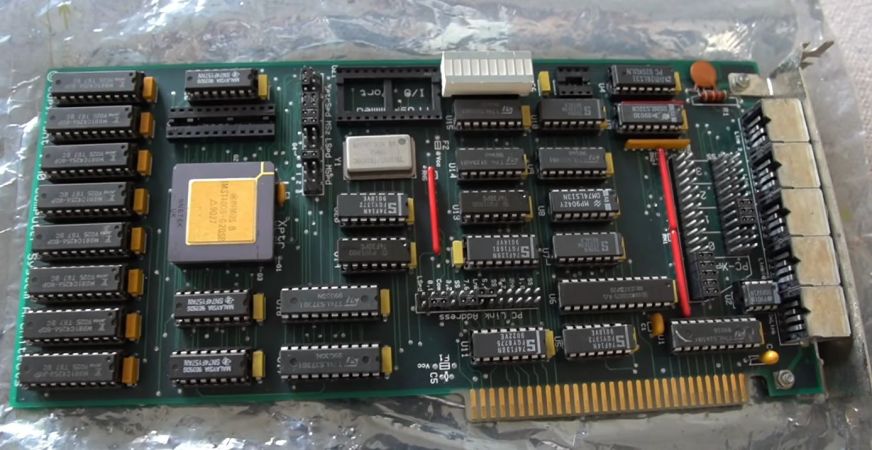
A long time before Beowulf clusters wired up with commodity Ethernet hardware became a hobbyist thing and a running joke, the transputer took a swing at a very similar architecture. This used stand-alone computers that were networked together with other transputer systems, to achieve task-level parallelism. For some people like [Lance Harvie] this is the kind of hardware that he used during his university years for a project, with him not only still having that hardware, but also recently adding to this collection with a recent eBay purchase.

The transputer story is a fascinating one, forming a major part of the UK’s semiconductor industry during the 1980s, creating a strong legacy as the computer industry awkwardly tried to figure out what types of parallelism to target. Whereas the industry largely moved to instruction-level (superscalar) parallelism alongside tightly coupled task-level parallelism along with multiple CPU cores on a single die, one could consider today’s supercomputer clusters to be one example of the transputer legacy.

Continue reading “A Look At A Gaggle Of Transputer Boards”

A More Convenient IButton Reader

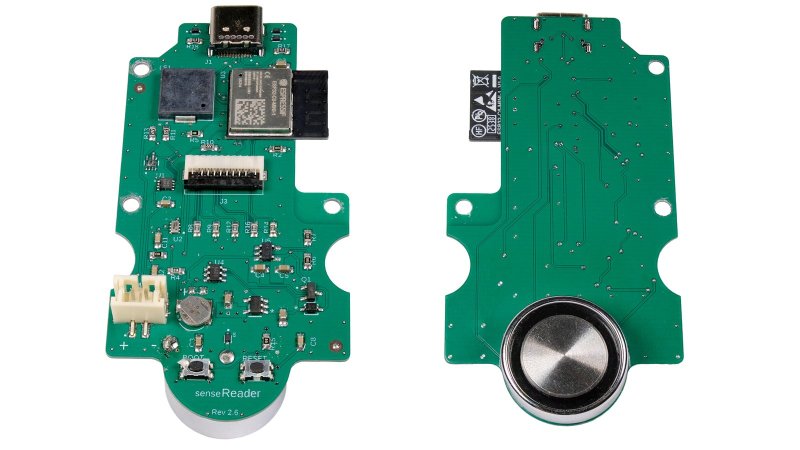
iButtons are microchips housed in small, round, metal containers, and are similar to coin cell batteries in appearance. Among other things, they’re used for logging data in industrial contexts, particularly where it’s desirable to track parameters like temperature over time. [Geoffrey Wells] has worked with these sensors, and decided that the aging solutions for reading these devices are too cumbersome and out-of-date. Thus, he designed ChillPoint as a more modern solution.

As you might have guessed by the name, [Geoffrey] was inspired to build a rig specifically for inspecting iButton data loggers in cold chain logistics applications. It’s built around an ESP32-C6, which has a 1-Wire probe on the front for communicating with the target device. On contact, the reader dumps all the data, storing it on its own flash storage. The data can then further be accessed by connecting to the ChillPoint handheld device over its own WiFi access point, upon which it hosts a web UI for access. The handheld can be used for scanning iButtons single-handed, while a smartphone, tablet, or laptop can be used as a screen to monitor the results live.

The project is nearing completion, and [Geoffrey] says both the hardware and software will be open source once it’s all said and done. Anyone interested in adding a ChillPoint to their toolbox should keep an eye out for its upcoming CrowdSupply campaign.

If you find yourself working with these devices on the regular, this project may be appealing to you. We’ve looked at iButtons many times over the years. The Java Ring was probably the coolest.

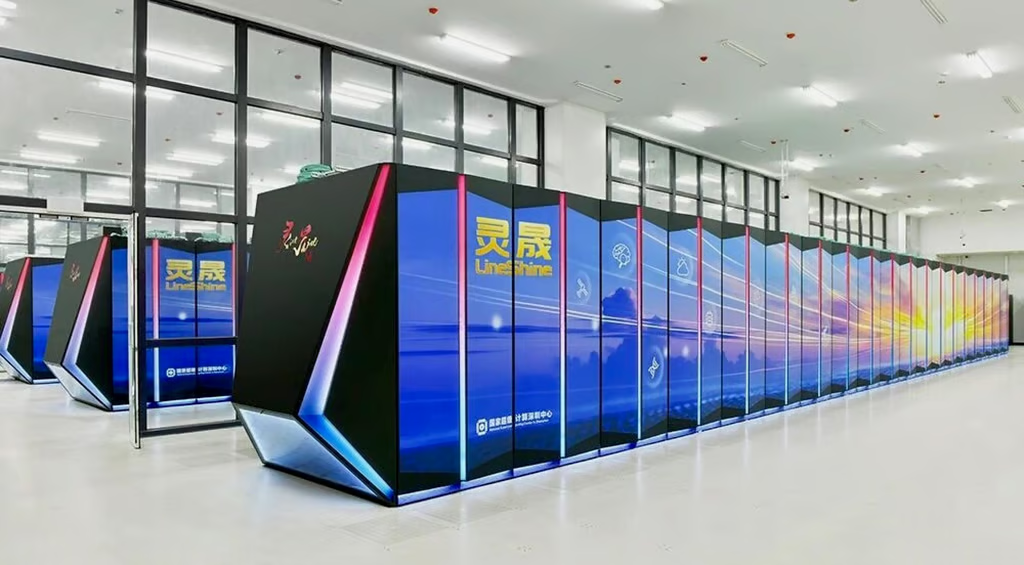
LineShine Is Fastest Supercomputer At Over 2 Exaflops

There is a phenomenon where as you get older, your sense of scale becomes somewhat fixed in the earlier era that shaped you– things like expecting the Dollar Store to carry items for 1$, or to get a burger and fries for less than twenty bucks– or, in this case, thinking of supercomputers as being petaflop-scale machines. That’s not wrong, per se– most of the world’s fastest machines benchmarks are best measured in petaflops– but when you’re clocking at 2198 of the things, it becomes easier just to say that the LineShine computer can do 2.188 exaflops. At double precision. With CPUs only. Yes, we are impressed.

Even more impressive is that this machine just debuted in China, which means it was built without the benefit of the latest-and-greatest Western chips, thanks to US sanctions. It’s using a made-in-China LX2 CPU with 304 ARMv9 cores onboard. Well, it’s actually using around 46 thousand of them, but who’s counting?

Each CPU actually consists of two separate compute dies and onboard high bandwith memory (HBM) and DRAM– 4GB of HBM and 32GB of DDR5. The 152 ARMv9 CPU cores on each chip are all built with Scalable Vector Extensions (SVE) and Scalable Matrix Extensions (SME), so despite the lack of GPUs LineShine will have no problem doing the sorts of vector processing that is traditional for high-performance computing, given the 13.79 million cores.

On the other hand, the lack of GPUs shows when you change benchmarks– LineShine is number one in the rankings for High Performance Linpack (HPL), but getting outside the 64-bit box, the supercomputer only hits number four on the HPL-MxP mixed-precision benchmark, behind machines that pair their CPUs with accelerators like GPUs or NPUs. That may mollify the American ego, as while their El Capitain was bumped to second place on the HPL list, they can still claim the pole position on HPL-MxP. Which computer is actually more capable depends entirely on what you want to do with it, and neither Lawrence Livermore National Laboratory nor China’s National Supercomputing Centre in Shenzhen advertise their compute queues, though this paper suggests at least one job will be crunching earth observation data.

The definition of a supercomputer has shifted over time, and it’s only a matter of time before LineShine and El Capitain end up on the auction block, like other supercomputers before them. We might question it when it comes to desktops, but for institutional HPC, no amount of computing ever seems to be enough.

All The Different Lasers, And How Well They Mark 3D Prints

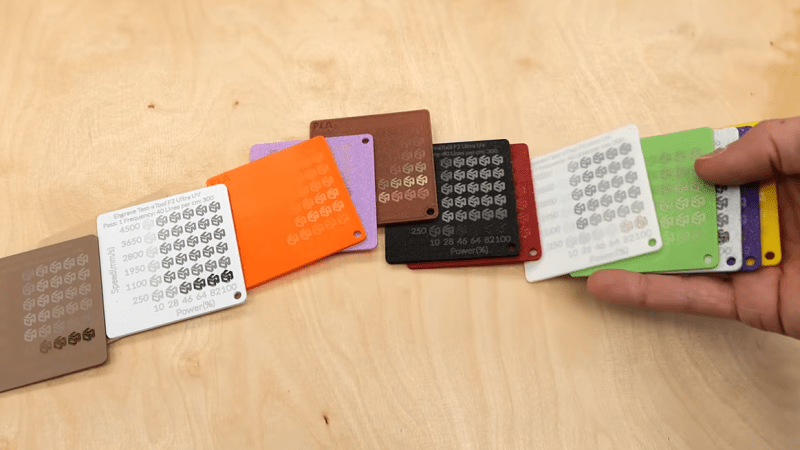
[Stefan] of CNC Kitchen has an informative video describing his experiences with trying to cleanly laser-mark 3D printed plastics using different methods, and it also happens to be a fantastic tour of all the different laser options available to hobbyists and workshops these days.

Laser marking is a fast and effective way to put things like product names, serial numbers, and other information on plastics. [Stefan] wondered whether laser options would be capable of creating clean and professional marks on 3D-printed items, and approached things with his usual attention to detail.

Continue reading “All The Different Lasers, And How Well They Mark 3D Prints”

Laser Scanning A Cave With Homebrew Gear

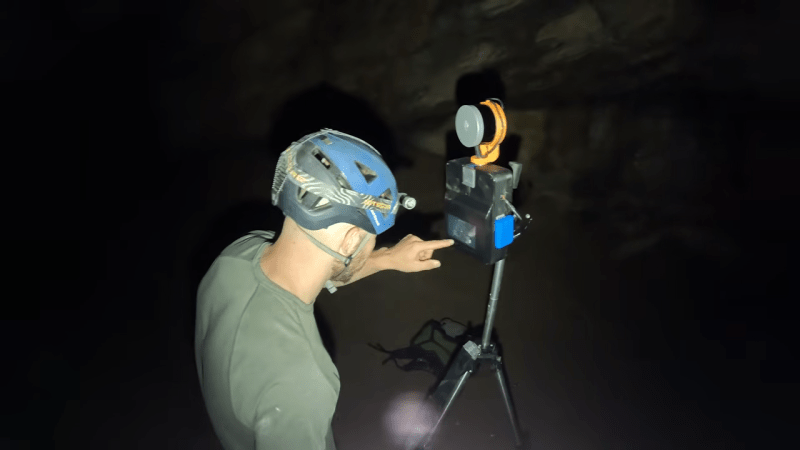
How do you measure the inside of a cave? You could do a bunch of hard work with classic surveying gear… or you could just use a laser scanner. [9nl] did the latter, with a scanning rig of his own creation.

The build is based around an Ouster VLP-16 mid-range lidar sensor. It shoots out pulses of light and measures how long it takes them to bounce back in order to determine the range of objects in the vicinity, and thus can be used to great effect for 3D scanning tasks. For [9nl], though, the sensor had a serious limitation. Since it only had a 40-degree field of view, it wasn’t ideal for the desired application of scanning a cave. However, by building a custom rig that could rotate the sensor, [9nl] ended up with a rig that could 3D scan an area through a full 360 degrees. There’s nothing wildly complex involved, just some good old mechanical engineering—putting the sensor on a shaft and spinning it with a belt drive. Then it’s just a matter of processing the data correctly. The hard part is then getting the rig in and out of the cave without breaking anything.

There are plenty of off-the-shelf 3D scanning solutions that can do this work, but few of them come cheap. Plus, rolling your own teaches you a great many things as you hone your solution to your particular needs. Video after the break.

Continue reading “Laser Scanning A Cave With Homebrew Gear”

FLOSS Weekly Episode 872: I’m Not Satoshi

This week Jonathan chats with Tristan Sherliker about the Craig Wright case, Open Source and the law, and Tristan’s own Open Source project, BunTool. How did Open Source help win the day at the Bitcoin trial? And why is right now such an interesting time to be in the legal field? Watch to find out!

Continue reading “FLOSS Weekly Episode 872: I’m Not Satoshi”