Laser-Based Audio Injection On Voice-Controllable Systems

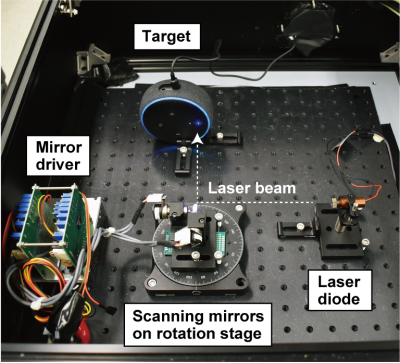
In one of the cooler hacks we’ve seen recently, a bunch of hacking academics at the University of Michigan researched the ability to flicker a laser at audible sound frequencies to see if they could remotely operate microphones simply by shining a light on them. The results are outstanding.

While most Hackers will have heard about ‘The Thing’ – a famous hack where Russian KGB agents would aim a radio transmitter at the great seal in the US embassy,  almost none of us will have thought of using lasers shined in from distant locations to hack modern audio devices such as Alexa or Google Assistant. In the name of due diligence, we checked it out on Wikipedia: ‘The Photoacoustic Effect’ , and indeed it is real – first discovered in 1880 by Alexander Bell! The pulsing light is heating the microphone element and causing it to vibrate along with the beam’s intensity. Getting long range out of such a system is a non-trivial product of telescopes, lasers, and careful alignment, but it can be made to work.

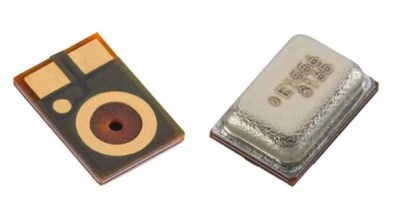
Digging deeper into the hack, we find that the actual microphone that is vulnerable is the MEMS type, such as the Knowles SPV0842LR5H. This attack is relatively easy to prevent; manufacturers would simply need to install screens to prevent light from hitting the microphones. For devices already installed in our homes, we recommend either putting a cardboard box over them or moving them away from windows where unscrupulous neighbors or KGB agents could gain access. This does make us wonder if MEMS mics are also vulnerable to radio waves.
As far as mobile phones are concerned, the researchers were able to talk into an iPhone XR at 10 metres, which means that, very possibly, anybody with a hand held ultra violet / infra red equipped flashlight could hack our phones at close range in a bar, for example. The counter-measures are simple – just stick some black electrical tape over the microphone port at the bottom of the phone. Or stay out of those dodgy bars. Continue reading “Laser-Based Audio Injection On Voice-Controllable Systems”

3D Printing Batteries

We’ve all gotten pretty adept at 3D printing keychains and enclosures. Some people can even 3D print circuit boards to an extent. But the real goal is a Star Trek-style replicator that just pushes out finished products. Printing different components would be a key technology and unless you want to supply external power, one of those components better be a battery or other power source like a solar cell. A recent paper entitled Additive Manufacturing of Batteries explores this technology. The paper is behind a paywall, but you can probably find a copy if you are persistent.

Some of the techniques are pretty exotic. For example, holographic lithography can produce high-performance lithium-ion batteries. However, some of the processes didn’t sound much different than some of the more common printing techniques employed by desktop printers, although with more exotic materials. For example, some batteries can be made with inkjet printing and even fused deposition printing. Continue reading “3D Printing Batteries”

Robotics Controller For The Pi Boasts An Impressive Feature List

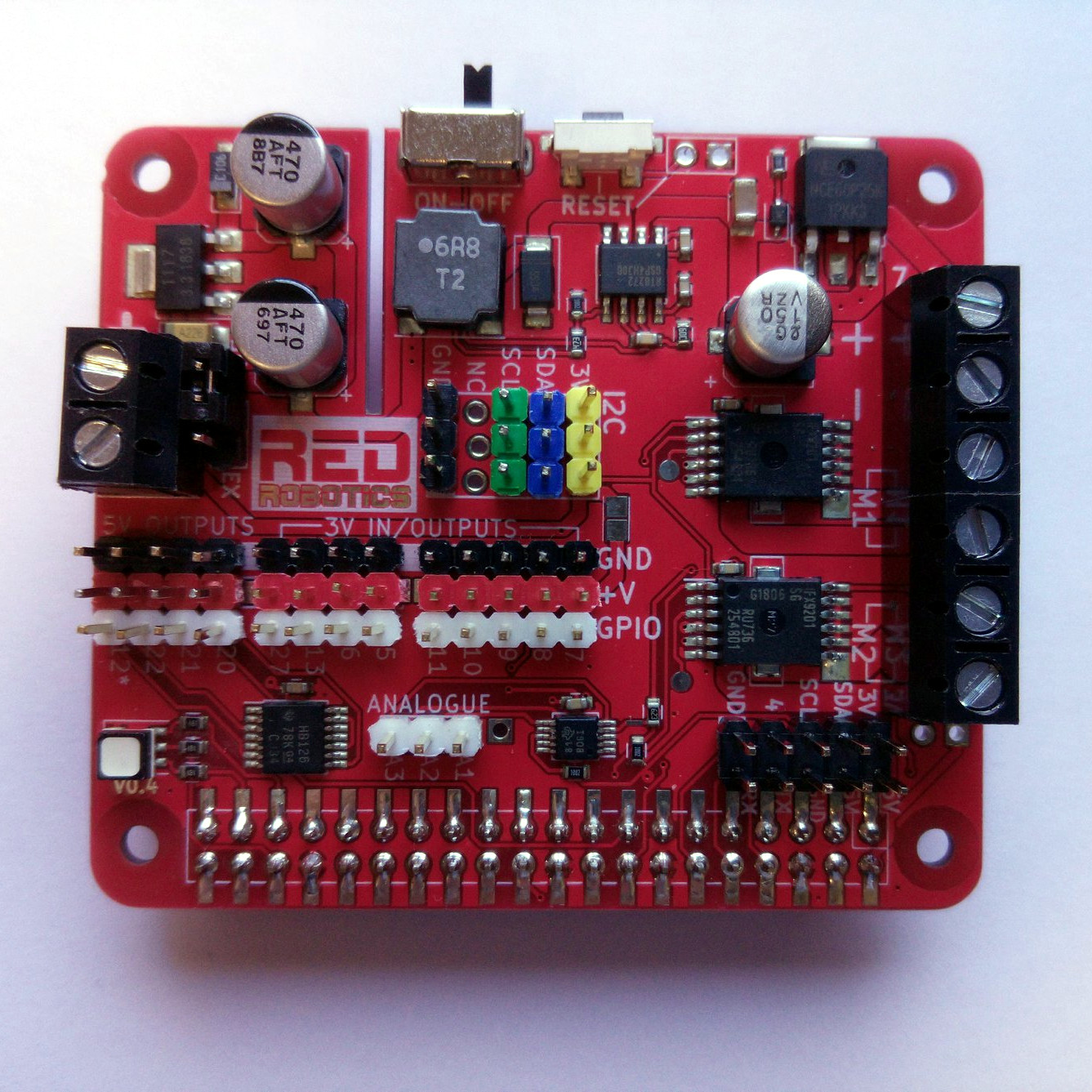
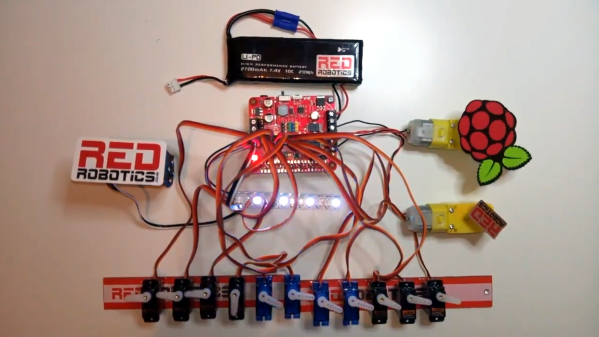
[Michael Horne] recently shared his thoughts on the RedBoard+, a motor controller board for the Raspberry Pi aimed at robotic applications. His short version for busy people is: if you’re at all into robotics, get one because it’s fantastic.

At heart the RedBoard+ is a motor controller, but it’s packed with I/O and features that set it above the usual fare. It can drive two DC motors and up to twelve servos, but what is extra useful is the wide input range of 7-24 V and its ability to power and control the underlying Raspberry Pi. A user-programmable button defaults to either doing a reboot or safe shutdown, depending on how long the button is held. Another neat feature is the ability to blink out the IP address of the Pi using the onboard RGB LED, which is always handy in a pinch.

The RedBoard+ has a GitHub repository which provides a variety of test scripts and an easy to use library, as well as a variety of hookup guides and quickstart guides. There’s even a pre-configured SD image for those who prefer to simply dive in.

A brief demo video showing the board in operation is embedded below. If you’re interested in one, Creator [Neil] of RedRobotics has made it available for sale on Tindie.

Continue reading “Robotics Controller For The Pi Boasts An Impressive Feature List”

How Ammo Temperature Will Affect Shooting Accuracy

The last time we visited the Hackaday shooting range we were all psyched up to get the right posture, breathe correctly, lower our heart rates and squeeze the trigger at exactly the right moment that the wandering cross hairs align with the target ……. and lastly accommodate the inevitable recoil. But never did we think to check the temperature of our ammo! Ok, temperatures aren’t likely to vary that much there unless the range cat chooses to lay down on top of the ammo box, but out in the wilderness the temperatures can easily vary by up to 30 degrees, which would certainly be a problem.

If we take a quick look at what’s happening on Johnny’s Reloading Bench  we get an in depth comparison of different powders at different temperatures, with data being collected via a bullet velocity radar. If nothing else, it’s interesting just to get a peep into the mysterious world of ‘Reloading’ where every one of the tiny kernels or ‘balls’ of powder make a difference and different powders require particular primers to make them burn properly.
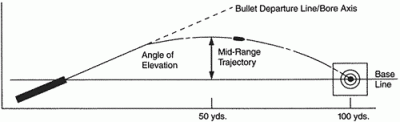
Just to make it clear, bullet speed makes a big difference to the trajectory, especially at long distances. For example, if the bullet were to travel at close to the speed of light, there would be almost no trajectory at all and the shooter would not have to adjust the vertical aim for distance. Normally, we have to aim upwards to hit the target:

It may be that we ‘zero in’ our sights at room temperature, but then end up actually shooting the firearm on a cold, frosty morning with cold ammo, and given what we have now learnt from the video, we could now make a small adjustment for that eventuality, depending on the particular ammo we are using. Johnny’s video is after the break:

Continue reading “How Ammo Temperature Will Affect Shooting Accuracy”

Liquid Methane Rocket Is Set To Soar

Solid rockets are a fun way to get started in rocketry. Brewing up a batch of rocket candy is something achievable even in the home lab, and anyone can give it a go with the right materials. Building a flight-capable liquid-fuelled rocket engine is another thing entirely, but the Purdue Space Program is up to the task.

The result of their hard work is Boomie Zoomie, a rocket which stands 15ft tall and weighs 130lbs. With peak thrust of 800 lbs, it’s got plenty of grunt to help get things off the ground. It’s fuelled by liquid methane, a first for a university-built rocket. The craft is constructed out of 6″ aluminium pipe sections, which were a best-case trade-off between weight, cost, and machinability. Special care was taken during the design process to make things modular, to both allow for future design revisions and ease of field prep. This allows different parts of the team to work independently, streamlining the process of preparing the rocket for launch.

Aiming to compete in the FAR MARS liquid rocket competition, the rocket has undergone two successful hotfires. The team estimates that the first launch should happen in the next few months. Preparations are continuing on the launch trailer and ancilliary support equipment to get things up and running. The aim is to reach a lofty altitude of 45,000 feet.

For those interested in a career in rocketry, Purdue may just be the place to be, with over 300 members in its space program. We’ve seen other top-notch collegiate rocket programs, too – such as this Boston University effort that aims to reach space. Video after the break.

Continue reading “Liquid Methane Rocket Is Set To Soar”

Building A 6.5 Digit Voltmeter From Scratch

After initially working to create a modernized replica of a Czechoslovakian 4-digit Metra M1T242 voltmeter, [Jaromir Sukuba] figured that while he was at it, he might as well create a voltmeter that would be slightly more capable. This led to the design and construction of a brand-new, 6.5 digit voltmeter design, which [Jaromir] has documented over at EEVBlog.

Employing an MSP430FR5994 MCU for the digital board, and an Altera/Intel EPM240T100 CPLD plus ADC on the input side, the design has been undergoing validation for a while now. The current revision uses an OPA140 op-amp in an integrating ADC setup in a multi-slope run-up configuration, but [Jaromir] has plans to replace this input board with another op-amp in a more efficient topology in the future.

Continue reading “Building A 6.5 Digit Voltmeter From Scratch”

Servo Socks Is A Brilliantly Simple Solution For Quick Hacking

[Dan Kitchen] has a great solution for making servos easy to hack.

Every hacker has a drawer full of servo’s somewhere. Just about every project that uses them starts off by measuring the spacing and designing some obscure bracket to meet that unique motor’s size. However, what if you could use common wood screws and hand tools to use them right away?

[Dan]’s solution is to make a case from recycled HDPE lumber, the same sort of material you might buy for a deck. This material is sandable, carvable, and can be drilled into. The case encapsulates the servo motor completely. One side has a freewheeling wooden disk and the other side’s disk is attached to the motor.  Now when you need motion you can work with the servo as if it were just a block of wood. Very cool.

[Dan] appears to be moving to make this a commercial product and we can see why. Though we see no reason why an enterprising hacker or hackerspace couldn’t come up with their own variations on this great idea.