Ham-designed Gear Used In Thailand Cave Rescue

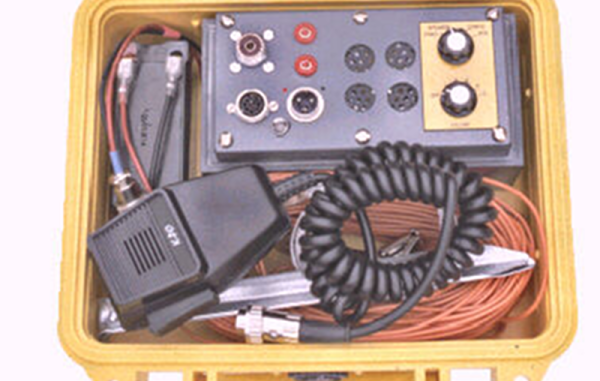
Unless you live in a cave, you’ve probably heard a little about the thirteen people — mostly children — trapped in the Tham Luang Nang Non cave in Thailand. What you may have missed, though, is the hacker/ham radio connection. The British Cave Rescue Council (BCRC) was asked for their expert help. [Rick Stanton], [John Volanthen] and [Rob Harper] answered the call. They were equipped with HeyPhones. The HeyPhone is a 17-year-old design from [John Hey, G3TDZ]. Sadly, [G3TDZ] is now a silent key (ham radio parlance for deceased) so he didn’t get to see his design play a role in this high-profile rescue, although it has apparently been a part of many others in the past.

The HeyPhone is actually considered obsolete but is still in service with some teams. The radio uses USB (upper sideband, not universal serial bus) at 87 kHz. The low frequency can penetrate deep into the ground using either induction loop antennas like the older Molephone, or — more commonly — with electrodes injecting RF energy directly into the ground.

Continue reading “Ham-designed Gear Used In Thailand Cave Rescue”

Cheetah 3 Is Learning To Move Blindly Before Learning To See

Stand up right now and walk around for a minute. We’re pretty sure you didn’t see everywhere you stepped nor did you plan each step meticulously according to visual input. So why should robots do the same? Wouldn’t your robot be more versatile if it could use its vision to plan a path, but leave most of the walking to the legs with the help of various sensors and knowledge of joint positions?

That’s the approach [Sangbae Kim] and a team of researchers at MIT are taking with their Cheetah 3. They’ve given it cameras but aren’t using them yet. Instead, they’re making sure it can move around blind first. So far they have it walking, running, jumping and even going up stairs cluttered with loose blocks and rolls of tape.

Cheetah 3 jumping 30 inches onto a desk
Jumping 30 inches onto a desk

Two algorithms are at the heart of its being able to move around blind.

The first is a contact detection algorithm which decides if the legs should transition between a swing or a step based on knowledge of the joint positions and data from gyroscopes and accelerometers. If it tilted unexpectedly due to stepping on a loose block then this is the algorithm which decides what the legs should do.

The second is a model-predictive algorithm. This predicts what force a leg should apply once the decision has been made to take a step. It does this by calculating the multiplicative positions of the robot’s body and legs a half second into the future. These calculations are done 20 times a second. They’re what help it handle situations such as when someone shoves it or tugs it on a leash. The calculations enabled it to regain its balance or continue in the direction it was headed.

There are a number of other awesome features of this quadruped robot which we haven’t seen in others such as Boston Dynamics’ SpotMini like invertible knee joints and walking on three legs. Check out those features and more in the video below.

Of course, SpotMini has a whole set of neat features of its own. Let’s just say that while they look very similar, they’re on two different evolutionary paths. And the Cheetah certainly has evolved since we last looked at it a few years ago.

Continue reading “Cheetah 3 Is Learning To Move Blindly Before Learning To See”

SPIDriver Shows You What’s Going On

When you’re debugging two bits of electronics talking SPI to each other, there’s a lot that can go sideways. Starting from the ground up, the signals can be wrong: data not synced with clocks right, or phase inverted. On top of that, the actual data sent needs to make sense to the receiving device. Are you sending the right commands?

When nothing’s working, you’re fighting simultaneously on these two fronts and you might need different tools to debug each. An oscilloscope works great at the physical layer, while something like a Bus Pirate or fancier logic analyzer works better at the data layer because it can do parsing for you. [James Bowman]’s SPIDriver looks to us like a Bus Pirate with a screen — giving you a fighting chance on both fronts.

SPIDriver also has a couple more tricks up its sleeve: a voltage and current monitor for the device under test, so you don’t even have to break out your multimeter when you’re experiencing random resets. We asked [James] if these additions had a sad history behind them. He included this XKCD.

Everything about SPIDriver is open, so you can check out the hardware design, browse the code, and modify any and all of it to your taste. And speaking of open, [James] is also the man behind the Gameduino and an amazing FPGA Forth soft-CPU.

It’s fully crowd-funded, but it closes in a couple of days so if you want one, get on it soon.

And if you want to learn more about SPI debugging, we’ve written up a crash-course. With the gear and the know-how, you at least stand a fighting chance.

Flawed Synthetic Diamonds May Be Key For Quantum Computing

If you’ve followed any of our coverage of quantum computing, you probably know that the biggest challenge is getting quantum states to last very long, especially when moving them around. Researchers at Princeton may have solved this problem as they demonstrate storing qubits in a lab-created diamond. The actual publication is behind a paywall if you want to learn even more.

Generally, qubits are handled as photons and moved in optical fibers. However, they don’t last long in that state and it is difficult to store photons with correct quantum information. The impurities in diamonds though may have the ability to transfer a photon to an electron and back.

Continue reading “Flawed Synthetic Diamonds May Be Key For Quantum Computing”

Do You Need A Solder Fume Extractor?

We’ll admit it. Most of us have been soldering since we were kids and we don’t think of it as a particularly dangerous activity. Just keep the hot and cold end of the iron straight and remember not to flick solder off the tip on your leg and you are fine. We sometimes roll our eyes a bit at the people with the soldering fume extractors unless you are soldering 8 hours a day, although we’ve occasionally used a small fan nearby just to get some circulation. [Tanner Tech’s] video on soldering fumes might make us rethink that, though (see below).

[Tanner] rigs up a fan with some plastic bottles, fans, and some cotton balls. But that didn’t do very much. Instead, he replaced his fan assembly with a shop vac. Then he examined what was on the cotton balls.

Continue reading “Do You Need A Solder Fume Extractor?”

Morphing Digital Clock Will Show You A Good Time

A few weeks ago, [HariFun] set out to emulate a 7-segment display with an LED matrix. Seems easy enough, right? Right. He also wanted to come up with a new way to transition between digits, which is a much harder task. But he did it, and it’s really cool. At a viewer’s suggestion, [Hari] used the transition as the basis for a mesmerizing clock that brings the smooth sweep of an analog second-hand into the digital age.

This is the coolest way to watch the time pass since the hourglass. You can almost hear the light move as one digit slides into the next. Each transition is totally unique, so depending on the digit this involves one or more vertical segments sliding from right to left, or multiple segments moving in a counter-clockwise circle.

You too can watch time glide by with little more than a 64×32 RGB LED matrix, a NodeMCU, and [Hari]’s digit transition code. It only costs about $25 to build, and you really can’t beat the quality of instruction he’s put together. Take a second or two and check it out after the break.

If you prefer OLEDs and vertical transitions, there’s a clock for that, too.

Continue reading “Morphing Digital Clock Will Show You A Good Time”

Open Hardware Takes Charge In Papua New Guinea

You probably don’t think much about charging your phone. Just find an outlet, plug it in, and wait a while. Can’t find a cable or wall wart? A rainbow of cheap, candy-colored options awaits you down at the brightly-lit corner drugstore.

This scenario couldn’t be further from reality in third world countries like Papua New Guinea, where people living in remote jungles have cell phone coverage, but have to charge their phones by hooking them up directly to cheap solar panels and old car batteries.

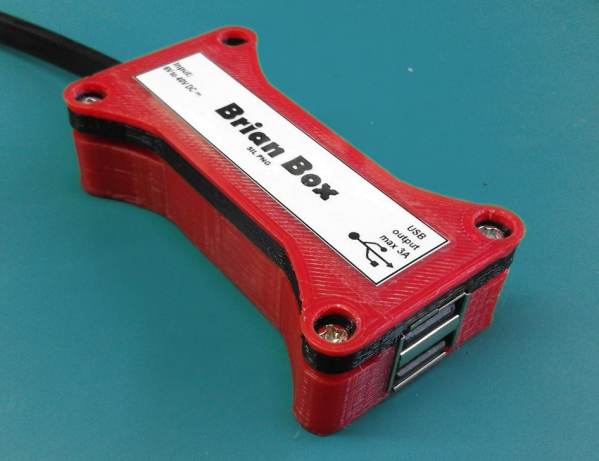
[Marius Taciuc] wants to change all of that. At the suggestion of his friend [Brian], he designed an intermediary device that takes any input and converts it to clean 5 volts with a low-cost, reliable buck converter. The inputs are a pair of alligator clips, so they can be connected to car battery terminals, bare-wire solar panel leads, or 9V connectors.

Mobile phones mean so much to the people of Papua New Guinea. They’re like a first-world care package of news, medical advice, and education. At night, they become simple, valuable lanterns. But these dirty charging hacks often lead to house fires. Someone will leave their phone to charge in the morning when they go off to hunt, and come home to a pile of ashes.

This is an open, simple device that could ultimately save someone’s life, and it’s exactly the type of project we’re looking for. [Marius] hopes to see these all over eBay someday, and so do we. Charge past the break to see [Marius] discuss the Brian Box and the people he’s trying to help.

Continue reading “Open Hardware Takes Charge In Papua New Guinea”