Hardware For Deep Neural Networks

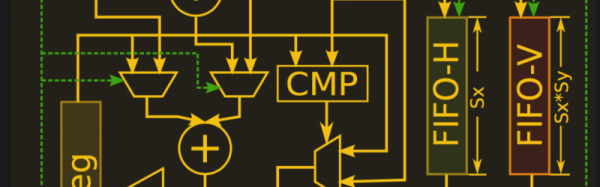
In case you didn’t make it to the ISCA (International Society for Computers and their Applications) session this year, you might be interested in a presentation by [Joel Emer] an MIT  professor and scientist for NVIDIA. Along with another MIT professor and two PhD students ([Vivienne Sze], [Yu-Hsin  Chen], and [Tien-Ju Yang]), [Emer’s] presentation covers hardware architectures for deep neural networks.

The presentation covers the background on deep neural networks and basic theory. Then it progresses to deep learning specifics. One interesting graph shows how neural networks are getting better at identifying objects in images every year and as of 2015 can do a better job than a human over a set of test images. However, the real key is using hardware to accelerate the performance of networks.

Hardware acceleration is important for several reasons. For one, many applications have lots of data associated. Also, training can involve many iterations which can take a long time.

Continue reading “Hardware For Deep Neural Networks”

Your Work Won’t Move With A Magnetic Drill Press Vise

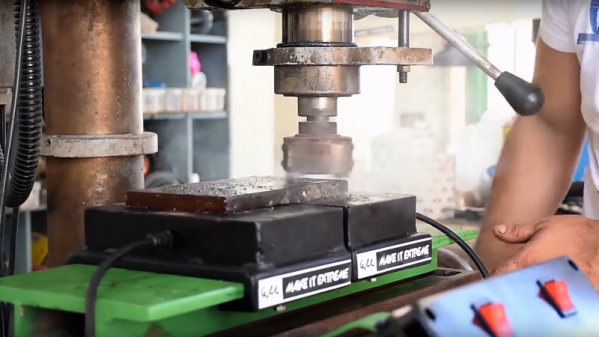
Setting up your workpiece is often the hardest part of any machining operation. The goal is to secure the workpiece so it can’t move during machining in such a way that nothing gets in the way of the tooling. Magnetic chucks are a great choice for securely and flexibly holding down workpieces, as this simple shop-built electromagnetic vise shows.

It looks like [Make It Extreme] learned a thing or two about converting microwave oven transformers to electromagnets when they built a material handling crane for the shop. Their magnetic vise, designed for a drill press but probably a great choice for securing work to a milling machine, grinder, or even a CNC router, has a simple but sturdy steel frame. Two separate platforms slide on the bed of the vise, each containing two decapitated MOTs. Wired to mains power separately for selective control and potted in epoxy, the magnets really seem to do the job. The video below shows a very thick piece of steel plate cantilevered out over one magnet while having a hole cut; that’s a lot of down force, but the workpiece doesn’t move.

Like the idea of a shop-made vise but would rather go the old-fashioned way? Check out [Make It Extreme]’s laminated bench vise, which also makes an appearance in this video.

Continue reading “Your Work Won’t Move With A Magnetic Drill Press Vise”

Magnet Implants, Your Cyborg Primer

What would you do to gain a sixth sense? Some of us would submit to a minor surgical procedure where a magnet is implanted under the skin. While this isn’t the first time magnet implants have been mentioned here on Hackaday, [The Thought Emporium] did a phenomenal job of gathering the scattered data from blogs, forum posts, and personal experimentation into a short video which can be seen after the break.

As [The Thought Emporium] explains in more eloquent detail, a magnet under the skin allows the implantee to gain a permanent sense of strong magnetic fields. Implantation in a fingertip is most common because nerve density is high and probing is possible. Ear implants are the next most useful because oscillating magnetic fields can be translated to sound.

For some, this is merely a parlor trick. Lifting paper clips and messing with a compass are great fun. Can magnet implants be more than whimsical baubles?

Continue reading “Magnet Implants, Your Cyborg Primer”

Hackaday Prize Entry: Touch Sensitive Power Supplies For EL Panels

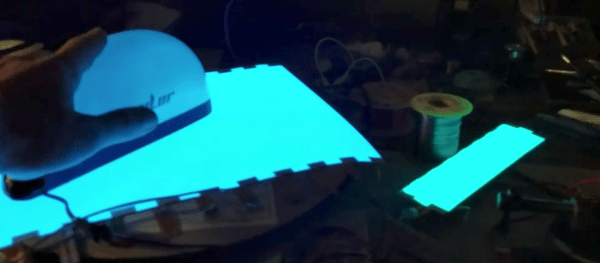
[fool]’s entry in the Hackaday Prize competition is a modular and configurable lighting system the purpose of which is to assist seniors and others with limited mobility navigate safely at home. For [fool], this means the quiet steady hum of electroluminescent panels and wire. EL stuff is notoriously tricky to power, as it only operates on AC. The MoonLITE project is the answer to the problem of an easy to use EL power supply. The goal is to create a 5 watt, quiet, wearable EL power supply that outputs 100V at 100Hz.

One of the reasons why [fool] is interested in EL materials is that it can also turned into a touch sensor. This has obvious applications in lighting, and especially in assistive technologies. The MoonLITE project is based around [fool]’s Whoa Board that turns EL wires and panels into not only touch-sensitive lights, but also analog switches that can control basically anything. This unique capability of lighting doubling as a sensor offers the opportunity to make light-up EL grab bars for a senior’s bedside, for instance. He or she is going to be touching it anyway when getting up—why not add light as well as stability?

This is an especially cool project that brings something to the table we don’t really see much of. You can check out a video of the project below, complete with example of EL panels being used as buttons.

Continue reading “Hackaday Prize Entry: Touch Sensitive Power Supplies For EL Panels”

That Decentralised Low Voltage Local DC Power Grid, How Did It Do?

Early on in the year, Hackaday published one of its short daily pieces about plans from the people behind altpwr.net for a low voltage DC power grid slated for the summer’s SHACamp 2017 hacker camp in the Netherlands. At the time when it was being written in the chill of a Northern Hemisphere January the event seemed so far away, but as the summer fades away along with the deep tan many SHACamp attendees gained in the Dutch sunlight it’s worth going back and revisiting the project. Did they manage it, and how did they do? This isn’t really part of our coverage of SHACamp itself, merely an incidental story that happens to have the hacker camp as its theatre.  Continue reading “That Decentralised Low Voltage Local DC Power Grid, How Did It Do?”

3D Printed Ribs For Not 3D Printed Planes

A few months ago, [Tom] built a few RC planes. The first was completely 3D printed, but the resulting print — and plane — came in a bit overweight, making it a terrible plane. The second plane was a VTOL tilt rotor, using aluminum box section for the wing spar. This plane was a lot of fun to fly, but again, a bit overweight and the airfoil was never quite right.

Obviously, there are improvements to be made in the field of 3D printed aeronautics, and [Tom]’s recent experiments with 3D printed ribs hit it out of the park.

If you’re unfamiliar, a wing spar is a very long member that goes from wingtip to wingtip, or from the fuselage to each wingtip, and effectively supports the entire weight of the plane. The ribs run perpendicular to the spar and provide support for the wing covering, whether it’s aluminum, foam board, or monokote.

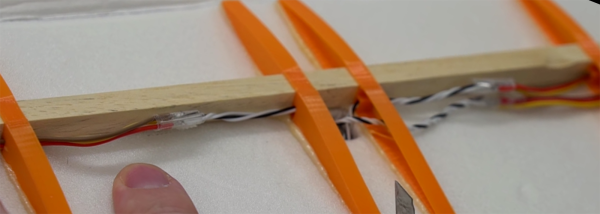
For this build, [Tom] is relying on the old standby, a square piece of balsa. The ribs, though, are 3D printed. They’re basically a single-wall vase in the shape of a wing rib, and are attached to the covering (foam board) with Gorilla glue.

Did the 3D printed ribs work? Yes, of course, you can strap a motor to a toaster and get it to fly. What’s interesting here is how good the resulting wing looked. It’s not quite up to the quality of fancy fiberglass wings, but it’s on par with any other foam board construction.

The takeaway, though, is how much lighter this construction was when compared to the completely 3D printed plane. With similar electronics, the plane with the 3D printed ribs weighed in at 312 grams. The completely 3D printed plane was a hefty 468 grams. That’s a lot of weight saved, and that translates into more flying time.

You can check out the build video below.

Continue reading “3D Printed Ribs For Not 3D Printed Planes”

I’ve Seen The Future And It’s Full Of Freakin’ Huge Bricks

“Did you know you can 3D-print LEGO bricks that can actually be used as regular LEGO?”–me, in 2009

Those magical words made real to me the wonder that was 3D printing. It was a magical time! Everyone was 3D printing everything, though most of it wasn’t very good because the technology wasn’t there. But just as every technology goes through an evolution, the goalposts of coolness move on past what used to be remarkable to the new thing everyone’s talking about.

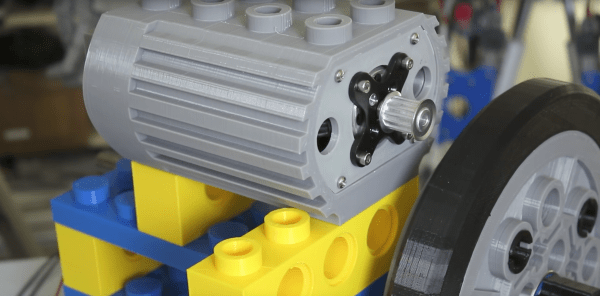
These days, no one is going to be more than mildly curious about your 3D-printed LEGO brick. Still, when you look at that uneven lump of plastic as being just one step in an evolution, it’s pretty momentous. What I’m saying is that we’re looking at a future that can be described in three words: Freakin’ Huge Bricks.

Continue reading “I’ve Seen The Future And It’s Full Of Freakin’ Huge Bricks”