Munchausen Makes NES A Cartridge Programmer

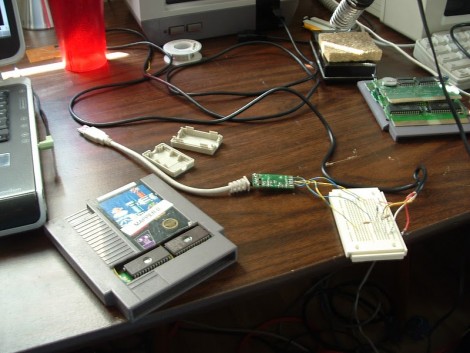
What a beautiful image of NES cartridges showing their private parts. These are the raw materials for the Munchausen Flash Cartridge project. A combination of a modified game cartridge and special USB cable makes it possible to program NES cartridges while inside an unmodified console. The cartridge has an added flash chip that is running a bootloader. By connecting a USB-to-NES cable to the second controller port a game image (or custom code image) can be flashed to one of the three game slots on the writable cartridge. The bootloader provides a menu at power-up to select between the three stored images, or can go straight to the previously selected image by holding down A when the console is turned on. There’s even a recovery routine in case of problems. Check out the demo after the break.

One thing we find interesting from the forum thread is a mention that it is technically possible to run code on the NES directly from the PC. That would sure make it easy to perform live chiptunes on NES.

Continue reading “Munchausen Makes NES A Cartridge Programmer”
A Ride Into Space, But Nothing Fancy

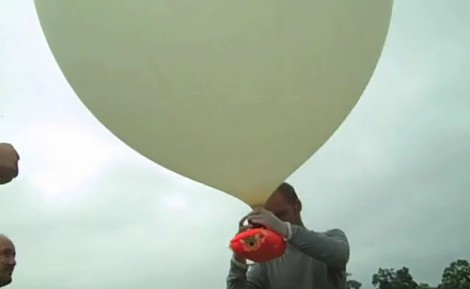
[Luke Geissbuhler] wanted to send something into space, a fun project his kids could get in on too. Instead of sending up a suite of electronic components they went with consumer electronics. The key element, an HD camera to record the event, is protected by a styrofoam shell and soft foam padding. To help ensure that the device was recovered an iPhone also made the trip, running a GPS tracking program that continuously updated the package’s location. To combat the ill-effects of severe cold some chemical hand warming packs also joined the flight.

As you can see after the break, it was a success. The camera documented an incredible ride, with a balloon rupture at 19 miles above the earth (that must be a calculated height as there’s no altimeter in the package). The pod came down gently thanks to a parachute and was recovered just 30 miles from where it launched.

Continue reading “A Ride Into Space, But Nothing Fancy”

Build A Beach Winch For Wakeboarding

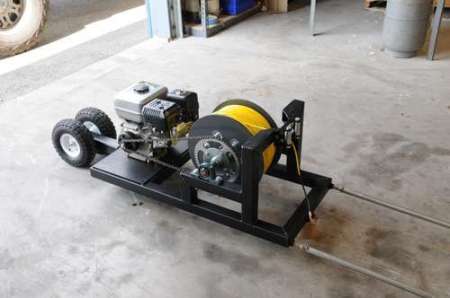
beachwinching itself is a hack of common wakeboarding. No waves? hrm... lets hack something together.

Here’s a build log for  a nice beach winch for your next trip out to go beachwinching. Beachwinching is when you use a fast winch on shore to pull you in, allowing you to wakeboard, wakeskate, or water skii without the need of waves or a boat or jet ski to pull you along. While there’s nothing amazingly groundbreaking here, we do love a nicely documented build log. We think a remote way to initialize the pull would be nice too.

You can catch an example video of beachwinching after the break

Continue reading “Build A Beach Winch For Wakeboarding”

Bronze Casting With MakerBot

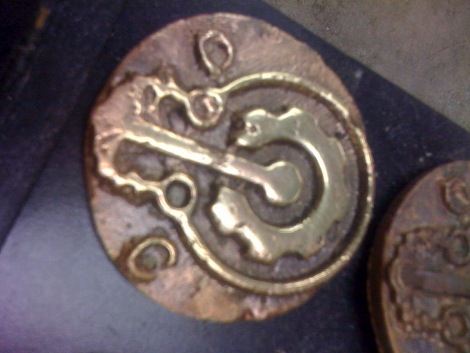
That, dear readers, is the smell of a new Hackspace opening up in Davenport Iowa. It is also the lovely scent of burning plastic. Because how do you celebrate a new Hackerspace? By casting bronze coins of course!

Begin by having a MakerBot extrude plastic coins, then compact the plastic coin in sand to produce a mold. Heat up your bronze in a trashcan furnace and pour it into the mold. The plastic melts away and you’re left with a bronze coin.

There are probably some safety measures and precautions that should be followed as well…

Photo Booth In Briefcase Form

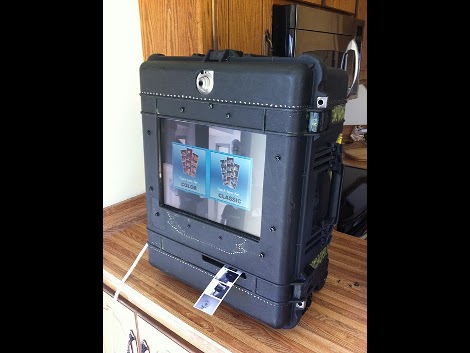
Taking portability one step further [Marty Enerson] built a photo booth in a roll-away case. The Pelican mobile case houses an Elo Touchscreen, a Canon PIXMA iP3000 photo printer, and a Canon Powershot SD100 digital camera. Most of this, including a Lenovo laptop to run it, was purchased second-hand from eBay, with a copy of Photoboof (different from the wedding photo booth from last week) to tie up the software side of the project. He plans to add a folding stand later on to make it into a kiosk.  For some reason that sparks the image of a voting booth in our minds.

From Sign Language To Spoken Language

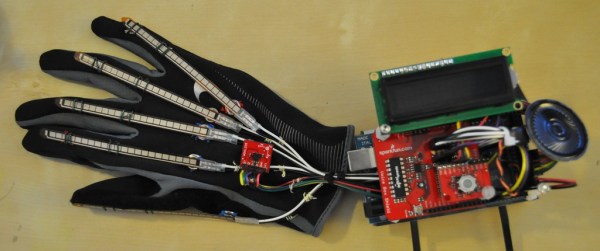
As part of a senior design project for a biomedical engineering class [Kendall Lowrey] worked in a team to develop a device that translates American Sign Language into spoken English. Wanting to eclipse glove-based devices that came before them, the team set out to move away from strictly spelling words, to combining sign with common gesture. The project is based around an Arduino Mega and is limited to the alphabet and about ten words because of the initial programming space restraints. When the five flex sensors and three accelerometer values register an at-rest state for two seconds the device takes a reading and looks up the most likely word or letter in a table. It then outputs that to a voicebox shield to translate the words or letters into phonetic sounds.

More OpenWRT Image Building For The Dockstar

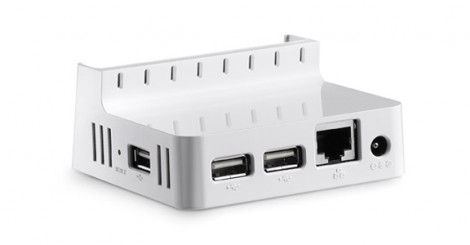
[Der_picknicker] wrote in to let us know about a guide to building OpenWRT images for the dockstar (translated). What they end up with is a nice little network attached storage device that runs SAMBA and subversion under the umbrella of OpenWRT. We looked at flashing and building OpenWRT images for this device back in July. The development branch of OpenWRT hasn’t quite reached a stable release yet, but much has been done in the last few months.

The machine translation is a little rough, but the compilation process is easy enough to follow. If you don’t care to slog through compiling (which apparently takes 1-2 hours) they’ve also made their images available for download. It should be possible to flash via SSH but you might want to add a serial port to the device just to be safe.