Remote Control Reel Mower

Challenged by hot days and steep turf [Grayson Sigler] modified his reel mower to use electric motors. The end product will be radio controlled but he lacked the necessary parts to make it wireless right now. Not to be deterred, he used a wired controller for prototyping and testing that should be easily replaced once the parts arrive. Sadly, the grade of his yard causes the small wheels to slip so he tried inserting screws into the tread for added traction. The small mower lacks the weight and footprint that the Lawnbot400 enjoys. That being said, solar charging is one of the future goals so this build, which he named RoMOW, wins out on the green scale. We’ve included the prototype video after the break that shows the blades spinning away.
Continue reading “Remote Control Reel Mower” →

Headphone Tube Preamp Kit

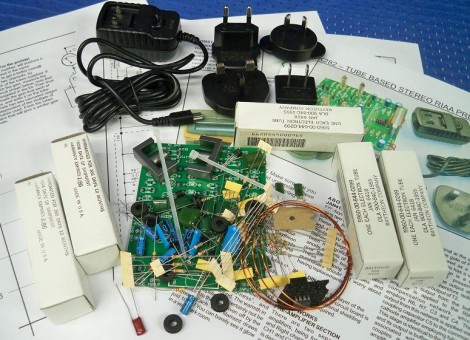
If you’re curious about tube amps but don’t have a firm enough knowledge base to dive right in you might want to try a kit. [Mark Houston] reviewed one such kit and we enjoyed reading about his experiences. It comes with everything you need save soldering tools, an enclosure, and the final connectors ([Mark] used RCA connectors). There is a full schematic available and the assembly instructions take you through tube matching and using that piece of copper coil you see in the picture to wind your own inductor. Consider trying this primer before you jump into building a single tube, multiple tube, or an amplifier of your own design.

[Thanks Gio]

A More Powerful Boost Charger

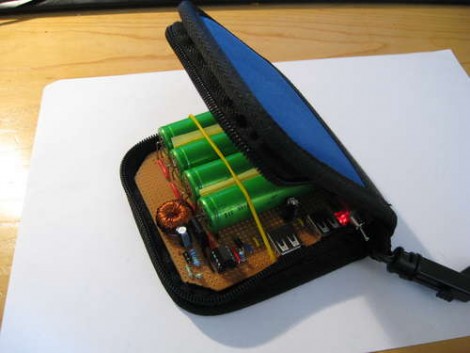
[Meseta] built a powerful boost charger to top off his portable devices. He was inspired by the Minty Boost but wanted to overcome the rather limited capacity provided by the two-celled product. He ended up building his own DC to DC boost circuit rather than using an all-in-one IC. As you can see, the result uses four 18650 lithium-ion cells, normally found in laptop batteries, and can power two USB devices at the same time.

DIY Pulse Oximeter

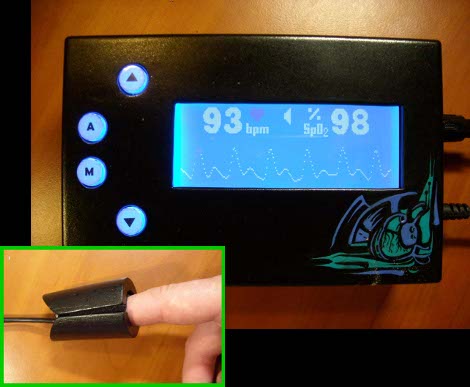
This pulse oximeter turned out very nicely. It is based around a Freescale microcontroller and detects pulse as well as oxygen saturation in your blood. The sensor is made of two wood pieces and allows two wavelengths of light to be shined through your finger. A sensor picks up the light on the other side of your stubby digit and the readings are compared to calculate saturation. Check out the finished project after the break.

We saw an Arduino-based oximeter a few months ago. These kind biometric hacks are rare around here. If you’ve got a well documented project don’t forget to tell us about it.

Continue reading “DIY Pulse Oximeter” →

Motion Sensing Light Module

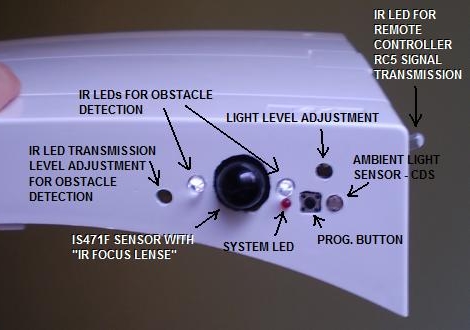
[Muris] is pumping out the home lighting hacks. He developed this motion sensing module as an add-on to the IR switch we saw last week. There’s some kind of fuse box above his entry door and its white cover, which you see above, is where he mounted an IR distance sensor to detect movement and switch on the lights. The RC5 infrared protocol is used to transmit the necessary signal to turn the lights on, then when a set amount of time has passed it will turn them back off again.

Custom Headphones Solve Wire Tangles

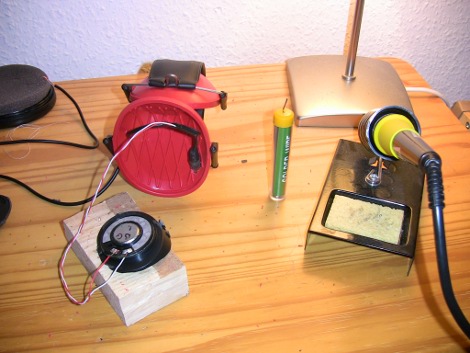
One complaint we hear about often is ear-bud’s cables getting tangled within backpacks. [Andrew] was having this “spaghetti” wire problem, and also wanted to listen to his music with ear protection on – where ear-buds are usually uncomfortable. The latter problem is fixed by placing speakers inside of folding ear protectors, and the cable is managed with a 3.5mm disconnect.

For those who can’t make disconnect-able headphones but still suffer from tangled headphone wire, we recommend proper wrapping technique for your wire, and a small carrying pouch. With the combination of the two, we’ve never had a tangled cable.

Phasor A/V PAL Demo Uses ATmega88

[youtube=http://www.youtube.com/watch?v=sCN1bqRG-7o]

Above is a new demo video called Phasor developed by [Lft]. It is run from an AVR ATmega88 and a few passive components, and the result is pretty amazing. [Lft] goes into detail about the tricks he used to get this up and running. The chip is clocked at 17.73447 MHz which is exactly four times the frequency of the PAL color carrier wave which allows him to fake a smooth signal. He also uses a timer trick to get the voltages that he needs. The work done here is beyond hardcore and quite frankly we can’t believe he managed to fit all of this into 8.5 KB of program space with just 1 KB or RAM. We wonder if there’s enough room there to add sound and color to the AVR Tetris project.

[Thanks Sprite_tm]