Ask Hackaday: How Small Is Your Shop?

Electronics, metalwork, carpentry, sewing — however you express your inner hacker, you’ve got to have a place to work. Most of us start out small, assembling projects on the kitchen table, or sharing space on a computer desk. But eventually, if we’re lucky, we all move on to some kind of dedicated space. My first “shop” was a corner of the basement my Dad used for his carpentry projects. He built me what seemed at the time like a huge bench but was probably only about five feet long. Small was fine with me, though, and on that bench I plotted and planned and drew schematics and had my first real lesson in why you don’t reach for a soldering iron without looking first. My thumb still bears that scar as a reminder.

Many of us outgrow that first tiny space eventually, as projects (and accumulated junk) outpace the available space. Some of us go on to build workspaces to die for; personally, I feel wholly inadequate whenever I see Frank Howarth’s immense wood shop, with its high ceilings, huge windows for natural light, and what amounts to a loading dock. Whenever I see it I think The work I could do in there!

Or could I? Is bigger necessarily better when it comes to workspaces? Would more space make me a better craftsman?


Continue reading “Ask Hackaday: How Small Is Your Shop?”

Visual Futurist Syd Mead Will Keynote At Hackaday Superconference

What does the future actually look like? Chances are what you see in your mind when presented with that question is heavily influence by Syd Mead. He is an industrial designer, but his body of work — which includes some of the most iconic Sci-Fi movies ever filmed — built a much more interesting job title for him: Visual Futurist.

Meet Syd Mead as he presents a keynote talk at the 2017 Hackaday Superconference this November 11 and 12 in Pasadena, California.

Philip K. Dick wondered Do Androids Dream of Electric Sheep?, but when it came time to build those sheep and the world they live in, director Ridley Scott looked to Syd Mead to determine what the future in Blade Runner actually looked like. He invented a world, one that was actually built through the practical sets and props widely used in the days before computer graphics became the norm. Syd’s work is also seen in Star Trek: The Motion PictureAlien, and the iconic designs for the movie Tron. And his prolific work has continued to appear on the silver screen ever since, with Elysium and Tomorrowland as some of his more recent work.

How does one invent the future, even through decades of progress? That’s the role of hardware creators — to envision what we want and need tomorrow, not today or yesterday. Syd Mead is a hardware creator and his hardware has been built time and again to inspire all of us for where we’re going with technology. Take that ride along with Syd at the Hackaday Superconference. Get your tickets now.

[Main image credit: Blade Runner concept art by Syd Mead]


Non-standard circuit boards

Non-standard Circuits: Jazz For Electrons

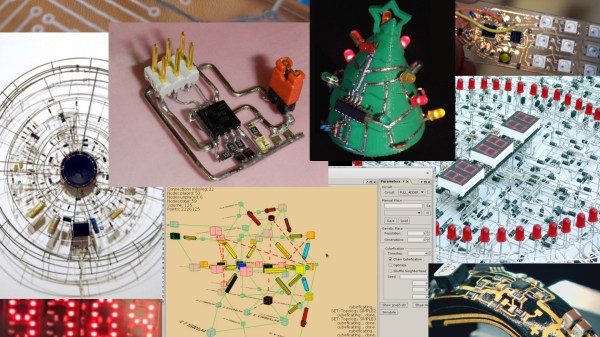
How creative are you when you make your circuit boards? Do you hunt around for different materials to use for the board? As long as it’s an insulator and can handle the heat of a soldering iron, then anything’s fair game. Or do you use a board at all? Let’s explore some options, both old favorites and some you may not have seen before, and see if we can get our creative juices flowing.

Transparent Circuit Boards

Let’s start with the desire to show more circuit and less board. For that we can start with [CNLohr]’s circuits on glass, usually microscope slides. What’s especially nice about his is that he provides detailed videos of the whole process, including all the failed things he tried along the way. Since he didn’t start with copper clad board, he instead glued his copper sheet to the glass using Loctite 3301. That was followed by the usual etching process, though with plenty of gotchas along the way.

In the end, he made a number of circuits, including an LED clock with the LEDs on the glass itself, and even attempted leading the community in making a glass keytar. The latter didn’t work out, but the resulting glass circuits are a work of art anyway.

What about making a transparent circuit board out of acrylic? [Frank Zhao] attempted just that by laser cutting troughs into the acrylic for the traces, and then drawing in nickel ink. But something in the ink ate into the acrylic, and as if that wasn’t bad enough, the voltage drop across the nickel was too high for his circuit. Suggestions were made in the comments for how to solve these problems, but unless we missed it, we haven’t seen another attempt yet.

But we’ve only just begun. What if you wanted even more transparency?

Continue reading “Non-standard Circuits: Jazz For Electrons”

Hackaday Links Column Banner

Hackaday Links: September 3, 2017

The TI-83, TI-84, and TI-86 have been the standard graphing calculators in classrooms for two decades. This is the subject of an xkcd. Now, hopefully, there’s a contender for the throne. Numworks is a graphing calculator that looks like it was designed in at least 2006 (so very modern), and apparently, there’s a huge community behind it.

Juicero is shutting down. No one could have seen this one coming. The Juicero was a $700 press that turned proprietary, DRM’ed juice packs into juice and garbage. It was exquisitely engineered, but it turns out very few people want to spend thousands of dollars per year on DRM’ed juice. Oh, since the Juicero phones home, those $700 presses probably won’t work in the future.

Are you in the Bay area? Do you need test equipment? There’s a gigantic auction happening somewhere around San Jose. [Dave] tipped everyone off to this one, and this auction is pretty freakin’ spectacular. Spectrum analyzers, signal gens, a ‘mega zoom’ oscilloscope, and 4-channel, 500 MHz scopes for $50. There are a thousand lots in this auction. It’s nuts.

Everybody loves PCB art, and [Uri] has a guide for designing custom, functional electronic circuit boards. The toolchain used in this guide is Inkscape and KiCad, with blinky hearts, blinky pandas, and other blinky PCBs.

This one is a little out there even for us. Here’s how you build your own AA batteries. It’s a dozen #10 copper washers, a dozen or so #10 zinc washers, some cardboard, vinegar, salt, and some heat shrink tubing. The assembly of this battery is exactly what you would expect, and yes, it does work. Here’s the thing, though: The very crude tests suggest these batteries have a capacity of about 800-1000 mAh, which is far more than we would expect. Who has a programmable load and wants to do a few experiments? Also, these batteries are ‘rechargeable’ by taking them apart, sanding the crud off each washer, and adding new electrolyte.

[Jan] has made a name for himself stuffing synthesizers into tiny little microcontrollers. The latest project is the Infinity37, a polyphonic synth with MIDI, envelopes, and a whole bunch of cool stuff. Check out the video.

[rctestflight] is building a solar powered aircraft. It’s has a beautiful wing studded with solar panels. The latest flight was four hours, long enough to make piloting a plane through some FatSharks extremely tedious. Future developments will probably include a MPPT charging solution, and probably an autopilot.

New Part Day: Pluggable ESP Modules

Almost exactly four years ago, we came across a really neat module for sale on SeeedStudios. It was a $5 WiFi chip, able to connect your microcontroller project to the Internet with just a handful of wires and a few AT commands. This was the ESP8266, and it has since spawned an entire ecosystem of connected devices.

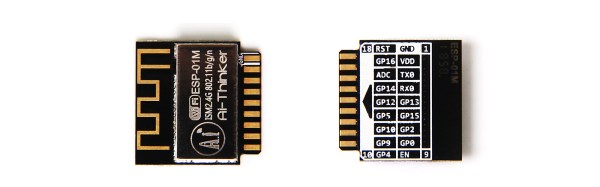
Now, there’s a new version of the ESP8266 that simply showed up on the Seeed website. Officially, it’s called the, ‘ESP8285 01M Wi-Fi SoC Module’, but you might as well start calling it ‘the Pluggable ESP module’. It’s the smallest ESP8266 module yet at 18mm square, and this one is designed to be plugged into a card-edge connector. It’s eighteen pins of wonder and 1MB of Flash, all ready to be stuffed into the next Internet of Things Thing.

The documentation for this module is sparse, and there isn’t even a mention of it on the AI Thinker website. That said, we can make some reasonable assumptions about what’s going on in this chip and what it can do. This module appears to be based on the ESP8285 SoC. Basically, it’s an ESP8266 with built-in 1MB SPI Flash. There are a handful of GPIOs available, and you should be able to build anything with this module that you could with other ESP8266 modules.

The highlight here is, of course, the card-edge connector. This is a module designed to be dropped into an existing product. You can program the module before hand, and assembly is a snap. The problem, though, is sourcing the relevant connector. It doesn’t look like Seeed has bothered to put a link to the right connector in the product description, although sourcing it shouldn’t be that much of a problem. The only question is if the card edge connectors on this module are hard gold (for multiple mating cycles) or just ENIG. Either way, if you’re plugging these modules into connectors dozens of times, you’re probably doing something wrong.

The Wrencher On The Road In The UK

Here at Hackaday, we are a team of technical writers who spend our days keeping abreast of the wonderful world of hardware as we write up the interesting things that cross our timelines and serve them up everyone to enjoy. That is however only part of the picture, the other half of the Hackaday family is you, our readers and our community. You are a wonderfully diverse group of people who do some fascinating things, and you are what gives us life.

From time to time, Hackaday makes it out on the road, we have events, we host meetups, and we spend time with you, the community of which we are a part. Of course, our world can be an annoyingly big place at times, so for a lot of us these meetups are too far away. As a Brit, for example, the upcoming Hackaday Superconference in Pasadena, California, is a somewhat unattainable dream without shelling out a significant chunk of the old hard-earned on travel.

In the very short term we must continue to disappoint many of our worldwide readers because we can’t have meetups all over the world and all at once. But we can at least provide succour to our British readers this month, with more than one opportunity to get to know Hackaday writers as we go out on the road.

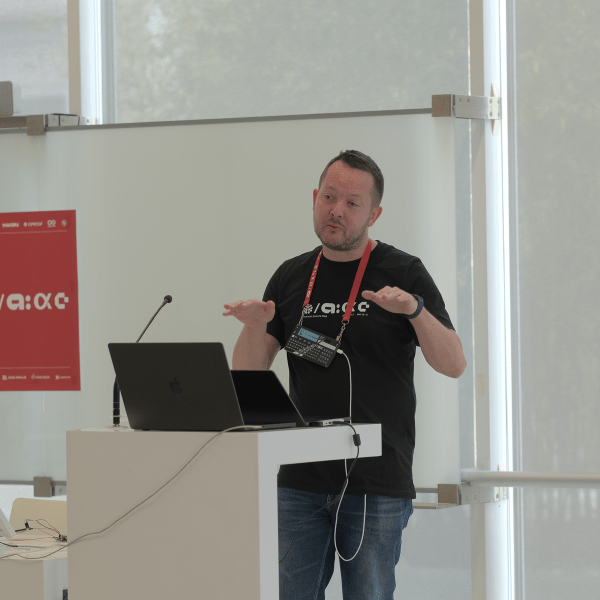
In the first instance, I’m going to be in Hebden Bridge, Yorkshire this weekend. I’ll be giving a couple of talks, one on Friday at the Wuthering Bytes festival, and the other on Saturday at the Open Source Hardware Camp. I’ll be bringing along the remainder of my stock of Hackaday stickers left over from SHA Camp, and I’d love to see what you’ve been getting up to.

But worry not if you can’t make it to Yorkshire, for there is another chance for Brits to meet us this month. Our London Unconference on the 16th of September may have been a speedy sell-out, but because we have no wish to disappoint those of you who missed out on a ticket we’re also running a bring-a-hack meetup the night before. We’ve hired the Drawing Room at the Marquis Cornwallis, a pub not too far from Russell Square Tube station in London, so come and have a pint with us and show us what you’ve made. Get your skates on, it’s not much more than a couple of weeks away!

Building Set Limitations Make For Z-Height Follies

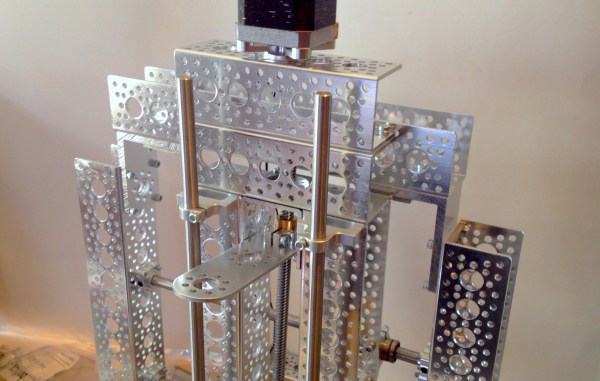
I’m working on a small CNC mill that uses a robotics building set as a starting point. I don’t know what to expect from the process. Maybe the connections will be too wobbly for the machine to be anything but a curiosity. Maybe I’ll be able to do pen plotting and balsa carving but nothing tougher than that. My goal is to have it carve PCBs, but what ultimately is important is that I have a tool whose awesomeness justifies the expense I’ve put into the project.

So far the process has been fun and interesting. But recently the Z-axis build has been especially so. It raises a really interesting question: where does the balance between unknown finished design and known material parameters fall?

Continue reading “Building Set Limitations Make For Z-Height Follies”