PCB Design Review: Switching Regulator Edition

This article was prompted by a friend of mine asking for help on a board with an ESP32 heart. The board outputs 2.1 V instead of 3.3 V, and it doesn’t seem like incorrectly calculated feedback resistors are to blame – let’s take a look at the layout. Then, let’s also take a look at a recently sent in design review entry, based on an IC that looks perfect for all your portable Raspberry Pi needs!

What Could Have Gone Wrong?

Here’s the board in all its two-layer glory. This is the kind of board you can use to drive 5 V or 12 V Neopixel strips with a firmware like WLED – exactly the kind of gadget you’ll want to use for LED strip experiments! 3.3 V power is provided by a Texas Instruments TPS54308 IC, and it’s the one misfiring, so let’s take a look.

Continue reading “PCB Design Review: Switching Regulator Edition”

TDK Claims Solid State Battery With 100X Energy Density

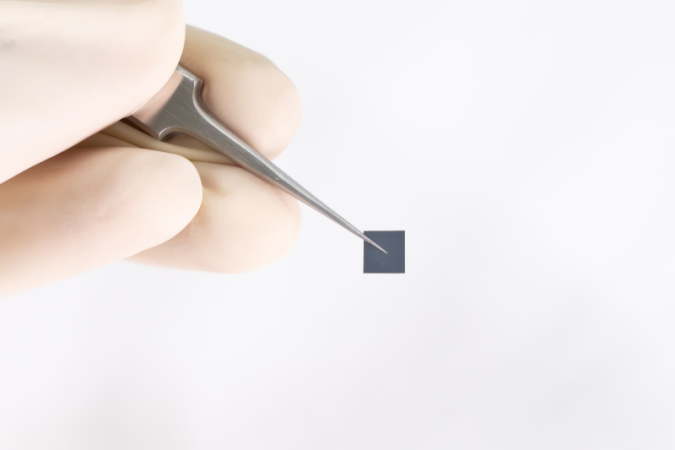
Regulations surrounding disposable batteries have accelerated a quiet race to replace coin cells, which on the whole are not readily rechargeable. TDK produces solid-state batteries and has announced a new material that claims an energy density of about 100 times that of their conventional batteries.

Energy density measures how much energy a system contains relative to its volume. The new battery has 1000 Wh/L. For comparison, old nickel-cadmium cells had about 150 Wh/L. A typical lithium-ion battery usually turns in about 200 – 250 Wh/L.

There aren’t many technical details, but a few things caught our interest. For one, it uses an oxide-based solid electrolyte and lithium alloy anodes. However, what really caught our eye was that it is “intended for use in wearables… that come in direct contact with the human body.” We don’t know if that means the material is safe for your skin or if it depends on being next to your body to operate.

While the energy density is high, keep in mind that the batteries of this type are usually tiny, so the total actual power available is probably not very high. Tiny batteries are definitely a thing. We are always hearing about breakthroughs, but we always wonder if and when we’ll see actual products.

McDonald’s Terminates Its Drive-Through Ordering AI Assistant

McDonald’s recently announced that it will be scrapping the voice-assistant which it has installed at over 100 of its drive-throughs after a two-year trial run. In the email that was sent to franchises, McDonald’s did say that they are still looking at voice ordering solutions for automated order taking (AOT), but it appears that for now the test was a disappointment. Judging by the many viral videos of customers struggling to place an order through the AOT system, it’s not hard to see why.

This AOT attempt began when in 2019 McDonald’s acquired AI company Apprente to create its McD Tech Labs, only to sell it again to IBM who then got contracted to create the technology for McDonald’s fast-food joints. When launched in 2021, it was expected that McDonald’s drive-through ordering lanes would eventually all be serviced by AOT, with an experience akin to the Alexa and Siri voice assistants that everyone knows and loves (to yell at).

With the demise of this test at McDonald’s, it would seem that the biggest change is likely to be in the wider automation of preparing fast-food instead, with robots doing the burger flipping and freedom frying rather than a human. That said, would you prefer the McD voice assistant when going through a Drive-Thru® over a human voice?

Credit: Xinmei Liu

The US Surgeon General’s Case For A Warning Label On Social Media

The term ‘Social Media’ may give off a benign vibe, suggesting that it’s a friendly place where everyone is welcome to be themselves, yet reality has borne out that it is anything but. This is the reason why the US Surgeon General [Dr. Vivek H. Murthy] is pleading for a health warning label on social media platforms. Much like with warnings on tobacco products, it’s not expected that such a measure would make social media safe for children and adolescents, but would remind them and their parents about the risks of these platforms.

While this may sound dire for what is at its core about social interactions, there is a growing body of evidence to support the notion that social media can negatively impact mental health. A 2020 systematic review article in Cureus by [Fazida Karim] and colleagues found anxiety and depression to be the most notable negative psychological health outcomes. A 2023 editorial in BMC Psychology by [Ágnes Zsila] and [Marc Eric S. Reyes] concurs with this notion, while contrasting these cons of social media with the pros, such as giving individuals an online community where they feel that they belong.

Ultimately, it’s important to realize that social media isn’t the end-all, be-all of online social interactions. There are still many dedicated forums, IRC channels and newsgroups far away from the prying eyes and social pressure  of social media to act out a personality. Having more awareness of how social interactions affect oneself and/or one’s children is definitely essential, even if we’re unlikely to return to the ‘never give out your real name’ days of  the pre-2000s Internet.

PostmarketOS Now Boots On Over 250 Devices

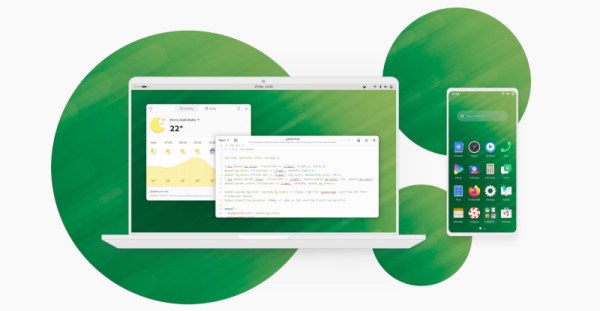
Every year, as consumers gobble up the latest Android devices, more old, but perfectly serviceable, units end up collecting dust in drawers. Or worse, they end up getting tossed in the trash. One of the most promising tools we have to help keep these older devices useful is postmarketOS, a full-fledged Linux distribution that provides a flexible and up-to-date software environment on devices that might otherwise be stuck with some old and unsupported version of Google’s mobile operating system.

As of the latest update on the postmarketOS blog, the team has announced an exciting milestone: over 250 devices can now boot the stable release of the OS.

Now to be clear, not all devices will be fully functional. In fact, the blog post clarifies that some of them only barely boot. But it’s progress, and now that these semi-supported devices aren’t hidden behind a development version of the OS, it means more folks will be able to put them to use.

For example, if you want to turn your old smartphone into a low-energy headless webserver, it doesn’t really matter if its display, touchscreen, or speakers are supported. You just need it to boot into Linux and fire up an SSH server so you can get in and start working.

But support for new devices is just one of the additions in this new v24.06 release. The blog post also points out several notable software upgrades, including the move to the 6.x branch of KDE Plasma Mobile. This brings with it a long list of improvements and changes, including a rewritten homescreen with enhanced customization options. If you prefer a more minimal GUI, don’t worry. This new release also updates Sxmo, which provides a menu-driven interface for both touch screens and hardware controls.

Among the newly supported devices is a generic x86_64 image that should work on a wide array of PCs. While obviously there’s no shortage of Linux distros you could run on your old computer, being able to install postmarketOS on it is definitely helpful for development purposes. There’s also a new Tegra ARMv7 target which brings a number of new devices into the fold, such as the Google Nexus 7, and Microsoft Surface RT.

Looking to run postmarketOS on your own hardware? The best way to start is to check the Devices page and see how many of those old gadgets you’ve got collecting dust in a drawer are compatible.

Voyager 1 Once Again Returning Science Data From All Four Instruments

As humanity’s furthest reach into the Universe so far, the two Voyager spacecraft’s well-being is of utmost importance to many. Although we know that there will be an end to any science mission, the recent near-death experience by Voyager 1 was a shocking event for many. Now it seems that things may have more or less returned to normal, with all four remaining scientific instruments now back online and returning information.

Since the completion of Voyager 1’s primary mission over 43 years ago, five of its instruments (including the cameras) were disabled to cope with its diminishing power reserves, with two more instruments failing. This left the current magnetometer (MAG), charged particle (LECP) and cosmic ray (CRS) instruments, as well as the plasma wave subsystem (PWS). These are now all back in operation based on the returned science data after the Voyager team confirmed previously that they were receiving engineering data again.

With Voyager 1 now mostly back to normal, some housekeeping is necessary: resynchronizing the onboard time, as well as maintenance on the digital tape recorder. This will ensure that this venerable spacecraft will be all ready for its 47th anniversary this fall.

Thanks to [Mark Stevens] for the tip.

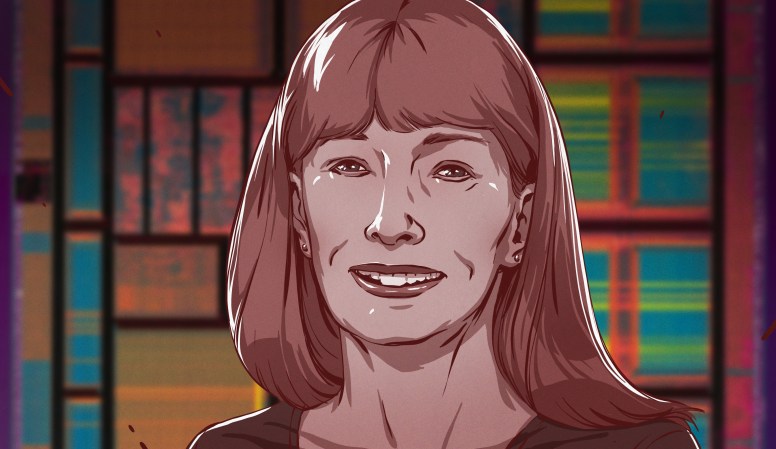
RIP Lynn Conway, Whose Work Gave Us VLSI And Much More

Lynn Conway, American engineer and computer scientist, passed away at the age of 86 from a heart condition on June 9th, at her Michigan home. Her work in the 1970s led to the integrated circuit design and manufacturing methodology known as Very Large Scale Integration, or VLSI, something which touches almost all facets of the world we live in here in 2024.

It was her work at the legendary Xerox PARC that resulted in VLSI, and its subsequent publication had the effect through the 1980s of creating a revolution in the semiconductor industry. By rendering an IC into a library of modular units that could be positioned algorithmically, VLSI enabled much more efficient use of space on the die, and changed the design process from one of layout into one of design. In simple terms, by laying out pre-defined assemblies with a computer rather than individual components by hand, a far greater density of components could be achieved, and more powerful circuits could be produced.

You may have also heard of Lynne Conway, not because of her VLSI work, but because as a transgender woman she found herself pursuing a parallel career as an activist in her later decades. As an MIT student in the 1950s she had tried to transition but been beaten back by the attitudes of the time, before dropping out and only returning to Columbia University to finish her degree a few years later in the early 1960s. A job at IBM followed, but when she announced her intent to transition she was fired from IBM and lost access to her family. Continue reading “RIP Lynn Conway, Whose Work Gave Us VLSI And Much More”