Scott Swaaley On High Voltage

If you were to invent a time machine and transport a typical hardware hacker of the 1970s into 2018 and sit them at a bench alongside their modern counterpart, you’d expect them to be faced with a pile of new things, novel experiences, and exciting possibilities. The Internet for all, desktop computing fulfilling its potential, cheap single-board computers, even ubiquitous surface-mount components.

What you might not expect though is that the 2018 hacker might discover a whole field of equivalent unfamiliarity while being very relevant from their grizzled guest. It’s something Scott Swaaley touches upon in his Superconference talk:  “Lessons Learned in Designing High Power Line Voltage Circuits” in which he describes his quest for an electronic motor brake, and how his experiences had left him with a gap in his knowledge when it came to working with AC mains voltage.

When Did You Last Handle AC Line voltages?

If you think about it, the AC supply has become something we rarely encounter for several reasons. Our 1970s hacker would have been used to wiring in mains transformers, to repairing tube-driven equipment or CRT televisions with live chassis’,  and to working with lighting that was almost exclusively provided by mains-driven incandescent bulbs. A common project of the day would have been a lighting dimmer with a triac, by contrast we work in a world of microcontroller-PWM-driven LEDs and off-the-shelf switch-mode power supplies in which we have no need to see the high voltages. It may be no bad thing that we are rarely exposed to high-voltage risk, but along the way we may have lost a part of our collective skillset.

Scott’s path to gaining his mains voltage experience started in a school workshop, with a bandsaw. Inertia in the saw kept the blade moving after the power had been withdrawn, and while that might be something many of us are used to it was inappropriate in that setting as kids are better remaining attached to their fingers. He looked at brakes and electrical loads as the solution to stopping the motor, but finally settled on something far simpler. An induction motor can be stopped very quickly indeed by applying a DC voltage to it, and his quest to achieve this led along the path of working with the AC supply. Eventually he had a working prototype, which he further developed to become the MakeSafe power tool brake.

Get Your AC Switching Right First Time

The full talk is embedded below the break, and gives a very good introduction to the topic of switching AC power. If you’ve never encountered a thryristor, a triac, or even a diac, these once-ubiquitous components make an entrance. We learn about relays and contactors, and how back EMF can destroy them, and about the different strategies to protect them. Our 1970s hacker would recognise some of these, but even here there are components that have reached the market since their time that they would probably give anything to have. We see the genesis of the MakeSafe brake as a panel with a bunch of relays and an electronic fan controller with a rectifier to produce the DC, and we hear about adequate safety precautions. This is music to our ears, as it’s a subject we’ve touched on before both in terms of handling mains on your bench and inside live equipment.

So if you’ve never dealt with AC line voltages, give this talk a look. The days of wiring up transformers to power projects might be largely behind us, but the skills and principles contained within it are still valid.
Continue reading “Scott Swaaley On High Voltage”

Jeremy Hong: Weaponizing The Radio Spectrum

Jeremy Hong knows a secret or two about things you shouldn’t do with radio frequency (RF), but he’s not sharing.

That seems an odd foundation upon which to build one’s 2018 Hackaday Superconference talk, but it’s for good reason. Jeremy knows how to do things like build GPS and radar jammers, which are federal crimes. Even he hasn’t put his knowledge to practical use, having built only devices that never actually emitted any RF.

So what does one talk about when circumspection is the order of the day? As it turns out, quite a lot. Jeremy focused on how the military leverages the power of radio frequency jamming to turn the tables on enemies, and how civilian police forces are fielding electronic countermeasures as well. It’s interesting stuff, and Jeremy proved to be an engaging guide on a whirlwind tour into the world of electronic warfare.
Continue reading “Jeremy Hong: Weaponizing The Radio Spectrum”

How To Stay Grounded When You Have Zero Potential

Ground is an interesting topic when it comes to engineering. Either it’s the reference level for a digital circuit (not necessarily at zero volts, either), or it’s the return path for current, or it’s the metal chassis, which shouldn’t be the return path for current or else something’s terribly broken. Erika Earl’s talk at this year’s Hackaday Superconference is all about ground.

The first type of ground to talk about is the ground in your outlets and walls. The AC safety ground is the third pin on your plug that should be attached to the chassis of your washer/dryer on one end, and somehow connected to the neutral wire somewhere near your breaker box. The theory of this being if a conductor touches the chassis of a lamp or appliance, all the current will go along that ground bus saving you from electrocution. It should also trip the circuit breaker.

But really we’re rarely dealing with mains power around here. When it comes to electronic design, we’re mostly dealing with analog grounds and digital grounds in circuits. Sometimes these are the same, sometimes they’re not, but they’re both usually referenced to 0 Volts, Add in some considerations for EMC, and ground loops, and you have an astonishing amount of knowledge wrapped up in having zero potential.

If you want to know about what ground actually is, this isn’t a talk to miss. Erika has tons of experience chasing down grounds as an audio engineer, and her career highlights including the director of hardware engineering at Slate Digital and the Senior Technical Engineer at LA’s legendary Village Recording Studios. There’s a lot of experience here, and if you want to where to find your ground, Erika is the person to ask.

Ken Shirriff Explains His Techniques For Reverse Engineering Silicon

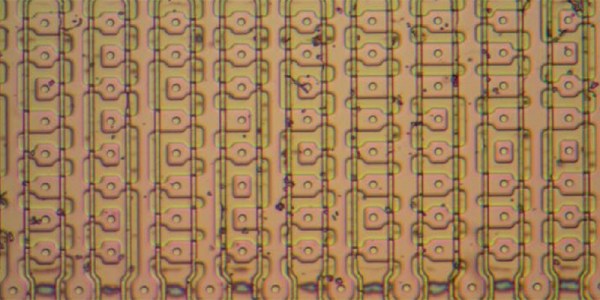
When it comes to reverse engineering silicon, there’s no better person to ask than Ken Shirriff. He’s the expert at teasing the meaning out of layers of polysilicon and metal. He’s reverse engineered the ubiquitous 555 timer, he’s taken a look at the inside of old-school audio chips, and he’s found butterflies in his op-amp. Where there’s a crazy jumble of microscopic wires and layers of silicon, Ken’s there, ready to do the teardown.

For this year’s talk at the Hackaday Superconference, Ken walked everyone through the techniques for reverse engineering silicon. Surprisingly, this isn’t as hard as it sounds. Yes, you’ll still need to drop acid to get to the guts of an IC (of course, you could always find a 555 stuck in a metal can, but then you can’t say ‘dropping acid’), but even the most complex devices on the planet are still made of a few basic components. You’ve got n-doped silicon, p-doped silicon, and some metal. That’s it, and if you know what you’re looking for — like Ken does — you have all the tools you need to figure out how these integrated circuits are made.

Continue reading “Ken Shirriff Explains His Techniques For Reverse Engineering Silicon”

Building Portable Linux Devices: Never Been Easier, But Still Hard

We live in a Golden Age of single-board computers. There was a time when a portable computer that was any good was a relatively rare and expensive device, certainly not something you could expect to replicate for yourself. A Psion, or later a Palm or perhaps a WinCE device would have been a lot more than an impulse purchase, and could not easily have been replicated using the components then available to the experimenter.

Thanks to spin-offs from technology developed for set-top boxes and mobile phones we can now buy any one of a pile of different boards that have almost equivalent power to a desktop computer. The experimenter can leverage that computing power to create their own small portables. Zerophone creator Arsenijs Picugins spoke about the tricky parts of designing a LInux portable at the recent Hackaday Superconference. You’ll find his talk below the break, which makes for a fascinating primer for those tempted to walk in his footsteps.

Zerophone – a Raspberry Pi Smartphone

Minor Details of Portables are the Majority of the Build

In theory, it’s pretty easy to use one of these boards to make a portable computer. Take one of the smaller members of the Raspberry Pi or Beaglebone families, add a battery and a display, and away you go. But as always the devil is in the detail, and for a truly successful build there are a wealth of variables to attend to.

In his talk, Arsenijs takes us through the challenges of power supplies, connectors, and interfaces. In particular there is considerable challenge to running an SBC from a battery small enough to be portable, as efficiency concerns and the ability to easily recharge make for a critical set of choices. Then we learn of another pitfall, that of using USB as a default interface. Power loss in converting 5V to 3.3V that is inconsequential for a desktop computer is a battery-killer in a small device, so we’re pointed at the array of alternatives.

Zerophone screen menu [via @ZeroPhoneOSHW]

Screen Size is a Tricky Spec to Settle

If you’ve been tempted by one of those cheap Raspberry Pi touch screens, you’ll certainly understand that while a full desktop on a screen the size of a playing card looks cool, the reality is almost unusable. Your device will require a user interface that fits its form factor, which from his experience, Arsenijs suggests is best achieved through the medium of buttons rather than a touchscreen on smaller screens. There are a variety of UI and display libraries he introduces us to which make the whole process significantly easier.

Arsenijs’ Zerophone Raspberry Pi smartphone was a finalist in the 2017 Hackaday Prize, and remains an exemplary portable project from which many others can gain inspiration. We are privileged that he was able to bring his experience to speak at the Superconference, and his talk makes for a fascinating watch.

Continue reading “Building Portable Linux Devices: Never Been Easier, But Still Hard”

Katrina Nguyen Automates Her Mice

When embarking on a career in the life sciences, it seems like the choice of which model organism to study has more than a little to do with how it fits into the researcher’s life. I once had a professor who studied lobsters, ostensibly because they are a great model for many questions in cell biology; in actuality, he just really liked to eat lobster. Another colleague I worked with studied salt transport in shark rectal glands, not because he particularly liked harvesting said glands — makes the sharks a tad grumpy — but because he really liked spending each summer on the beach.

Not everyone gets to pick a fun or delicious model organism, though, and most biologists have had to deal with the rats and mice at some point. It’s hard to believe how needy these creatures can be in terms of care and feeding, and doubly so when feeding is part of the data you’re trying to collect from them. Graduate student Katrina Nguyen learned this the hard way, but rather than let her life be controlled by a bunch of rodents, she hacked a solution that not only improved her life, but also improved her science. She kindly dropped by the Hackaday Superconference to tell us all about how she automated her research.

Continue reading “Katrina Nguyen Automates Her Mice”

Bill Gross On Why Your Startup Will Succeed

Bill Gross is one of the great heros when it comes to technology incubators. Twenty years ago, he founded Idealab, a business whose business plan is to create more businesses. This started out with just a handful of companies in 1996, and has since gone on to found 150 companies, that have collectively raised three and a half billion dollars. Out of these companies, more than half have either gone through successful IPOs and acquisitions, or are currently operating. That investment has generated a 13.5x return, and created more than 10,000 jobs.

Obviously, when you want to talk about what goes into a successful startup, Bill Gross is the person you want to talk to. We were happy to have him Keynote the Hackaday Superconference this year, and the lessons he shared might surprise you, especially if you’re interested in starting your own business.

Continue reading “Bill Gross On Why Your Startup Will Succeed”