Everything We Know About SpaceX’s Starlink Network

When it comes to SpaceX, or perhaps more accurately its somewhat eccentric founder and CEO Elon Musk, it can be difficult to separate fact from fiction. For as many incredible successes SpaceX has had, there’s an equal number of projects or ideas which get quietly delayed or shelved entirely once it becomes clear the technical challenges are greater than anticipated. There’s also Elon’s particular brand of humor to contend with; most people assumed his claim that the first Falcon Heavy payload would be his own personal Tesla Roadster was a joke until he Tweeted the first shots of it being installed inside the rocket’s fairing.

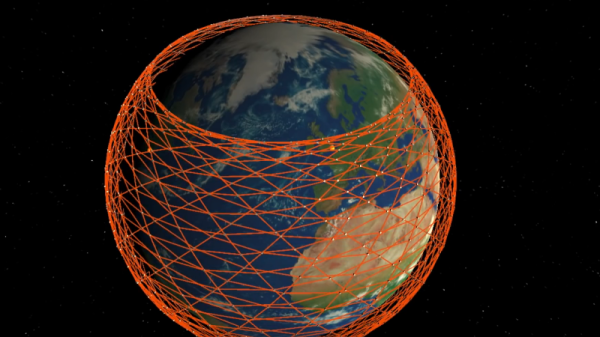
So a few years ago when Elon first mentioned Starlink, SpaceX’s plan for providing worldwide high-speed Internet access via a mega-constellation of as many as 12,000 individual satellites, it’s no surprise that many met the claims with a healthy dose of skepticism. The profitability of Starlink was intrinsically linked to SpaceX’s ability to substantially lower the cost of getting to orbit through reusable launch vehicles, a capability the company had yet to successfully demonstrate. It seemed like a classic cart before the horse scenario.

But today, not only has SpaceX begun regularly reusing the latest version of their Falcon 9 rocket, but Starlink satellites will soon be in orbit around the Earth. They’re early prototypes that aren’t as capable as the final production versions, and with only 60 of them on the first launch it’s still a far cry from thousands of satellites which would be required for the system to reach operational status, but there’s no question they’re real.

During a media call on May 15th, Elon Musk let slip more technical information about the Starlink satellites than we’ve ever had before, giving us the first solid details on the satellites themselves, what the company’s goals are, and even a rough idea when the network might become operational.

Continue reading “Everything We Know About SpaceX’s Starlink Network”

That Super Mario Bros. C64 Port Was Too Good For This World

It was foolish to think that the adventure of the Mario Bros. would ever exist outside of the castle walls of the Nintendo Entertainment System. Except for that one time it did. The Hudson Soft company was a close collaborator with Nintendo, and parlayed that favor into being tasked with bringing Super Mario Bros. to platforms beyond the NES. The result of that collaboration would be 1986’s Super Mario Special, a port for the NEC PC-88 line of desktop computers. What ended up on that 5.25″ floppy sounded reminiscent of the Famicom original, but with a grand total of four colors (including black) and not a single scrolling screen in sight; Super Mario Special felt decidedly less than spectacular to play. Those eternally flickering sprites mixed with jarring blank screen transitions would never make it outside of Japan, so for a large swath of the world Mario would remain constrained to a gray plastic cartridge for years to come.

There are no shortage of ways to play Super Mario Bros. these days. Emulation in all of its various official and unofficial forms has taken care of that. Virtually everything with a processor more capable than the NES’s 6502 can play host to the Mushroom Kingdom, however, machines more contemporary with the NES still lacked access to the iconic title.

Enter the 2019 port of Super Mario Bros. for the Commodore 64 by [ZeroPaige]. A culmination of seven years work to port the game onto one of the most prolific computers of the eighties was a clear feat of brilliance and an amazing bit of programming that would have taken 1986 by storm. No pale imitation, this was Mario on the C64. Despite all of the nuance in recreating the jump-and-run model of the original paired with enveloping all eight sound channels of a dual SID chip setup, Nintendo saw fit to stifle the proliferation of this incredible 170 kB of software because they claim it infringes on their copyright.

Continue reading “That Super Mario Bros. C64 Port Was Too Good For This World”

It Is ‘Quite Possible’ This Could Be The Last Bay Area Maker Faire

The Bay Area Maker Faire is this weekend, and this might be the last one. This report comes from the San Francisco Chronicle, and covers the continuing problems of funding and organizing what has been called The Greatest Show and Tell on Earth. According to Maker Media CEO Dale Dougherty, “it is ‘quite possible’ that the event could be the Bay Area’s last Maker Faire.”

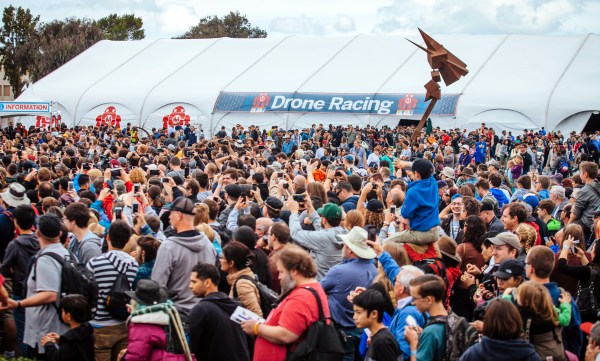
Maker Faire has been drawing artists, craftspeople, inventors, and engineers for more than a decade. In one weekend you can see risque needlepoint, art cars meant for the playa, custom racing drones, science experiments, homebrew computers, gigantic 3D printers, interactive LED art, and so much more. This is a festival built around a subculture defined by an act of creation; if you do something with your hands, if you build something, or if you make something, Maker Faire has something for you. However you define it, this is the Maker Movement and since 2006, there has been a Maker Faire, a festival to celebrate these creators.

It’s sad to learn the future of this event is in peril. Let’s take a look at how we got here and what the future might hold.

Continue reading “It Is ‘Quite Possible’ This Could Be The Last Bay Area Maker Faire”

The Great Ohio Key Fob Mystery, Or “Honey, I Jammed The Neighborhood!”

Hack long enough and hard enough, and it’s a pretty safe bet that you’ll eventually cause unintentional RF emissions. Most of us will likely have our regulatory transgression go unnoticed. But for one unlucky hacker in Ohio, a simple project ended up with a knock at the door by local authorities and pointed questions to determine why key fobs and garage door remotes in his neighborhood and beyond had suddenly been rendered useless, and why his house seemed to be at the center of the disturbance.

Few of us want this level of scrutiny for our projects, so let’s take a more in-depth look at the Great Ohio Key Fob Mystery, along with a look at the Federal Communications Commission regulations that govern what you can and cannot do on the airwaves. As it turns out, it’s easy to break the law, and it’s easy to get caught.

Continue reading “The Great Ohio Key Fob Mystery, Or “Honey, I Jammed The Neighborhood!””

What Happened With Supermicro?

Back in October 2018, a bombshell rocked the tech industry when Bloomberg reported that some motherboards made by Supermicro had malicious components on them that were used to spy or interfere with the operation of the board, and that these motherboards were found on servers used by Amazon and Apple. We covered the event, looking at how it could work if it were true. Now seven months have passed, and it’s time to look at how things shook out.

Continue reading “What Happened With Supermicro?”

A Million Zombie Taxis By 2020? It’s Not Going To Happen

The tech world has a love for Messianic figures, usually high-profile CEOs of darling companies whose words are hung upon and combed through for hidden meaning, as though they had arrived from above to our venture-capital-backed prophet on tablets of stone. In the past it has been Steve Jobs or Bill Gates, now it seems to be Elon Musk who has received this treatment. Whether his companies are launching a used car into space, shooting things down tubes in the desert, or synchronised-landing used booster rockets, everybody’s talking about him. He’s a showman whose many pronouncements are always soon eclipsed by bigger ones to keep his public on the edge of their seats, and now we’ve been suckered in too, which puts us on the spot, doesn’t it.

Your Johnny Cab is almost here

The latest pearl of Muskology came in a late April presentation: that by 2020 there would be a million Tesla electric self-driving taxis on the road. It involves a little slight-of-hand in assuming that a fleet of existing Teslas will be software upgraded to be autonomous-capable and that some of them will somehow be abandoned by their current owners and end up as taxis, but it’s still a bold claim by any standard.

Here at Hackaday, we want to believe, but we’re not so sure. It’s time to have a little think about it all. It’s the start of May, so 2020 is about 7 months away. December 2020 is about 18 months away, so let’s give Tesla that timescale. 18 months to put a million self-driving taxis on the road. Can the company do it? Let’s find out.

Continue reading “A Million Zombie Taxis By 2020? It’s Not Going To Happen”