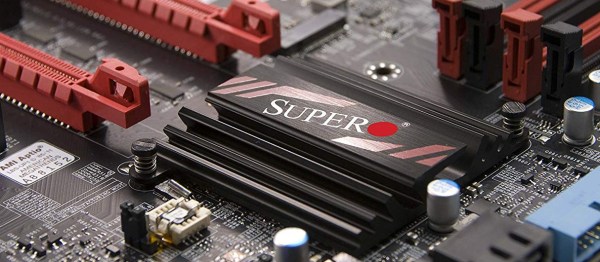
Back in October 2018, a bombshell rocked the tech industry when Bloomberg reported that some motherboards made by Supermicro had malicious components on them that were used to spy or interfere with the operation of the board, and that these motherboards were found on servers used by Amazon and Apple. We covered the event, looking at how it could work if it were true. Now seven months have passed, and it’s time to look at how things shook out.
Current Events592 Articles
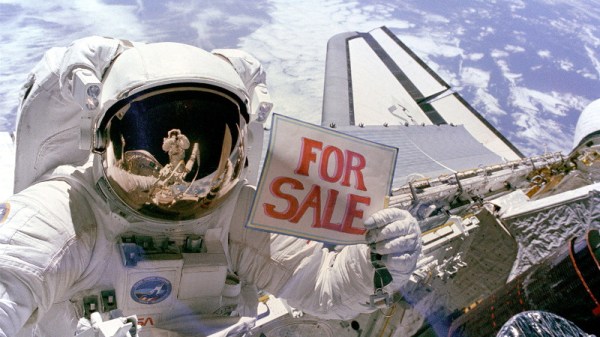
This Space For Rent: Advertisements In Orbit
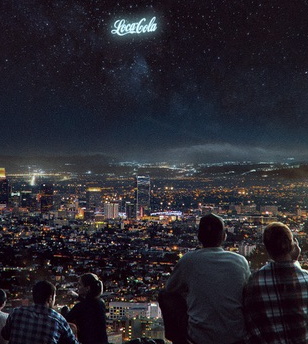
Recently there’s been some buzz in the news that Pepsi, or more accurately the company’s Russian division, had partnered with a startup by the name of StartRocket to experiment with the idea of putting “billboards” in space. After overwhelmingly negative response to the idea on social media, Pepsi’s official line is that the StartRocket experiment was a one-time partnership, and that the company has no plans to push ahead with a space advertising program “at this time”.

Had this been the first time a worldwide conglomerate like Pepsi had turned their eyes up into the black and saw dollar signs, you might think that humanity’s brief flirtation with space-bound advertisements was nothing but a social media stunt. But the truth of the matter is that companies such as Coca-Cola and Pizza Hut have been trying to get their products off terra firma since the 1980’s. This isn’t even Pepsi’s first attempt, despite what their PR department might want you to believe right about now.
So why haven’t we seen advertisers putting their money into space advertising schemes? Well, we have, actually. They just haven’t been terribly effective and the average person likely has no recollection of them. We’re seeing considerable excitement about spaceflight in the new media right now with billionaires like Elon Musk and Jeff Bezos battling to see who can build the most outlandish rockets, but historically, you’d do better getting a 10 second spot during the Super Bowl than plastering your logo on the side of a weather satellite.
In honor of Pepsi’s recent blunder, let’s take a look at some of the standout attempts to conquer advertising’s true true final frontier from the last few decades.
Continue reading “This Space For Rent: Advertisements In Orbit”
A Million Zombie Taxis By 2020? It’s Not Going To Happen
The tech world has a love for Messianic figures, usually high-profile CEOs of darling companies whose words are hung upon and combed through for hidden meaning, as though they had arrived from above to our venture-capital-backed prophet on tablets of stone. In the past it has been Steve Jobs or Bill Gates, now it seems to be Elon Musk who has received this treatment. Whether his companies are launching a used car into space, shooting things down tubes in the desert, or synchronised-landing used booster rockets, everybody’s talking about him. He’s a showman whose many pronouncements are always soon eclipsed by bigger ones to keep his public on the edge of their seats, and now we’ve been suckered in too, which puts us on the spot, doesn’t it.
Your Johnny Cab is almost here
The latest pearl of Muskology came in a late April presentation: that by 2020 there would be a million Tesla electric self-driving taxis on the road. It involves a little slight-of-hand in assuming that a fleet of existing Teslas will be software upgraded to be autonomous-capable and that some of them will somehow be abandoned by their current owners and end up as taxis, but it’s still a bold claim by any standard.
Here at Hackaday, we want to believe, but we’re not so sure. It’s time to have a little think about it all. It’s the start of May, so 2020 is about 7 months away. December 2020 is about 18 months away, so let’s give Tesla that timescale. 18 months to put a million self-driving taxis on the road. Can the company do it? Let’s find out.
Continue reading “A Million Zombie Taxis By 2020? It’s Not Going To Happen”
The Stratolaunch Is Flying, But Can It Do Cargo?
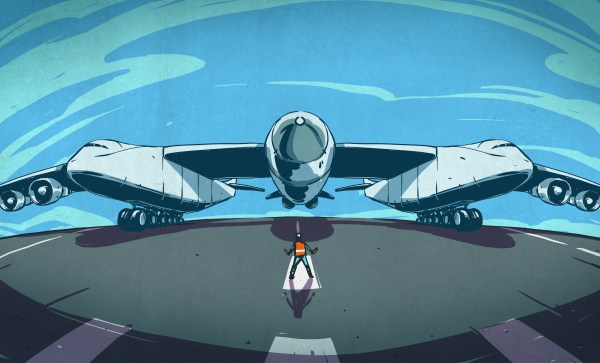
The world’s largest aircraft is flying. Stratolaunch took to the skies in test flights leading up to its main mission to take rockets up to 20,000 feet on the first stage of their flight to space. But the Stratolaunch is a remarkable aircraft, a one-of-a-kind, and unlike anything ever built before. It can lift a massive 250 tons into the air, and it can bring it back down again.
By most measures that matter, the Stratolaunch is the largest aircraft ever flown. It has the largest wingspan of any aircraft, and it has the largest cargo capacity of any aircraft. In an industry that is grasping at interesting and novel approaches to spaceflight like rockoons and a small satellite launcher from a company whose CTO is still a junior in college, the Stratolaunch makes unexpected sense; this is a launch platform above the clouds, that can deliver a rocket to orbit, on time.
But the Stratolaunch is much more than that. This is an aircraft whose simple existence deserves respect. And, like others of its kind, the Antonov AN-225, the Spruce Goose, there is only one. Even if it never launches a rocket, the Stratolaunch will live on by the simple nature of its unique capabilities. But what are those capabilities? Is it possible for the Stratolaunch to serve as a cargo plane? The answer is more interesting than you think.
Continue reading “The Stratolaunch Is Flying, But Can It Do Cargo?”
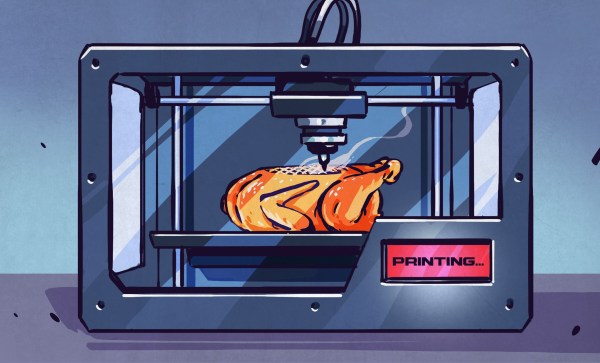
3D Printering: The Quest For Printable Food
A video has been making the rounds on social media recently that shows a 3D printed “steak” developed by a company called NovaMeat. In the short clip, a machine can be seen extruding a paste made of ingredients such as peas and seaweed into a shape not entirely unlike that of a boot sole, which gets briefly fried in a pan. Slices of this futuristic foodstuff are then fed to passerby in an effort to prove it’s actually edible. Nobody spits it out while the cameras are rolling, but the look on their faces could perhaps best be interpreted as resigned politeness. Yes, you can eat it. But you could eat a real boot sole too if you cooked it long enough.
To be fair, the goals of NovaMeat are certainly noble. Founder and CEO Giuseppe Scionti says that we need to develop new sustainable food sources to combat the environmental cost of our current livestock system, and he believes meat alternatives like his 3D printed steak could be the answer. Indeed, finding ways to reduce the consumption of meat would be a net positive for the environment, but it seems his team has a long way to go before the average meat-eater would be tempted by the objects extruded from his machine.
But the NovaMeat team aren’t the first to attempt coaxing food out of a modified 3D printer, not by a long shot. They’re simply the most recent addition to a surprisingly long list of individuals and entities, not least of which the United States military, that have looked into the concept. Ultimately, they’ve been after the same thing that convinced many hackers and makers to buy their own desktop 3D printer: the ability to produce something to the maker’s exacting specifications. A machine that could produce food with the precise flavors and textures specified would in essence be the ultimate chef, but of course, it’s far easier said than done.
Continue reading “3D Printering: The Quest For Printable Food”
Why Satellites Of The Future Will Be Built To Burn
There’s no shortage of ways a satellite in low Earth orbit can fail during the course of its mission. Even in the best case scenario, the craft needs to survive bombardment by cosmic rays and tremendous temperature variations. To have even a chance of surviving the worst, such as a hardware fault or collision with a rogue piece of space garbage, it needs to be designed with robust redundancies which can keep everything running in the face of systemic damage. Of course, before any of that can even happen it will need to survive the wild ride to space; so add high-G loads and intense vibrations to the list of things which can kill your expensive bird.
After all the meticulous engineering and expense involved in putting a satellite into orbit, you might think it would get a hero’s welcome at the end of its mission. But in fact, it’s quite the opposite. The great irony is that after all the time and effort it takes to develop a spacecraft capable of surviving the rigors of spaceflight, in the end, its operators will more than likely command the craft to destroy itself by dipping its orbit down into the Earth’s atmosphere. The final act of a properly designed satellite will likely be to commit itself to the same fiery fate it had spent years or even decades avoiding.
You might be wondering how engineers design a spacecraft that is simultaneously robust enough to survive years in the space environment while at the same time remaining just fragile enough that it completely burns up during reentry. Up until fairly recently, the simple answer is that it wasn’t really something that was taken into account. But with falling launch prices promising to make space a lot busier in the next few years, the race is on to develop new technologies which will help make sure that a satellite is only intact for as long as it needs to be.
Continue reading “Why Satellites Of The Future Will Be Built To Burn”
The Drones And Robots That Helped Save Notre Dame
In the era of social media, events such as the fire at Notre Dame cathedral are experienced by a global audience in real-time. From New York to Tokyo, millions of people were glued to their smartphones and computers, waiting for the latest update from media outlets and even individuals who were on the ground documenting the fearsome blaze. For twelve grueling hours, the fate of the 850 year old Parisian icon hung in the balance, and for a time it looked like the worst was inevitable.
The fires have been fully extinguished, the smoke has cleared, and in the light of day we now know that the heroic acts of the emergency response teams managed to avert complete disaster. While the damage to the cathedral is severe, the structure itself and much of the priceless art inside still remain. It’s far too early to know for sure how much the cleanup and repair of the cathedral will cost, but even the most optimistic of estimates are already in the hundreds of millions of dollars. With a structure this old, it’s likely that reconstruction will be slowed by the fact that construction techniques which have become antiquated in the intervening centuries will need to be revisited by conservators. But the people of France will not be deterred, and President Emmanuel Macron has already vowed his country will rebuild the cathedral within five years.
It’s impossible to overstate the importance of the men and women who risked their lives to save one of France’s most beloved monuments. They deserve all the praise from a grateful nation, and indeed, world. But fighting side by side with them were cutting-edge pieces of technology, some of which were pushed into service at a moments notice. These machines helped guide the firefighters in their battle with the inferno, and stood in when the risk to human life was too great. At the end of the day, it was man and not machine that triumphed over nature’s fury; but without the help of modern technology the toll could have been far higher.
Continue reading “The Drones And Robots That Helped Save Notre Dame”