As anyone who has been faced with a recently-manufactured household appliance that has broken will know, sometimes they can be surprisingly difficult to fix. In many cases it is not in the interests of manufacturers keen to sell more products to make a device that lasts significantly longer than its warranty period, to design it with dismantling or repairability in mind, or to make spare parts available to extend its life. As hardware hackers we do our best with home-made replacement components, hot glue, and cable ties, but all too often another appliance that should have plenty of life in it heads for the dump.
Czech waste management workers dismantle scrap washing machines. Tormale [CC BY-SA 3.0].If we are at a loss to fix a domestic appliance then the general public are doubly so, and the resulting mountain of electrical waste is enough of a problem that the European Union is introducing new rules governing their repairability. The new law mandates that certain classes of household appliances and other devices for sale within the EU’s jurisdiction must have a guaranteed period of replacement part availability and that they must be designed such that they can be worked upon with standard tools. These special classes include washing machines, dishwashers, refrigerators, televisions, and more.
Let’s dig into the ramifications of this decision which will likely affect markets beyond the EU and hopefully lead to a supply of available parts useful for repair and beyond.
If the current Administration of the United States has their way, humans will return to the surface of the Moon far sooner than many had expected. But even if NASA can’t meet the aggressive timeline they’ve been given by the White House, it seems inevitable that there will be fresh boot prints on the lunar surface within the coming decades. Between commercial operators and international competition, we’re seeing the dawn of a New Space Race, with the ultimate goal being the long-term habitation of our nearest celestial neighbor.
An Apollo astronaut covered in lunar dust
But even with modern technology, it won’t be easy, and it certainly won’t be cheap. While commercial companies such as SpaceX have significantly reduced the cost of delivering payloads to the Moon, we’ll still need every advantage to ensure the economical viability of a lunar outpost. One approach is in situ resource utilization, where instead of transporting everything from Earth, locally sourced materials are used wherever possible. This technique would not only be useful on the Moon, but many believe it will be absolutely necessary if we’re to have any chance of sending a human mission to Mars.
One of the most interesting applications of this concept is the creation of a building material from the lunar regolith. Roughly analogous to soil here on Earth, regolith is a powdery substance made up of grains of rock and micrometeoroid fragments, and contains silicon, calcium, and iron. Mixed with water, or in some proposals sulfur, it’s believed the resulting concrete-like material could be used in much the same way it is here on Earth. Building dwellings in-place with this “lunarcrete” would be faster, cheaper, and easier than building a comparable structure on Earth and transporting it to the lunar surface.
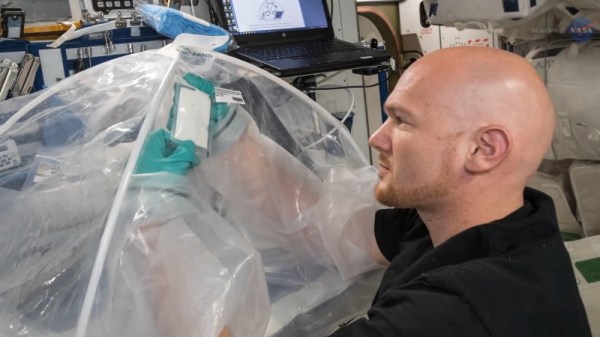
Now, thanks to recent research performed aboard the International Space Station, we have a much better idea of what to expect when those first batches of locally-sourced concrete are mixed up on the Moon or Mars. Of course, like most things related to spaceflight, the reality has proved to be a bit more complex than expected.
It’s fair to say that 2019 has not been a good year for the aircraft manufacturer Boeing, as its new 737 MAX aircraft has been revealed to contain a software fault that could cause the aircraft to enter a dive and crash. Now stories are circulating of another issue with the 737, some of the so-called “Pickle forks” in the earlier 737NG aircraft have been found to develop cracks.
It’s a concerning story and there are myriad theories surrounding its origin but it should also have a reassuring angle: the painstaking system of maintenance checks that underpins the aviation industry has worked as intended. This problem has been identified before any catastrophic failures have occurred. It’s not the story Boeing needs at the moment, but they and the regulators will no doubt be working hard to produce a new design and ensure that it is fitted to aircraft.
The Role of the Pickle Fork
For those of us who do not work in aviation though it presents a question: what on earth is a pickle fork? The coverage of the story tells us it’s something to do with attaching the wing to the fuselage, but without a handy 737 to open up and take a look at we’re none the wiser.
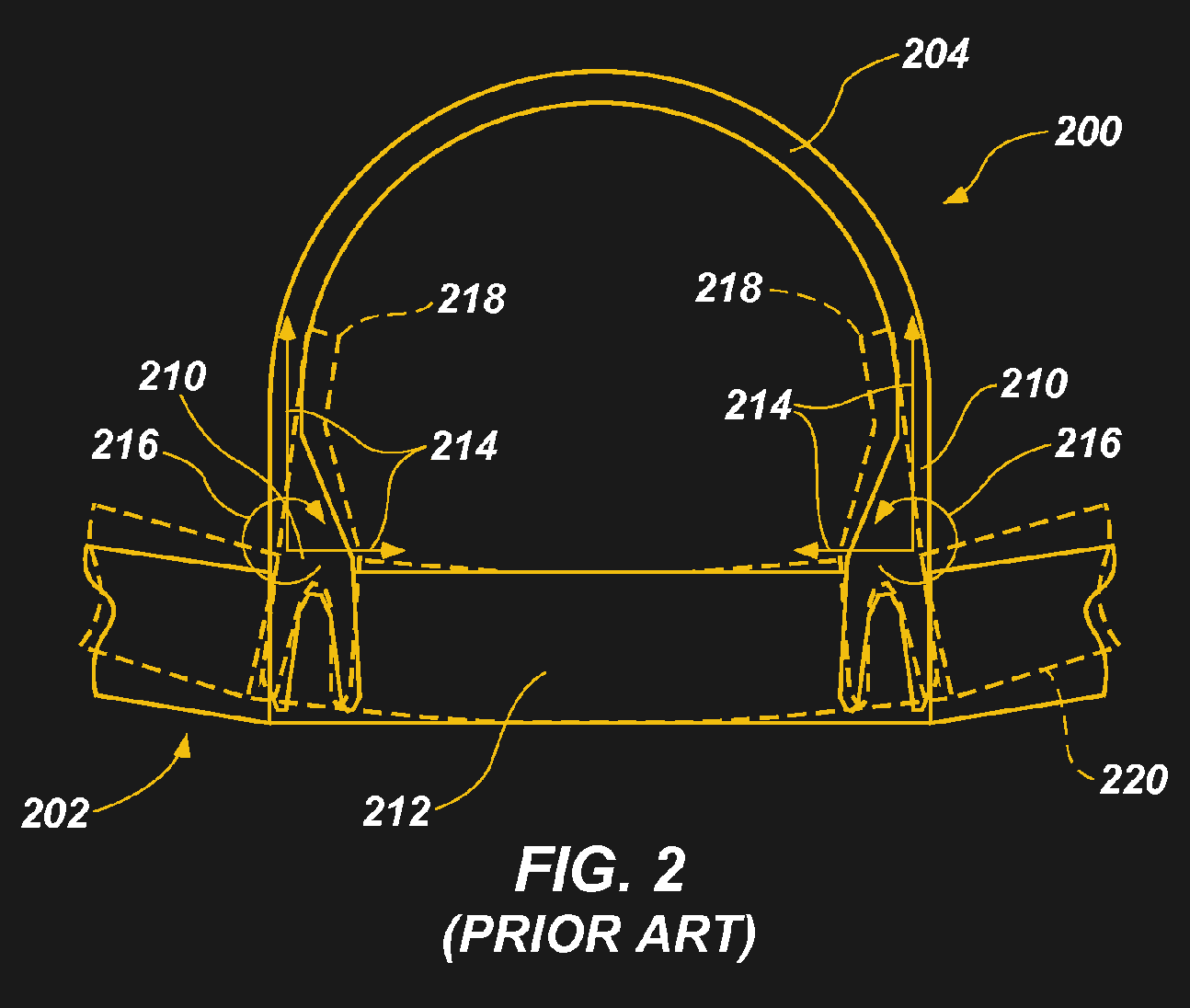
Fortunately there’s a comprehensive description of one along with a review of wing attachment technologies from Boeing themselves, and it can be found in one of their patents. US9399508B2 is concerned with an active suspension system for wing-fuselage mounts and is a fascinating read in itself, but the part we are concerned with is a description of existing wing fixtures on page 12 of the patent PDF.
A cross-section of the aircraft wing fixing, in which we’ve highlighted the role of the pickle forks. (Boeing)
The pickle fork is an assembly so named because of its resemblance to the kitchen utensil, which attaches firmly to each side of the fuselage and has two prongs that extend below it where they are attached to the wing spar.
For the curious engineer with no aviation experience the question is further answered by the patent’s figure 2, which provides a handy cross-section. The other wing attachment they discuss involves the use of pins, leading to the point of the patented invention. Conventional wing fixings transmit the forces from the wing to the fuselage as a rigid unit, requiring the fuselage to be substantial enough to handle those forces and presenting a problem for designers of larger aircraft. The active suspension system is designed to mitigate this, and we’d be fascinated to hear from any readers in the comments who might be able to tell us more.
We think it’s empowering that a science-minded general public can look more deeply at a component singled out in a news report by digging into the explanation in the Boeing patent. We don’t envy the Boeing engineers in their task as they work to produce a replacement, and we hope to hear of their solution as it appears.
Regular readers will know that we have reported extensively the sorry saga of official reactions to drone incidents, because we believe that major failings in reporting and investigation will accumulate to have an adverse effect on those many people in our community who fly multi-rotors. In today’s BBC report for example there is the assertion that 109 of the drone sightings came from “‘credible witnesses’ including a pilot and airport police” which while it sounds reassuring is we believe a dangerous route to follow because it implies that the quality of evidence is less important than its source. It is crucial to understand that multi-rotors are still a technology with which the vast majority of the population are still unfamiliar, and simply because a witness is a police officer or a pilot does not make them a drone expert whose evidence is above scrutiny.
Whichever stand you take on the drone sightings at Gatwick and in other places it is clear that Sussex Police do not emerge from this smelling of roses and that their investigation has been chaotic and inept from the start. We believe that there should be a public inquiry into the whole mess, so that those embarrassing parts of it which they and other agencies are so anxious to quietly forget can be subjected to scrutiny. We do not however expect this to happen any time soon.
It is said that Benjamin Franklin, while watching the first manned flight of a hot air balloon by the Montgolfier brothers in Paris in 1783, responded when questioned as to the practical value of such a thing, “Of what practical use is a new-born baby?” Dr. Franklin certainly had a knack for getting to the heart of an issue.
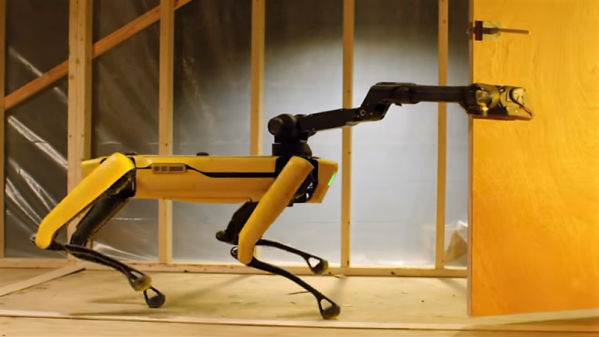
Much the same can be said for Spot, the extremely videogenic dog-like robot that Boston Dynamics has been teasing for years. It appears that the wait for a production version of the robot is at least partially over, and that Spot (once known as Spot Mini) will soon be available for purchase by “select partners” who “have a compelling use case or a development team that [Boston Dynamics] believe can do something really interesting with the robot,” according to VP of business development Michael Perry.
The qualification of potential purchasers will certainly limit the pool of early adopters, as will the price tag, which is said to be as much as a new car – and a nice one. So it’s not likely that one will show up in a YouTube teardown video soon, so until the day that Dave Jones manages to find one in his magic Australian dumpster, we’ll have to entertain ourselves by trying to answer a simple question: Of what practical use is a robotic dog?
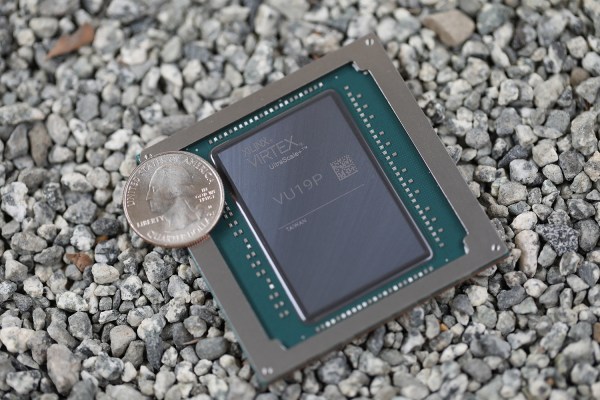
Xilinx recently announced the Virtex UltraScale+ VU19P FPGA. Of course, FPGA companies announce new chips every day. The reason this one caught our attention is the size of it: nearly 9 million logic cells and 35 billion transistors on a chip! If that’s not enough there is also over 2,000 user I/Os including transceivers that can move around 4.5 Tb/s back and forth.
To put things in perspective, the previous record holder — the Virtex Ultrascale 440 — has 5.5 million logic cells and an old-fashioned Spartan 3 topped out at about 50,000 cells — the new chip has about 180 times that capacity. For the record, I’ve built entire 32-bit CPUs on smaller Spartans.
That led us to wonder? Who’s buying these things? When I first heard about it I guessed that the price would be astronomical, partly due to expense but also partly because the market for these has to be pretty small. The previous biggest Xilinx part is listed on DigKey who pegs the Ultrascale 440 (an XCVU440-2FLGA2892E) at a cost of $55,000 as a non-stocked item. Remember, that chip has just over half the logic cells of the VU19P.
It seems like hardly a day goes by that doesn’t see some news story splashed across our feeds that has something to do with Elon Musk and one or another of his myriad companies. The news is often spectacular and the coverage deservedly laudatory, as when Space X nails another double landing of its boosters after a successful trip to space. But all too often, it’s Elon’s baby Tesla that makes headlines, and usually of the kind that gives media relations people ulcers.
The PR team on the automotive side of Tesla can take a bit of a breather now, though. This time it’s Elon’s solar power venture, Tesla Energy Operations, that’s taking the heat. Literally — they’ve been sued by Walmart for rooftop solar installations that have burst into flames atop several of the retail giant’s stores. While thankfully no lives have been lost and no major injuries were reported, Walmart is understandably miffed at the turn of events, leading to the litigation.
Walmart isn’t alone in their exposure to potential Tesla solar problems, so it’s worth a look to see what exactly happened with these installations, why they failed, and what we as hackers can learn from the situation. As we’ll see, it all boils down to taking electrical work very seriously and adhering to standards designed to keep everyone safe, even when they just seem like a nuisance.


![Czech waste management workers dismantle scrap washing machines. Tormale [CC BY-SA 3.0].](https://hackaday.com/wp-content/uploads/2019/10/1280px-DVO_4792.jpg)