Electronics Manufacturers React To China Trade Tariffs

Mere weeks ago, the United States announced it was set to impose a 25% tariff on over 800 categories of Chinese goods. These tariffs include nearly every component that goes into the manufacture of any piece of electronic hardware, from resistors to capacitors, semiconductors to microcontrollers, and even the raw components that are turned into printed circuit boards. These tariffs will increase the cost of materials for electronics, even if those electronics are ultimately manufactured in the United States because suppliers and subcontractors must source their materials from somewhere, and more often than not, that place is China.

Now, manufacturers are feeling the pinch. An email distributed by Moog Music last Friday has asked their supporters to contact their senators and representatives.

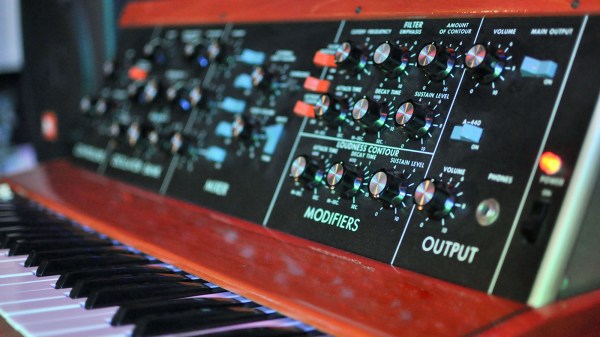
In the world of musical synthesizers, there is no bigger name than Moog. The company was founded in the 1950s manufacturing theremins, and in the 1960s, production moved to synthesizers. The famous Minimoog, launched in 1970, has been featured on tens of thousands of albums. Modern music simply wouldn’t exist without Moog synthesizers. After a buyout, mismanagement, and bankruptcy in the 1980s, the company was reborn in the early 2000s, moved into a beautiful factory in Asheville, North Carolina, and has gone on to produce some of the most popular synthesizers ever made.

The company’s statement says these new tariffs will, ‘immediately and drastically increase the cost of building our instruments, and have the very real potential of forcing us to lay off workers and could.. require us to move some, if not all, of our manufacturing overseas’. In a statement on Twitter, Moog says they source half their PCBs and a majority of other materials domestically, already paying up to 30% more than if the PCBs were sourced from China. However, because the raw materials for PCB manufacture are also sourced from China, board manufacturers for Moog’s synths will be forced to pass along the 25% tariff to their customers.

The threat of Moog being forced to move production of their instruments to China is real. Like cell phones, laptops, and other finished goods, synthesizers are not covered by the new tariff. As noted by Bunnie Huang, these tariffs have the perverse incentive of shifting US manufacturing jobs to China.

These tariffs have been a point of contention for the electronics and engineering communities. Anyone can easily pull up the distributor information from a Mouser or Digikey order and find the country of origin for an entire Bill of Materials. It has already been confirmed that most of the FR4 and other raw components that go into manufacturing PCBs in the United States come from Chinese suppliers. These items can be cross-referenced with the list of items that will be subject to a 25% tariff next week. Manufacturing electronics in the United States, even if you get your PCBs from US manufacturers and parts from US suppliers, will cost more in just a few short days.
What Is Our Martian Quarantine Protocol?

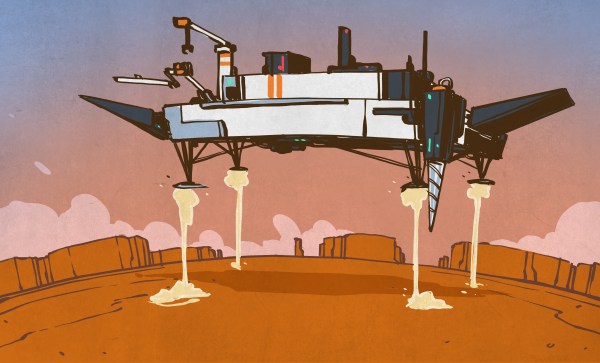
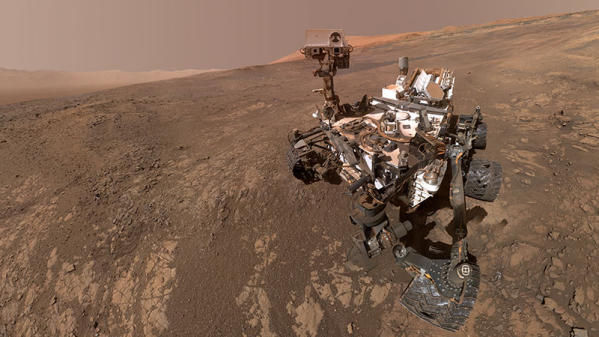
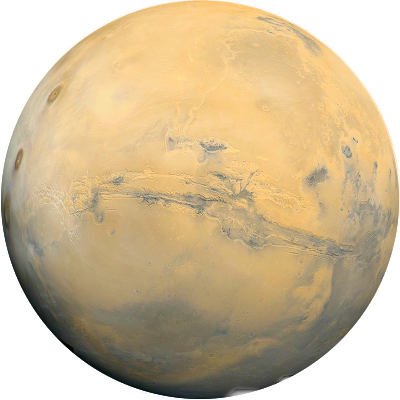
If you somehow haven’t read or watched War of the Worlds, here’s a spoiler alert. The Martians are brought down by the common cold. You can argue if alien biology would be susceptible to human pathogens, but if they were, it wouldn’t be surprising if aliens had little defense against our bugs. The worrisome part of that is the reverse. Could an astronaut or a space probe bring back something that would ravage the Earth with some disease? This is not science fiction, it is both a historically serious question and one we’ll face in the near future. If we send people to Mars are they going to come back with something harmful?

A Bit of News: Methane Gas Fluctuations on Mars

What got me thinking about this was the mounting evidence that there could be life on Mars. Not a little green man with a death ray, but perhaps microbe-like life forms. In a recent press release, NASA revealed that they not only found old organic material in rocks, but they also found that methane gas is present on Mars and the amount varies based on the season with more methane occurring in the summer months. There’s some dispute about possible inorganic reasons for this, but it is at least possible that the variation is due to increased biological activity during the summer.

Continue reading “What Is Our Martian Quarantine Protocol?”

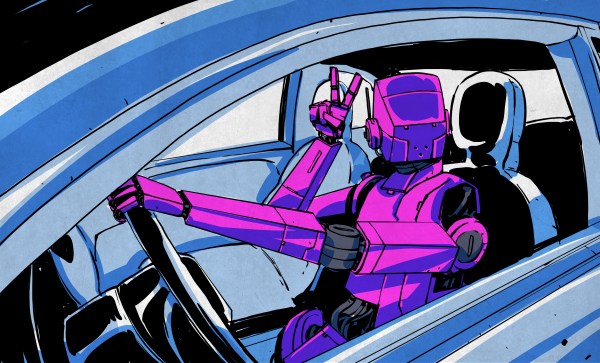
Fatalities Vs False Positives: The Lessons From The Tesla And Uber Crashes

In one bad week in March, two people were indirectly killed by automated driving systems. A Tesla vehicle drove into a barrier, killing its driver, and an Uber vehicle hit and killed a pedestrian crossing the street. The National Transportation Safety Board’s preliminary reports on both accidents came out recently, and these bring us as close as we’re going to get to a definitive view of what actually happened. What can we learn from these two crashes?

There is one outstanding factor that makes these two crashes look different on the surface: Tesla’s algorithm misidentified a lane split and actively accelerated into the barrier, while the Uber system eventually correctly identified the cyclist crossing the street and probably had time to stop, but it was disabled. You might say that if the Tesla driver died from trusting the system too much, the Uber fatality arose from trusting the system too little.

But you’d be wrong. The forward-facing radar in the Tesla should have prevented the accident by seeing the barrier and slamming on the brakes, but the Tesla algorithm places more weight on the cameras than the radar. Why? For exactly the same reason that the Uber emergency-braking system was turned off: there are “too many” false positives and the result is that far too often the cars brake needlessly under normal driving circumstances.

The crux of the self-driving at the moment is precisely figuring out when to slam on the brakes and when not. Brake too often, and the passengers are annoyed or the car gets rear-ended. Brake too infrequently, and the consequences can be worse. Indeed, this is the central problem of autonomous vehicle safety, and neither Tesla nor Uber have it figured out yet.

Continue reading “Fatalities Vs False Positives: The Lessons From The Tesla And Uber Crashes”

Explaining Efail And Why It Isn’t The End Of Email Privacy

Last week the PGPocalipse was all over the news… Except that, well, it wasn’t an apocalypse.

A team of researchers published a paper(PDF) where they describe how to decrypt a PGP encrypted email via a targeted attack. The research itself is pretty well documented and, from a security researcher perspective, it’s a good paper to read, especially the cryptography parts.

But we here at Hackaday were skeptical about media claims that Efail had broken PGP. Some media reports went as far as recommending everyone turn off PGP encryption on all email clients., but they weren’t able to back this recommendation up with firm reasoning. In fact, Efail isn’t an immediate threat for the vast majority of people simply because an attacker must already have access to an encrypted email to use the exploit. Advising everyone to disable encryption all together just makes no sense.

Aside from the massive false alarm, Efail is a very interesting exploit to wrap your head around. Join me after the break as I walk through how it works, and what you can do to avoid it.

Continue reading “Explaining Efail And Why It Isn’t The End Of Email Privacy”

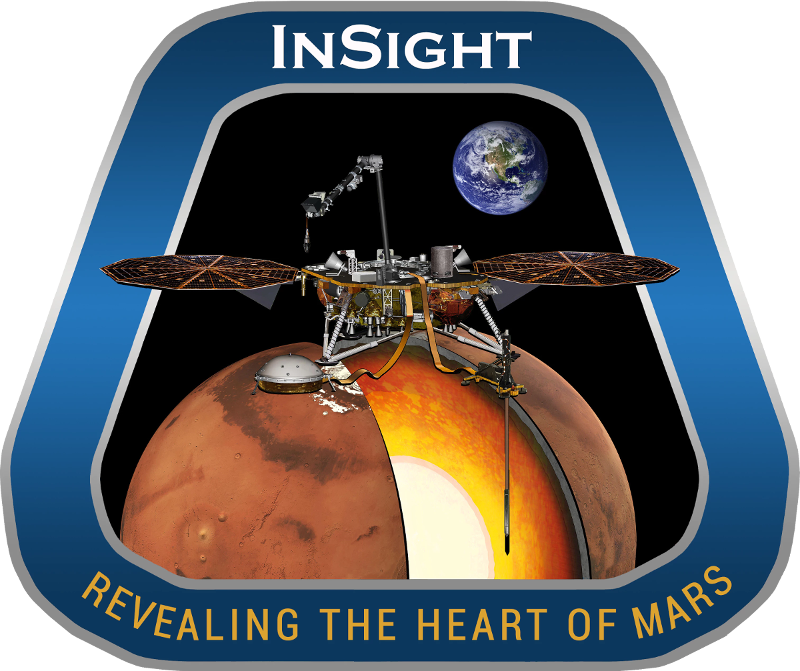
InSight Brings New Tech To Mars

Unless you’ve got your ear on the launch pad so to speak, you might not be aware that humanity just launched a new envoy towards the Red Planet. Estimated to touch down in Elysium Planitia on November 26th, the InSight lander is relatively low-key as far as interplanetary missions go. Part of the NASA’s “Discovery Program”, it operates on a considerably lower budget than Flagship missions such as the Curiosity rover; meaning niceties like a big advertising and social media campaign to get the public excited doesn’t get a line item.

Which is a shame, because not only are there much worse things to do with tax money than increase public awareness of scientific endeavours, but because InSight frankly deserves a bit more respect than that. Featuring a number of firsts, the engineers and scientists behind InSight might have been short on dollars, but ambition was in ample supply.

So in honor of the successful launch, let’s take a look at the InSight mission, the unique technology onboard, and the answers scientists hope it will be able to find out there in the black.

Continue reading “InSight Brings New Tech To Mars”

The Eric Lundgren Story: When Free Isn’t Free

At this point, you’ve almost certainly heard the tale of Eric Lundgren, the electronics recycler who is now looking at spending 15 months in prison because he was duplicating freely available Windows restore discs. Of no use to anyone who doesn’t already have a licensed copy of Windows, these restore discs have little to no monetary value. In fact, as an individual, you couldn’t buy one at retail if you wanted to. The duplication of these discs would therefore seem to be a victimless crime.

Eric Lundgren

Especially when you hear what Eric wanted to do with these discs. To help extend the functional lifespan of older computers, he intended on providing these discs at low cost to those looking to refurbish Windows computers. After each machine had its operating system reinstalled, the disc would go along with the computer in hopes the new owner would be able to utilize it themselves down the road.

It all sounds innocent enough, even honorable. But a quick glance at Microsoft’s licensing arrangement is all you need to know the whole scheme runs afoul of how the Redmond giant wants their operating system installed and maintained. It may be a hard pill to swallow, but when Eric Lundgren decided to use Microsoft’s product he agreed to play by their rules. Unfortunately for him, he lost.

Continue reading “The Eric Lundgren Story: When Free Isn’t Free”

Self-Driven: Uber And Tesla

Self-driving cars have been in the news a lot in the past two weeks. Uber’s self-driving taxi hit and killed a pedestrian on March 18, and just a few days later a Tesla running in “autopilot” mode slammed into a road barrier at full speed, killing the driver. In both cases, there was a human driver who was supposed to be watching over the shoulder of the machine, but in the Uber case the driver appears to have been distracted and in the Tesla case, the driver had hands off the steering wheel for six seconds prior to the crash. How safe are self-driving cars?

Trick question! Neither of these cars were “self-driving” in at least one sense: both had a person behind the wheel who was ultimately responsible for piloting the vehicle. The Uber and Tesla driving systems aren’t even comparable. The Uber taxi does routing and planning, knows the speed limit, and should be able to see red traffic lights and stop at them (more on this below!). The Tesla “Autopilot” system is really just the combination of adaptive cruise control and lane-holding subsystems, which isn’t even enough to get it classified as autonomous in the state of California. Indeed, it’s a failure of the people behind the wheels, and the failure to properly train those people, that make the pilot-and-self-driving-car combination more dangerous than a human driver alone would be.

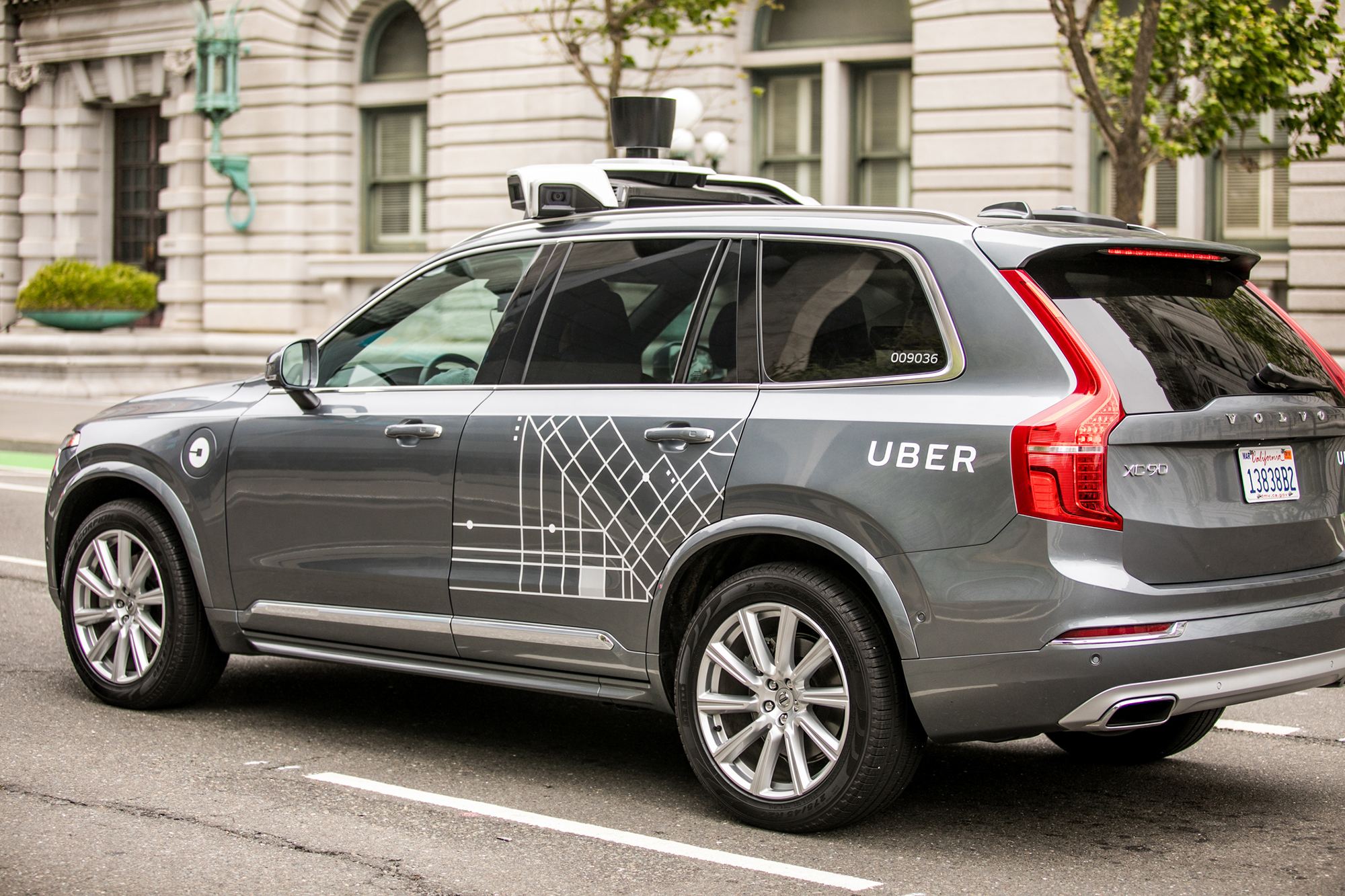
A self-driving Uber Volvo XC90, San Francisco.

You could still imagine wanting to dig into the numbers for self-driving cars’ safety records, even though they’re heterogeneous and have people playing the mechanical turk. If you did, you’d be sorely disappointed. None of the manufacturers publish any of their data publicly when they don’t have to. Indeed, our glimpses into data on autonomous vehicles from these companies come from two sources: internal documents that get leaked to the press and carefully selected statistics from the firms’ PR departments. The state of California, which requires the most rigorous documentation of autonomous vehicles anywhere, is another source, but because Tesla’s car isn’t autonomous, and because Uber refused to admit that its car is autonomous to the California DMV, we have no extra insight into these two vehicle platforms.

Nonetheless, Tesla’s Autopilot has three fatalities now, and all have one thing in common — all three drivers trusted the lane-holding feature well enough to not take control of the wheel in the last few seconds of their lives. With Uber, there’s very little autonomous vehicle performance history, but there are leaked documents and a pattern that makes Uber look like a risk-taking scofflaw with sub-par technology that has a vested interest to make it look better than it is. That these vehicles are being let loose on public roads, without extra oversight and with other traffic participants as safety guinea pigs, is giving the self-driving car industry and ideal a black eye.

If Tesla’s and Uber’s car technologies are very dissimilar, the companies have something in common. They are both “disruptive” companies with mavericks at the helm that see their fates hinging on getting to a widespread deployment of self-driving technology. But what differentiates Uber and Tesla from Google and GM most is, ironically, their use of essentially untrained test pilots in their vehicles: Tesla’s in the form of consumers, and Uber’s in the form of taxi drivers with very little specific autonomous-vehicle training. What caused the Tesla and Uber accidents may have a lot more to do with human factors than self-driving technology per se.

You can see we’ve got a lot of ground to cover. Read on!

Continue reading “Self-Driven: Uber And Tesla”