Creating A PCB In Everything: Protel Autotrax

Protel Autotrax is a PCB design tool first released for DOS in the mid-80s. Consider this a look at the history of PCB design software. I’m not recommending anyone actually use Protel Autotrax —  better tools with better support exist. But it’s important to know where we came from to understand the EDA tools available now. I’m rolling up my sleeves (about 30 years worth of rolling) and building our standardized test PCB with the tool. Beyond this, I suggest viewing EEVblog #747, where [Dave] digs into one of his old project, Borland Pascal, and Protel Autotrax.

This is the continuation of a series of articles demonstrating how to Create A PCB In Everything. In this series, we take a standard reference circuit and PCB layout — a simple ATtiny85 board — and build it with different PCB design tools. We’ve already covered Eagle in this series. We learned Fritzing is a joke for PCB design, although it is quite good for making breadboard graphics of circuits. Each of these tutorials serves as a very quick introduction to a specific PCB design tool. Overall, this series provides for a comparison between different PCB design tools. Let’s dig into Protel Autotrax.

A short history of Protel, Altium, and Autotrax

The company we know as Altium today was, for the first fifteen years of its existence, known as Protel. Back in the day, PCB design on a computer required a dedicated workstation, a lot of hardware, light pens, and everything was extraordinarily expensive. Protel was a reaction to this and the first product, Autotrax, was a DOS-based program that brought PCB design to the PC. A freeware version of Autotrax is still available on the Altium website and can be run from inside a DOS virtual machine or DOSBox.

Interestingly, Protel Autotrax is not the only PCB design software named Autotrax. A company called DEX 2020 has also has a PCB design software called AutoTRAX. This is weird, confusing, and I can’t figure out how this doesn’t violate a trademark. If anyone has any insight to what the Protel / Altium legal department was doing a few decades ago, your wisdom is welcome in the comments.

Continue reading “Creating A PCB In Everything: Protel Autotrax”
My Life In The Connector Zoo

“The great thing about standards is that there are so many to choose from.” Truer words were never spoken, and this goes double for the hobbyist world of hardware hacking. It seems that every module, every company, and every individual hacker has a favorite way of putting the same pins in a row.

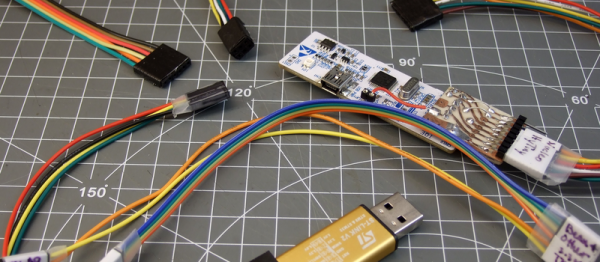
We have an entire drawer full of adapters that just go from one pinout to another, or one programmer to many different target boards. We’ll be the first to admit that it’s often our own darn fault — we decided to swap the reset and ground lines because it was convenient for one design, and now we have two adapters. But imagine a world where there was only a handful of distinct pinouts — that drawer would be only half full and many projects would simply snap together. “You may say I’m a dreamer…”

This article is about connectors and standards. We’ll try not to whine and complain, although we will editorialize. We’re going to work through some of the design tradeoffs and requirements, and maybe you’ll even find that there’s already a standard pinout that’s “close enough” for your next project. And if you’ve got a frequently used pinout or use case that we’ve missed, we encourage you to share the connector pinouts in the comments, along with its pros and cons. Let’s see if we can’t make sense of this mess.

Continue reading “My Life In The Connector Zoo”

Resurrection — Pressing WW2 Radio Equipment Back Into Service

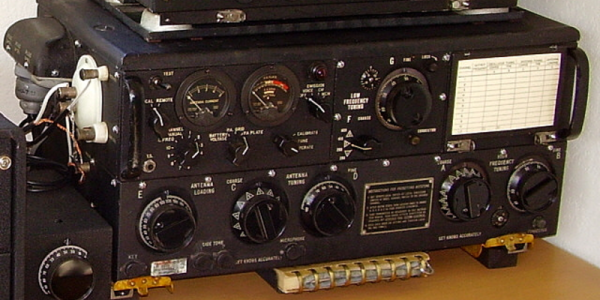
Mass production was key to survival during the Second World War. So much stuff was made that there continues to be volumes of new unpacked stuff left over and tons of used equipment for sale at reasonable prices. Availability of this war surplus provided experimenters in the mid 20th century with access to high performance test equipment, radio equipment, and high quality components for the first time.

Even today this old stuff continues to motivate and inspire the young generations because of its high build quality, unique electro-mechanical approaches, and overall innovative designs which continue to be relevant into the 21st century. In this post we will show you how to get started in the hobby of resurrecting WW2 radio equipment and putting it back on the air.

Continue reading “Resurrection — Pressing WW2 Radio Equipment Back Into Service”

Perceptrons In C++

Last time, I talked about a simple kind of neural net called a perceptron that you can cause to learn simple functions. For the purposes of experimenting, I coded a simple example using Excel. That’s handy for changing things on the fly, but not so handy for putting the code in a microcontroller. This time, I’ll show you how the code looks in C++ and also tell you more about what you can do when faced with a more complex problem.

Continue reading “Perceptrons In C++”

Crossing Wheatstone Bridges

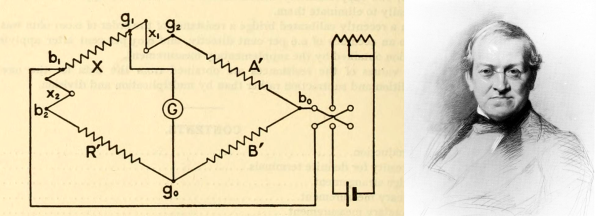
The Wheatstone bridge is a way of measuring resistance with great accuracy and despite having been invented over 150 years ago, it still finds plenty of use today. Even searching for it on Hackaday brings up its use in a number of hacks. It’s a fundamental experimental device, and you should know about it.

Continue reading “Crossing Wheatstone Bridges”

Fictional Hacking: Michael Westen

I don’t know if it is true or not today, but in fiction, spies depend on lots of high-tech gadgets. I do know that during World War II, the various secret services like the OSS and the SOE did have gadgets like secret transmitters and concealed weapons. But, like [James Bond’s] grenade-launching ink pen, to [Maxwell Smart’s] shoe phone, those gadgets came from some organized lab. (When you watch the video below, remember that at that time, a personal phone going off in a theater was unknown as cell phones were years in the future.)

Continue reading “Fictional Hacking: Michael Westen”

A Realistic Look At The Death Of A Standard

A bit ago I wrote an article called, “Death To The 3.5mm Audio Jack, Long Live Wireless.” A few readers were with me, a few were indifferent, many were vehemently against me, and there was a, not insubstantial, subset in a pure panic about the potential retirement of a beloved connector. Now I used a lot of opinionated language dispersed with subjectively evaluated facts to make a case that the connector is out. Not today maybe, but there is certainly a tomorrow not so far off where there are more wireless headsets at the electronics store than wired ones.

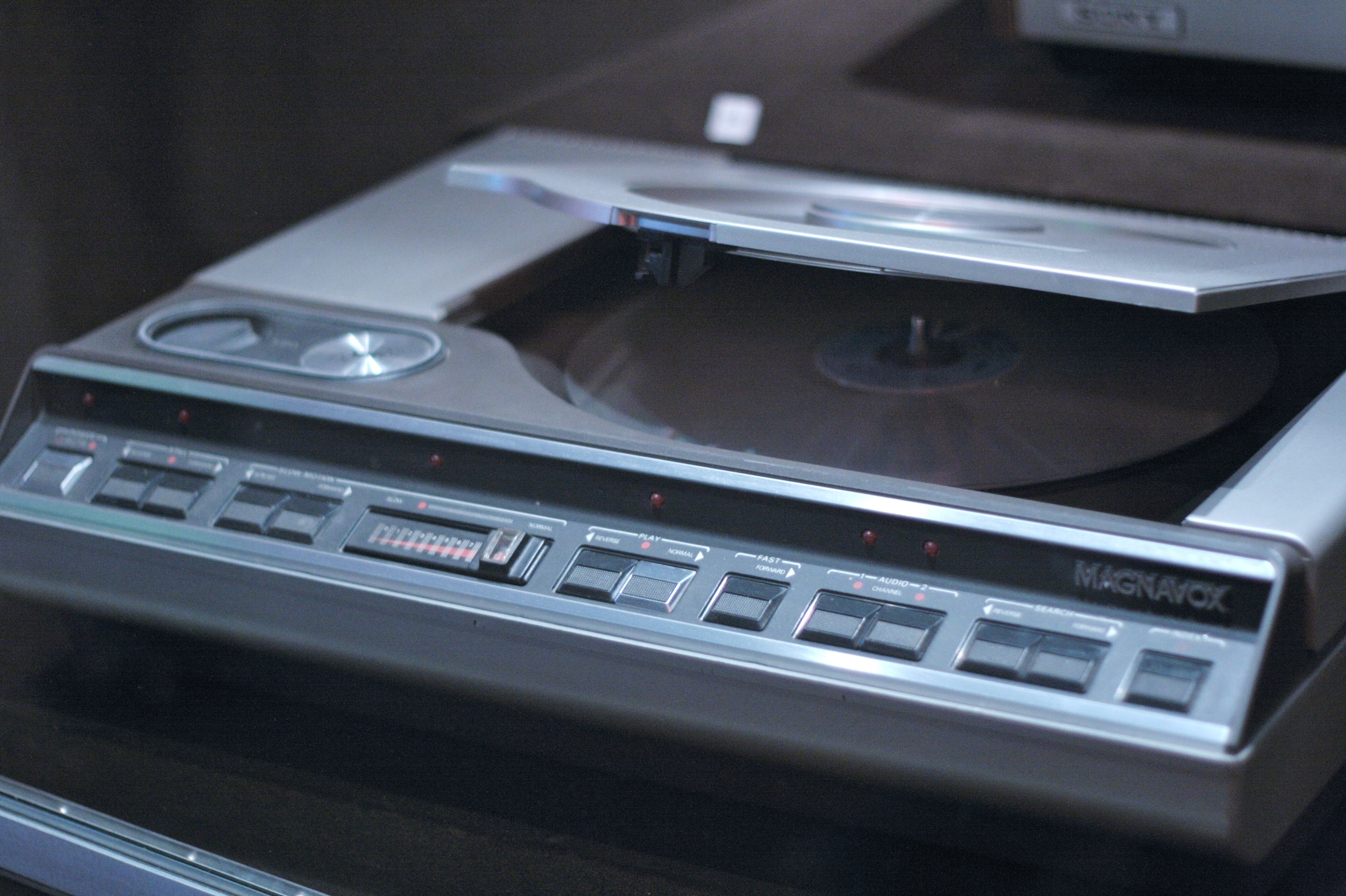
I think I saw a laserdisc player in operation exactly once.
I think I saw a Laserdisc player in operation exactly once.

So what happens when a standard dies? What happens when technology starts to move on? Let’s take a look at the CD-ROM.  Continue reading “A Realistic Look At The Death Of A Standard”