Hackaday logo carved in MDF

Live Look At Taktia Augmented Power Tool And Carbide 3D Mill

There were so many things to see at Maker Faire that the booths spilled out of the buildings and into various tents on the grounds. One of the most interesting tents was packed with tables showing off CNC machines and that’s where we ran into two that are familiar, and still amazing.

First up is the handheld CNC router which we saw all the way back in 2012. It’s a spectacular piece of tech that adds a base to a handheld router. The base gives the tool a touchscreen system, the ability to precisely track it’s location, and adjustment motors to move the cutting bit in order to correct for imperfections in operator movements. It’s really amazing and we are happy to see they have formed a company called Taktia around the concept and are heading for crowd funding soon.

The second half of the video shows off the Nomad CNC mill which we covered at the end of April. Carbide 3D had a hugely successful (more than 10x the goal) Kickstarter that they tried to blame on the support of Hackaday readers. It’s a no-brainer that this machine is the one to watch, as even our hacked camera work doesn’t lose the fact that it can produce rock-solid results.

Arduino Zero Hardware Is Not Just For Beginners

We stopped by the Atmel booth at Maker Faire to gawk at the pre-production Arduino Zero boards they were showing off. [Bob] gave us a rundown of everything the new board offers, and it’s better than we imagined when we heard about it last week.

I may be an odd egg in that I don’t like to use an IDE when developing uC firmware. Generally I rock the text editor and a makefile for 8-bit, adding OpenOCD and GDB when working with ARM. I probably shouldn’t be surprised that there is already OpenOCD support (and by extension GDB support) for the Arduino Zero. In fact, that’s how the Arduino IDE flashes the board. This should have been obvious since the board is really just a breakout for the SAM D21 chip which is already supported.

Riffing on the thought of this being a breakout board, we think they did a pretty good job. There are two USB connectors; one let you access the board as a device or a host while the other connects the debugging hardware. If you’ve never used an On Chip Debugger before it’ll change your life so do give it a try. When you do move past the initial prototyping phase of your project you can still use the Zero as a debugging tool. There’s an unpopulated 10-pin header (not sure if the small pitch header comes with it or not) which can be used to interface with a target board. [Bob] also spent some time talking about the configurable 6-pin header which allows you to choose from a range of hardware protocols (SPI, TWI, etc.).

Unfortunately we still don’t have info on the availability timeframe or pricing information. There was one hiccup with this pre-production run (two signals were swapped on the PCB) and they need to spin another board, populate, and QA before they can green-light the final product.

Editorial Note: Atmel advertises on Hackaday but this video and post are not a product of that relationship. Hackaday doesn’t post paid content.

ISEE-3: Ready To Come Home

ISEE

The team working to reboot the ISEE-3 satellite hurtling towards an August encounter with Earth is hard at work. They’ve put up a crowdfunding page, and now that they’re completely funded (don’t stop donating, btw), they’re starting to go deeper into the waters that will allow them to capture a forgotten satellite.

The project put up a status report going over what they’ve accomplished so far, and what work has yet to be done. For a few months now, they knew both transmitters aboard the craft were operational, but they were not sending telemetry. The team has gone through the documentation, came up with a set of commands, and are currently en route to Arecibo to transmit those commands.

Two ground station transmitters are being constructed, one specifically built to be installed at Arecibo for this application. The other is a portable, self-contained 700 watt transmitter that will be used at the official ISEE-3 ground station in Morehead State University in Kentucky.

With transmitters taken care of and receiving handled by an SDR from Ettus Research, a lot of work has focused on the command and telemetry systems.  In 1978, the user interface for commands and telemetry was primitive to say the least. The team is now working on a system built-in Labview that’s much easier on the eyes than the vintage text terminal screens.

So far, signals from ISEE-3 are planned to be received at Arecibo, Morehead State, and Bochum observatory in Germany. This will give the team extremely good coverage for most of a day, and there are other ground stations in California that will extend the time the team is able to communicate with ISSE-3 each day by a few hours.

There’s still a lot of work to be done; the team really doesn’t know what systems are still operating, although most of them did make it 20 years with only one fault. In the next few days, we’ll all get to see if this satellite will be up to the task of coming back home to Earth. If everything goes to plan, ISEE-3 will be on track towards a 17 hour burn to put it on the correct trajectory some time in mid June.

Find The Giant Jolly Wrencher At Maker Faire This Weekend

scaled_DSC_0038

Check it out, I made something really geeky for Maker Faire. If you’re going to be in San Mateo this weekend for Maker Faire Bay Area, watch for the floating Skull and Wrenches. I won’t be alone, and my compatriots and I will be loaded down with stuff to give away to those who ask for it. If you are hell-bent on finding us, just check this Twitter list as we’ll frequently be tweeting our locations and exploits.

Want to grab a beer with some other Hackaday folk? Even if you’re not attending the Faire, you can take part in the festivities. We’re descending on O’Neil’s Irish Pub on Saturday night. You might want to let us know you’re coming. You can show up unannounced, but we can’t guarantee that you’ll be able to squeeze into the 80-person-pub. If we have way too many hackers overflowing into the street we’ll probably split the party up and go bar hopping. The place is apparently right next to a train stop for your traveling convenience. We just hope to keep things tame enough to make it to Maker Faire again on Sunday morning, but we can’t guarantee that either ;-)

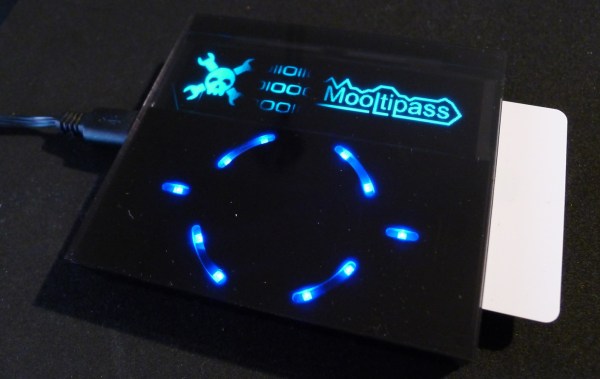
OLED display, blue LED and Smartcard

Developed On Hackaday: License Incompatibilities And Project State

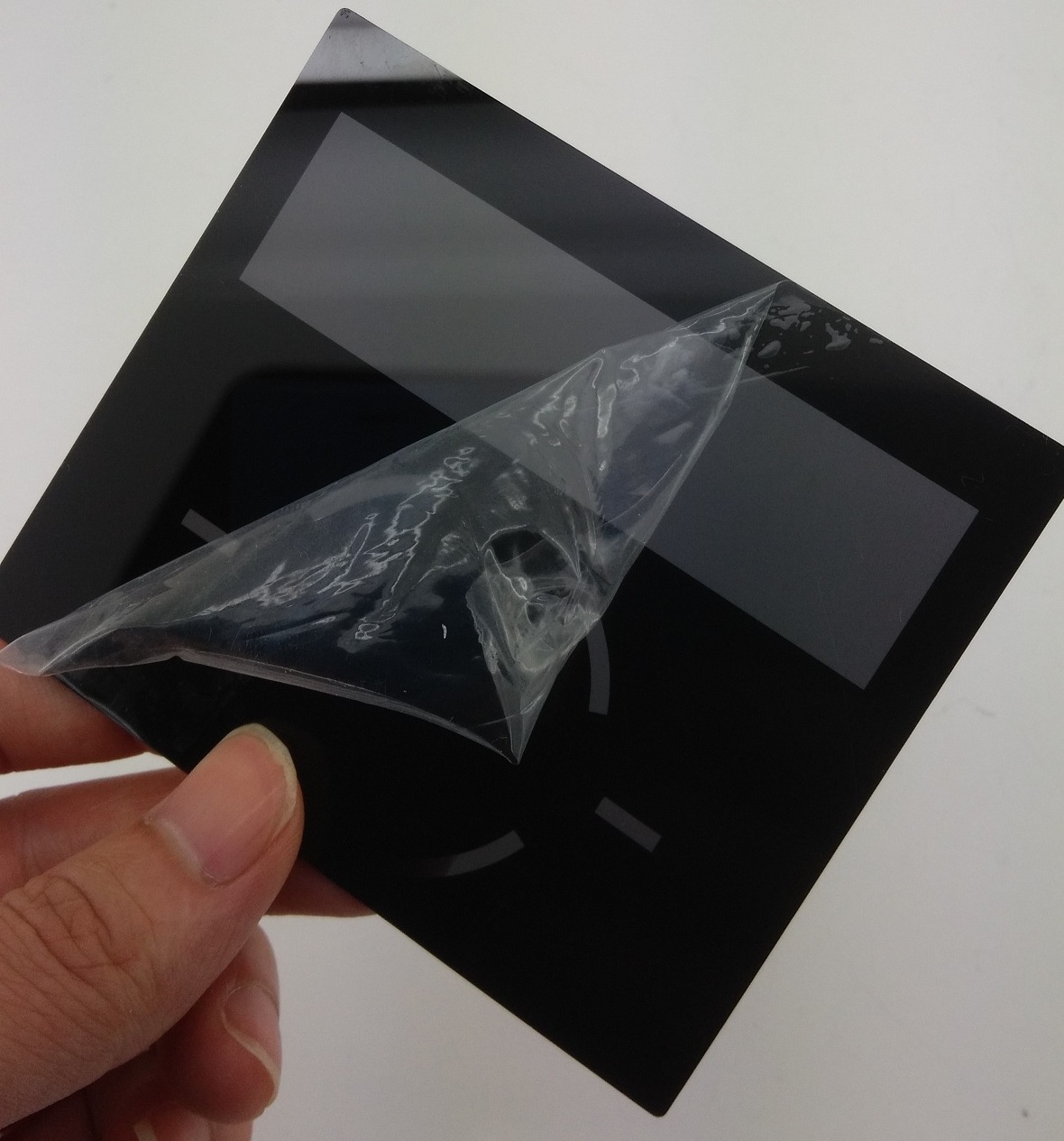
mooltipass top pcb

It has been a while since we wrote an article about our ongoing offline password keeper project, aka the Mooltipass. Our last post was asking our dear readers to vote for their favorite card art, so what have we been doing since then?

For the last few weeks we’ve mostly been improving our current PCBs and case design for the production process to go smoothly. The final top PCB shown above has been tweaked to improve his capacitive touch sensing capabilities, you may even see a video of the system in action in the Mooltipass project log on hackaday.io. We’ve also spent some time refining the two most popular card art designs so our manufacturers may print them correctly. We’ll soon integrate our updated USB code (allowing the Mooltipass to be detected as a composite HID keyboard / HID generic) into the main solution which will then allow us to work on the browser plugin.

It’s also interesting to note that we recently decided to stop using the GPL-licensed avrcryptolib. Our current project is CDDL licensed, allowing interested parties to use our code in their own project without forcing them to publish all the remaining code they created. The GPL license enforces the opposite, we therefore picked another AES encryption/decryption implementation. This migration was performed and checked by our dedicated contributor [Miguel] who therefore ran the AES NESSIE / CTR tests and checked their output, in less than a day.

We’re about to ship the first Mooltipass prototypes to our active contributors and advisers. A few weeks later we’ll send an official call for beta testers, just after we shown (here on Hackaday) what the final product looks like. Don’t hesitate to ask any question you may have in the comments section, you can also contact us on the dedicated Mooltipass Google group.

Get Your Uni, School Or College Involved In The Hackaday Prize

We’ve been busy contacting design tech and electrical engineering education departments to tell them about The Hackaday Prize, but there are only so many of us and we could do with your help to get the word out.

Are you excited about The Hackaday Prize? Do you think more people at your school should know about it so they can take part? Either way, please help us help them by emailing prize@hackaday.com to let us know what program coordinators, student group, or other people we should contact. If appropriate, we have a bunch of promotional materials we would like to send out to some of these awesome hackers.

You can also help us by telling your hacker designer friends, posting about The Hackaday Prize on college social media (#HackadayPrize), or letting the student newspaper know. We want to get as many universities, colleges and high schools involved as possible. Many senior year project ideas would make great starting points for THP entries, and we want to make sure students take up this opportunity to show off what they can do (and hopefully win some stuff in the process). This makes a great summer project, and looks great when applying for colleges or jobs in the future.

Remember you have until August to get your entry in, but the sooner you post it on Hackaday Projects, the sooner you can potentially start winning rewards. We have hundreds of tshirts, stickers, patches, posters and other swag up for grabs on the way to winning The Hackaday Prize.