Minimal Computer And Operating System: One Button, One LED

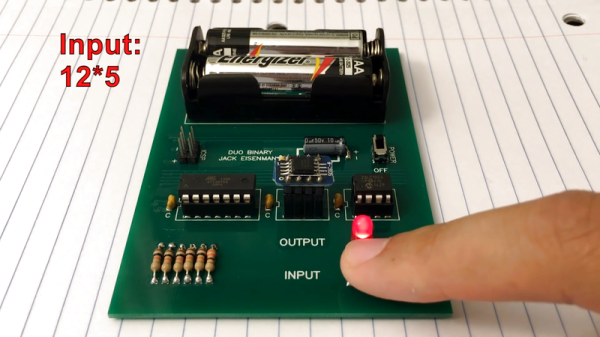
DUO BINARY is a very, very small computer system in every possible sense. It runs on an ATtiny84, which has even got “tiny” in its name. The user interface is a single button for data entry and a single LED for feedback, making this binary keyboard look frivolously over-complicated. It uses a devilish chimera of Morse code and a truncated ASCII to enter data, and the LED blinks the same back at you.

We’re guessing that [Jack Eisenmann] is the only person in the world who can control this thing, and you can watch him doing so in the video embedded below. Continue reading “Minimal Computer And Operating System: One Button, One LED”

Certification For Open Source Hardware Announced

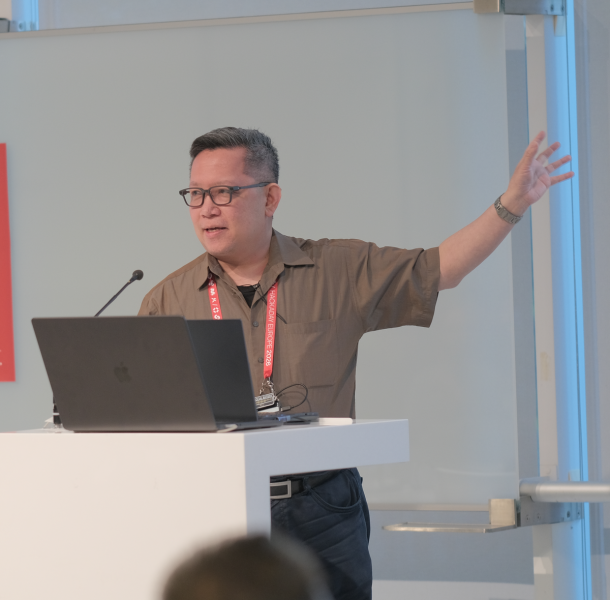
Today at the Open Hardware Summit in Portland, Alicia Gibb and Michael Weinberg of the Open Source Hardware Association (OSHWA) launched the Open Source Hardware Certification program. It’s live, and you can certify your own hardware as Open Hardware right now.

What Is Open Source Hardware?

Open Source Hardware can’t be defined without first discussing open source software. At its very core, open source software is just a copyright hack, enabled by a worldwide universal computer network. The rise of open source software is tied to the increasing ease of distributing said software, either through BBSes, Usenet, and the web. Likewise, Open Source Hardware is tied to the ease of distributing, modifying, and building hardware.

In the 1980s, there were no services that could deliver a custom circuit board to anywhere on the planet for a dollar per square inch. When open software began, CNC machines were expensive tools, now you can build a very good machine for just a week’s wages. We are currently living at the dawn of Open Source Hardware, enabled by the creation of Open Source design tools that have themselves been used to create physical tools. Inexpensive 3D printers, open source oscilloscopes, circuit board plotters, and the entire hackerspace movement are as revolutionary as the Internet. These devices and the Internet are the foundations for Open Hardware and software, respectively.  The objections to why hardware is incompatible with Open Source no longer apply and small-scale manufacturing techniques are only going to get better.

Continue reading “Certification For Open Source Hardware Announced”

Tetris In 446 Bytes

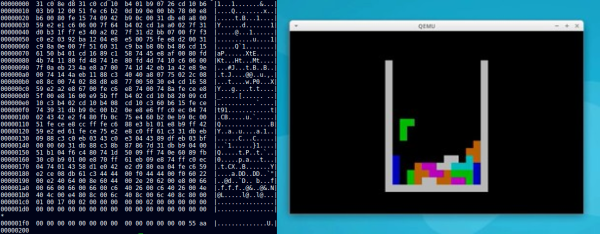
You want to play Tetris. You want to play Tetris on any operating system. You want to play on an old IBM PC, you want to play Tetris on a new MacBook. You want a Tetris that’ll fit inside the master boot record of a disk. You want Tetris as an operating system. You want TetrOS.

Or maybe you don’t, but it’s a fantastic piece of work, and we love tiny demos. Check it out below the break. Or read through the source code in the banner image.

Continue reading “Tetris In 446 Bytes”

Choosing A ‘Scope: Examining Bandwidth

A few weeks ago I asked the Hackaday community for some help and advice in buying a new budget oscilloscope. Thank you very much to those of you who responded both here online and in person among my friends closer to home. I followed the overwhelming trend in the advice I received, and bought myself a Rigol DS1054z, an instrument with which I am very happy. It’s a nominally a 50 MHz scope, but there’s a software hack that can bring it up to 100 MHz. How fast can it go?

My trusty Cossor, its 2 MHz bandwidth as yet unverified.

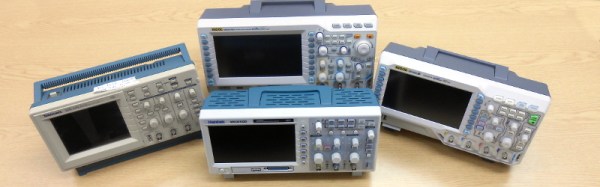
This question became a mini scope-shootout after a conversation with my Hackaday colleague [Elliot] about measuring oscilloscope bandwidth, and then my fellow Oxford Hackspace members producing more than one scope for comparison. You know who you are, thank you. I found myself with ready access to several roughly equivalent models and one very high-end one in specification terms representing different strata of test equipment manufacture, and with the means to examine their performance.

Continue reading “Choosing A ‘Scope: Examining Bandwidth”

The Art Of Making A Nixie Tube

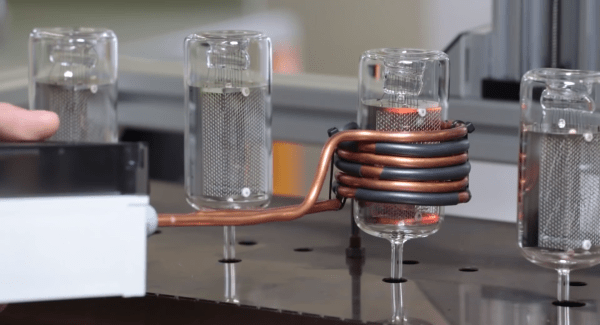
Three years ago we covered [Dalibor Farnby]’s adventures in making his own Nixie tubes. Back then it was just a hobby, a kind of exploration into the past. He didn’t stop, and it soon became his primary occupation. In this video he shows the striking process of making one of his Nixie tubes.

Each of his tubes get an astounding amount of love and attention. An evolution of the process he has been working on for five years now. The video starts with the cleaning process for the newly etched metal parts. Each one is washed and dried before being taken for storage inside a clean hood. The metal parts are carefully hand bent. Little ceramic pins are carefully glued and bonded. These are used to hold the numbers apart from each other. The assembly is spot welded together.

In a separate cut work begins on the glass. The first part to make is the bottom which holds the wire leads. These are joined and then annealed. Inspection is performed on a polariscope and a leak detector before they are set aside for assembly. Back to the workbench the leads are spot welded to the frame holding the numbers.

It continues with amazing attention to detail. So much effort goes into each step. In the end a very beautiful nixie tube sits on a test rack, working through enough cycles to be certified ready for sale. The numbers crisp, clear, and beautiful. Great work keeping this loved part of history alive in the modern age.

Continue reading “The Art Of Making A Nixie Tube”

Glitching USB Firmware For Fun

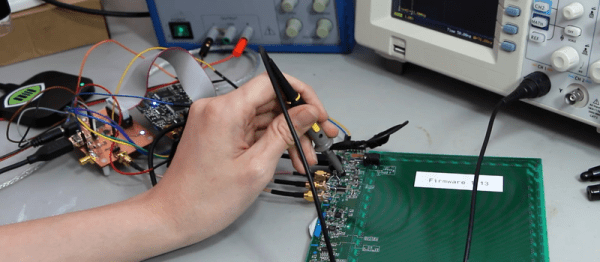
[Micah Elizabeth Scott], aka [scanlime], has been playing around with USB drawing tablets, and got to the point that she wanted with the firmware — to reverse engineer, see what’s going on, and who knows what else. Wacom didn’t design the devices to be user-updateable, so there aren’t copies of the ROMs floating around the web, and the tablet’s microcontroller seems to be locked down to boot.

With the easy avenues turning up dead ends, that means building some custom hardware to get it done and making a very detailed video documenting the project (embedded below). If you’re interested in chip power glitching attacks, and if you don’t suffer from short attention span, watch it, it’s a phenomenal introduction.

Continue reading “Glitching USB Firmware For Fun”

How To Get Started With The ESP32

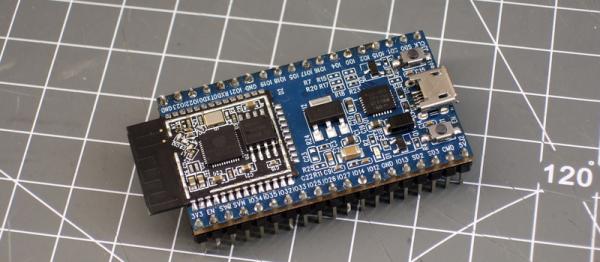
ESP32 is the hottest new wireless chip out there, offering both WiFi and Bluetooth Low Energy radios rolled up with a dual-core 32-bit processor and packed with peripherals of every kind. We got some review sample dev boards, Adafruit and Seeed Studio had them in stock for a while, and AI-Thinker — the company that makes the most popular ESP8266 modules — is starting up full-scale production on October 1st. This means that some of you have the new hotness in your hands right now, and the rest of you aren’t going to have to wait more than a few more weeks.

As we said in our first-look review of the new chip, many things are in a state of flux on the software side, but the basic process of writing, compiling, and flashing code to the chip is going to remain stable. It’s time to start up some tutorials!

Continue reading “How To Get Started With The ESP32”