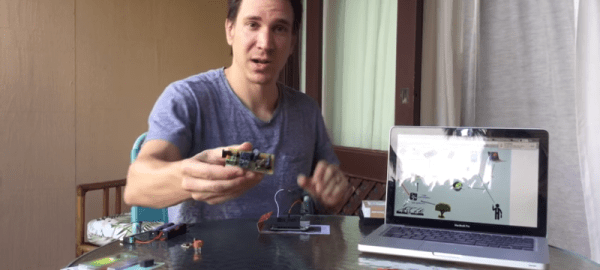
Rice is cultivated all over the world in fields known as rice paddies and it is one of the most maintenance intensive crops to grow. The rice paddy itself requires a large part of that maintenance. It is flooded with water that must be kept at a constant level, just below the height that would keep rice seedlings from growing but high enough to drown any weeds that would compete with the rice stalks for nutrients. This technique is called continuous flooding and a big part of the job of a rice farmer is to inspect the rice paddy every day to make sure the water levels are normal and there are no cracks or holes that could lead to water leakage.
This process is labor intensive, and the technology in use hasn’t changed much over the centuries. Most of the rice farmers in my area are elders with the approximate age of 65-70 years. For these hard working people a little bit of technology can make a big difference in their lives. This is the idea behind TechRice.
On Thursday The Guardian published information linking Samsung to the current Volkswagen emissions fiasco. Samsung is accused of installing a ‘defeat device’ on some televisions that uses less energy during official testing conditions than would be found during real-world use.
“The apparent discrepancy between real-world and test performance of the TVs is reminiscent of the VW scandal that originated in the US last week,” wrote [Arthur Nelson] of The Guardian. This report was based on an unpublished lab test by the research group ComplianTV which found discrepancies between real-world and test performance when measuring power consumption. According to ComplianTV, this is due to the ‘motion lighting’ setting included in some Samsung TVs. Samsung vehemently denies this ‘motion lighting’ saying that it is not a method of cheating the consumption tests.
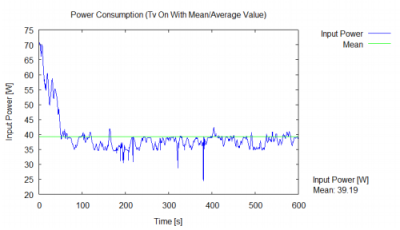
Not one to let a good controversy go to waste, the BBC reports a Samsung TV will reduce its power draw shortly after the start of the test. A graph of the power draw of a TV – not explicitly a Samsung television – demonstrating this functionality was found in a PDF of a ComplianTV workshop from last year labeled as, “Typical results recognized during testing” with a decrease in power consumption being a recognized behavior when the appropriate test video was found.
This is not the first time ComplianTV tested a Samsung TV equipped with a ‘motion lighting’ setting. Earlier this year, ComplianTV measured the power consumption of the Samsung UE55H8090 television, and found this TV was compliant with energy regulations. Incredibly, all Samsung TVs listed on the ComplianTV database were found to be compliant with the relevant energy directives.
Samsung’s rebuttal to the Guardian article states the ‘motion lighting’ technology is an ‘out of the box’ feature, active in both the lab and at home. Unlike Volkswagen’s ‘defeat device’ for their diesel engines which is only active during emissions testing, the ‘motion lighting’ technology is active whenever it is enabled in the TV’s settings menu.
Anyone in the US who has shopped for a television in the last four years will have noticed cost-per-year estimates for operating the appliance. This is only an issue if the televisions don’t actually meet that advertised benchmark. Until we see a published study we’re raising our eyebrows at The Guardian, easily one of the most trusted journalistic institutions on the planet, and reserving judgement for Samsung.
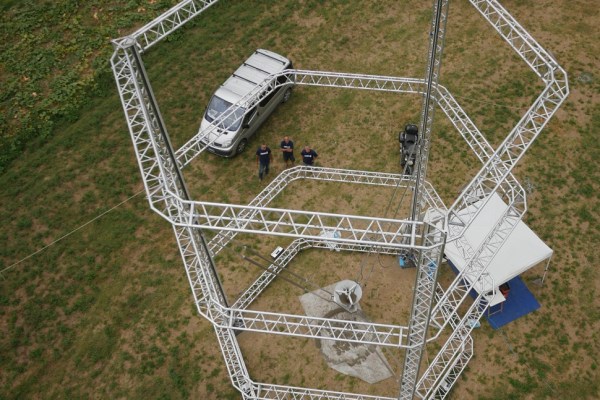
[Massimo Moretti] has a big idea – to build housing on the cheap from locally sourced materials for a burgeoning world population. He also has a background in 3D printing, and he’s brought the two concepts together by building a 12 meter tall delta-bot that can print a house from clay.
The printer, dubbed Big Delta for obvious reasons, was unveiled in a sort of Burning Man festival last weekend in Massa Lombarda, Italy, near the headquarters of [Moretti]’s WASProject. From the Italian-language video after the break, we can see that Big Delta moves an extruder for locally sourced clay over a print area of about 20 square meters. A video that was previously posted on WASProject’s web site showed the printer in action with clay during the festival, but it appears to have been taken down by the copyright holder. Still, another video of a smaller version of Big Delta shows that clay can be extruded into durable structures, so scaling up to full-sized dwellings should be feasible with the 4 meter delta’s big brother.
Clay extrusion is not the only medium for 3D printed houses, so we’ll reserve judgment on Big Delta until we’ve seen it print a livable structure. If it does, the possibilities are endless – imagine adding another axis to the Big Delta by having it wheel itself around a site to print an entire village.
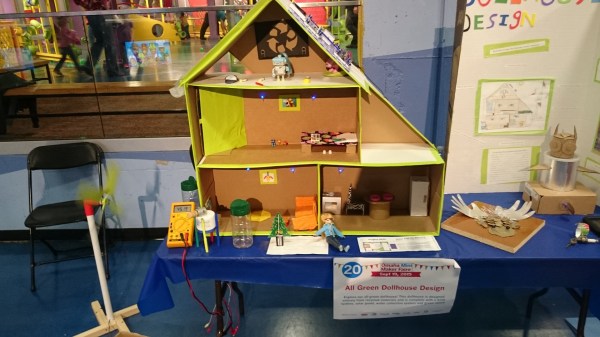
A young maker named [Allie] drew a lot of attention at the 2nd annual Omaha Mini Maker Faire. Her booth was full of the various creations she has designed and built herself throughout the course of her short life. The biggest draw was her green design dollhouse, which focuses on environmentally friendly living. With the exception of the LEDs lighting the interior, some tape, and the requisite bit of hot glue, the entire structure and its contents were made from recycled materials.
The cardboard structure features a kitchen, living room, bedroom, bathroom, and attic. Every piece of furniture and all the decorations are made from salvaged materials and packaging. One side of the roof holds a Snap Circuits board with a solar panel that powers some blue LEDs on the bedroom wall. [Allie] poured water down the other side of the roof to demonstrate the rain water collection system. The house’s rain barrel was made from a grated parmesan cheese container, which is perfectly designed for the airline tubing running into it from the recycled plastic guttering.
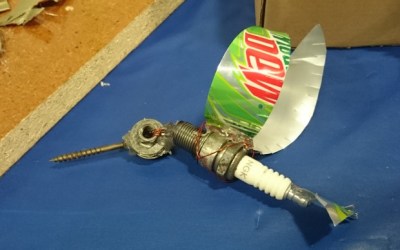
One of [Allie]’s other projects is a disagreeable owl fashioned from cardboard and a salvaged canister. Hidden away beneath the owl’s platform lies a simple gear system attached to a key on the front. Turning the key causes the owl’s head to swivel back and forth. We tried to make it spin all the way around, but the full range of motion is about 270 degrees. She also brought Mountain Dew, a hummingbird model made from a spark plug and other metal bits and bobs, including a pair of soda can wings.
In addition to her crafty skills, [Allie] is one well-spoken tween. She was more than happy to discuss her creations in detail to anyone who would listen, which included at least two local journalists and this impressed reporter. We learned through a bit of light research that a robot [Allie] built a few years ago inspired a British toy company to produce a new doll, the Robot Girl Lottie. She’s an inspiration to makers of all ages.
A while ago, [Joshua Young] had a conversation with an environmental scientist. There aren’t many government-funded pollution monitoring stations around Texas, but there are a lot of well-off home owners associations in Houston that have the sensors to collect the data. Air quality monitoring is important, and more data is usually better, and without these HOA’s providing the data for free, these environmental scientists wouldn’t have the data to do their job.
The system [Joshua] is building uses a suite of air quality sensors to measure sulfur dioxide, carbon monoxide, nitrogen oxides, ozone and particulate matter. These sensors connect to the Internet through either an ESP8266 WiFi module or a LoRa radio module, push the data onto the cloud, and let the entire world know what the air quality is.
Using tens of thousands of individual base stations to gather data has been done before; Weather Underground uses ten times as many weather stations than the National Weather Service to get better weather tracking resolution. Pollution sensors aren’t normally a part of a weather station, and with [Joshua]’s project, the environmental scientists tracking this data will hopefully get the data they need.
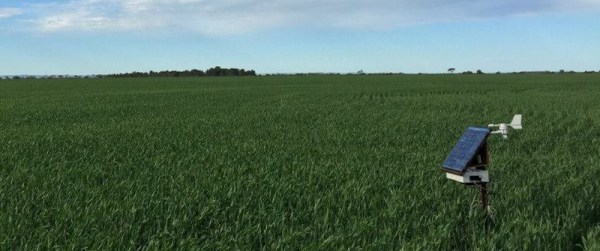
For their entry to the Hackaday Prize, the team behind SentriFarm is solving a big problem for farmers in Australia. Down there, farms are big, and each paddock must be checked daily. This means hours of driving every day. Surely a bunch of sensors and some radio links would help, right?
This is the idea behind SentriFarm: a ground station that reads air temperature, atmospheric pressure, wind speed and direction, rain, light, UV and smoke, and relays that back to a central node. Yes, it’s basically a wireless weather station, but the sheer distance these sensors must transmit adds some interesting complexity.
The SentriFarm team is hoping to get about 10km out of their radio system, and they’re using a long-range, low power radio module to do it. This data is received by the ubiquitous radio towers found on Australian farms and sent to a database on the farm’s network. This data can be combined with data from the local weather service to get an accurate picture of exactly what’s happening in each paddock.
You can check out the SentriFarm project video below.
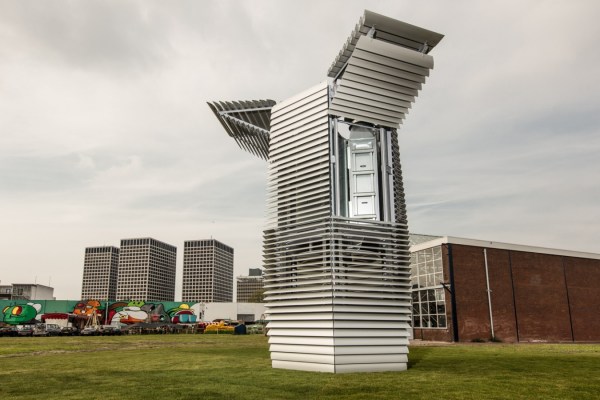
Wait what? The Smog Free Project by [Daan Roosegaarde] is another one of those head scratchers where somehow art, engineering, and a designer collide — to produce what looks like an actual working concept…?
The oddly shaped white tower is essentially a massive air purifier. It’s in Rotterdam this week after over 3 years of research and development. It actually scrubs the air, removes contaminates, and then compresses those particles down into small cubes, or “gem stones”. Going full tilt, it will clean approximately 30,000 cubic meters of air per hour. Continue reading “Turning Smog Into Gemstones And Pollution Awareness”→



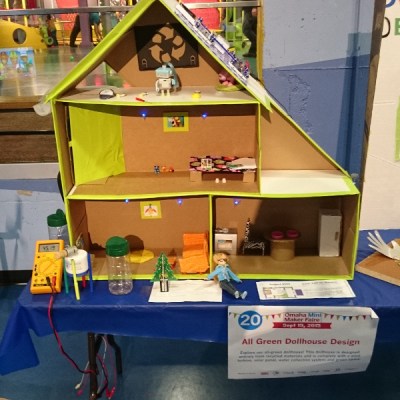 The cardboard structure features a kitchen, living room, bedroom, bathroom, and attic. Every piece of furniture and all the decorations are made from salvaged materials and packaging. One side of the roof holds a Snap Circuits board with a solar panel that powers some blue LEDs on the bedroom wall. [Allie] poured water down the other side of the roof to demonstrate the rain water collection system. The house’s rain barrel was made from a grated parmesan cheese container, which is perfectly designed for the airline tubing running into it from the recycled plastic guttering.
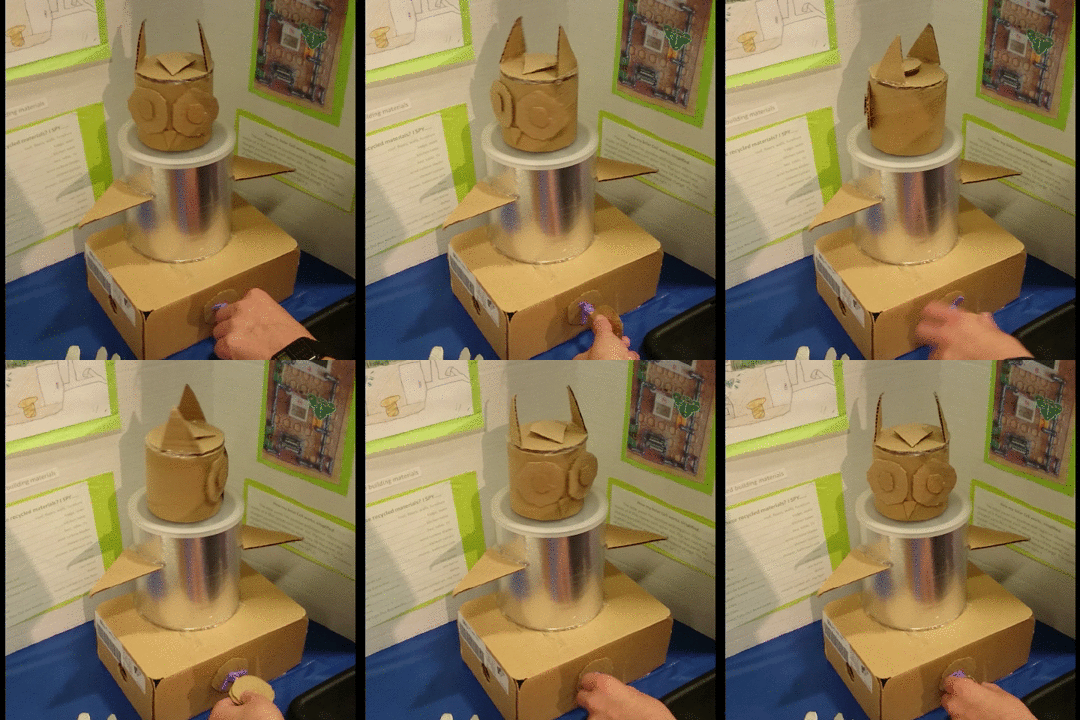 One of [Allie]’s other projects is a disagreeable owl fashioned from cardboard and a salvaged canister. Hidden away beneath the owl’s platform lies a simple gear system attached to a key on the front. Turning the key causes the owl’s head to swivel back and forth. We tried to make it spin all the way around, but the full range of motion is about 270 degrees. She also brought Mountain Dew, a hummingbird model made from a spark plug and other metal bits and bobs, including a pair of soda can wings.
 In addition to her crafty skills, [Allie] is one well-spoken tween. She was more than happy to discuss her creations in detail to anyone who would listen, which included at least two local journalists and this impressed reporter. We learned through a bit of light research that a robot [Allie] built a few years ago inspired a British toy company to produce a new doll, the