This excellent content from the Hackaday writing crew highlights recurring topics and popular series like Linux-Fu, 3D-Printering, Hackaday Links, This Week in Security, Inputs of Interest, Profiles in Science, Retrotechtacular, Ask Hackaday, Teardowns, Reviews, and many more.
When we last left the post office, they had implemented OCR to read even the sloppiest of handwriting. And to augment today’s 99% accuracy rate, there’s a center full of humans who can decipher the rest of those messy addresses with speed and aplomb. Before that, we took a look at many of the machines that make up the automated side of the post office’s movements. But what was being done to improve the customer experience during all of this time?
Quite a bit, as it turns out. In this installment, we’ll take a look at the development of vending machines and programs like Speed Mail, Missile Mail, and V-Mail (no, not voicemail!) as they relate to enhanced customer service over the years.
Our homes are full of technological marvels, and, as a Hackaday reader, we are betting you know the basic ideas behind a microwave oven even if you haven’t torn one apart for transformers and magnetrons. So we aren’t going to explain how the magnetron rotates water molecules to produce uniform dielectric heating. However, when we see our microwave, we think about two things: 1) this thing is one of the most dangerous things in our house and 2) what makes that little turntable flip a different direction every time you run the thing?
First, a Little History
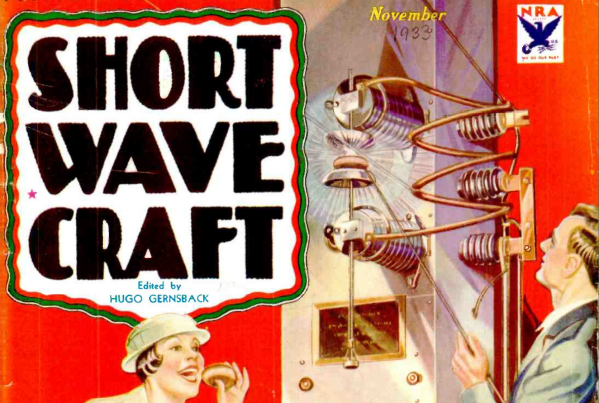
Westinghouse Powercaster which could, among other things, toast bread in six seconds
People think that Raytheon engineer Percy Spenser, the chief of their power tube division, noticed that while working with a magnetron he found his candy bar had melted. This is, apparently, true, but Spenser wasn’t the first to notice. He was, however, the first to investigate it and legend holds that he popped popcorn and blew up an egg on a colleague’s face (this sounds like an urban legend about “egg on your face” to us). The Raytheon patent goes back to 1945.
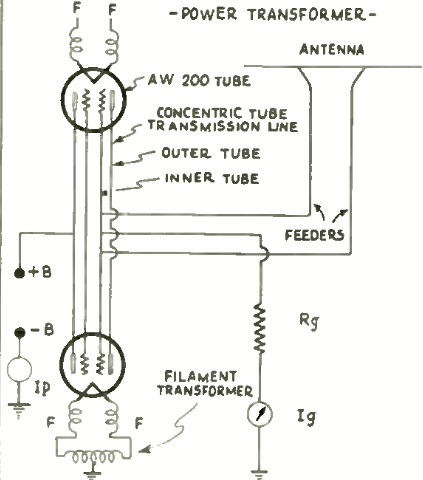
However, cooking with radio energy was not a new idea. In 1933, Westinghouse demonstrated cooking foods with a 10 kW 60 MHz transmitter (jump to page 394). According to reports, the device could toast bread in six seconds. The same equipment could beam power and — reportedly — exposing yourself to the field caused “artificial fever” and an experience like having a cocktail, including a hangover on overindulgence. In fact, doctors would develop radiothermy to heat parts of the body locally, but we don’t suggest spending an hour in the device.
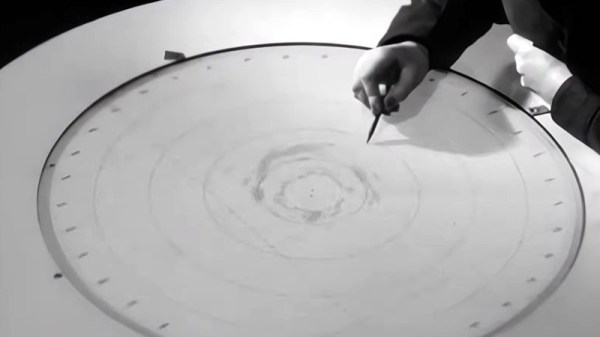
When you’ve been a fact-sponge for electronics trivia for over four decades, it’s not often that an entire class of parts escapes your attention. But have you seen the Skiatron? It’s a CRT that looks like a normal mid-20th-century tube, until it’s switched on. Then its secret is revealed; instead of the glowing phosphor trace we’d expect, the paper-white screen displays a daylight-readable and persistent black trace. They’re invariably seen in videos of radar installations, with the 360 degree scans projected onto large table-top screens which show the action like a map. It’s like e-ink, but from the 1940s. What’s going on?
The tenebrescent mineral Hackmanite, before and after UV exposure. Leland Green…, CC BY-SA 2.0 and CC BY-SA 2.0.
The phosphor coating on a traditional CRT screen is replaced by a halide salt, and the property on which the display relies is called tenebrescence, changing colour under the influence of radiation. This seems most associated online with UV treatment of some minerals and gemstones to give them a prettier look, and its use a s a display technology is sadly forgotten.
A high-school physics understanding of the phenomenon is that energy from the UV light or the electron beam in the case of the tube, places some electrons in the crystal into higher energy levels, at which they absorb some visible light wavelengths. This is reversible through heat, in some substances requiring the application of heat while in others the heat of room temperature being enough. Of course here at Hackaday we’re hands-on people, so into the EPROM eraser went a small amount of table salt in a makeshift dish made of paper, but sadly not to be rewarded by a colour change.
On a real dark-trace CRT the dark trace would be illuminated from behind by a ring light round the glass neck of the tube. An interesting aside is that, unlike phosphor CRTs, they were more suitable for vertical mounting. It seems that small amounts of phosphor could detach themselves from a vertically mounted screen and drop into the electron gun, something that wasn’t a problem for tenebrescent coatings.
This display tech has shuffled off into the graveyard of obsolescence, we’re guessing because CRT technology became a lot better over the 1950s, and radar technologies moved towards a computerised future in which the persistence of the display wasn’t the only thing keeping the information on the screen. It seems at first sight to be a surprise that tenebrescent coatings have never resurfaced in other displays for their persistence, but perhaps there was always a better alternative whether it was ultra-low-power LCDs or more recently e-ink style devices.
For more bleeding-edge 1950s radar displays, we’ve previously brought you Volscan, a radar with an early form of GUI, which no doubt was one of those which consigned dark-trace CRTs to history.
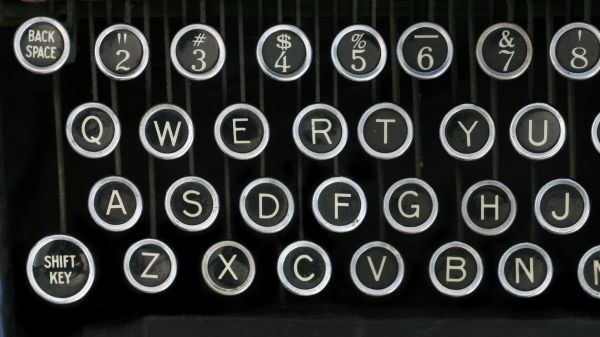
When you think about it, wiggling your fingers over a bunch of magic chiclets is a pretty strange gateway to the written word. And yet, here we sit a hundred-odd years after someone first decided that the same basic interface used to run pianos and harpsichords for centuries would be a fantastic model for mechanizing the whole writing thing. Just because it makes perfect sense thanks to the outsized portion of our brains dedicated to the motor and sensory functions of our wonderfully complex and versatile hands doesn’t mean it’s not weird.
Still and all, it seems like there could be some room for improvement in the basic design of keyboards. We could probably do with something that makes typing easier, results in less repetitive strain, or is just more fun to do. Pushing back on the traditional and boring designs of the past is where we find the strange breed of keyboard builders and modders that our very own Kristina Panos counts herself part of. You know here from her popular “Keebin’ with Kristina” series, and now we’ve coaxed her into checking into the Hack Chat to talk to all the rest of us keyboard-minded individuals. If you’ve ever thought that there has to be a better way to enter text, or even just something a little bit different, you’ll want to come along and join the conversation.
Modern video games are almost always written on the backs of a game engine platform, and the two most popular are definitely Unreal Engine and Unity. Some bean counter at Unity decided they essentially wanted a bigger piece of the pie and rolled out new terms of use that would have game development houses paying per Unity install. This was a horrible blow to small indie game development houses, where the fees would end up eating up something like 15% of revenue in an industry that’s already squeezed between the Apple Store and Steam. It caused an absolutely gigantic uproar in the game dev community, and now Unity is walking it back.
We noticed the change first because tons of “migrate from Unity to Godot” tutorials popped up in our YouTube stream. Godot is a free and open-source game engine, and while we’re no game devs, it looks to be at about the level of Blender five years ago – not quite as easy to use or polished as its closed-source equivalents, but just about poised to make the transition to full usability. While we’re sure Unreal Engine is happy enough to see Unity kick some more business their way, we’re crossing our fingers for the open-source underdog.
Amazon’s Kindle Direct Publishing allows independent authors to self-publish. And it’s apparently been awash in prose written by large language models. While it was fun for a while to look through self-published books for the shibboleth phrase “As an AI language model,” Amazon caught on pretty quickly. Of course, that only gets the lowest-hanging fruit. Books like the AI-written guidebook to mushrooms that recommends eating the Death Cap still manage to sneak through, as we mentioned two weeks ago.
Amazon’s solution? Limiting self-published books to three per day. I wrote a book once, and it took me the better part of a year, and Amazon is letting through three per day. If this limit is going to help limit the size of the problem, then we vastly underestimate the problem.
And it’s good news, bad news from space. The good news is that NASA’s OSIRIS-REx mission to return a sample from the asteroid Bennu successfully landed just a few hours ago. As we write this, they’ve sent a team driving around the Utah desert to pick up the capsule. The effort reminds us of retrieving high-altitude balloon capsules after a flight: you know roughly where it is, but you still have to get out there to fetch it. Only NASA has a helicopter to go out looking for the capsule and a lot more science to do before they can throw it in the back of their car.
On the bad news side, India’s Vikram and Pragyan lunar lander/rover pair wasn’t really expected to make it through the long lunar night and had successfully executed all of its planned mission goals before going into deep sleep mode two weeks ago. But you’ve got to try to wake it up anyway, right? Well, the sun came up on Vikram on Friday, and the Indian space agency tweeted a stoic, “Efforts have been made to establish communication with the Vikram lander and Pragyan rover to ascertain their wake-up condition. As of now, no signals have been received from them. Efforts to establish contact will continue.” We’ve still got our fingers crossed, but at this point it would just be extra icing on the cake.
You might find yourself, dear Hackaday reader, attracted to some pretty strange corners of the tech world. Who knows when that knowledge of stenography, ancient retrocomputing, and floppy disk internals will all combine to get someone falsely accused out of jail? Go read this story and come on back, but the short version is that [Bloop Museum] helped recover some 40+ year old court evidence off of some floppies to right an old wrong.
If you looked at the combination of extremely geeky topics, you’d say it’s unlikely to find anyone well versed in any one of them, and you’d say that the chances of anyone knowing enough in each these fringe domains to be helpful is exceedingly low. But I’m absolutely sure that the folks at [Bloop Museum] had some more to throw into the mix if they were called for. Or better yet, they might know exactly the right geeks to call in.
And that’s the other heartwarming part of the story. When [Bloop Museum] didn’t know everything about old stenography formats, they knew the right people to reach out to – the Plover open stenography project. Who is going to know more? Nobody! Together, the nerd community is an unstoppable resource.
So remember, when you’re hanging out with your geek friends, to keep a running catalog of everyone’s interests. Because you never know when you’re going to need an expert in re-gilding frames, or relocating bee hives, or restoring 1930’s radio sets. Or decoding obscure data formats to get someone out of jail.
Hackaday Halloween
We’re running the 2023 Halloween Hackfest and it’s your chance to document your Halloween projects, and win fame, fortune, or at least one of three $150 DigiKey gift certificates, plus some Arduino schwag courtesy of the contest’s sponsors! You’ve got until the end of October, so get on it!
This article is part of the Hackaday.com newsletter, delivered every seven days for each of the last 200+ weeks. It also includes our favorite articles from the last seven days that you can see on the web version of the newsletter.
Want this type of article to hit your inbox every Friday morning? You should sign up!
This week, Editor-in-Chief Elliot Williams and Kristina Panos gathered over the Internet and a couple cups of coffee to bring you the best hacks of the previous week. Well, the ones we liked best, anyhow.
First up in the news, we’ve got a brand-spankin’ new Halloween Hackfest contest running now until 9AM PDT on October 31st! Arduino are joining the fun this year and are offering some spooky treats in addition to the $150 DigiKey gift cards for the top three entrants.
It’s a What’s That Sound Results Show this week, and although Kristina actually got into the neighborhood of this one, she alas did not figure out that it was an MRI machine (even though she spent a week in an MRI one day).
Then it’s on to the hacks, which had a bit of a gastronomical bent this week. We wondered why normies don’t want to code on their Macs, both now and historically. We also examined the majesty of dancing raisins, and appreciated the intuitiveness of a salad spinner-based game controller.
From there we take a look at nitinol and its fun properties, admire some large, beautiful Nixie tubes, and contemplate a paper punching machine that spits out nonsensical binary. Finally we talk about rocker bogie suspensions and the ponder the death of cursive.
Check out the links below if you want to follow along, and as always, tell us what you think about this episode in the comments!